The ideas below range from a wooden tray on your counter to a full wall of mounted planters, with most asking for little more than a free afternoon and a trip to the hardware store.
What separates the right choice from the rest is whether you want the setup to move around, stay put on a shelf, or come down without a trace when your lease ends.
[link-whisper-related-posts]1. Vertical Wall Planters
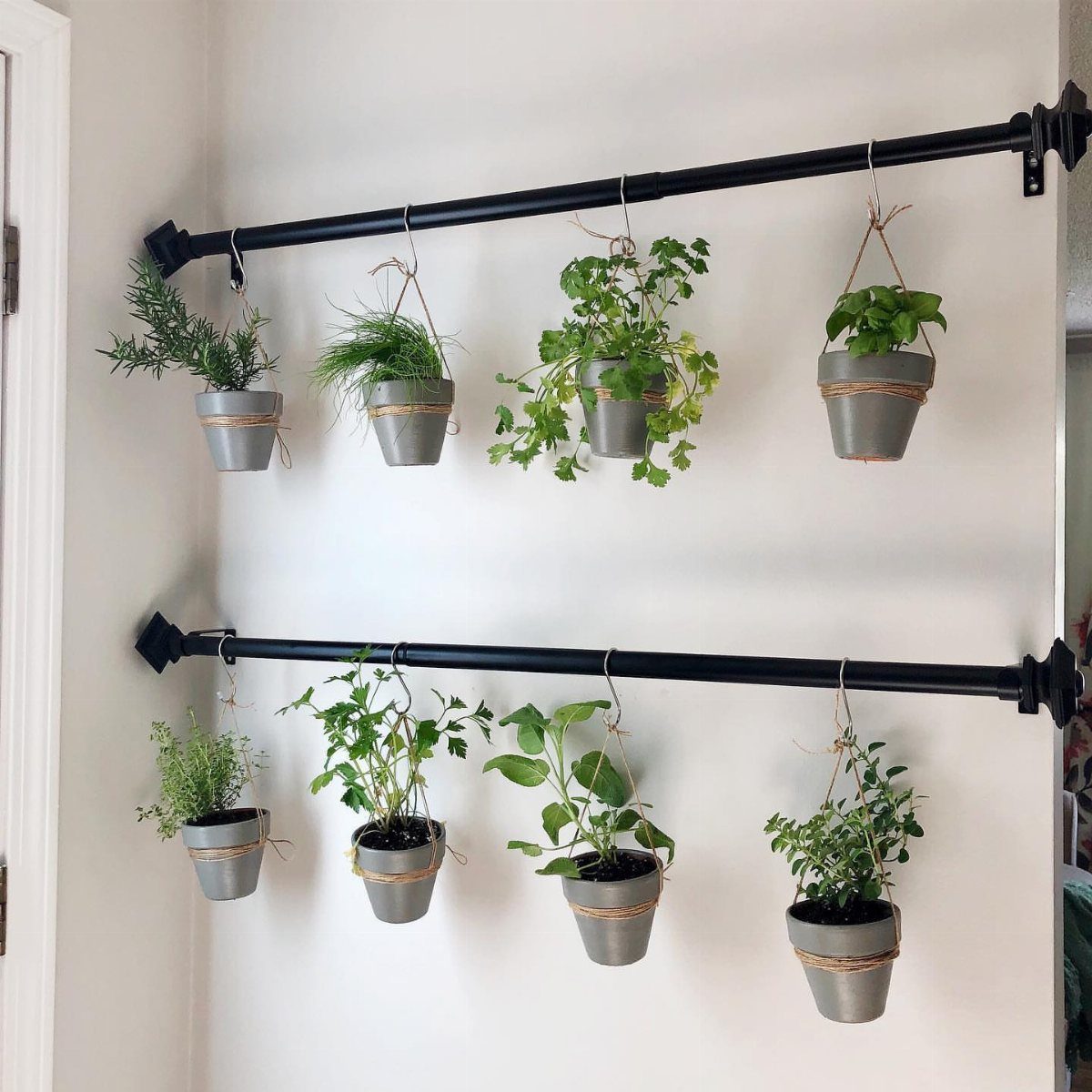
Wall-mounted rods give herbs almost no footprint on your counter or floor. I like that the pots hang by twine; it means you can lift each one down for harvesting without unhooking anything permanent.
Before you install, check that your wall can take the weight of wet soil across six or more pots. Standard drywall anchors have a weight limit, and damp potting mix runs heavier than you’d guess at a glance.

FRESH HERBS, NO FUSS: Grow fresh herbs for everyday cooking, right on your kitchen counter. Add water, plug in and start growing. 3 basil pods included to get you started. No dirt, no fertilizer to mix: all nutrients are already in the pod.


2. Hanging Planters
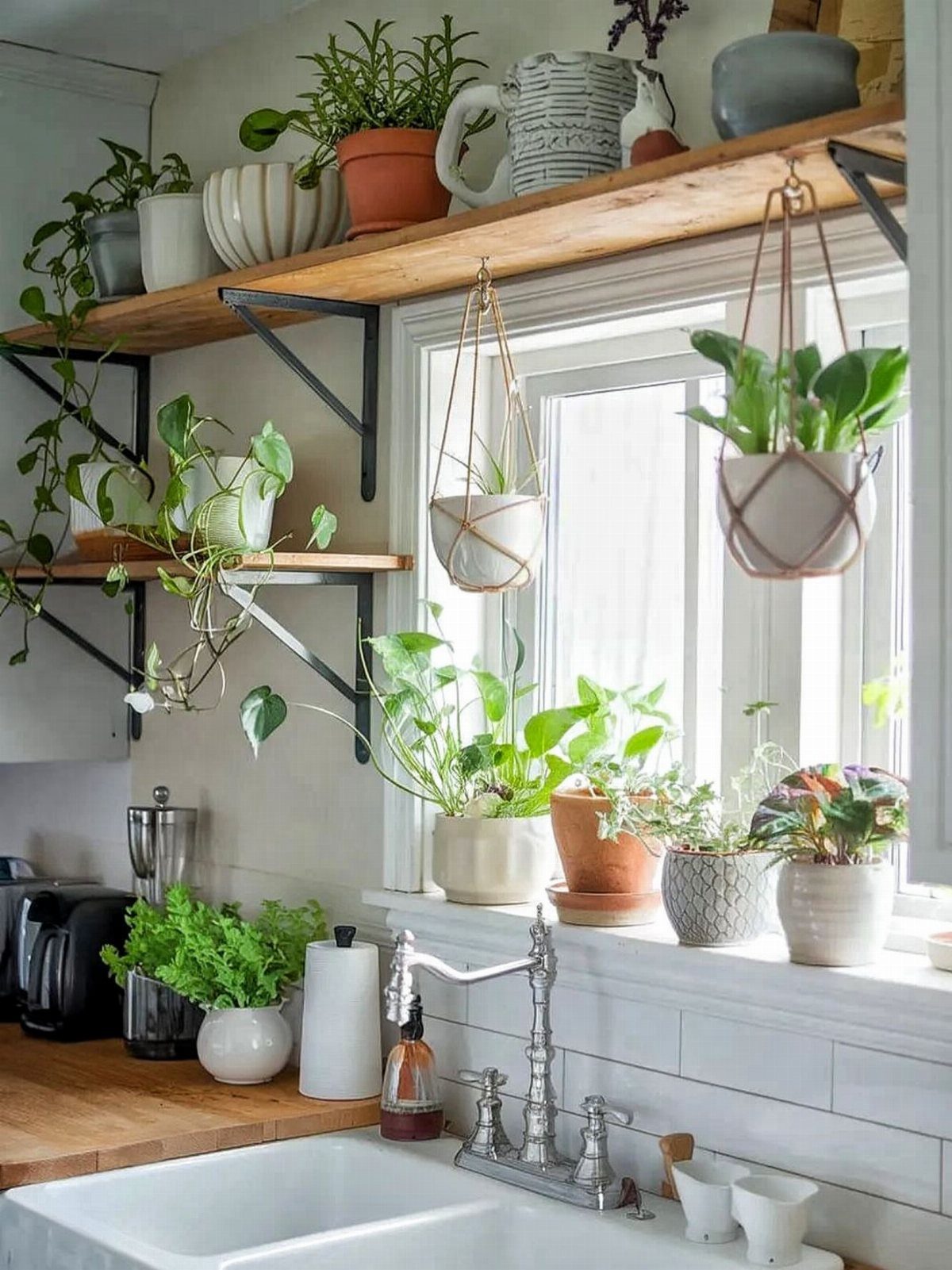
Macrame cord over a window turns a blank gap of air into growing space.
Your window frame or ceiling fixture needs a secure anchor point; for rental kitchens, a tension rod across the window frame does the same job with no holes.
Just keep the bottom of the planter clear of the sink so splashing water doesn’t rot the cord.

4-Pack Value Set: Includes 4 macrame hanging planters for creating a cohesive green wall display. Suitable for succulents, air plants, or herbs

This macrame plant hanger supports two flower pots. Show your plants some love with this elegant, vintage-inspired macrame double plant hanger. Simple, yet meticulously handcrafted, this beauty would be gracing your home or balcony garden, or brightening up an office

DISPLAY PLANTS IN YOUR WINDOW: By hanging planters on a metal rod, Triflora makes it easy to water and display plants in your window, without taking up space on the window will or counter
3. Uniform Pot Display
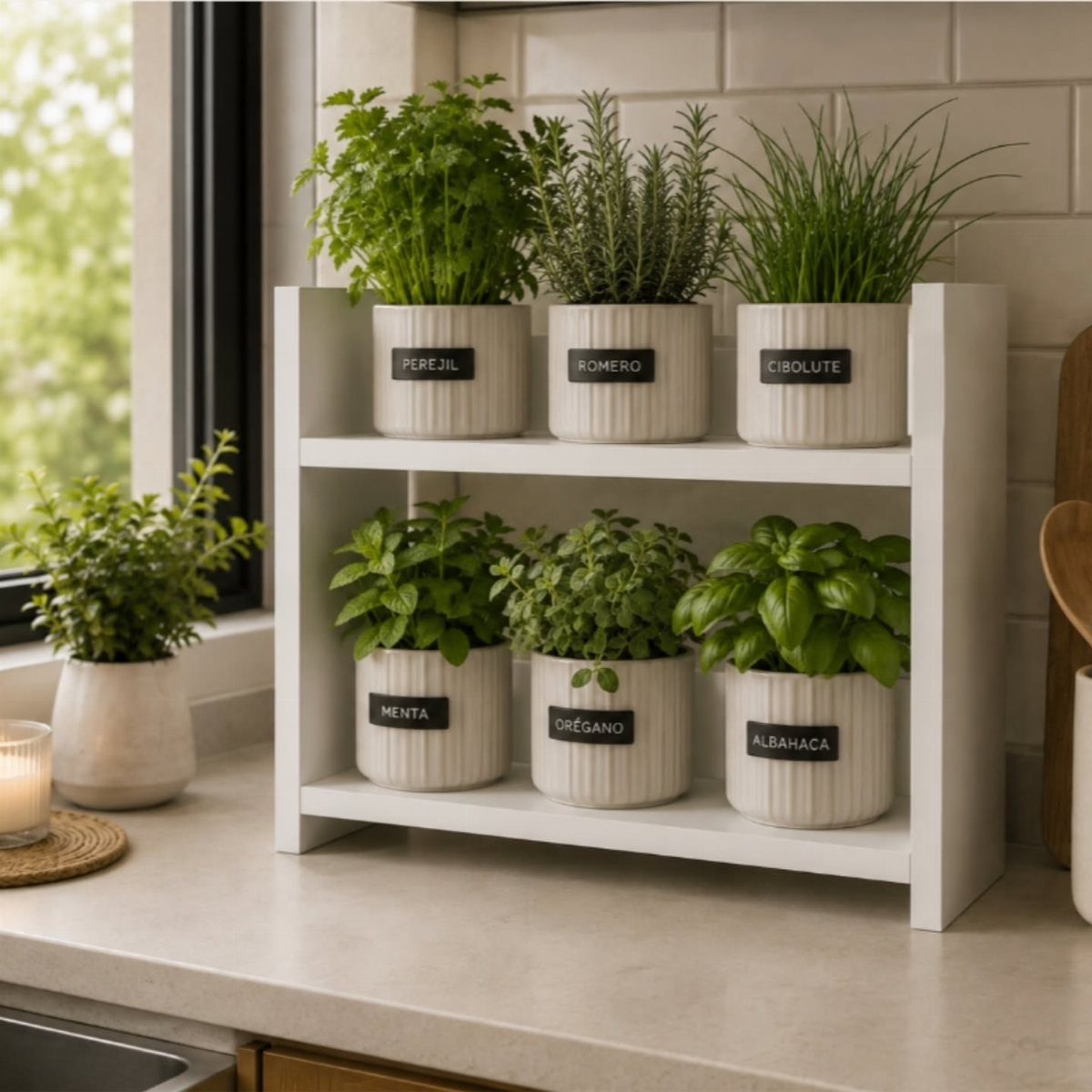
Matching white ribbed pots on a tiered shelf read as one deliberate piece rather than collected odds and ends.
I would buy the set first, then decide which herbs I actually cook with; the uniform look works either way, but empty slots spoil it.
Waterproofing matters: kitchen steam and the occasional splash will blur paper or run ink that isn’t sealed.

Plant Hanger with 6 Chains : Featuring an extra-long design, this hanging plant holder measures 70.8" in length and includes 6 chains. It’s perfect for large spaces and allows you to hang more plants. Save space and bring greenery into your home with this versatile and stylish plant hanger.

DISPLAY PLANTS IN ANY WINDOW: By hanging five planters on a metal rod, Triflora makes it easy to water and display plants in your window without taking up space on the window sill or countertop

41-INCH PLANT HANGING ROD: Provides practical hanging space for indoor plants, herbs, flowers, and decorative planters while keeping surfaces organized.
4. Grow Lights
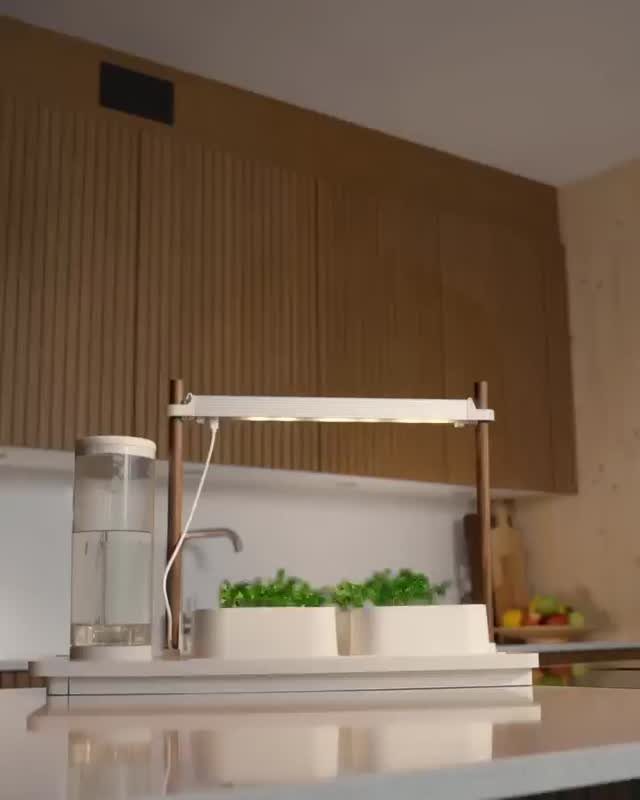
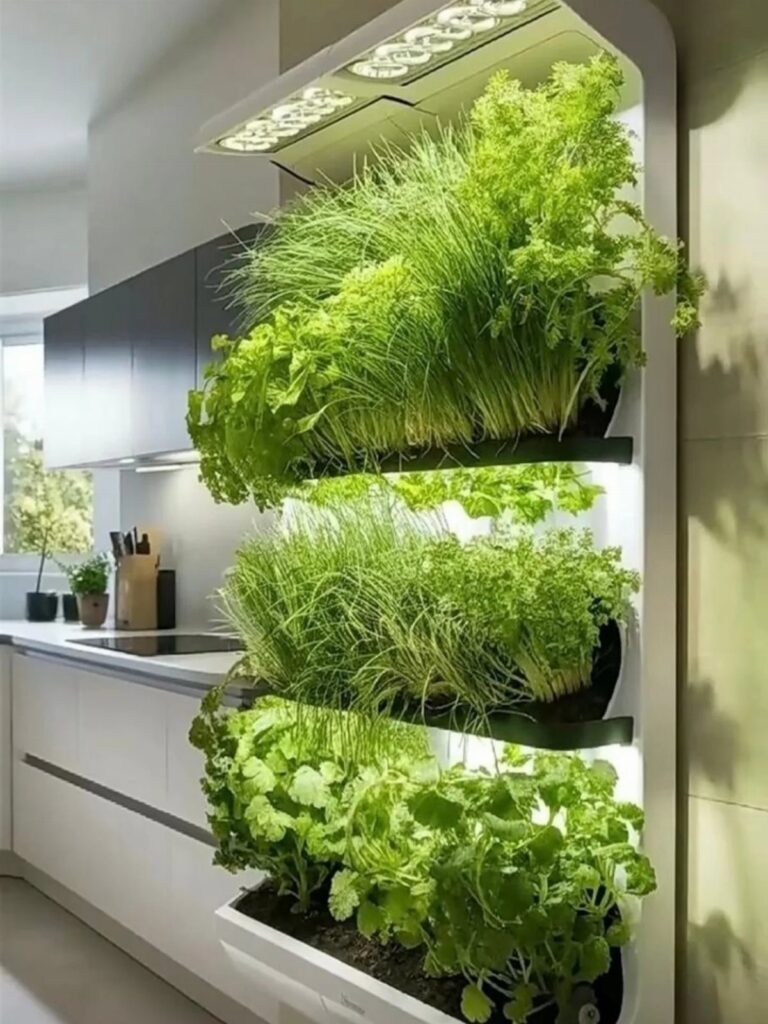
A grow light bar set over planter boxes handles the dark interior kitchen that windows alone won’t fix. LED bars in this style draw little power and run cool enough to sit close above the leaves without scorching.
A water reservoir below the planters catches runoff; if you’re assembling your own, a simple drip tray works, but you do need something, otherwise water pools on the counter and roots sit in it.

🌱【 Window Sill 】 Our sleek steel indoor herb planter enhances home decor. This set includes planters and a matching tray, but herbs and seeds are not included. Featuring a leather handle for easy carrying, you can move your herbs to adjust for sunlight or decor needs.

Create a waterfall of flowers or herbs with our charming outdoor stacking planter
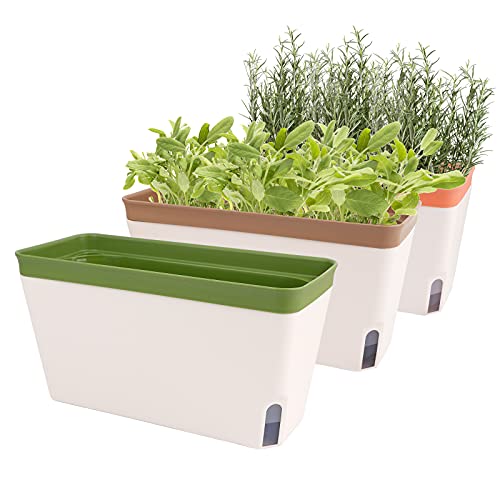
SELF-WATERING PRINCIPLE: Through two absorbent cotton ropes, the self watering pots provide water to the soil and keep the soil moist through the principle of osmosis, without having to water the plants regularly. Even if you leave home for a few days, it can help you take care of the plants and avoid plants die from water shortage.
5. Window Shelves for Potted Herbs
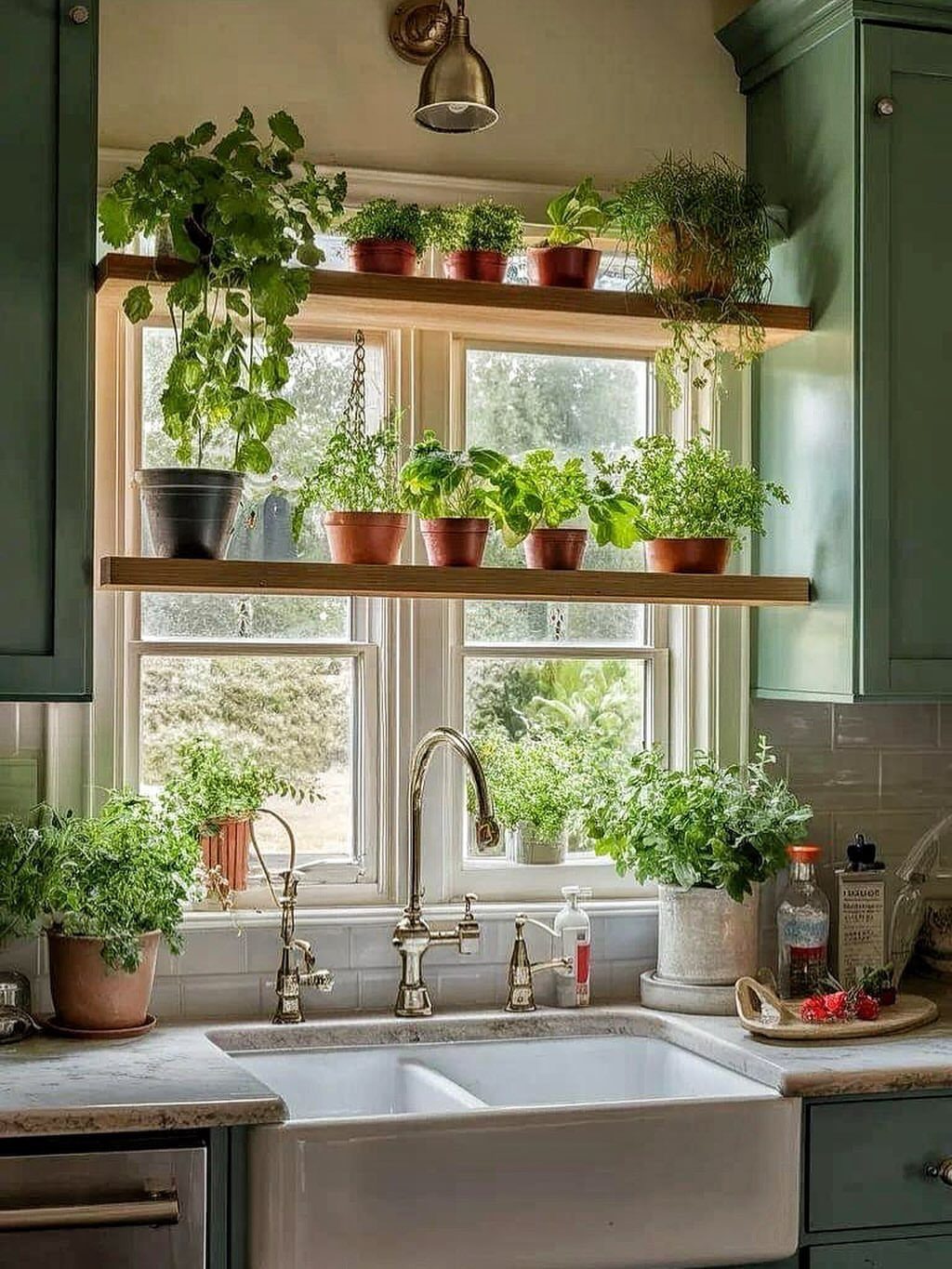
Floating shelves across a window turn the glass itself into a greenhouse. I’m partial to this setup for south- or west-facing windows where the light is strong enough that herbs on a sill alone would lean and stretch toward it.
Wood against glass needs protection from condensation and direct sun, or it warps and fades. A coat of exterior-grade poly on the underside and the window-facing edge buys you years before you have to think about replacement.

Ideal for Plant Display: Our transparent window shelves seamlessly integrate with your window, allowing unobstructed views of your plants. Protect them from wind and rain while promoting growth and beauty. Please note that pots can be placed with a base diameter up to 3.6 inches
6. Mason Jars in Wooden Crate
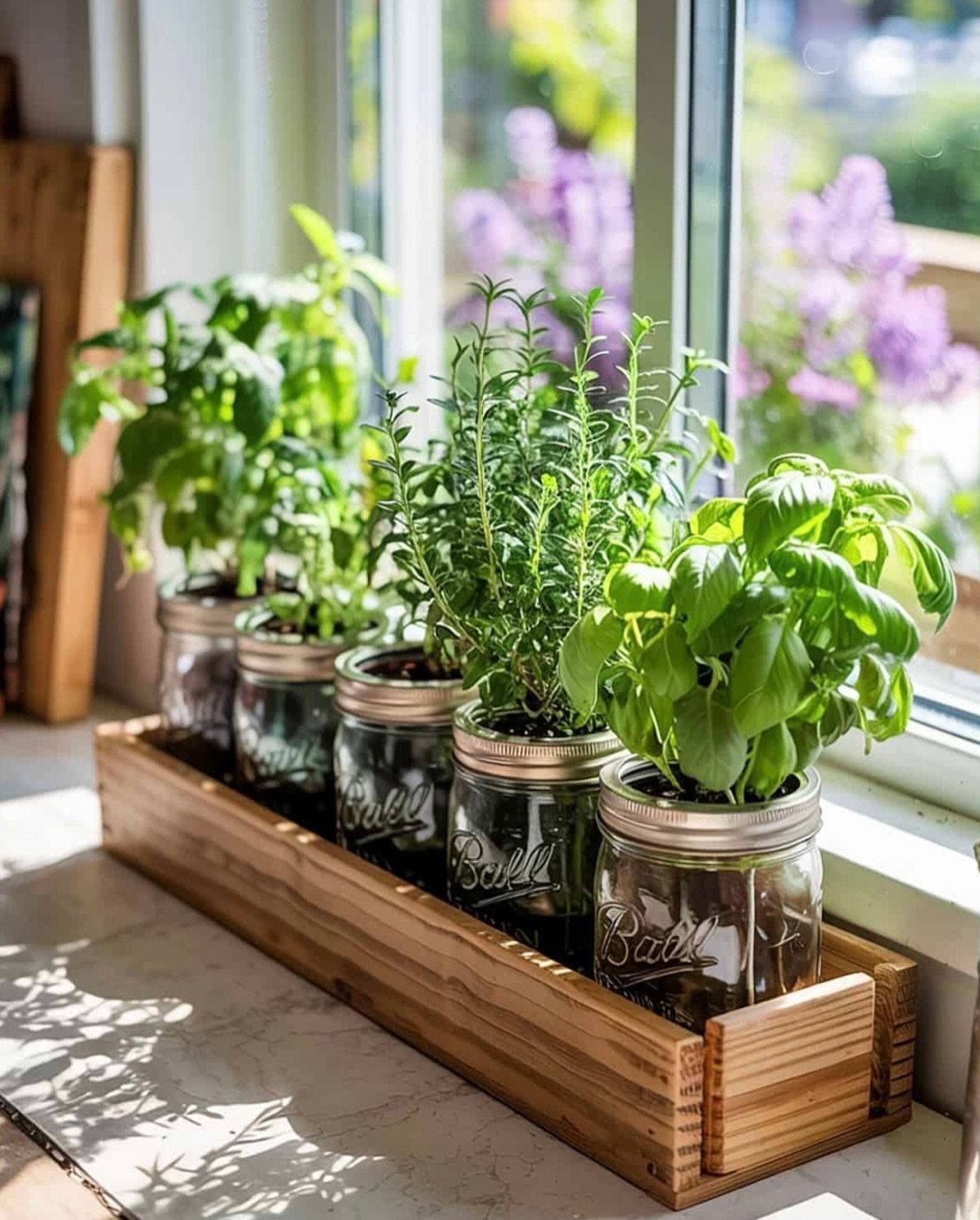
Mason jars in a wooden crate line a sill with what looks like a single farmhouse piece rather than scattered containers.
The jars have no drainage, so I use a layer of pebbles or broken pottery at the bottom and water sparingly, letting the roots dry between.
A crate with slatted sides allows some air to move across the jars, which helps offset the drainage problem. Solid wood would trap moisture and grow mold on the windowsill underneath.

HERB PLANTS & SEEDS - Start an indoor herb garden from seed with basil, chives, dill, cilantro and parsley, each in its own burlap pot.
7. Countertop Tray Herb Garden
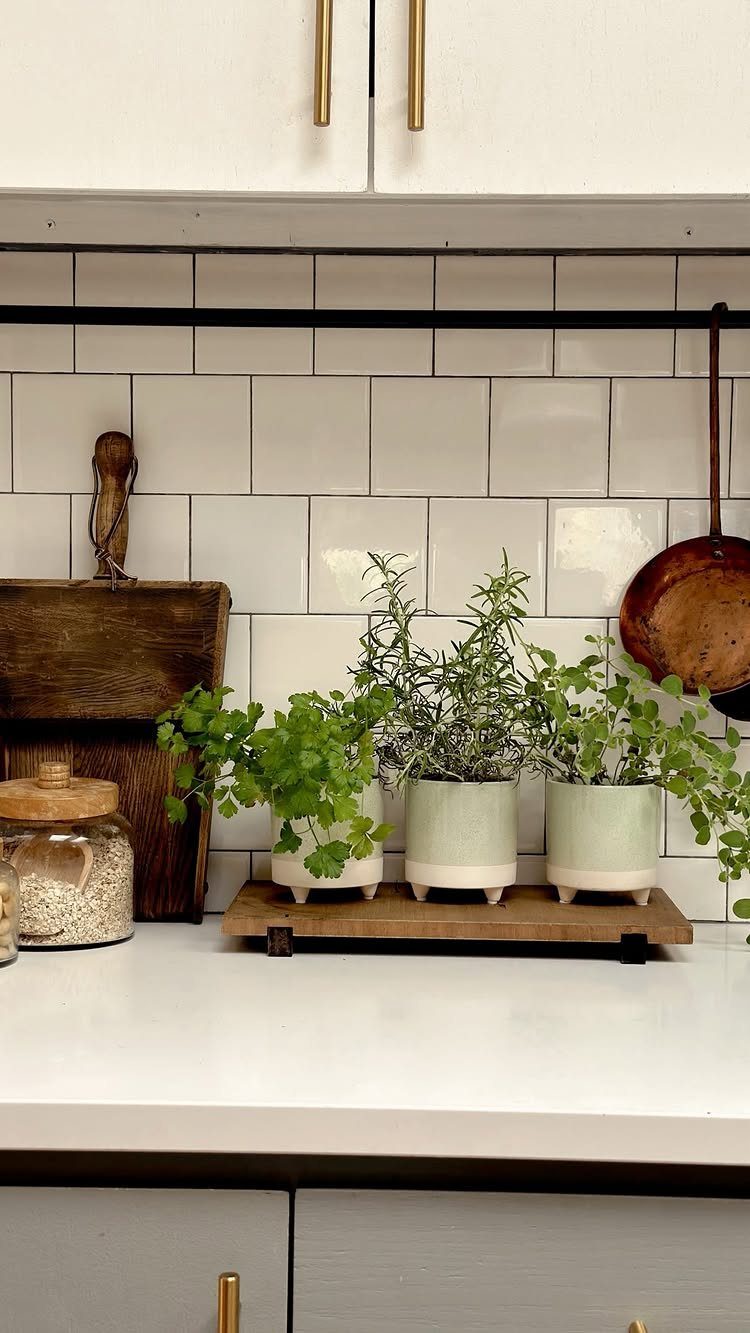
A shallow wooden tray corrals several herbs into one moveable unit. I like that the whole setup slides to the sink for watering and back under the cabinets for counter space.
The tray’s lip needs to be high enough to catch runoff; a flat board stains your counter. Check that the wood is sealed, or line it with a waterproof mat cut to fit.
8. Windowsill Herb Pots with Plant Labels
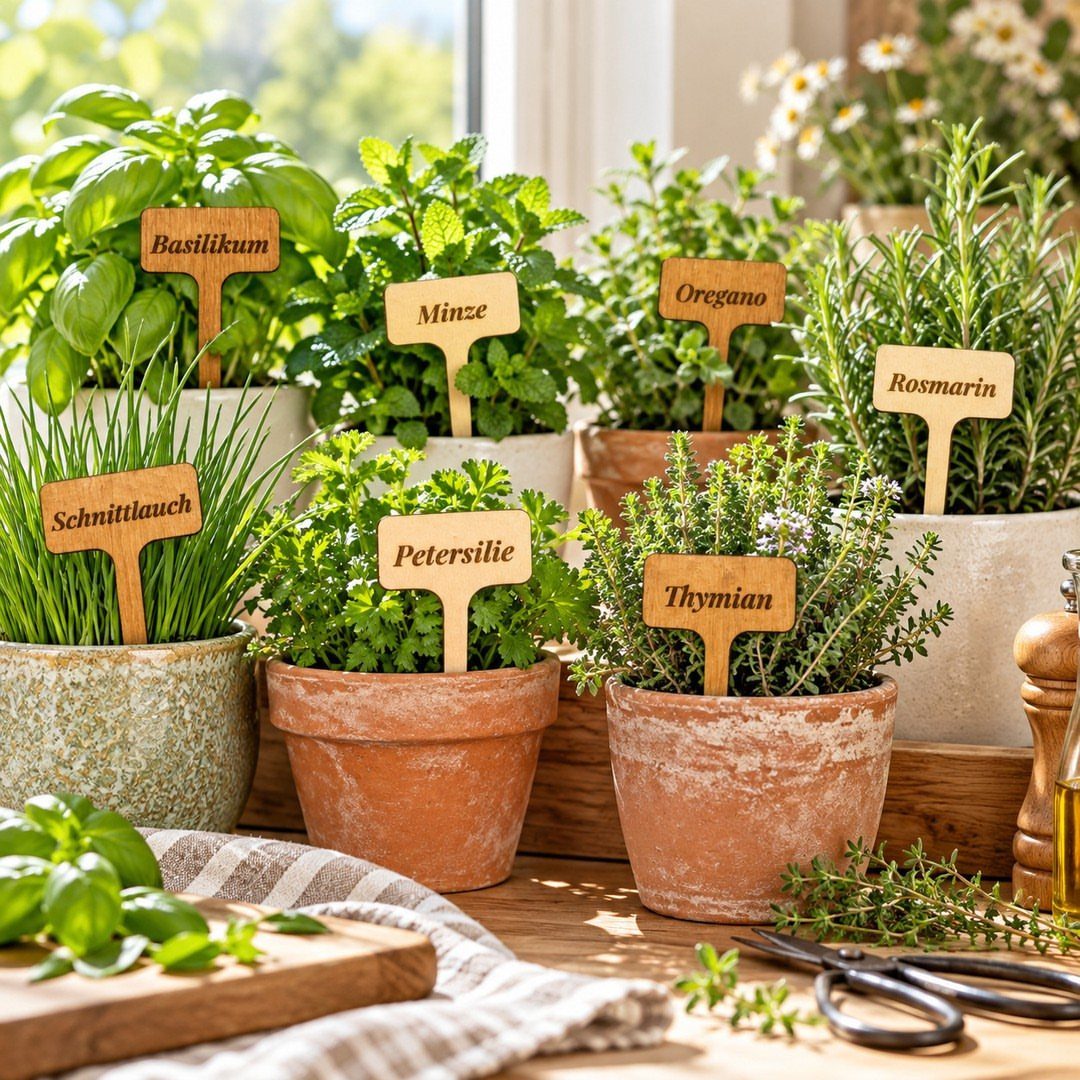
Wooden labels take the guesswork out of which seedling is which, especially when herbs look alike as seedlings.
I would write the names in pencil or a fine marker, not carve them; you can flip the label and reuse it when you swap the pot to a new herb.
Set the pots back from the glass far enough that summer sun doesn’t cook the leaves against it; a half inch of clearance is usually enough.

{Premium Material}: Our garden wall planters bags choosing high-quality felt materials with good air permeability can better store and release water to promote healthy plant growth. It is lightweight, sturdy, convenient, foldable, durable and anti-aging.
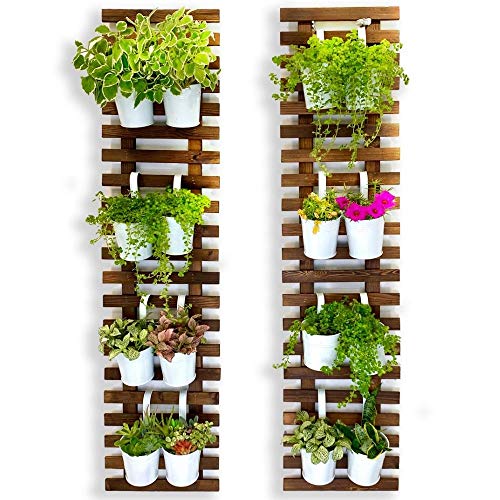
29x120cm (11.4" x 47.2") x 2 pcs. Plants, flowers, pots, decorations are NOT included

Design: Wall mounted flower pots are suitable for indoor and outdoor decoration or office walls, saving space. It is also suitable for indoor plant wall pots and vertical wall flower pots
Best Herbs for Indoor Growth
Basil, chives, mint, oregano, parsley, rosemary, and thyme are the herbs I would start with indoors. They ask for less fuss than most and still give you leaves worth harvesting.
If you are new to this, three to five herbs is the right ceiling. More than that and you are managing microclimates in a space that probably does not have room for them.
I would buy seedlings from a garden shop rather than start from seed. Seeds take the patience I’m usually short on for a windowsill project, so I start with nursery seedlings instead.
Mint spreads aggressively even in a pot, so I would give it its own container from day one.
Basil is the outlier in the group: it wants steady warmth and its leaves wilt fast if the temperature drops. The rest tolerate the normal range of a heated kitchen.
Herbs make most sense grown in a kitchen, so they are easily accessed. However, if your kitchen doesn’t receive enough natural light, you may need to look at other areas of your home.

WINDOWSILL HERB GARDEN: Set of 3 steel herb pots on a matching tray with a leather carry handle, sized for a kitchen windowsill, shelf or countertop. Move all your herbs to the sun in one go. Herbs and seeds not included
Care Tips for Indoor Herbs
6 hours of direct sun is the minimum most herbs need to keep producing leaves.
In a kitchen that does not get that, a grow light bar fills the gap. I would set a timer and treat it like a shift, not an afterthought.
Water when the top of the soil dries, but do not let pots sit in runoff. Pour out anything that collects in the saucer; roots in standing water rot fast.
For humidity, I would mist with a spray bottle a couple of times a week or set pots on a tray of pebbles with water below the pot bottoms.
If air is stale, a fan nearby helps, just not blowing directly on the leaves.
Feed with a fertilizer labeled for vegetables and herbs while the plants are actively growing.
The label tells you the rate; more is not better. Excess fertilizer pushes leafy growth at the expense of the oils that give herbs their flavor.

Strong & Sturdy Support: The upgraded plant shelf comes with 7 powerful suction cups and 2 triangular support brackets to boost stability, holding up to 20 lbs total. Whether you’re displaying delicate succulents or heavy herbs, enjoy wobble-free stability

【Crystal-Clear Plant Display Platform】 Crafted with ultra-transparent 5mm acrylic, these shelves showcase your succulents, microgreens, or herb garden without visual obstruction. Full-length 1" front lip & side guards prevent pot slippage while maintaining 180° sunlight exposure
Choosing the Right Pots
Drainage holes are non-negotiable.
Without them, you are relying on pebble layers and hope, and pebbles only buy time. I would pick pots with actual holes and pair them with a saucer or a plastic protector for the surface underneath.
Terracotta is my first choice for breathability.
It pulls some moisture through the walls, which helps prevent soggy soil but also means you are checking water more often. Plastic stays wet longer and weighs less; I would use it for a setup I plan to move.
The smaller the pot, the faster roots fill it.
Once roots start poking through the drainage holes, I move the plant up one size and refresh the potting soil. Some herbs can be split at that point and repotted to keep the footprint small.
Frequently Asked Questions
Do it yourself herb garden ideas?
A wall-mounted rod with twine-hung pots turns almost no counter space into a working herb garden, and you can lift each pot down to harvest without unhooking anything permanent.
For renters, a tension rod across a window frame holds macrame planters with no holes in the wall.
A shallow wooden tray turns several pots into one moveable unit you can slide to the sink for watering, then tuck back under cabinets when you need the counter.
What herbs should never be planted together?
Mint should always get its own container from day one; it spreads aggressively even in a pot and will crowd out anything else.
Coriander also multiplies fast enough that I would isolate it rather than risk it taking over a shared pot.
Beyond those two, the main rule is matching water, sun, and temperature needs: basil wants steady warmth and wetter soil, while rosemary, sage, and thyme tolerate drier conditions, so I would not force them into the same container.
What are the commonly used herbs in the kitchen?
Basil, chives, mint, oregano, parsley, rosemary, and thyme are the ones I would start with for a kitchen garden.
I would pick based on what you actually cook; if you never use cilantro, it does not deserve limited windowsill space no matter how popular it is on lists.
Do indoor herbs need direct sunlight?
Most herbs need direct sun to keep producing leaves, though indirect light works if it is bright enough. South- or west-facing windows are usually your best bet for natural light.
What herbs grow well indoors?
Basil, chives, mint, oregano, parsley, rosemary, and thyme are the ones I would start with indoors.
If you are new to this, three to five herbs is the right ceiling; more than that and you are managing microclimates in a space that probably does not have room for them.
How often should I water my herbs?
Water when the top of the soil dries, which for most herbs in most kitchens works out to roughly once a week.
Herbs that prefer wetter soil, like basil, parsley, and cilantro, need water more often, especially in terracotta that pulls moisture through the walls.
Herbs that like drier conditions, like rosemary, sage, and thyme, can go longer between drinks; I would stick a finger into the soil to test rather than guess.