These 14 raised garden bed ideas run from cedar and corrugated metal you can bolt together in an afternoon to stacked stone and concrete block built to outlast decades.
Some of these beds sit on wheels or fold flat when you move; others are tiered into a slope or mortared at the corners so they never budge.
The hollow cores in those concrete blocks alone add extra planting pockets for scallions or strawberries, which is the kind of detail that only matters once you know which side of that line you stand on.
[link-whisper-related-posts]1. Cedar Garden Beds
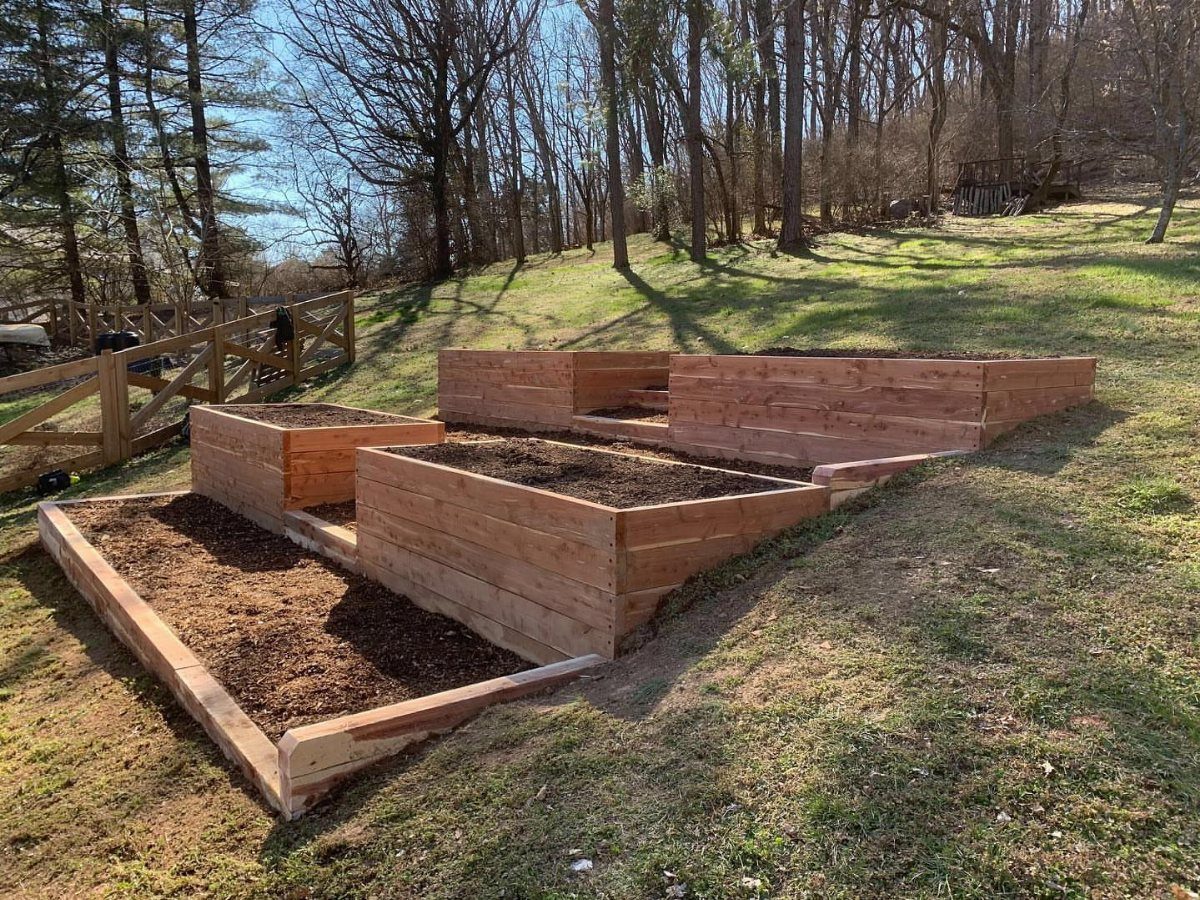
Cedar boards cost more than pine upfront, but they last without chemical treatment. I built my first beds from cedar because I could cut the boards with a basic miter saw and sink screws without pre-drilling.
The red tone is the wood’s natural color; it silvers to gray unless you oil it.
Check that the boards are heartwood, not sapwood, since only the heartwood carries the rot-resistant oils. Tiering follows the grade and saves you from moving much dirt.

Elevate Your Garden - Opt for a brilliantly engineered raised garden bed to revolutionize your gardening. Its spacious design, measuring 48x24x30 inches, allows for the cultivation of multiple vegetable varieties alongside a plethora of herbs, optimizing your gardening space for ease and diversity.

16.5" deep to accommodate large, deep-rooted plants

Each raised metal garden bed size: 4×2×1ft ,7.14Cu
2. Raised Planter Trellis Box
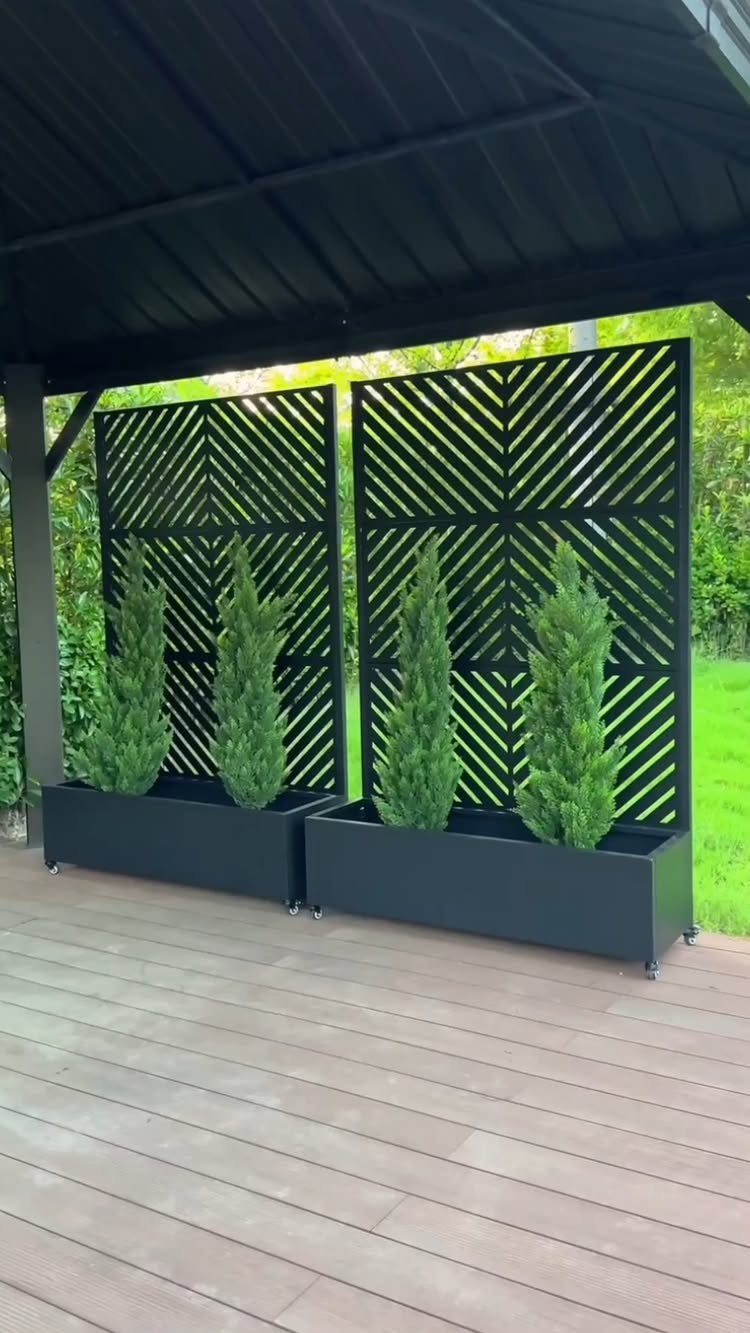
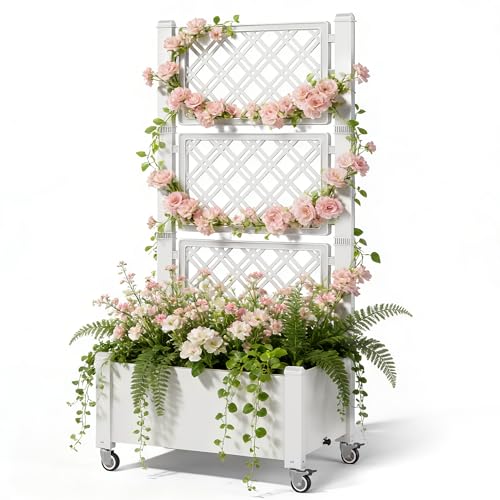
A planter on wheels with a built-in trellis solves 2 problems for renters: no ground to dig and something tall that does not count as a permanent structure.
I would check the wheel locks before buying; a gust of wind can send a tall planter rolling across a deck.
Cypress is a slow choice for a trellis plant; morning glories or sweet peas would cover the screen in one season. Move it to catch sun, roll it aside when you need the space.

【Spacious and Versatile Design】: The CATMANOR raised garden beds outdoor provide ample growing space for a variety of vegetables, herbs, and flowers. The raised bed design maximizes planting capacity, making it an ideal solution for gardening enthusiasts who want to grow medium to deep-rooted plants such as broccoli, beans, and more.

Size: The garden bed measure is 23.6"L x 23.6"W x 17"H. Made of galvanized steel sheet metal with a rust-resistant coating features long-lasting use during kinds of weather.

【Spacious and Versatile Growing Space】The CATMANOR raised garden beds outdoor offer plenty of room for growing vegetables, herbs, and flowers. The raised bed design helps make better use of planting space and works well for medium to deep-rooted plants like broccoli, beans, and similar crops.
3. Self-Watering Raised Garden Bed
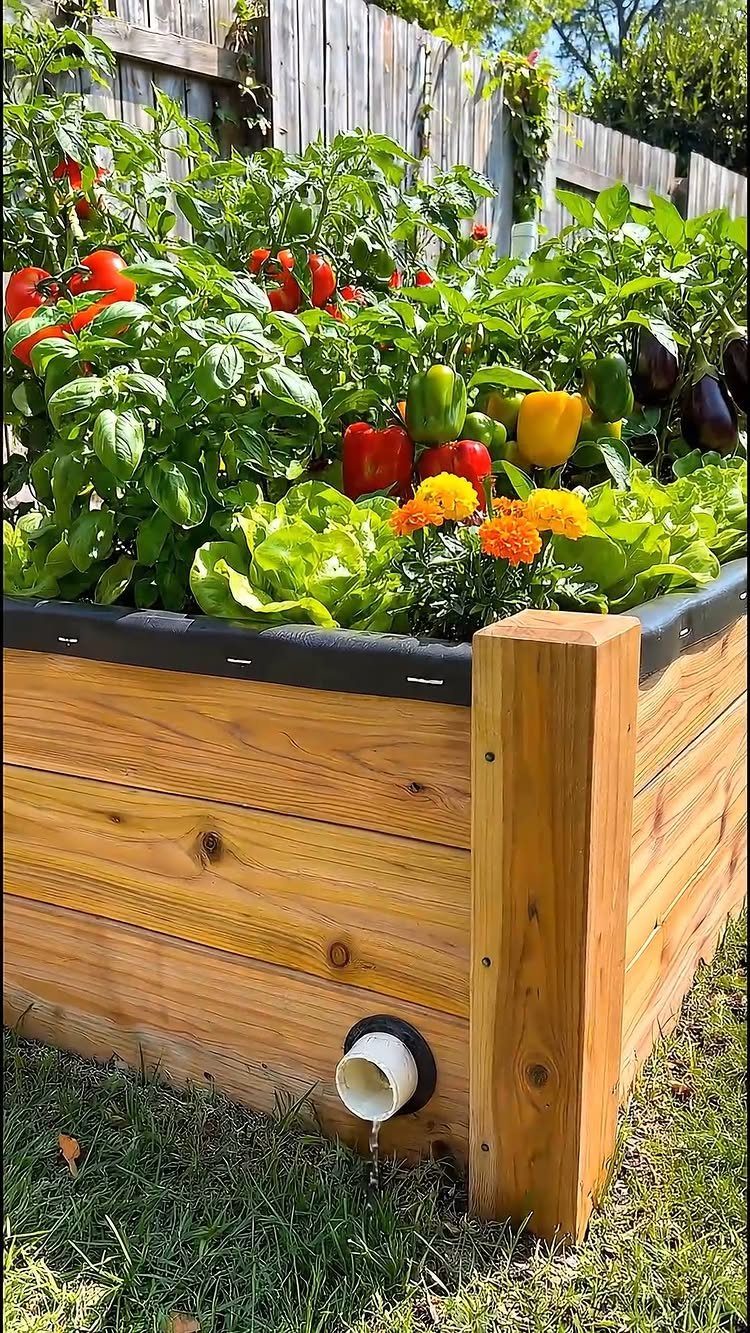
The pipe at the bottom is the tell: this bed has a reservoir underneath the soil that you fill from a top inlet, and the overflow keeps roots from drowning.
I think this matters most for tomatoes, which crack from uneven watering.
You can buy kits with the liner and plumbing included, or line a standard bed yourself with pond liner and perforated PVC.
The soil needs to sit well above the water line so vegetable roots stay dry enough. In wet climates, that overflow pipe is non-negotiable.

COMPACT SIZE FOR SMALL SPACES: Assembled planter has an 11.8 x 11.8 in footprint, a 9.9 in tall planter box, and a 41.3 in overall height with the trellis. Check the dimensions before ordering; designed for compact patios and balconies.

【Package included】: This Trellis for Climbing Plants Outdoor comes complete with everything you need to get started: 17pcs metal stakes, 8pcs stainless wire connect pipe, 2 A-shaped connectors, and a 0.9x1.8meter Bird net.
【Simple, Satisfying Assembly】Assembly is quick and hassle-free thanks to clearly labeled parts and clear instructions. Designed with precision and built to last, everything clicks into place perfectly, the structure is incredibly sturdy.
4. Fabric Pots
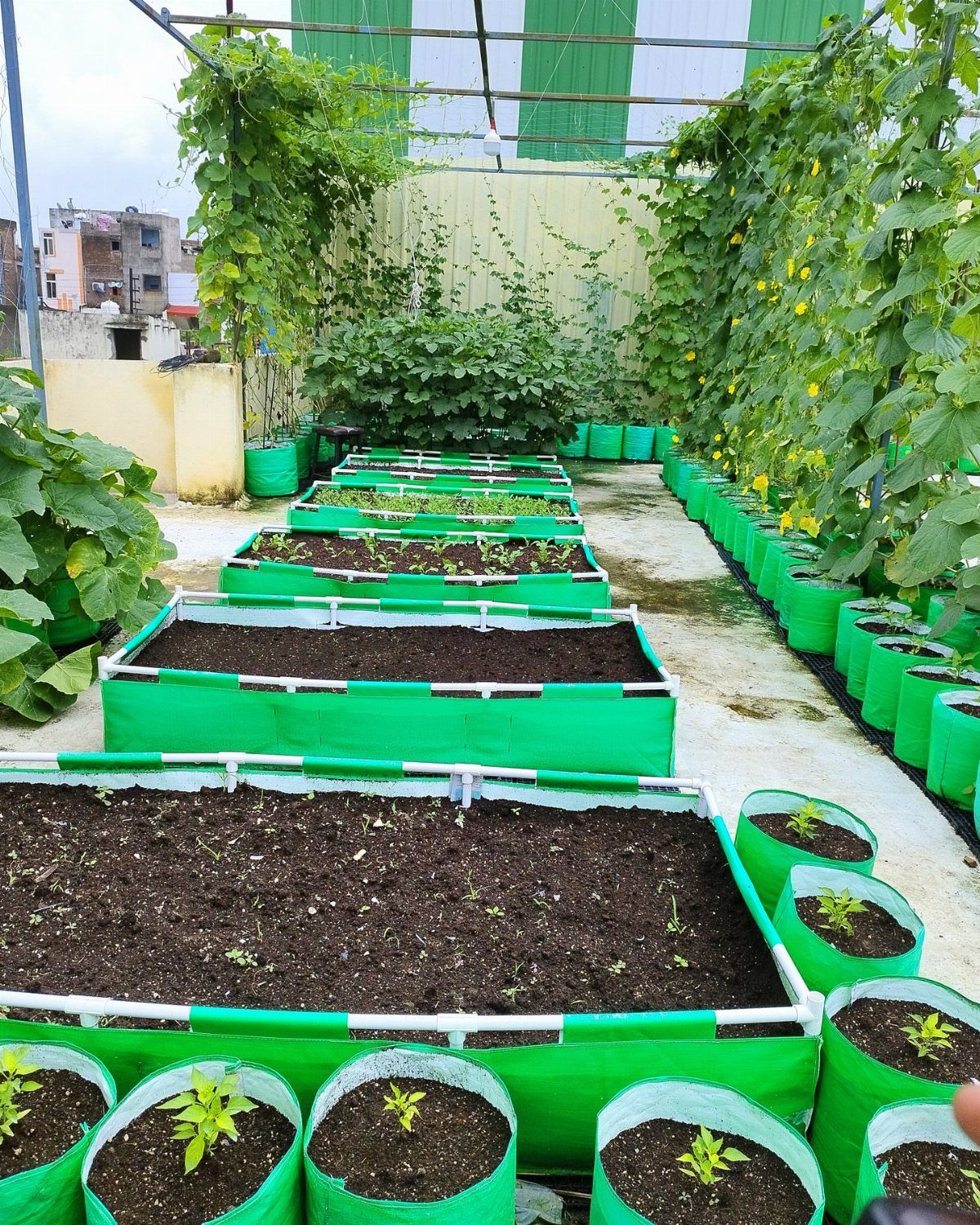
Fabric pots air-prune roots, so a plant never circles itself into a tangle. PVC frames hold the pots upright and give you something to attach trellis netting to.
I would use the rectangular fabric beds for tomatoes and the round pots for peppers or herbs.
On a rooftop, weight matters; wet soil in fabric is heavy, so check your load limit before you fill a dozen. The white pipe frame is a smart add-on, but the pots work fine sitting directly on a surface.

Automatic watering support for healthier plants // The built in reservoir delivers water directly to plant roots allowing them to absorb moisture naturally as needed throughout the day

Ergonomic Elevated Design: 31” tall raised planter box with legs reduces bending and back strain, making gardening more comfortable and accessible.

DIMENSIONS: 32. 3 in. L x 14. 7 in. W x 30. 7 in. H
5. Upcycled Container Vegetable Garden
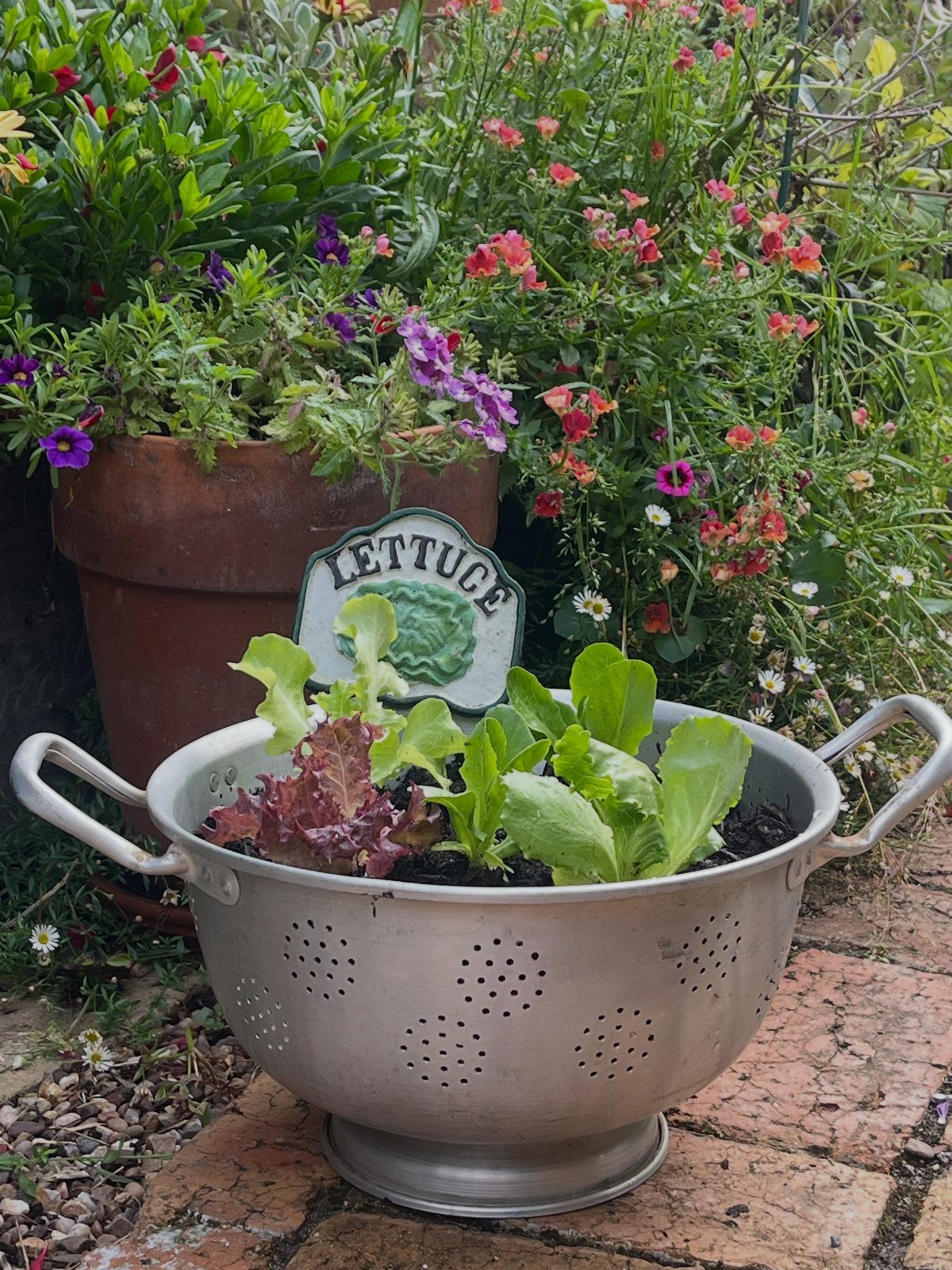
A colander already has drainage holes, which saves you one step. Lettuce is shallow-rooted enough that a bowl’s depth is plenty.
I would line it with coffee filters or landscape fabric so soil does not wash straight through the holes with each watering. Any container with drainage works: old buckets, tea tins, wooden crates lined with plastic.
The sign is cute, but the real point is that you want something that holds enough soil and will not rust through in one season if it is metal.

Roots Control Planter: This air root pruning planter avoid root circling, ensuring a healthier root structure. This leads to faster plant growth and larger yields
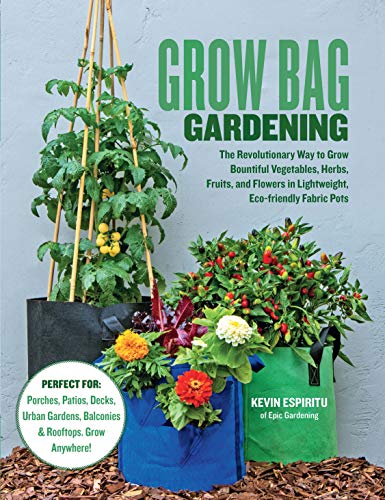

Thickened Nonwoven Fabric: Crafted from 300G thickened breathable nonwoven fabric, these grow bags for plants provide moderate permeability for root respiration; BPA-free material ensures food safety for organic vegetables
6. Flowers and Vegetables in a Raised Bed
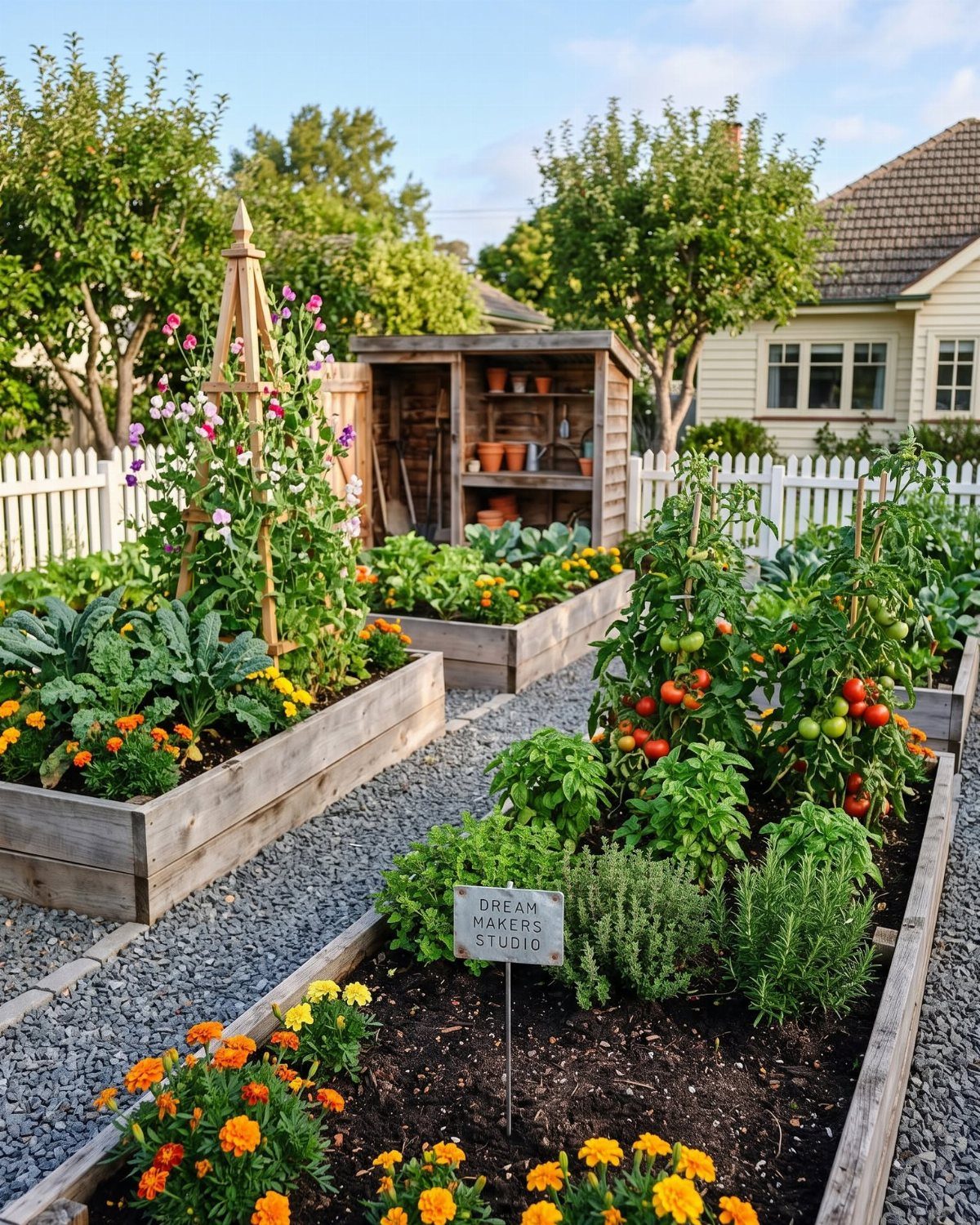
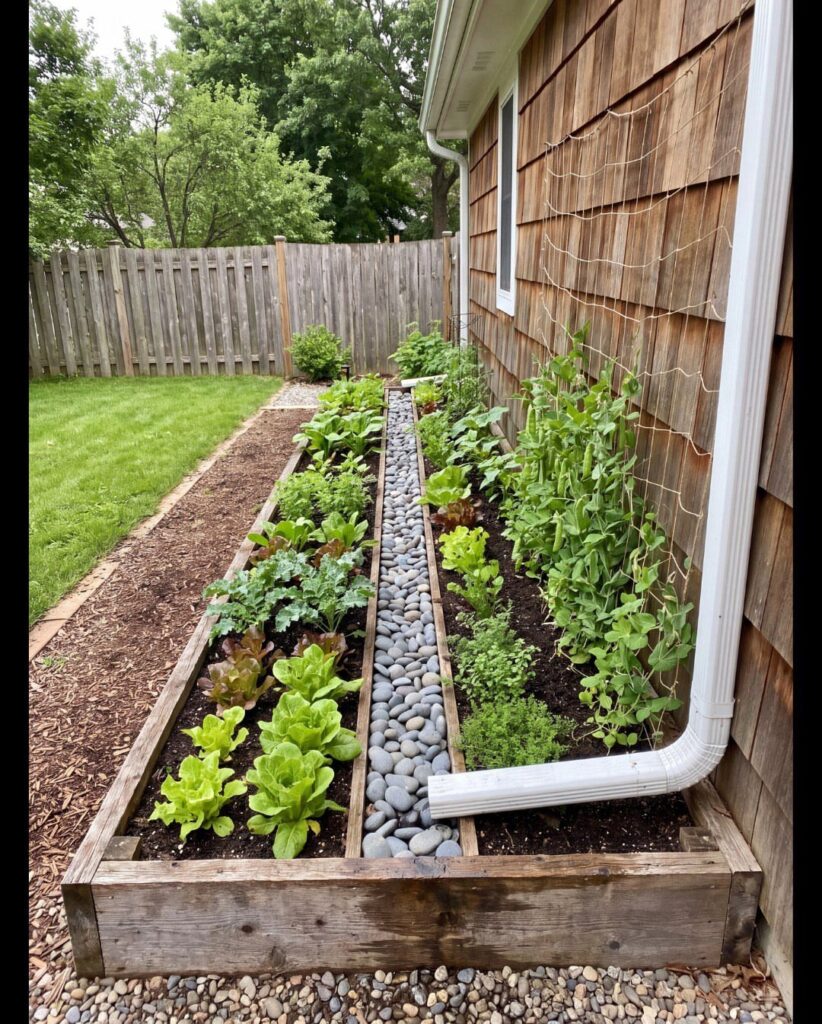
Marigolds between the tomatoes are not just pretty; their root exudates suppress some nematodes. Gravel paths keep mud off your shoes and discourage slugs from crossing.
I would keep the flowers on the south edge so they do not shade the vegetables.
Sweet peas climb, so they need a trellis or they will sprawl across the kale. The mix works in one bed because the tomatoes are staked upright and the herbs stay low; plan your heights before you plant, not after.

SPACIOUS GROWING SPACE WITH EXTRA PLANTING DEPTH:Measuring 91.5" L × 47.3" W × 22.06" H, this galvanized raised garden bed holds approximately 412 gallons of soil, providing generous planting space and extra depth for vegetables, herbs, flowers and fruits. The spacious design allows roots to grow naturally while supporting tomatoes, peppers, cucumbers, broccoli, beans, lettuce, carrots, potatoes and other popular garden plants. Ideal for backyard gardening, raised vegetable gardens and outdoor planter box projects.

DIMENSIONS: 48 in. W x 48 in. D x 29. 12.6 in. H

Size: The garden bed measure is 46"L x 23.6"W x 17"H. The planter box provides ample space for planting vegetables, fruits, flowers and other plants.
7. DIY Raised Garden Beds with Corrugated Metal
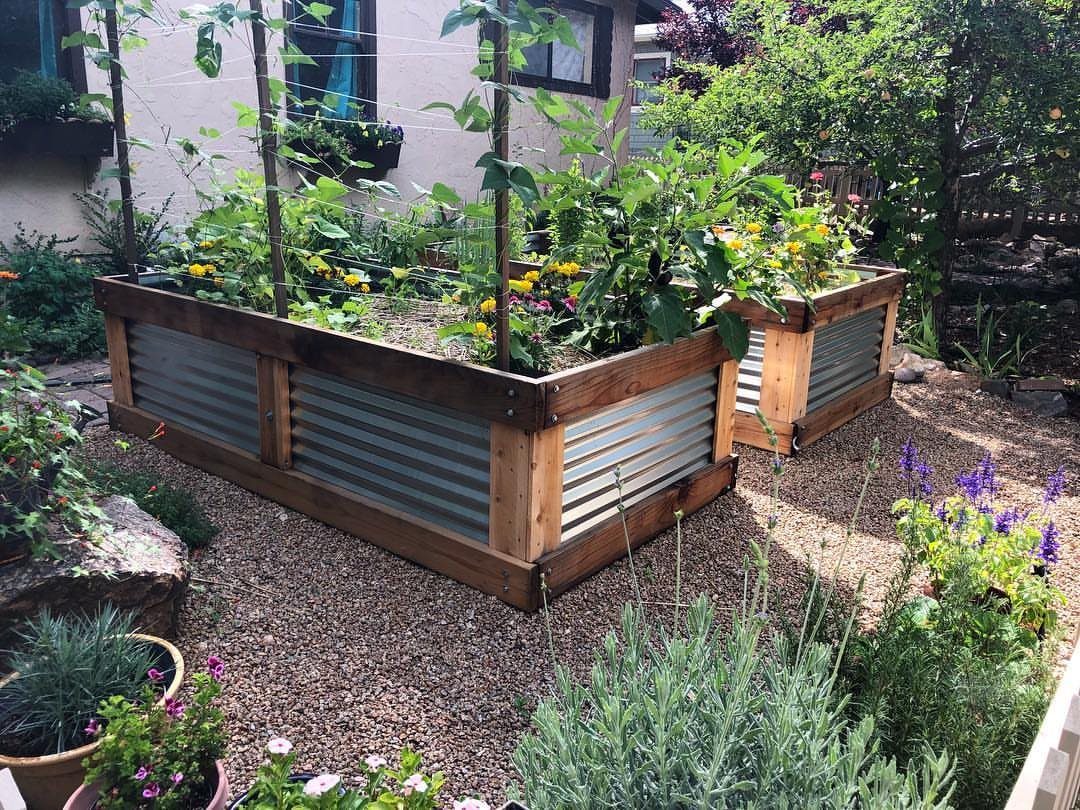
Corrugated metal sides give a cleaner, more industrial look than all-wood construction, and the ridges add stiffness so thinner stock works without bowing outward from soil pressure.
I would use galvanized steel, not aluminum, since it holds paint if you ever want to change the color.
The edges need trim caps; the raw corrugated profile will cut you or snag hose fabric. Cedar frames the panels well, but pressure-treated 4x4s work if you line the interior with plastic to keep soil from direct contact.

4X2X1FT GROWING SPACE: This oval raised garden bed measures 4 x 2 x 1 ft, providing 7+ cu. ft. of organized growing space for vegetables, herbs, flowers, strawberries and selected root crops. Its compact footprint fits naturally into backyards, lawns and small outdoor gardens while keeping plants easy to reach and maintain.

𝑷𝒓𝒆𝒎𝒊𝒖𝒎 𝑮𝒂𝒍𝒗𝒂𝒏𝒊𝒛𝒆𝒅 𝑺𝒕𝒆𝒆𝒍:Made of extra-thick corrugated galvanized steel for superior rust resistance and durability in all weather conditions.

Each circle raised garden bed is made of 0.6 mm thick galvanized steel for enhanced rigidity and dependable outdoor use. The corrugated metal panels help resist bending and maintain a stable round shape after being filled with soil.
8. Raised Garden Bed Boxes from Pallet Wood
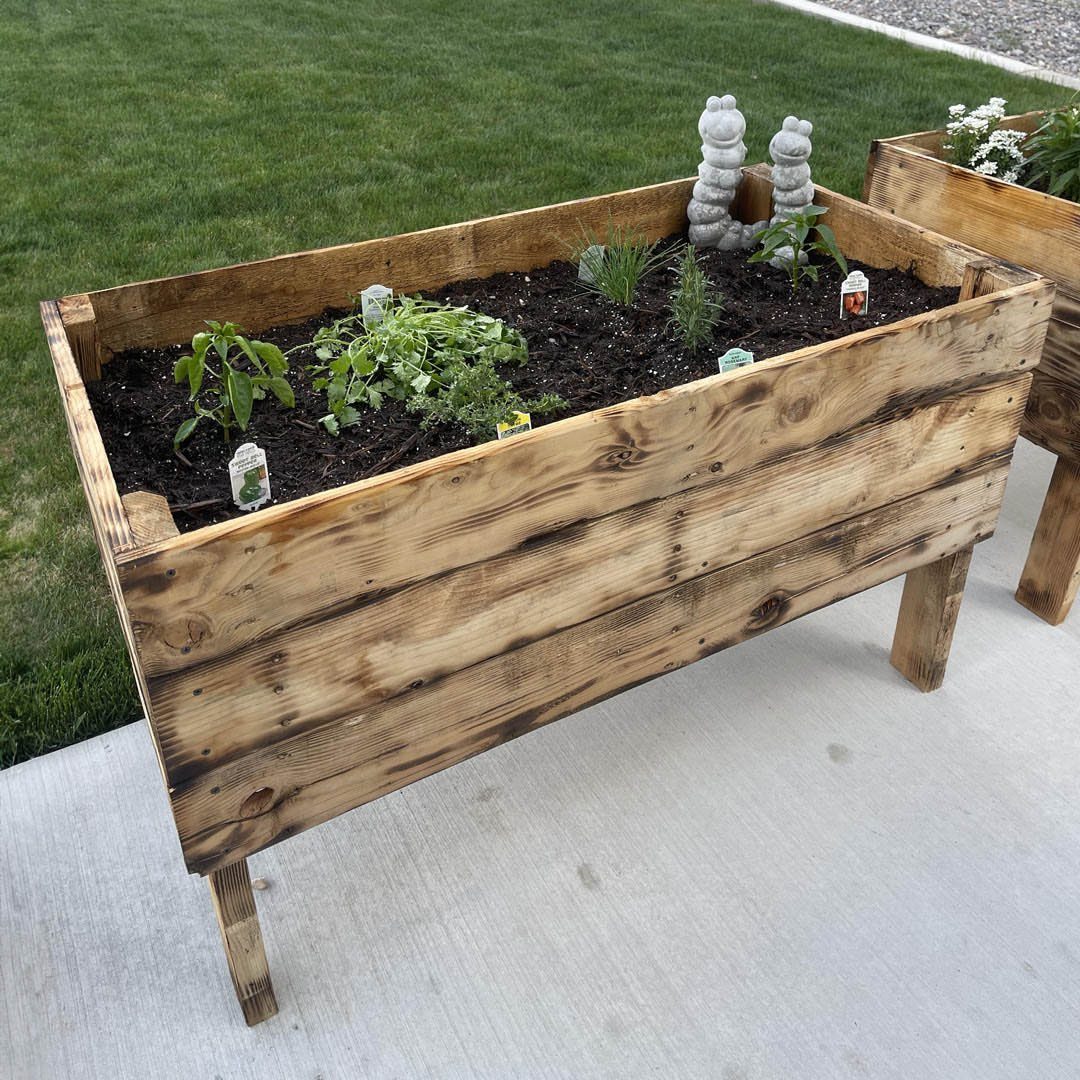
Pallet wood is free if you source it carefully, but not all pallets are safe for growing food. A charred finish is shou sugi ban; burning the surface adds rot resistance without chemicals.
I would check for the IPPC stamp: HT means heat-treated and safe near soil, MB means methyl bromide and belongs nowhere near vegetables.
The slats run thin, so expect to replace a few every couple of seasons. Elevated boxes like this save your back and keep rabbits out.

Integrated with a vertical trellis and a spacious planting area, the elevated garden bed with trellis provides strong support for climbing plants (like roses and clematis) while offering ample room for vegetables and herbs, making it ideal for creating a charming 3D vertical garden at home.

【Multi-Function】 Tall Tomato Cage-Each tomato cage can be adjusted from 16inches to 47 inches in height,suit for different growth stages of plants, offering versatile supports for a wide variety of tomato plants, ensuring they grow tall and strong.

【Extra-Large Height & Space for Climbing Plants】Standing at 65 inches tall—3 inches higher than standard versions—this trellis provides generous vertical space for vigorous climbers. The 51×17.7-inch frame with dense netting ensures even plant distribution and maximum sunlight exposure, effectively improving fruit yield and quality.
9. Garden Pond in a Raised Bed
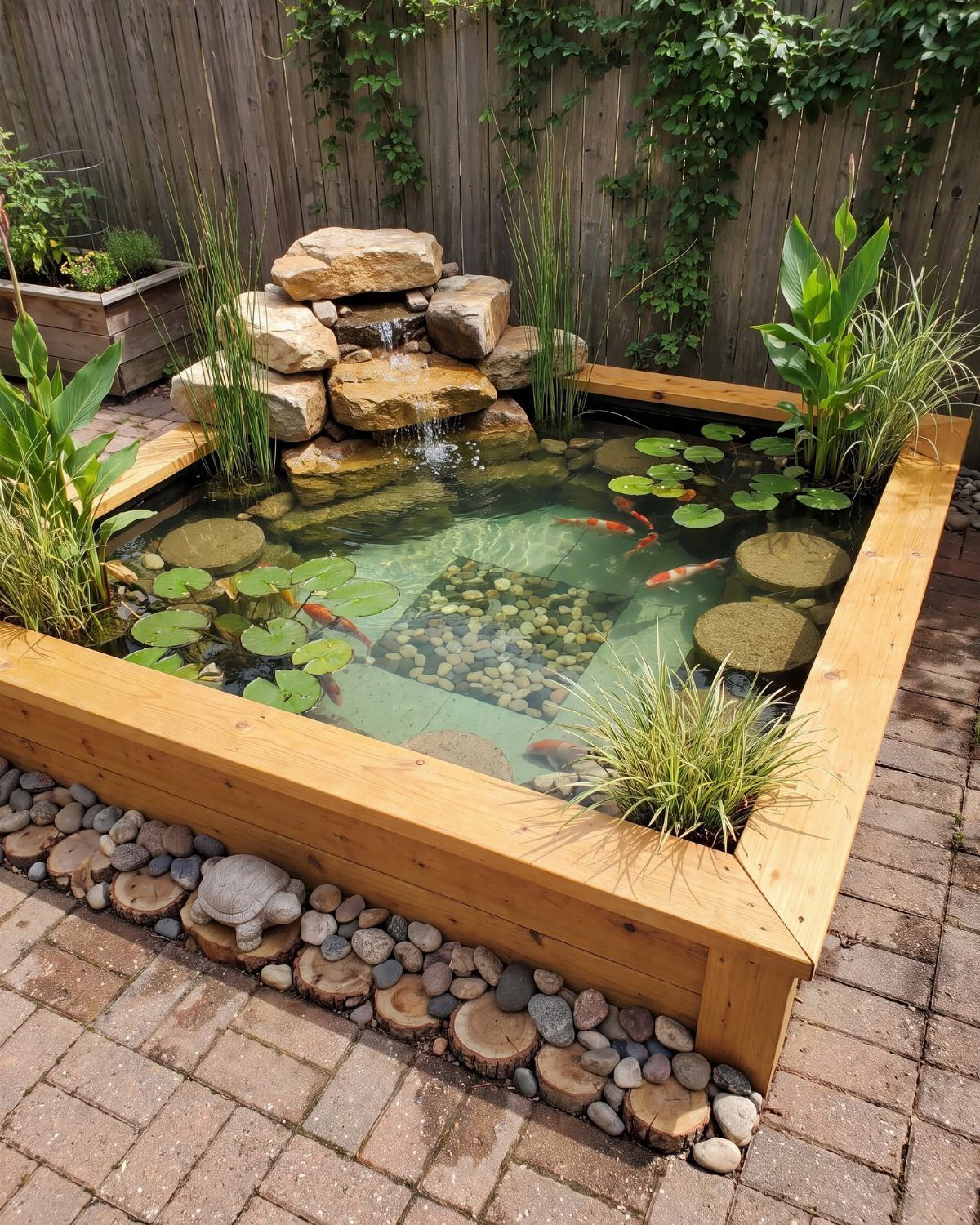
A raised bed frame lined with pond liner becomes a water garden, with the soil sitting on built-in shelves for the marginals and a deeper center for submerged plants.
The stacked stone waterfall needs a small recirculating pump; a submersible rated for the volume is the part to get right.
I would build one side lower or add an overflow pipe, or a hard rain will flood the surrounding bed.
Koi need more depth than goldfish; I would not attempt them in a setup this exposed to sun unless the basin runs deeper than for goldfish.

30" TALL ELEVATED GARDEN – The High-Rise sits well above the ground for very easy access to plants but sits just low enough to be available to those in seated positions

ERGONOMIC DESIGN: Reasonable height design reduces the need for bending or kneeling to operate, reduces the burden on the body, and makes gardening activities more comfortable and convenient.

Self-watering System: The automatic watering system delivers water from the reservoir through capillary action, supplying plants with just the right amount of water to avoid both overwatering and underwatering
10. Raised Garden Bed from Concrete Blocks
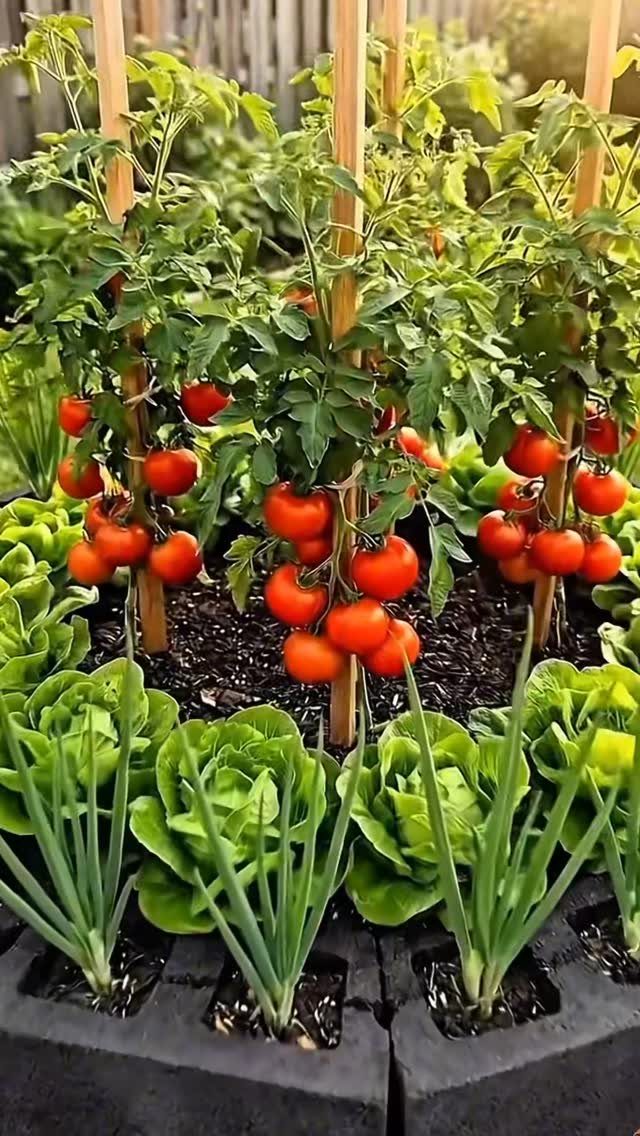
Concrete blocks are cheap, immovable, and the hollow cores become extra planting pockets for shallow-rooted crops like scallions or strawberries.
Sealing paint traps moisture and flakes off within 2 seasons. Fill holes with gravel first so soil does not compact and refuse to drain.

Sturdy & Garden-Ready Material: Made of 300g of thickened nonwoven fabric, these pots are moderately permeable, environmentally friendly, and BPA-free; Ideal for raised beds, patios, and outdoor gardens

Reusable garden grow bags designed to improve plant growth by air pruning roots and draining excess water.

Bright Colors: Revitalize your growing space with a set of five 5-gallon grow bags in vibrant yellow, orange, green, blue, and gray; These eye-catching bags brighten up your garden; Each set includes 10 plant labels for easy identification and growth tracking
11. DIY Tiered Raised Garden Beds
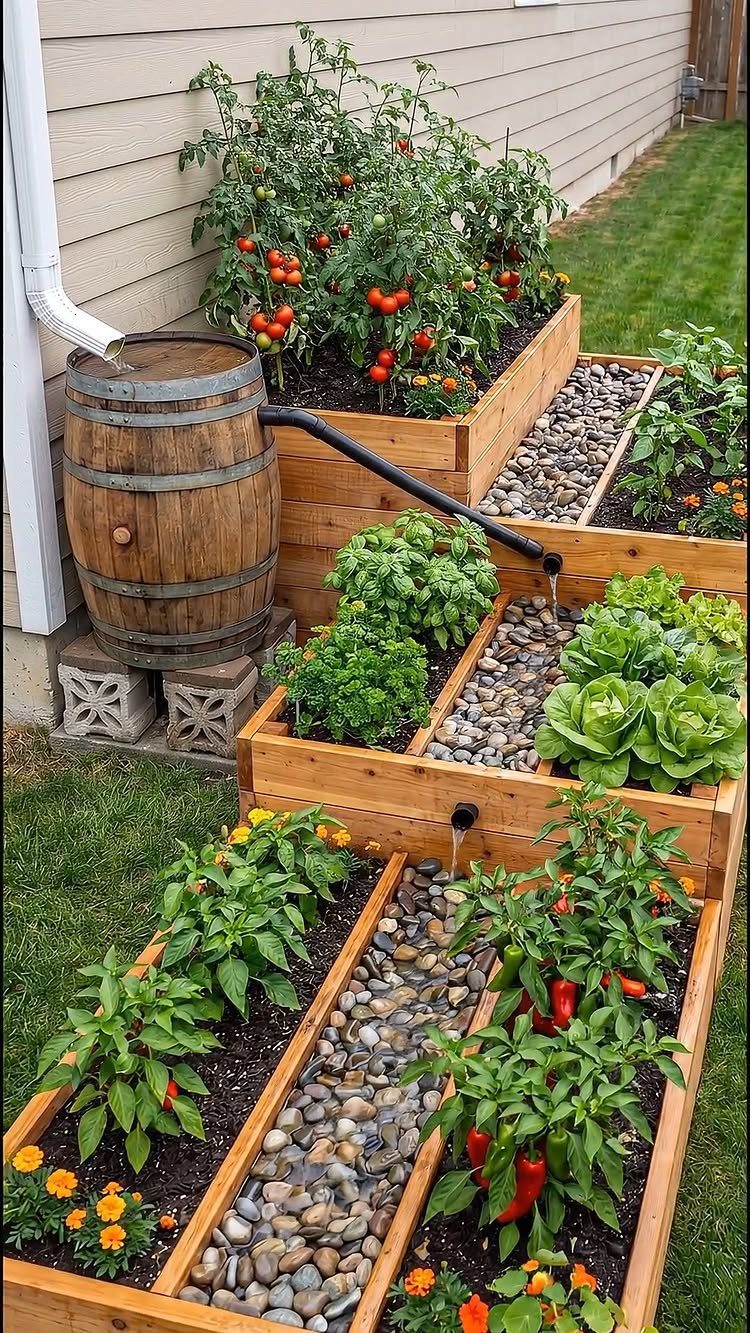
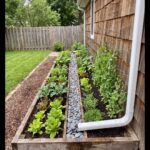
Tiered beds follow a slope naturally, and the stepped design puts every plant at arm height without building a single tall wall.
A rain barrel and pebble channel collect roof runoff and feed it down through each level, which I think is worth copying in any hillside setup.
Water wants to run across, not soak straight in, so pocket the soil surface slightly or the top tier will stay wet and the bottom tier dry.
I would build from cedar; pressure-treated lumber leaches and you are eating what grows in it.
Raised beds can be used on patios, decks, side yards, or terraces, or set up right atop grass or gravel on the ground itself. They are relatively easy to establish and maintain, and are more forgiving than many other approaches to gardening.
12. Raised Stone Garden Bed
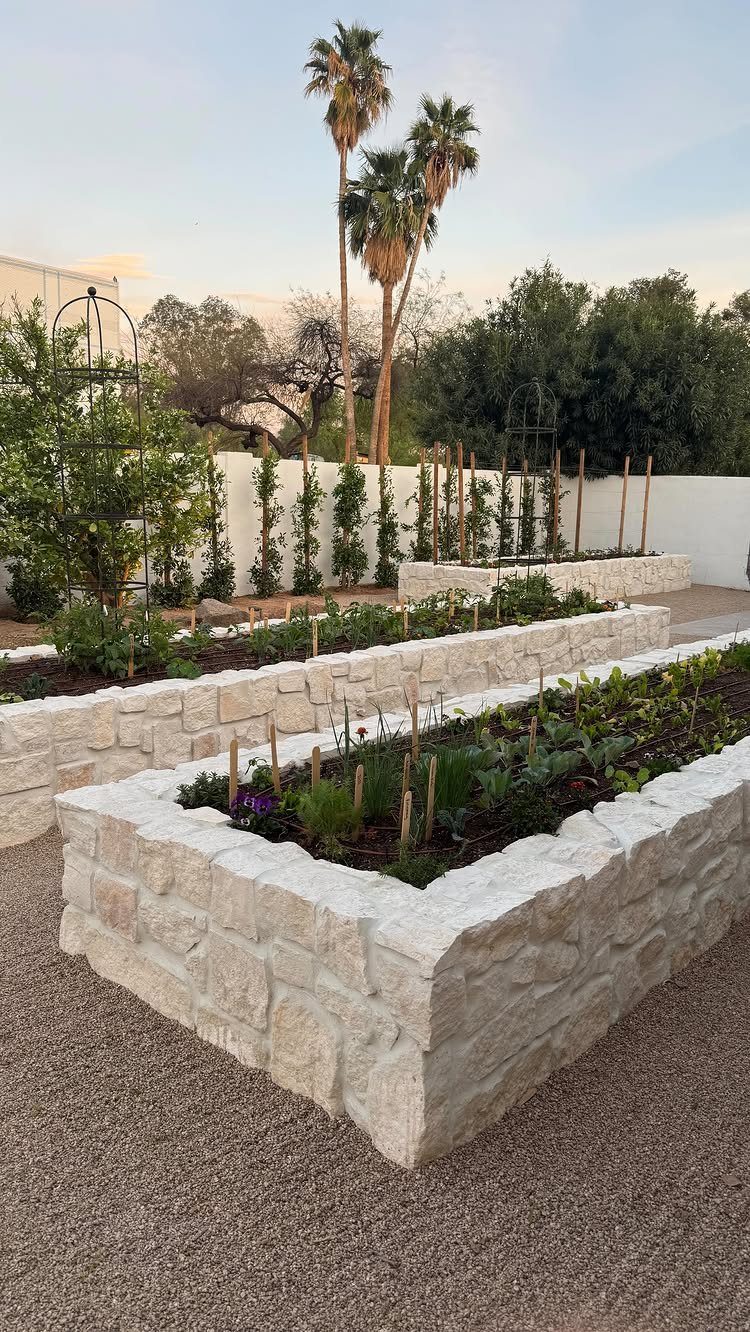
Stacked stone beds cost more in materials and labor than wood, but they outlast it by decades and hold heat that extends the growing season in cool climates.
Light stone like limestone or cast concrete block faced to match reads clean against planting.
I would check that the stone is dry-stacked or sealed with a flexible mortar; soil moisture will push standard mortar apart before long. A gravel base under the first course is non-negotiable for drainage and frost heave.
13. Standing Strawberry Planter
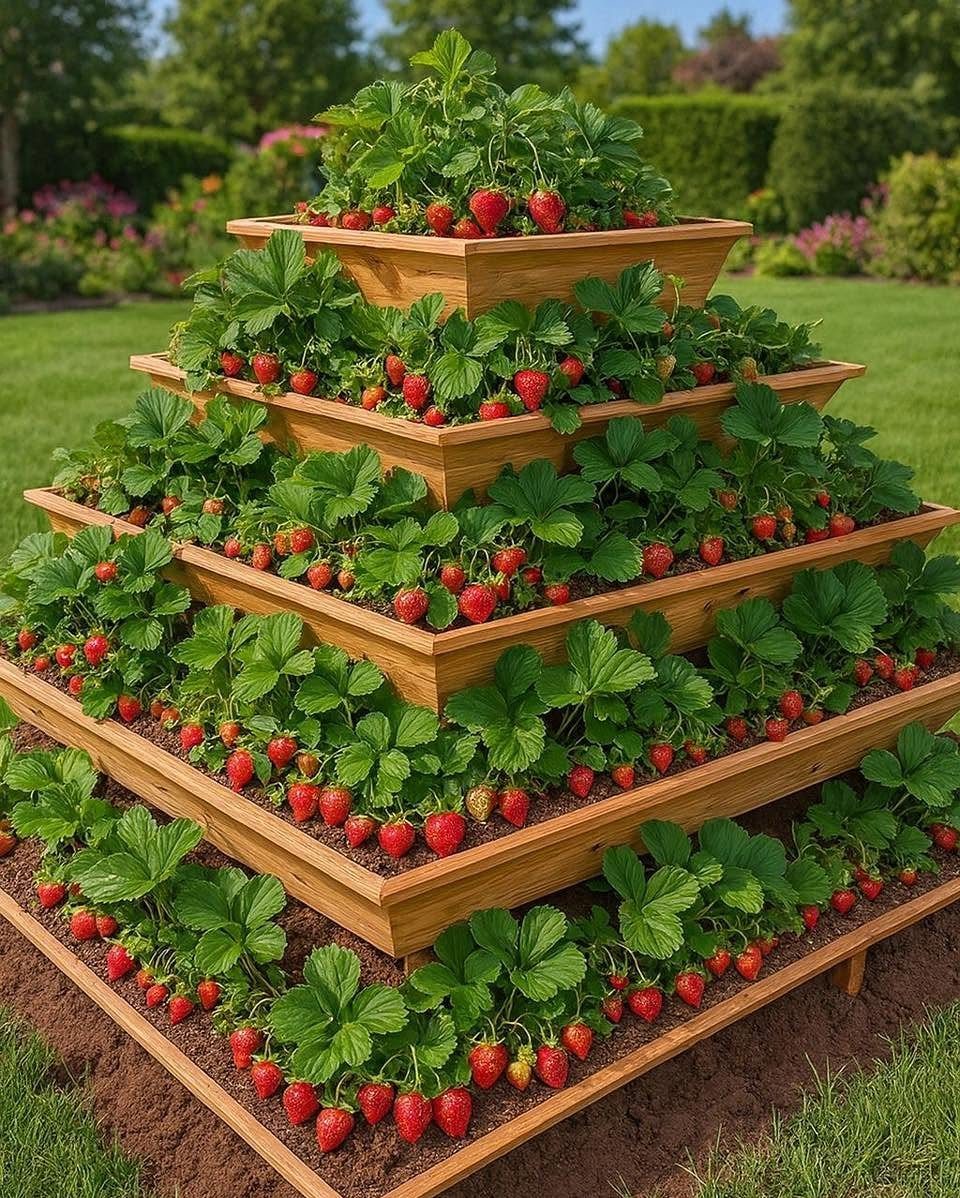
A pyramid of stacked boxes narrows toward the top, giving each strawberry plant its own pocket of sun and air.
I would check that the joints are screwed, not just nailed; soil and water load adds up fast in a vertical stack.
The open tiers dry out quicker than ground-level beds, so this suits someone who waters daily or runs drip lines to each level. Ripe berries hang clear of the soil, which beats the slug problem flat beds invite.
14. Red Brick Raised Planter
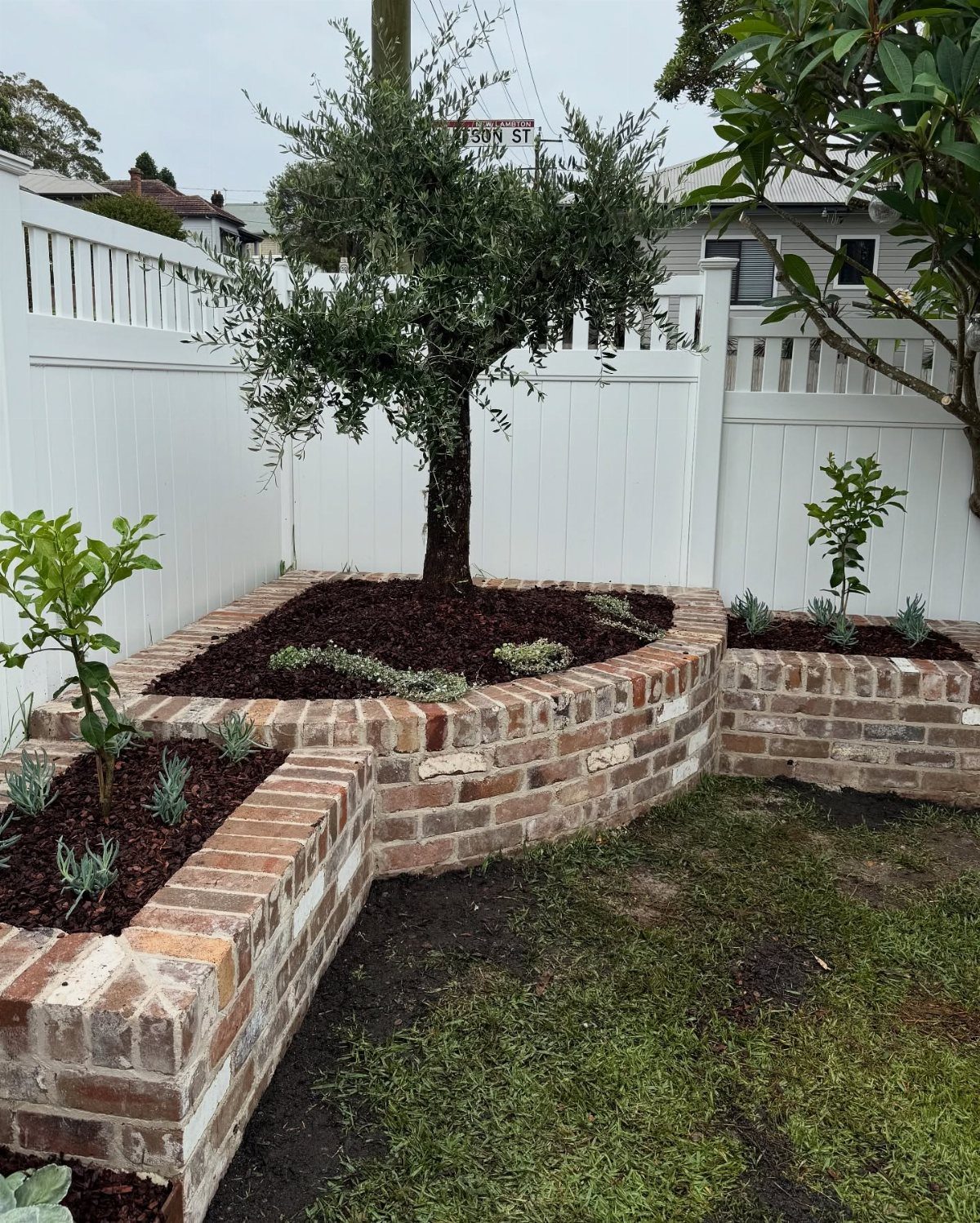
Red brick set in running bond against a fence gives a garden bed the look of having always been there.
I would leave weep holes at the base or the wall will hold water and stain; a course of gravel behind the first row of bricks does the same work hidden.
Standard bricks are 3-5/8 by 2-1/4 by 8 inches, so a tier two bricks tall sits just under 8 inches; plan your soil depth to the plant, not to a round number of courses.
The white fence behind this one reads crisp, but brick against wood siding would trap moisture and rot the boards.
Choosing Materials for Raised Beds
Wood gives you drainage and you can cut it to whatever footprint your yard allows. Rot-resistant woods like cedar, black locust, or white oak hold up without chemical help; cedar is the one I see most gardeners actually use.
If you want the simplest possible build, concrete blocks at the corners let you drop boards in place with no fasteners at all.
The blocks also take stain if the industrial gray bothers you; just skip any film-forming sealant that locks moisture inside.
Fly ash in some cinder blocks is reason enough for me to seal the interior faces before adding soil.
Whatever material you choose, keep the bed narrow enough to reach the center from either side.
Crop Rotation Practices
Crop rotation matters most once you have grown in the same bed for a few seasons. The idea is to move plant families so pests and diseases cannot settle in where they found a host last year.
Tomatoes and peppers are both nightshades, so swapping them does nothing; rotation only counts when you move whole families to different ground.
If your raised bed is small, dividing it into sections for rotation will not actually break disease or pest cycles; the distance is too short.
In that case, replacing the soil or growing in containers that move is the more honest approach.
Different plants change soil in different ways, so rotation also keeps any one nutrient from running low.
Beans and peas fix nitrogen, which makes them a useful slot in any sequence. I would plan several seasons ahead, not just next spring, and keep a simple diagram of what grew where.
Frequently Asked Questions
What should I make raised beds out of?
Wood, concrete blocks, corrugated metal, brick, and stone all work.
Cedar lasts without chemical treatment and cuts easily with basic tools; concrete blocks are cheap and immovable but need sealing if they contain fly ash; galvanized steel holds paint but needs edge trim to avoid cuts.
Pressure-treated lumber needs an interior liner if you are growing food in it; I would not use it bare because the chemicals can leach into the soil.
What is the 70/30 rule in gardening?
This rule calls for a soil mix of 70% soil and 30% organic matter like compost or leaf mold.
The blend drains better than native ground and gives roots a lighter start in otherwise compacted or poor soil. I think of it as a baseline you adjust once you see how your plants respond in the first season.
Can you put perennials in raised beds?
Perennials do fine in raised beds, though most of my planting there is annual vegetables and herbs that I rotate each season.
The same bed structures, soil depth, and drainage rules apply; stone or concrete block beds hold extra heat that can extend the growing season for perennial flowers or herbs in cool climates.
I would just remember that perennials return to the same spot, so plan your crop rotation around the permanent plants or give them their own bed.