These ideas run from a weekend of cutting 2x4s for vertical lumber storage to a full mobile cart build with plywood and locking casters.
What decides which one fits your garage is whether you need storage that stays put or follows you from project to project.
The vertical lumber storage built with 2x4s uses adjustable arms that handle anything from short trim pieces to longer stock, so one frame holds lumber you have not bought yet.
[link-whisper-related-posts]1. Overhead Storage Shelves
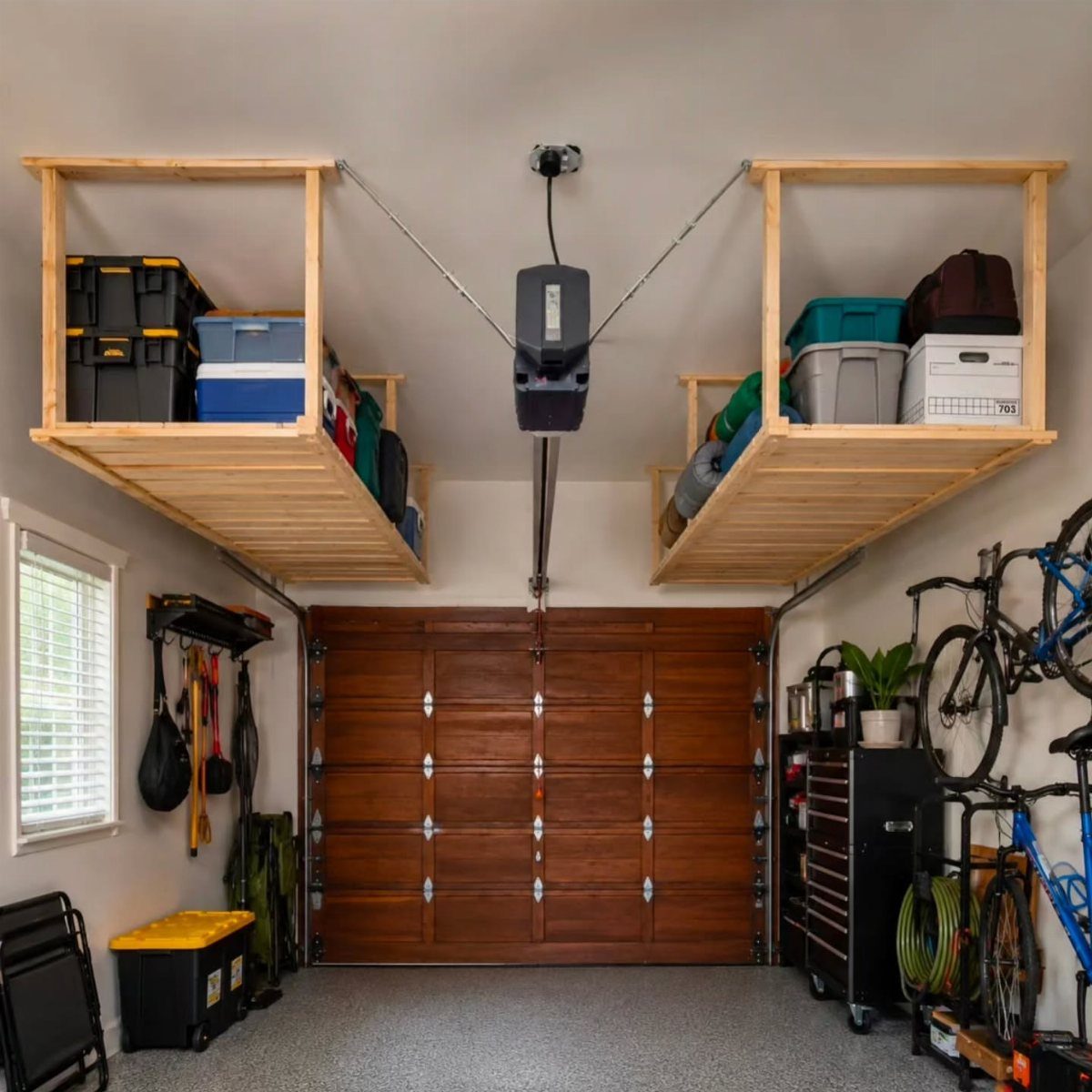
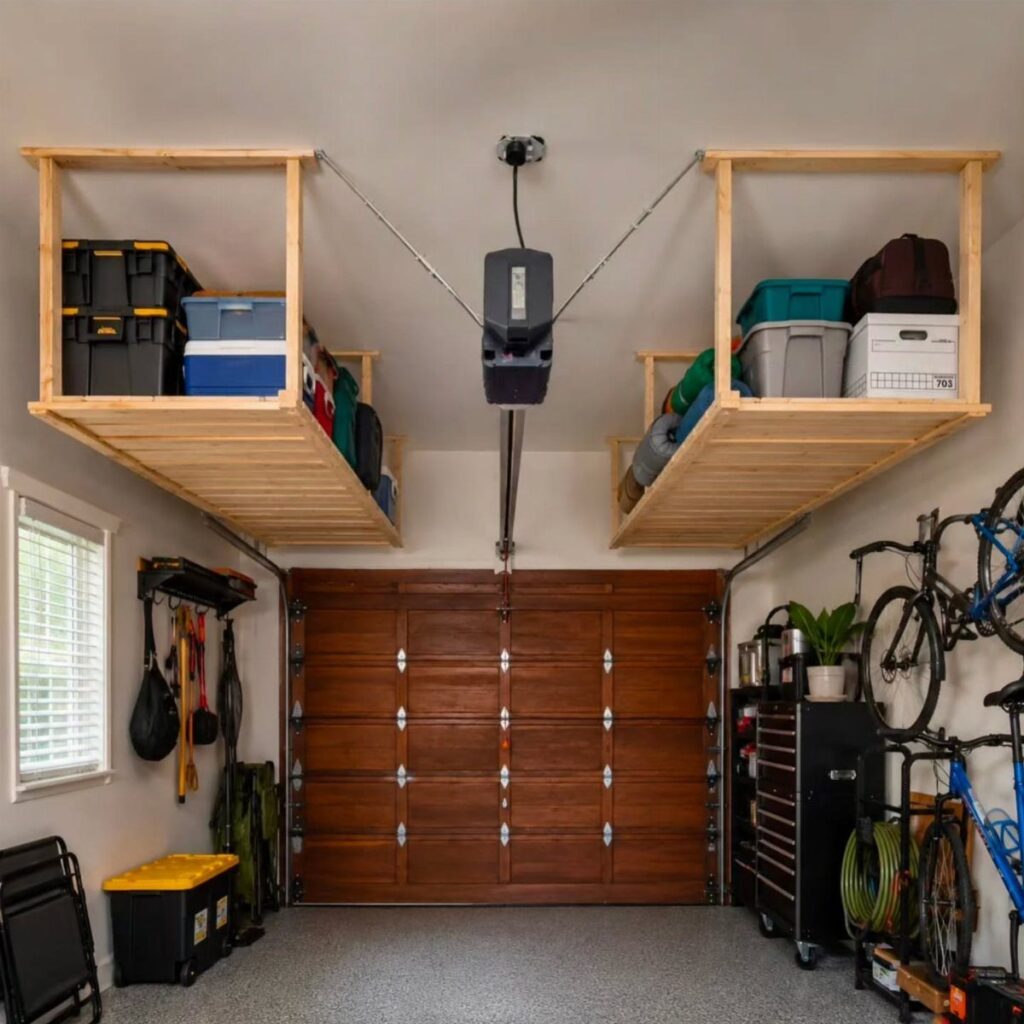
Overhead shelves bolt to ceiling joists and keep bins off the floor entirely. I would check my garage door track height first; anything that hangs too low blocks the door or a vehicle.
A slatted wood frame is lighter than solid plywood, which matters when you are lifting lengths overhead. Plastic totes slide in and out easily, so I would skip loose items that need rummaging.

1200 lbs tested, 750 lbs Rated: Our adjustable overhead garage storage rack undergoes rigorous 1.6 times load testing (1200 lbs) to ensure unmatched safety and durability, supporting up to 750 lbs for your tools and equipment.

1200 lbs Tested, 750 lbs Rated: Our overhead garage storage rack undergoes rigorous 1.6 times load testing (1200 lbs) to ensure unmatched safety and durability, supporting up to 750 lbs for your tools and equipment.

Storage Master – These high-impact lumber storage racks are designed to store long objects such as lumbers, pipes, or skiing equipment to create more space in your house or even outdoor workspaces.
2. Freestanding Shelving Unit
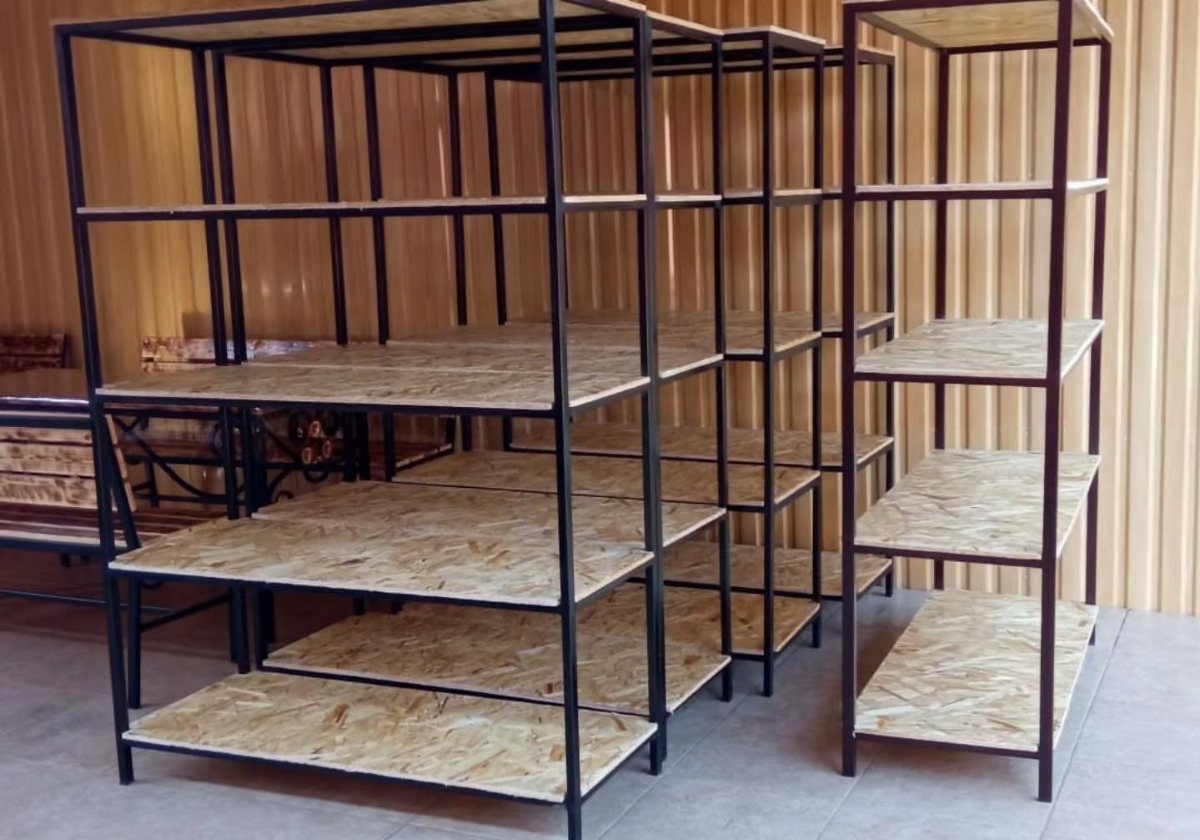
Freestanding units with metal frames and OSB shelves ship flat and assemble with a wrench. I like that they move when I rearrange the garage for a project, though they do eat floor space that wall-mounted shelves would not.
A black frame and raw plywood look utilitarian; I would paint or seal the OSB if I stored anything that might leak. Check that the feet sit level on cracked concrete before you load heavy items on upper shelves.

PLANO PLASTIC STORAGE SHELVES: Organize your home, closet, garage, laundry room or office with Plano heavy-duty Shelving Units.

5 shelf wire rack offers handy storage space and easy access to tools and supplies

4 shelf wire rack offers handy storage space and easy access to tools and supplies
3. DIY Workbench with Storage
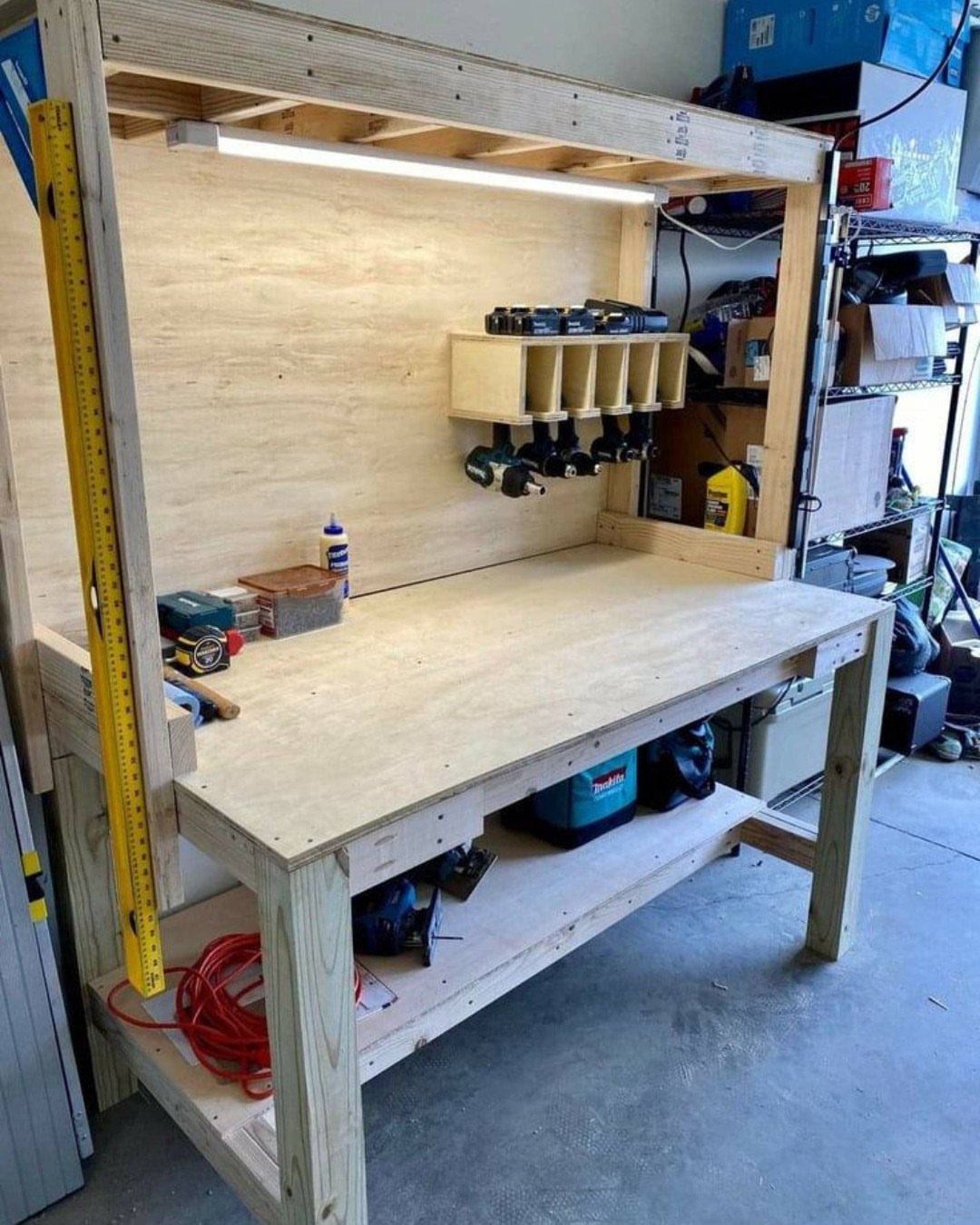
A workbench with a bottom shelf, top shelf, and hanging drill rack keeps tools where you use them.
The Makita gear suggests this builder works with cordless tools; I would add a power strip to the back rail if I used corded equipment.
The overhead light is worth copying, since garages often have one dim fixture in the center.
I would build the top from plywood thick enough for stiffness, and screw it down so it does not shift when I plane or sand.

4-Outlet Power Strip:This garage shelf wall mount features an integrated 4-outlet power strip with a 6.5-foot cord for easy charging. Charge your tools directly on the shelf without the hassle of searching for outlets. By combining storage and functionality, this tool rack saves space while ensuring your power tools are always ready for use.

✅【GO LARGE, STAY SORTED】Tired of racks that work today but can’t keep up tomorrow? Meet Jaxon — This large power tool organizer wall mount made for DIY lovers who know their collection won’t stop here. Ample space, strong build — it's the last organizer you’ll need for a long time.
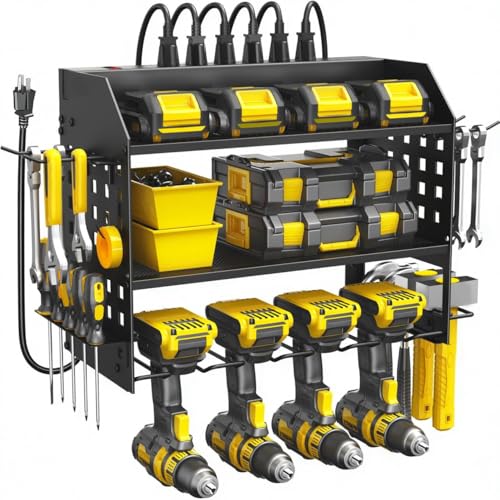
【Integrated 6-Outlet Power Strip】 The power tool organizer features a built-in 6-outlet charging station with a heavy-duty cord, allowing you to charge multiple cordless tool batteries (drills, impact drivers) simultaneously. No more tangled extension cords or searching for available wall sockets in your garage.
4. Rolling Scrap Bin
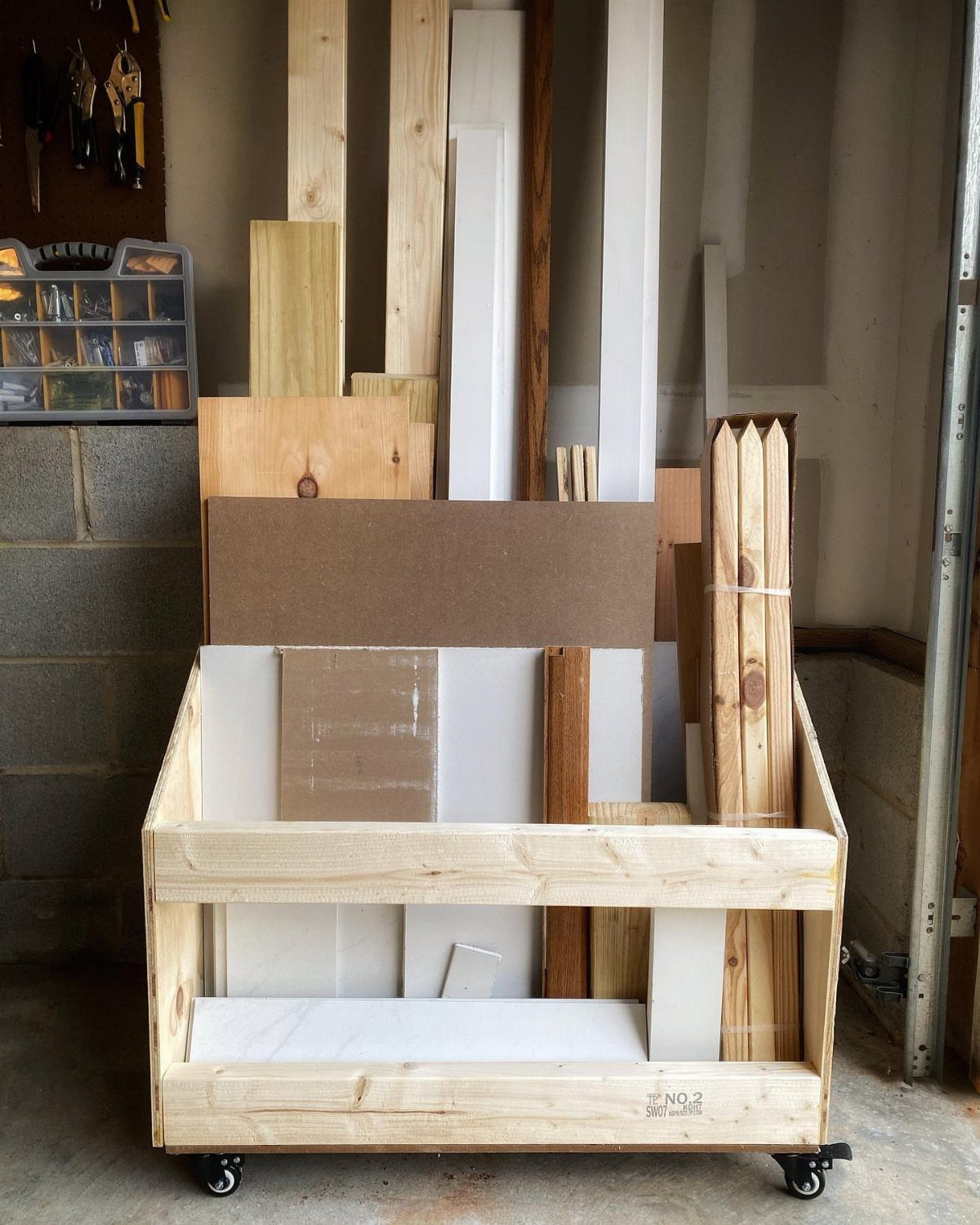
A scrap cart on casters corrals cutoff lumber and trim that otherwise clutters corners.
Mixed boards and drywall scraps tell me this builder saves everything; I would limit myself to 2 categories, maybe hardwood and softwood, or I would never find what I need. The "NO.
2" stamp on one board is standard grade marking, not a date, so I would add my own date labels if I worried about drying time. Locking casters keep it from rolling while I rummage.

LOAD CAPACITY- 375LBS capacity per set of 5.

HEAVY DUTY & REINFORCED CONSTRUCTION: Upgraded with thickened solid steel plates, stronger screws, and high-quality bearings, featuring three mounting holes on both the top and bottom plates for a more secure fit. This retractable caster wheel set of 4 heavy duty supports a total weight capacity of 660 lbs, providing a stable foundation to instantly turn your stationary workbench, woodworking table, or machinery stand into a mobile unit

HEAVY DUTY & REINFORCED CONSTRUCTION: Upgraded with thickened solid steel plates, stronger screws, and high-quality bearings, featuring three mounting holes on both the top and bottom plates for a more secure fit. This retractable caster wheel set of 4 heavy duty supports a total weight capacity of 880 lbs, providing a stable foundation to instantly turn your stationary workbench, woodworking table, or machinery stand into a mobile unit
5. DIY Garage Shelves
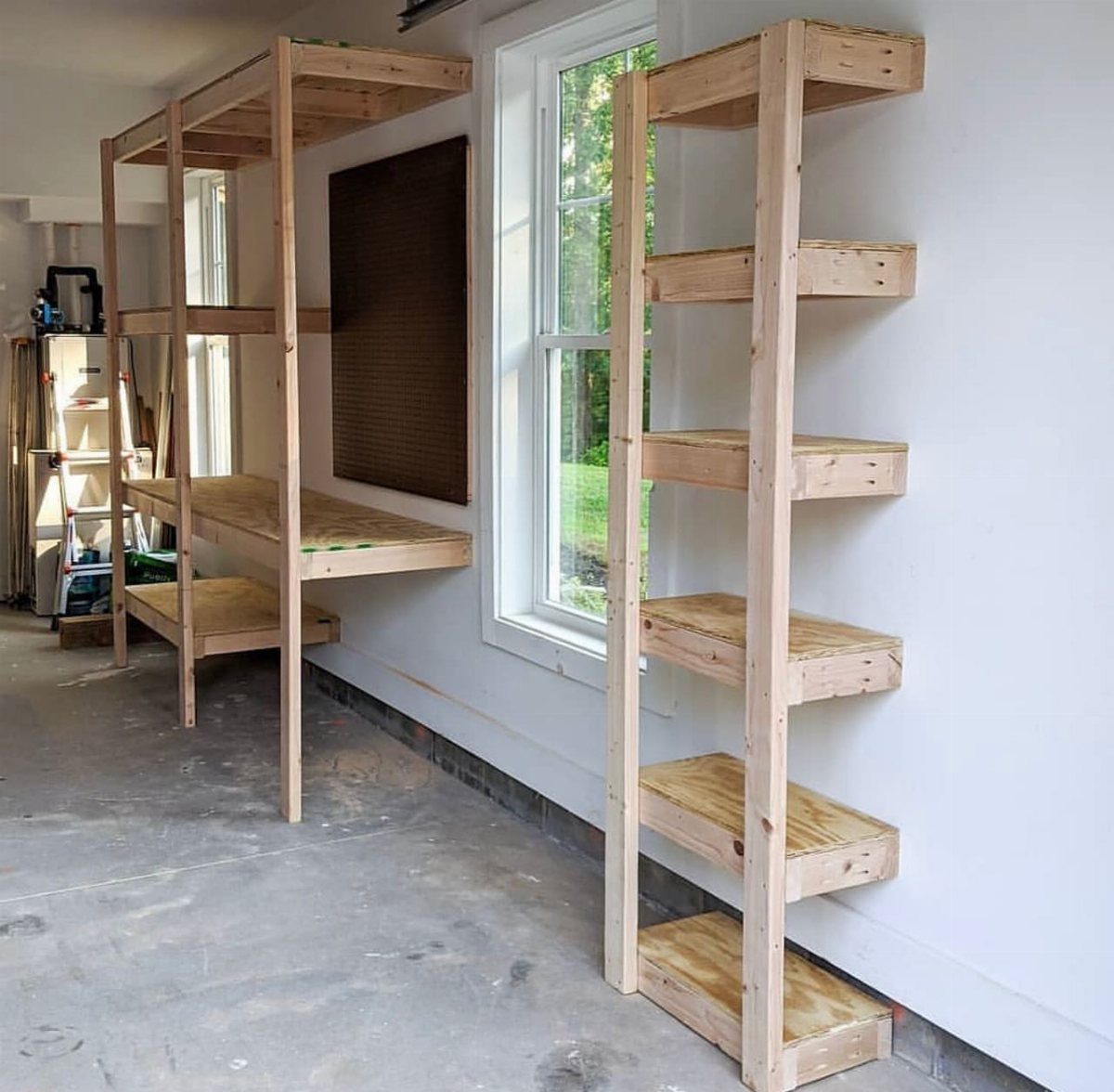
Simple wall-mounted shelves frame a workspace without closing it in. Shelves and workbench in one continuous run, with pegboard between them, is a layout I would copy if I had the wall length.
The built-in wooden shelving units frame a pegboard against the white wall, which keeps the garage brighter than raw wood alone would.
I would anchor through the drywall into studs with long screws, not drywall anchors, once I started loading lumber and paint cans.
Every shop can use more storage. This set of cabinets looks as good in the shop as they would in the home.

WORKSPACE: The perfect way to unclutter your garage and work on your projects while keeping everything in place

Large Storage Capacity: The package includes 2 shelves, 2 wire baskets, 1 hook rack. This unique storage combination has a large enough capacity to store a lot of garage supplies. Making full use of this wall shelves capacity to make your home look cleaner and tidier.

HIGH-STRENGTH MATERIAL: Garage Lumber Storage Rack is made of 1.2mm high-quality thick steel pipe, which is not easy to deform and bend, and its safe load-bearing capacity is beyond doubt. The surface of the garage storage rack is powder-coated, and the sturdy design enables it to withstand daily wear and tear. Not only beautiful, but also waterproof and not easy to rust
6. Vertical Lumber Storage Built with 2x4s
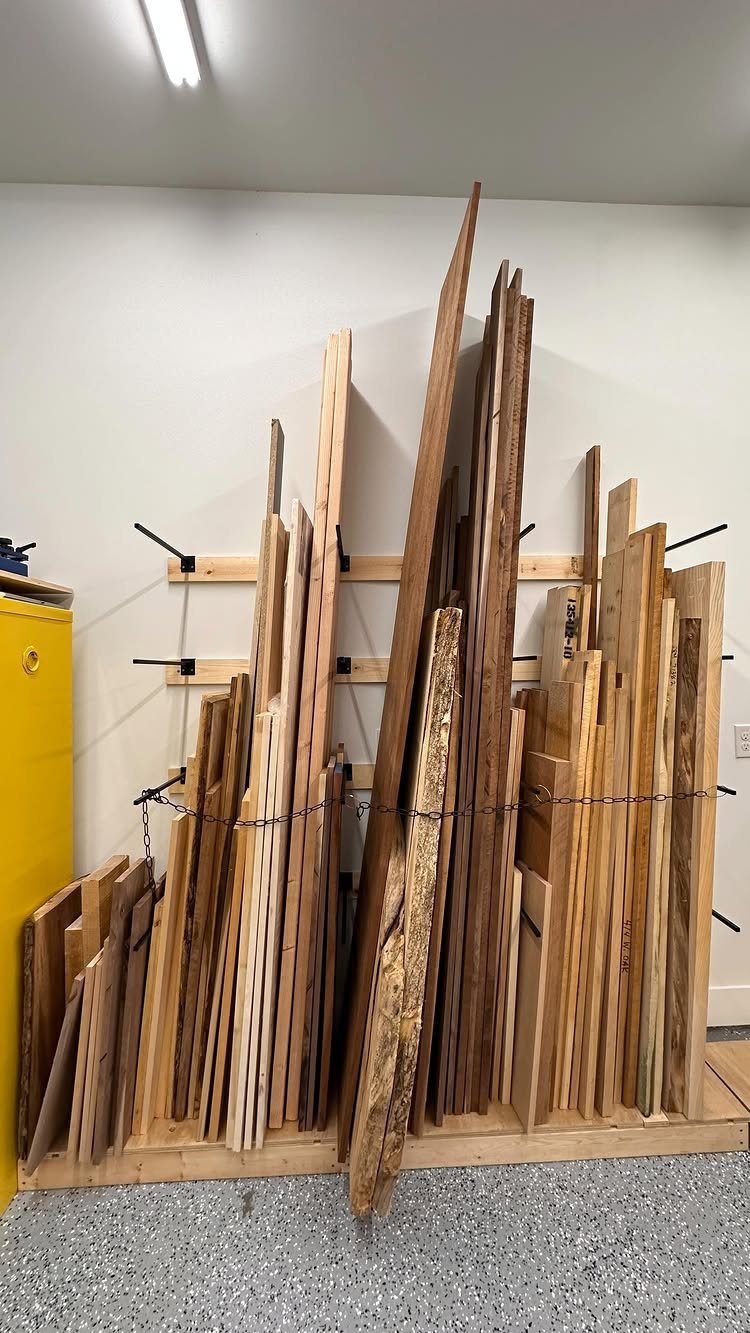
Vertical racks hold boards upright in slots between metal pegs, so I can see every piece at once and pull one without unstacking.
A 2×4 frame and base keep lumber off damp concrete, which matters for anything I will mill later.
The "4/4 W. OAK" marking tells me this builder buys rough hardwood by the quarter-inch; I would size my slots for 6/4 stock too, since thickness varies.
The metal pegs adjust, so I would set narrow slots for trim and wider ones for cabinet-grade boards.

900 lbs Tested, 450 lbs Rated Weight Capacity: Our overhead garage storage rack undergoes rigorous double load testing (900 lbs) to ensure unmatched safety and durability, supporting up to 450 lbs for your tools and equipment.

900 lbs Tested, 450 lbs Rated Weight Capacity: Our overhead garage storage rack undergoes rigorous double load testing (900 lbs) to ensure unmatched safety and durability, supporting up to 450 lbs for your tools and equipment.

RECLAIM YOUR GARAGE:Use garage ceiling space to store seasonal and unused items. 22'' to 40'' ceiling dropdown provides up to 52 cu. ft. of storage. Dimensions: 96 in. L x 24 in. W x 22-40 in. H.(Hooks sold separately)
7. Mobile Lumber and Tool Cart
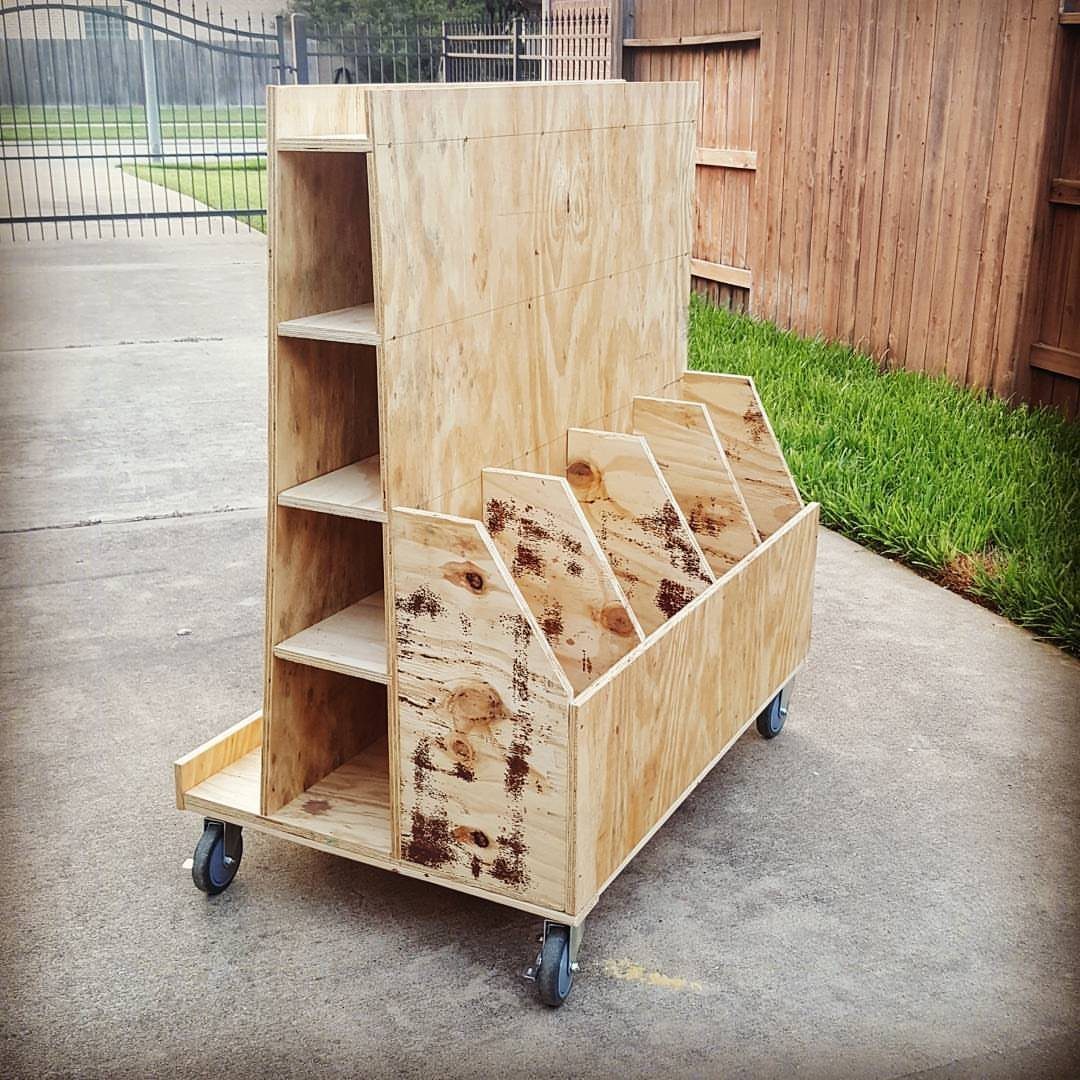
A plywood cart on casters lets you roll lumber and tools to where you are working, then park it when you are done.
The vertical dividers on one side keep boards sorted by length or species; I would angle them slightly so nothing slides out when I push the cart across a driveway.
Open shelves on the other end suit power tools or a small compressor.
I would build the box from 3/4-inch plywood for stiffness, and use locking casters rated for the load.
The height matters: tall enough for long boards to stand without tipping, but low enough that I can see over it when I roll it. Small casters handle smooth concrete; cracked garage floors need larger wheels.
If I already had a fixed workbench, I would treat this as a mobile outfeed table and parts rack in one.

5 shelf wire rack offers handy storage space and easy access to tools and supplies

4 shelf wire rack offers handy storage space and easy access to tools and supplies

Heavy-Duty Tubular Frame: Sturdy frame supports up to 150 lbs per shelf, providing reliable storage for food, tools, equipment, and supplies in garages, basements, and attics.
Using Wall Space Effectively
Pegboard between shelves only works if you leave it open; I would stop my shelving run a foot short of both ends if I planned to hang tools there.
A full 4×8 sheet of pegboard has holes spaced an inch apart, so I would mark stud locations before I cut it to fit between shelf uprights.
French cleats handle heavier items than pegboard; I would rip a 2×4 lengthwise and screw the wall half into every stud, then hang the mating strip on cabinets or tool holders where I need them.

Efficient Storage: This 4-tier wall-mounted power tool rack (19.29 x 7.87 x 14.57 in) features 3 shelves, 4 drill slots, side rack, and hooks to keep your tools organized and within easy reach

【Multi-Functional Garage Wall Organizer】This power tool holder utilizes free wall space to store tools items, comes with charging station, 4 drill holder slots, 4 hooks and drill bit rack, 2 layers adjustable structure can place the charge tools in order, providing you a neat and efficient workbench!

Tool Storage Rack: The screwdriver holder wall mount is equipped with holes of different shapes and sizes, which can store various types of tools such as screwdrivers, pliers, wrenches, hammers. Hanging the tools on the rack makes them clearly visible, allowing you to quickly access the tools you need at a glance
Cost-effective Materials
Reclaimed wood needs inspection before it carries load.
I would pull every nail, check for rot at the ends, and pass on anything with insect holes. Pallets marked "HT" are heat-treated and safe to handle; "MB" means methyl bromide, and I would leave those for the landfill.
OSB costs less than plywood and works fine for shelves that stay dry, but I would edge-seal every cut with paint or primer.
Swelling ruins the stuff faster than load does. For a painted finish, I would fill OSB voids with spackle before the first coat; raw plywood looks better left clear.

HEAVY DUTY & REINFORCED CONSTRUCTION: Upgraded with thickened solid steel plates, stronger screws, and high-quality bearings, featuring three mounting holes on both the top and bottom plates for a more secure fit. This retractable caster wheel set of 4 heavy duty supports a total weight capacity of 720 lbs, providing a stable foundation to instantly turn your stationary workbench, woodworking table, or machinery stand into a mobile unit

HEAVY DUTY & REINFORCED CONSTRUCTION: Upgraded with thickened solid steel plates, stronger screws, and high-quality bearings, featuring three mounting holes on both the top and bottom plates for a more secure fit. This retractable caster wheel set of 4 heavy duty supports a total weight capacity of 920 lbs, providing a stable foundation to instantly turn your stationary workbench, woodworking table, or machinery stand into a mobile unit

Core Functionality: Adapter hole inner diameter: 2.3 cm Diameter 19 cm thickness 3.5 mm,These trash can wheels enhance mobility by allowing effortless transportation and maneuvering of heavy garbage bins, reducing physical strain during waste disposal
Preventing Lumber Warping
Horizontal boards bow under their own weight when the span is too long. I would keep horizontal piles low if I had to stack them, and sticker every layer with 3/4-inch strips so air moves through.
Vertical storage in slots or against a rack puts the load in compression along the grain, which the wood handles better.
I would still keep vertical stock a few inches off the back wall so moisture does not wick from the concrete or studs behind it.
If I stored sheet goods horizontally, I would lay them flat on a level surface, not lean them; a slight lean turns into a permanent warp over months.

High Quality Yoga Mat Holder: Our yoga mat storage with a floating shelves, which can store small objects such as yoga blocks, water cups, dumbbells and so on. The iron frame of yoga mat rack is specially treated and the paint surface will not easily peel off and deformed. The 3-layer design can store more, you can put yoga mats, foam roller, yoga bolster pillow and so on. Comes with 4 hooks to hang resistance bands, skipping ropes, stretch belts, etc.

【Sturdy & Durable】Made of sturdy particleboard and metal brackets for safe and durable uses. The metal support shelves of DINZI LVJ are thicker than others for added stability and stronger load-bearing capacity(up to 33lbs). Extra anti-toppling device ensures the wooden shelves without deformation

Large Storage Capacity: The package comes with 3 pack shelves. each measuring 32.68 inches long by 11.81 inches wide. The spacious surface offers ample room to store various garage accessories, tools and household supplies. Maximize your vertical wall storage to clear up cluttered countertops and floors, leaving your home neat, orderly and well-organized.
Frequently Asked Questions
What are some effective storage ideas for a car garage?
Ceiling-mounted racks let you park below what you rarely need, though I would measure the garage door’s full arc first; a bin that clears the rail at rest can still clip it on the way up.
A pegboard panel between two wall shelf units gives you a backstop for tools without boxing the bench in, and I like rolling metal racks with OSB decks when I know the layout will shift twice a year.
I would leave pegboard open by stopping shelving a foot short at both ends, and use French cleats ripped from a 2×4 for anything too heavy for standard hooks.
Is it okay to store wood furniture in a garage?
I would not store finished furniture in a garage unless I had no other option. Garages cycle through temperature swings and humidity that stress joints and finishes, and concrete floors wick moisture that rises into legs and frames.
If I had to do it, I would keep pieces several inches off the floor on a rack or platform, away from exterior walls, and cover them with cloth rather than plastic so air still moves.
How to store stuff outside without a shed?
A rolling scrap bin or mobile lumber cart on locking casters lets you move materials under an eave or carport when weather threatens, then roll them back out to work.