Modern landscape design runs from a single gravel path you lay in a Saturday to a minimalist patio wired for low-voltage LED and built around geometric beds, and the deciding factor is how much structure your property already gives you to work with.
A flat yard with shallow birch roots wants layered grasses and mass plantings, not a vertical element that needs drip irrigation and load-bearing brackets.
That distinction matters because even the minimalist concrete steps demand precision to the inch, with nowhere for flaws to hide.
[link-whisper-related-posts]1. Minimalist Look
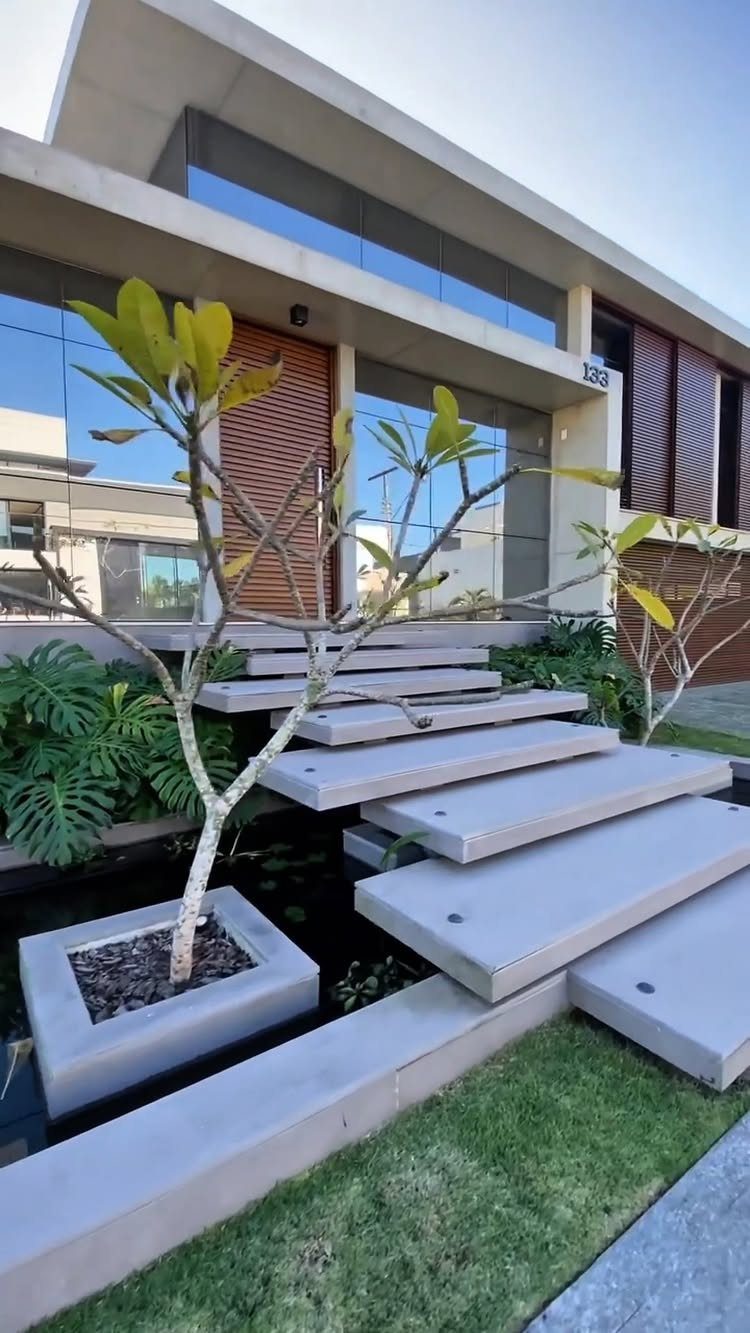
A minimalist landscape strips out everything that does not serve a purpose, leaving space and material to speak instead. Concrete steps alone can carry a whole entrance when they cross water with nothing extra added.
I would check 3 things before committing to this.
First, the clean lines demand precision; a step even an inch off reads as a mistake, not a choice. Second, the limited palette means every material must age well, since there is nowhere for flaws to hide.
Third, the openness that looks serene in a photo can feel exposed on a busy street; this suits settings with some natural screening or distance from the sidewalk.
2. Geometric Designs
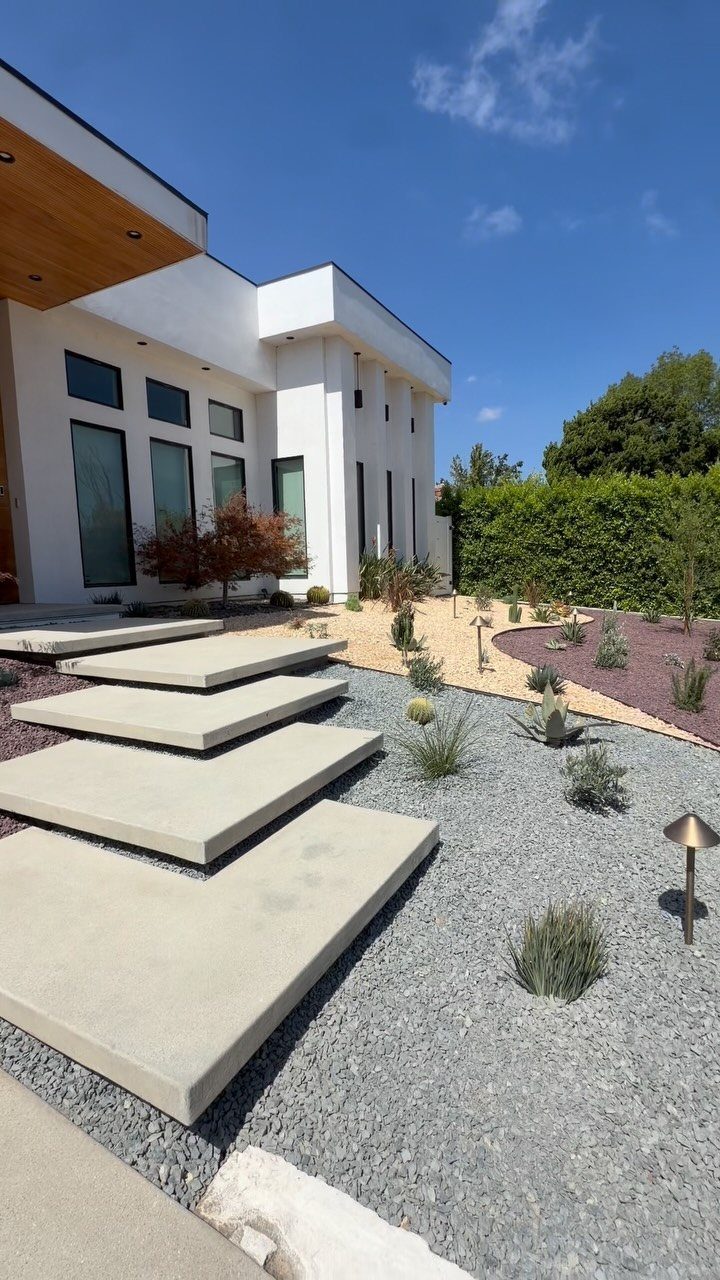
Strong shapes give a modern yard its structure before any plant grows in.
The visible path uses large rectangular pavers set at regular intervals through gravel, a rhythm you could repeat with concrete, cut stone, or even steel depending on budget.
The gravel between matters as much as the pavers; it needs to be angular, not rounded, so it locks in place underfoot.
I would lay the whole pattern dry first, walking it, before setting anything permanently. The succulents and low-water plants soften edges without breaking the geometry, which is the balance that keeps this from looking like a parking lot.
This approach suits anyone tired of fussy bed shapes but willing to edge and weed enough to keep those lines crisp.

【Natural River Stone】Our stepping stones, made from river rocks, are naturally stunning. Each stone, crafted from genuine river stones, retains its natural texture to highlight its intrinsic beauty. With their unique natural colors, they can create an eye-catching garden path for your patio.

DURABLE AND ECO-FRIENDLY: Crafted from 100% recycled PPE plastic, our gravel paver system delivers exceptional strength and longevity; This set includes 22 units with a 1-inch depth, covering an area of 65 square feet

Define a Garden Path: 8 pack 15 x 15 in rubber stepping stones provide about 12.5 sq ft of total surface area, giving homeowners enough pieces to create a short walkway through gardens, lawns, flower beds or backyard areas without buying individual pavers separately
3. Mass Plantings
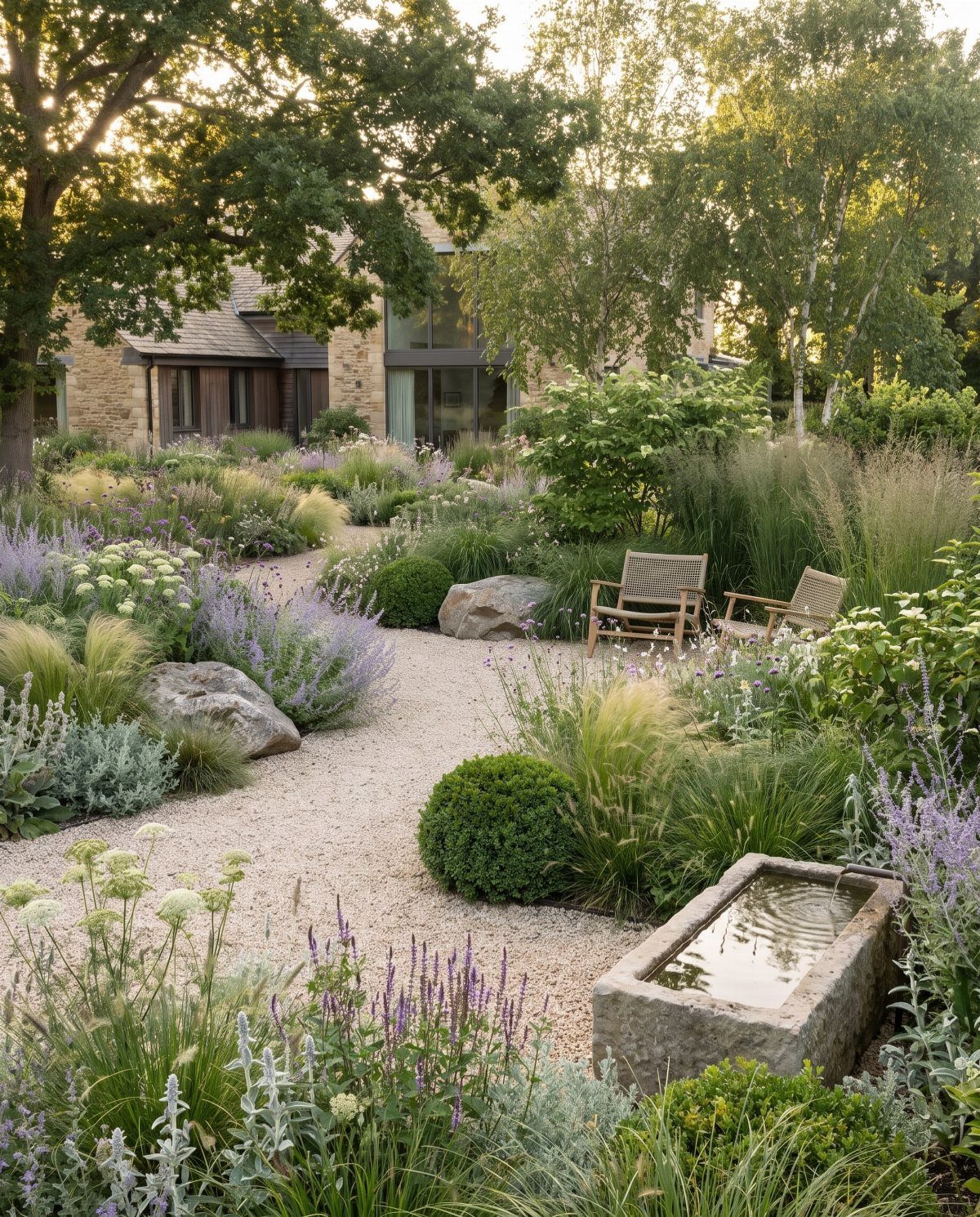
Repeating one plant across a wide area does more with less, and the result is cohesion you cannot get from mixing dozens of varieties.
Ornamental grasses and purple flowers, likely lavender, filling both sides of a gravel path let the planting read as a single gesture.
I would start smaller than this looks.
A mass planting fails badly if the chosen plant struggles in your soil or light, so I would test with a small group in one area for a full season before committing to a large area.
The gravel path here is practical as well as pretty; it lets you walk and work without compressing the root zone. Boulders and the stone trough add points of rest for the eye, but the planting itself carries the design.
4. Low Maintenance
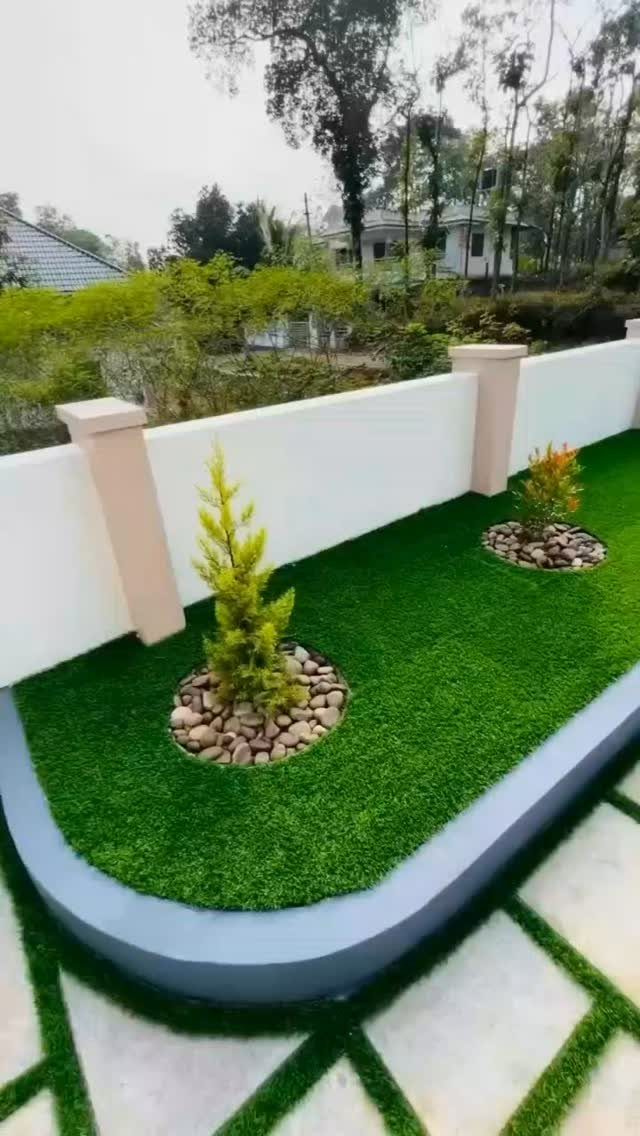
Artificial turf and stone rings around shrubs remove the two biggest time sinks in a yard: mowing and bed edging.
The white wall and pillars frame it as intentional design rather than mere convenience, which is the trick I would borrow.
The trade-off is upfront cost. Turf runs more installed than seed, and the sub-base prep matters more than the product itself; skimp there and you get pooling and seams.
The stone rings around shrubs keep mulch contained and make blowing leaves simple; I would use a contrasting stone color so the geometry reads even from a distance.
5. Modern Landscape Materials
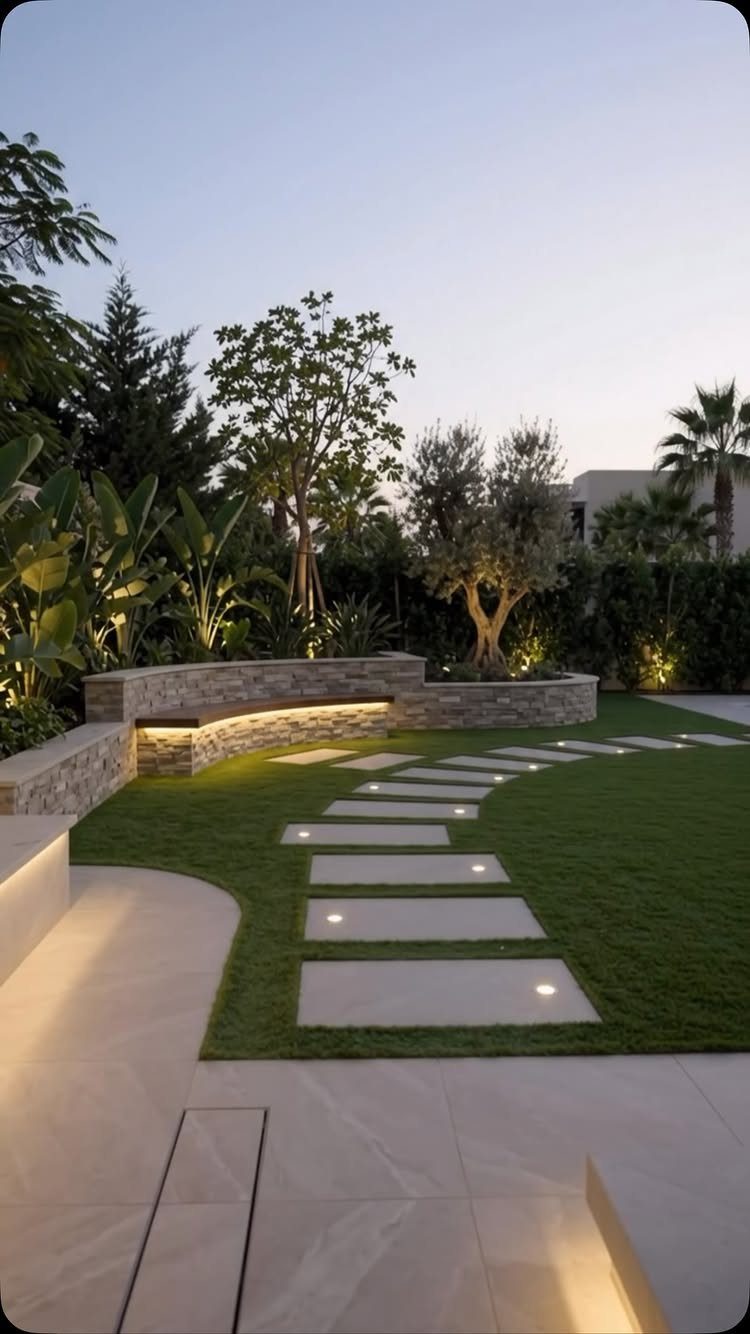
The stacked stone here is not random; the coursing follows the curve evenly, which takes skilled labor or patient DIY work with a dry-stack system.
I would ask about the lighting before copying this. The built-in bench lighting suggests low-voltage LED, and you need a transformer sized for the run.
Large format pavers need a compacted base to stay level; anything less and they rock. This suits a yard with some grade change to work with, since the retaining wall turns that problem into a feature.
6. Plants for a Modern Garden
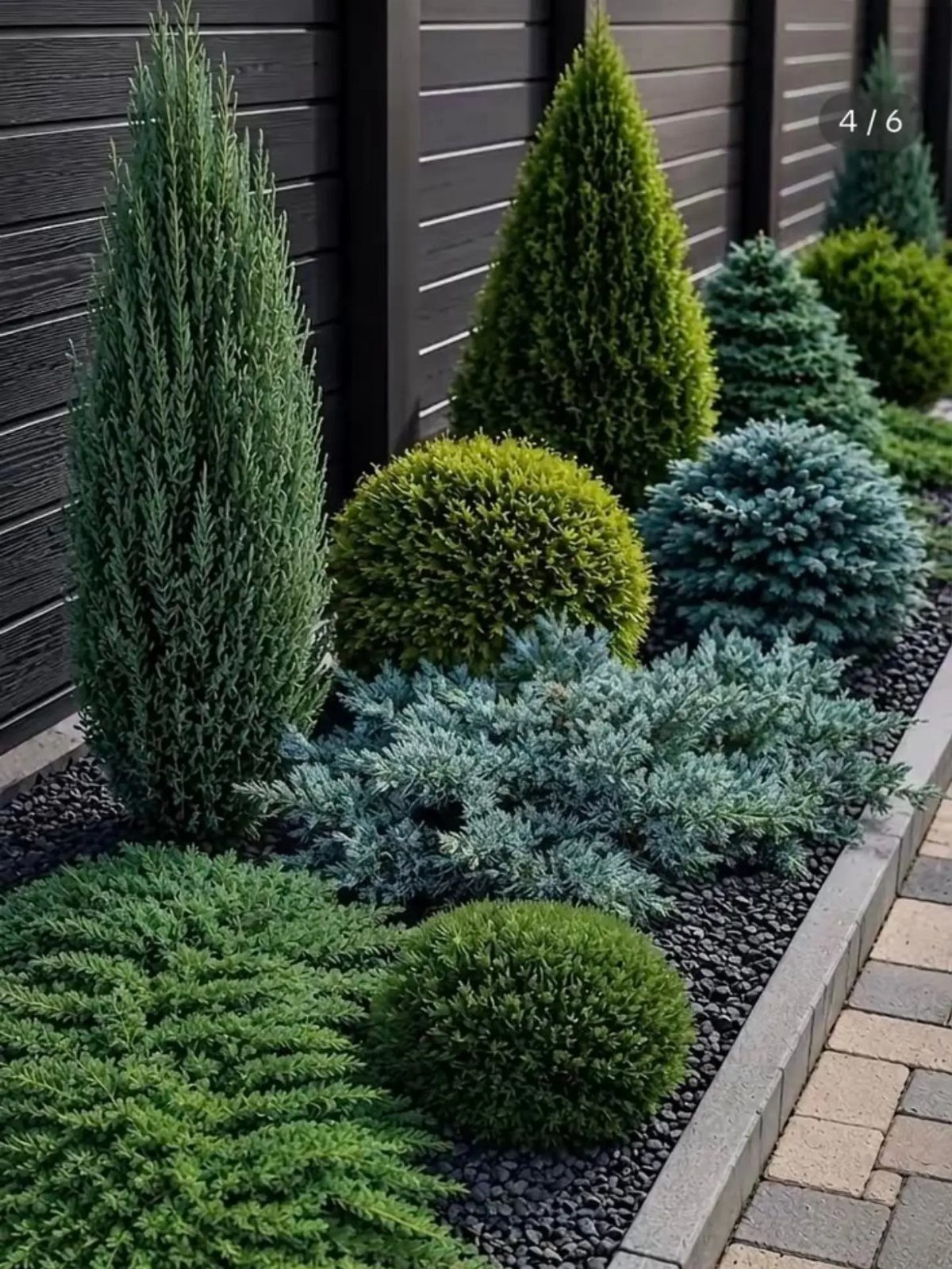
Evergreen structure gives a modern garden its bones through winter, when deciduous plants leave nothing but sticks.
Sculpted conifers and shrubs against dark mulch and a dark fence make the foliage colors, especially blue-greens, read more crisply than they would against brown or red.
I would place these in deliberate lines or grids, not naturalistic drifts; the geometry is what makes it modern rather than merely low-maintenance.
The dark gravel or mulch visible here needs refreshing every 2 to 3 years to keep its effect, or it fades to dusty gray.
Modern landscape design often relies on slow-growing evergreen shrubs and small trees for structure, an approach that suits anyone patient enough to wait for that framework to mature but unwilling to replant annually.

【Superior Material and Detail】Our permeable paver system, made entirely from 100% recycled plastic, offers superior durability and strength. The set comprises 12 units, each 1.6 inches deep, and covers 32 square feet. This gravel paver solution provides an efficiently and long-lasting option for various applications.
7. Outdoor Living Spaces
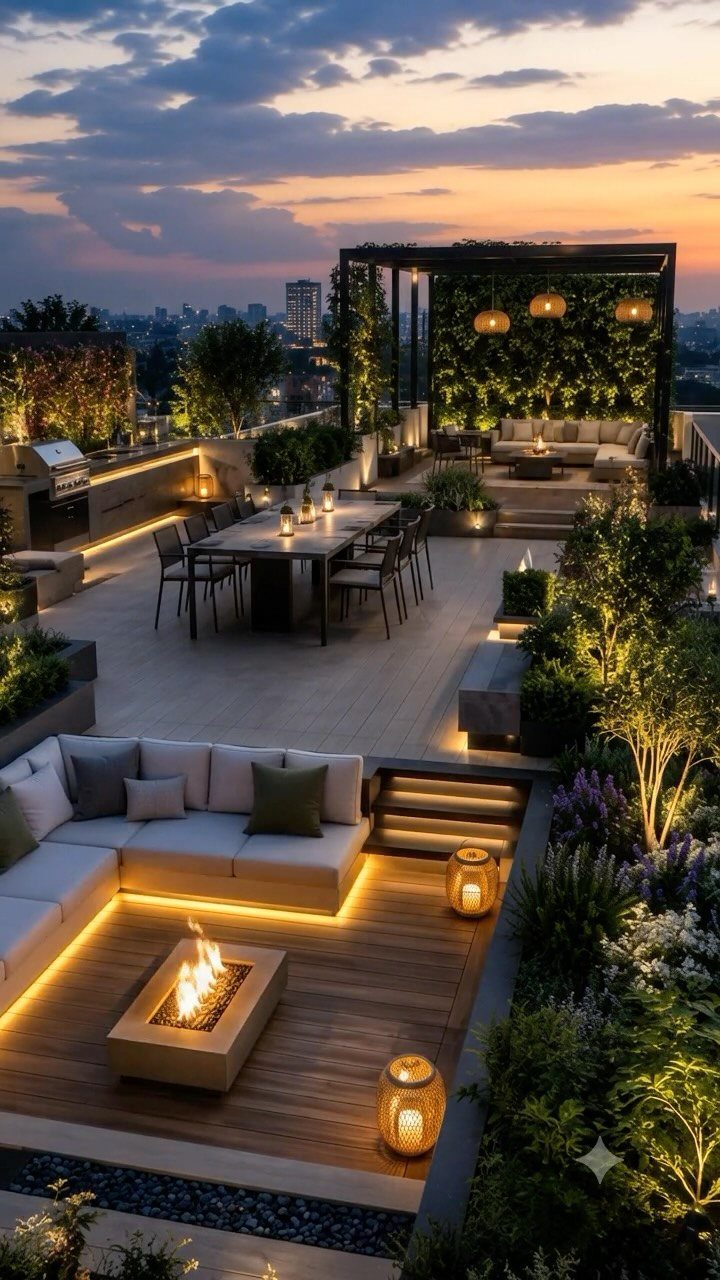
A sunken lounge around a fire pit turns any rooftop or patio into a room you actually use after dark.
The built-in seating and dedicated dining and grill zones mean you are not hauling furniture around every time you want to eat outside.
I would decide on power before anything else. Low-voltage LED for the deck and fire pit lighting needs a transformer and conduit run, which is easier to rough in before the decking goes down.
A pergola adds defined shade without blocking all light, but it needs footings rated for wind load; a rooftop means checking what the structure can handle before adding weight up there.
This suits anyone who entertains regularly and would rather build once than replace patio sets every few years.
8. Layered Planting
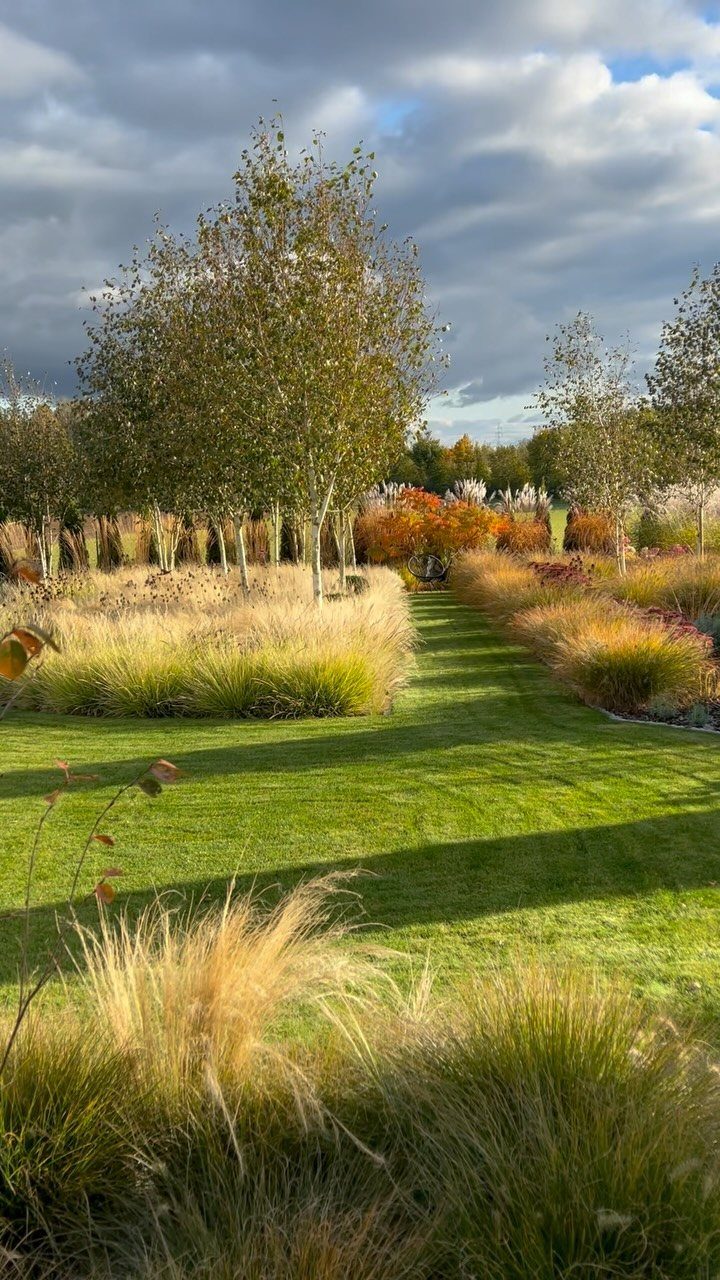
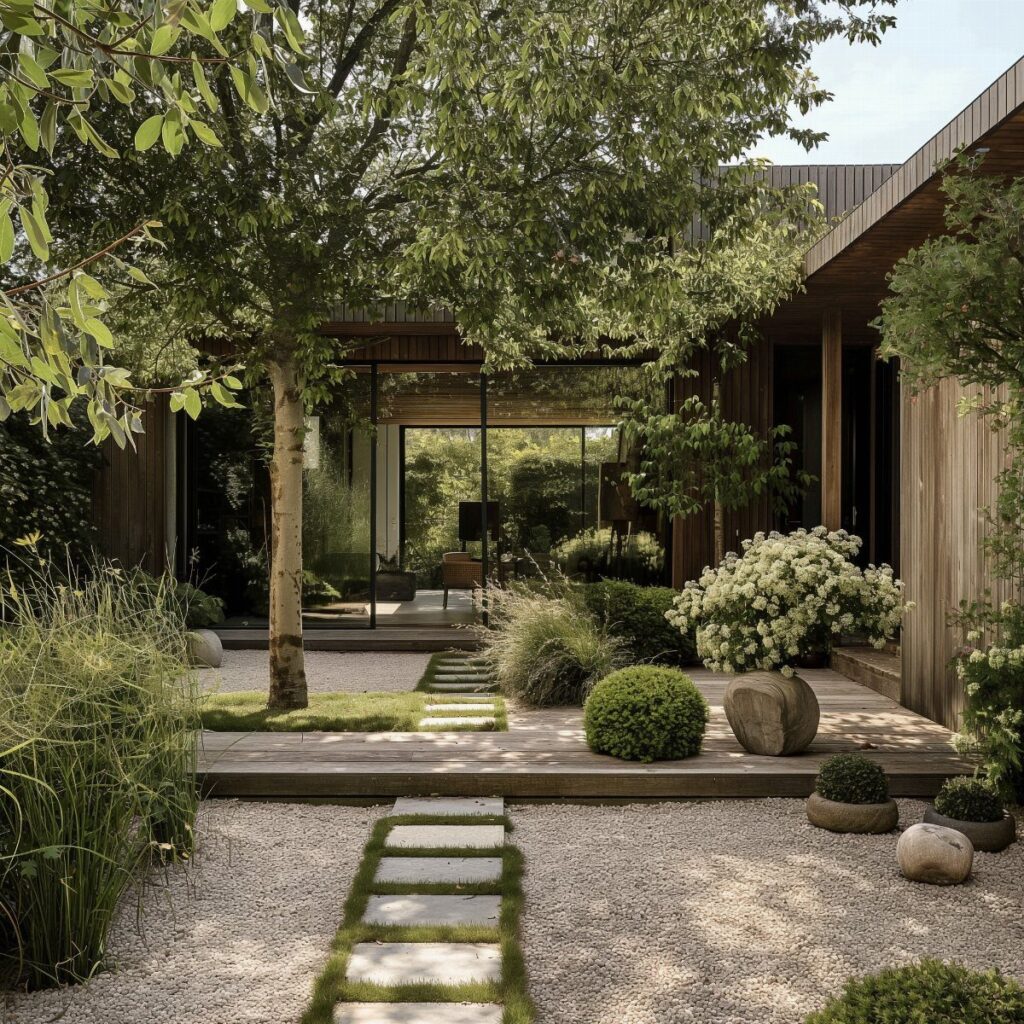
Ornamental grasses under birch trees create depth by repeating the same 2 elements at different heights, so the eye travels from ground to canopy without hitting visual clutter. The grass pathway keeps feet dry and maintenance low.
I would plant the trees first and wait a full season before adding the grasses.
Birch roots are shallow and wide, and digging around them later damages what you installed. Low grasses planted beneath spreading branches need headroom at maturity; I would check mature sizes before buying, not trust nursery tags for young plants.
This approach suits flat yards that would otherwise read as one flat plane, though it needs enough width for the layers to read separately; a narrow strip loses the effect.
9. Drought-Resistant Plants
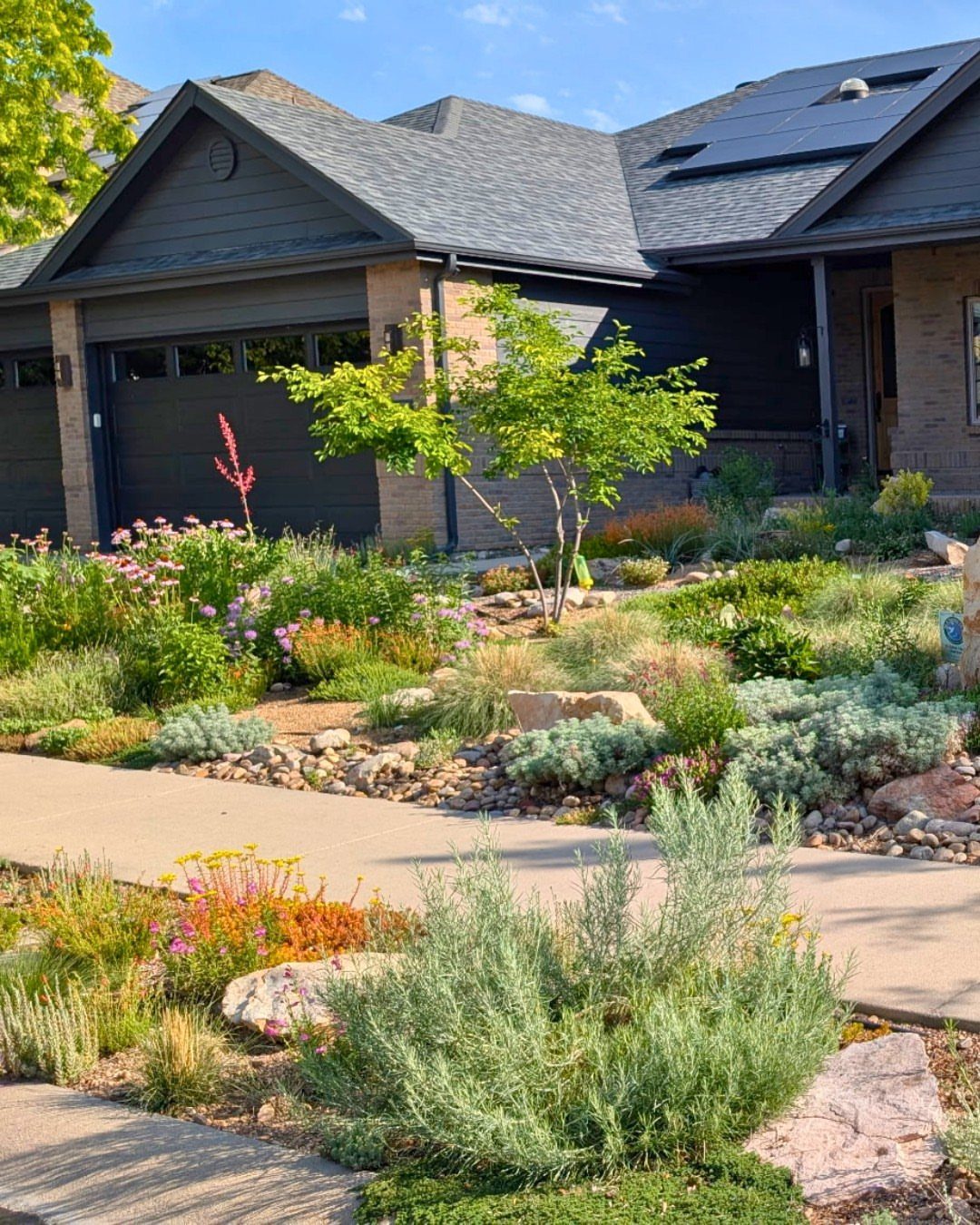
A front yard planted with succulents, flowering perennials, and grasses replaces lawn without looking abandoned, and the gravel mulch keeps moisture in the soil while it drains fast enough for plants that rot in clay.
The solar panels on the house suggest this homeowner already thinks long-term about resource use.
I would match plant choices to local rainfall patterns, not just the label "drought-tolerant."
A plant adapted to dry native conditions may still need summer water where springs stay dry. Gravel size matters; 3/8 inch is stable enough to walk on and coarse enough that seeds blow through rather than sprouting.
I would budget for drip irrigation at install even if you plan to shut it off; retrofitting means digging through established plants later.

[3000K Bright Light] This 5.6W 12V AC/DC low voltage LED landscape pathway light has a brightness of 151lm, enough to illuminate your front/backyard, sidewalk and driveway; 3000K warm white light and 80 CRI to beautify your alley, garden, fence, courtyard and swimming pool, creating a comfortable dreamy night scene

3 Color Temperature Selectable: Modern style path light combines decoration and practicality, can be adjusted according to seasonal changes in different light colors, 3000K/4000K/5000K integrated in a button without the need to disassemble the lamp
10. Vertical Elements
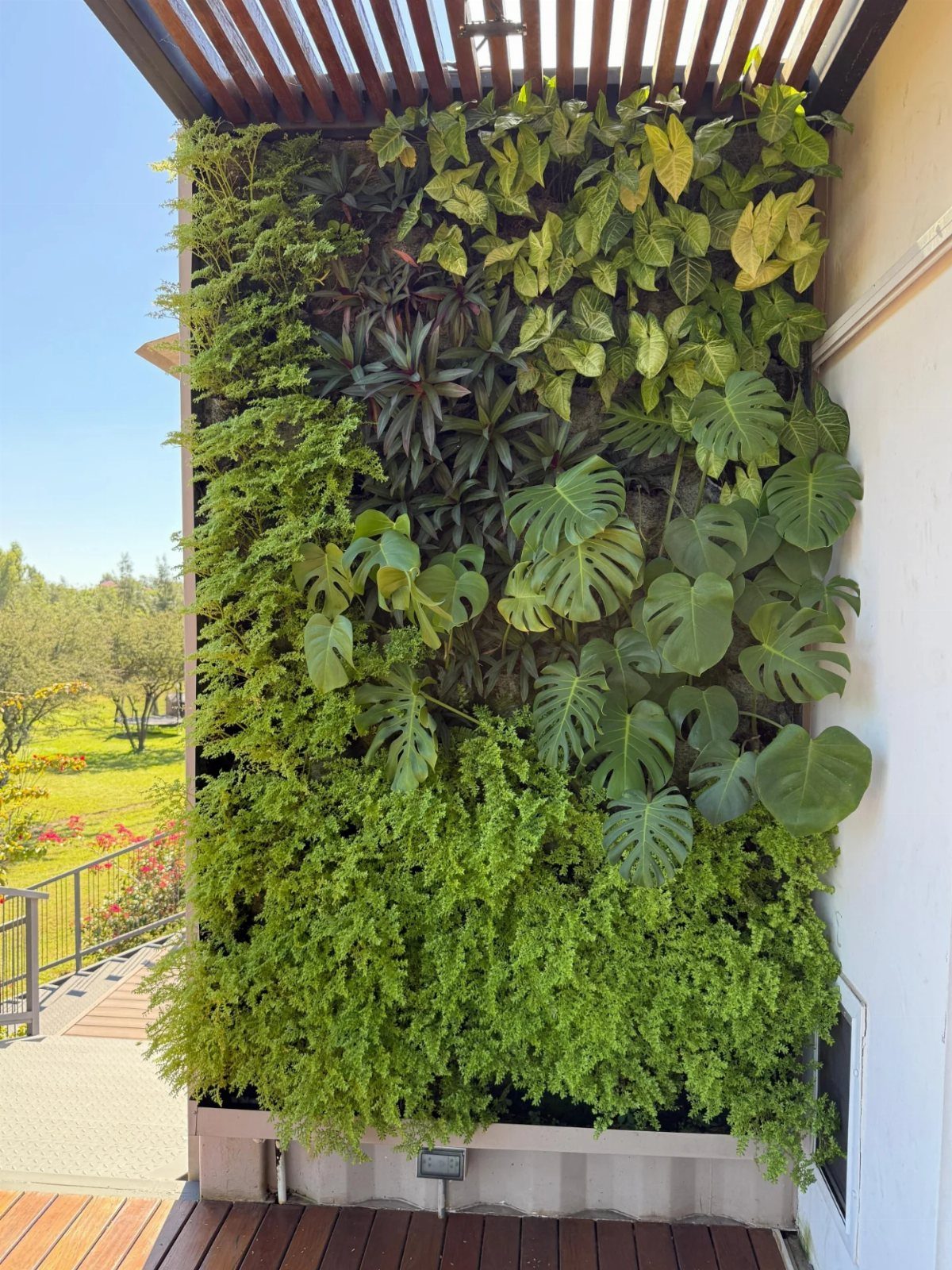
A living wall of ferns and monstera turns a blank patio structure into green architecture, adding privacy without the footprint of a hedge.
The wood decking and pergola frame suggest this is a semi-covered space with some shelter from sun and wind.
A wall this dense needs a dedicated drip system or it dries out in hours on a hot day; hand-watering is not practical once the plants establish and the roots tangle.
The mounting system must handle wet soil weight, which runs heavy, and I would confirm the structure was engineered for the load or add support brackets.
This suits small patios where floor space is limited, though it blocks light to anything behind it; plan the shadow line across your seating hours before mounting.

DURABLE AND ECO-FRIENDLY: Crafted from 100% recycled PPE plastic, our gravel paver system delivers exceptional strength and longevity; This set includes 11 units with a 2" depth, covering an area of 37 square feet
DURABLE AND ECO-FRIENDLY: Crafted from 100% recycled PPE plastic, our gravel paver system delivers exceptional strength and longevity; This set includes 11464 units with a 1-inch depth, covering an area of 4350 square feet

HEAVY-DUTY, DURABLE CONSTRUCTION: Each permeable paver measures 41 x 41 x 2.5 centimeters (16 x 16 x 1 inch) and is constructed from thick, high-strength plastic mesh. Engineered to withstand vehicular traffic without deformation, ensuring long-term performance for your permeable paving system
11. Pathways and Walkways
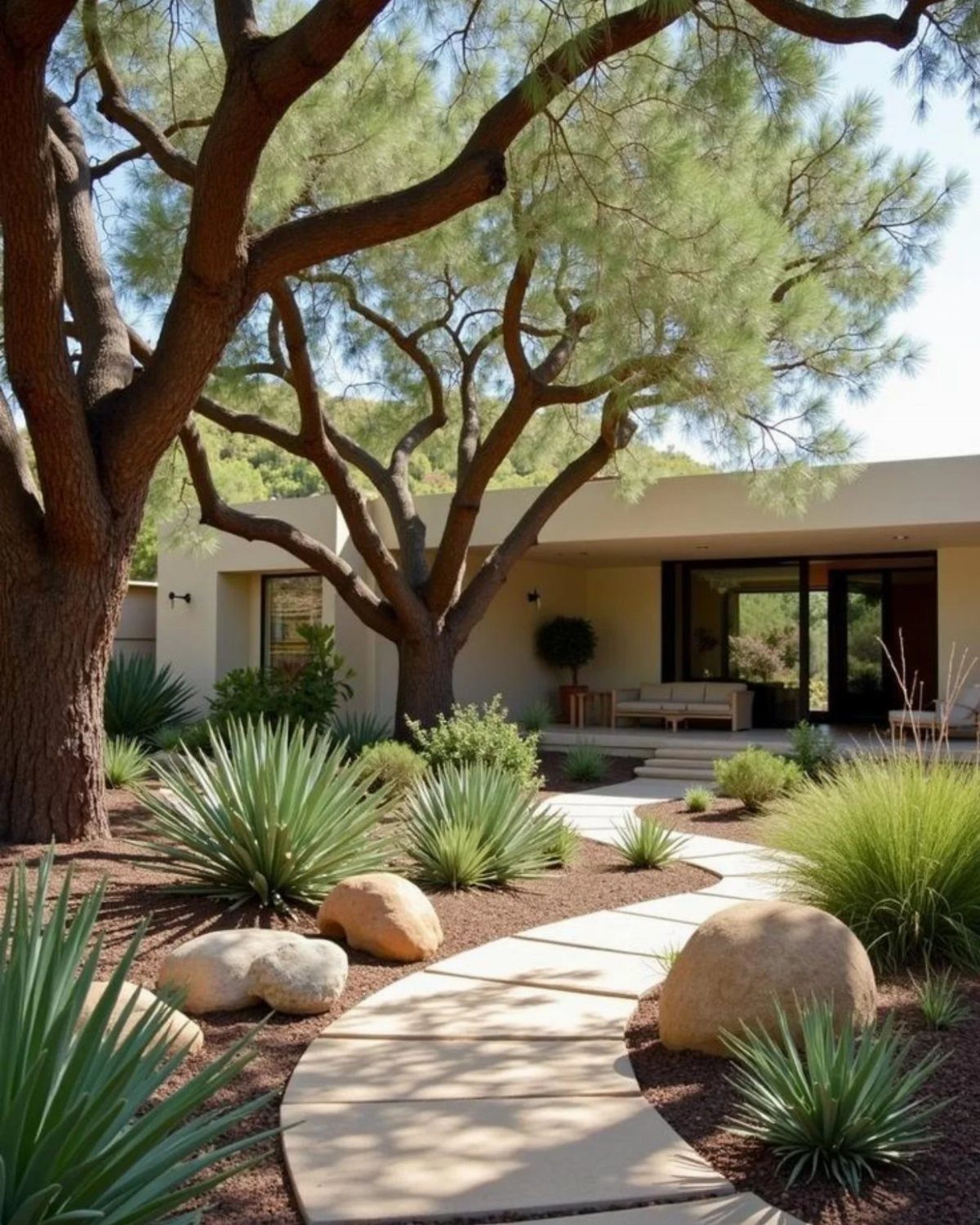
Curved pavers through gravel and boulders guide movement without the formality of a straight axis, and the spacing lets low plants colonize the gaps if you want a softer look later.
Large agaves and grasses confirm this is a dry-climate yard where pavement would radiate heat.
I would set the curve in a garden hose first and live with it for a day, watching how the sun moves across it. A curve that reads well in morning light can feel arbitrary once shadows shift.
The gravel base under pavers needs compaction in lifts; loose fill and the pavers rock within a season. Boulders this size need equipment to place; I would stage them before any planting so you are not trucking across new grass.
This suits anyone with enough depth for the path to wander; on a shallow lot, a straight line reads better.
12. Planting Beds
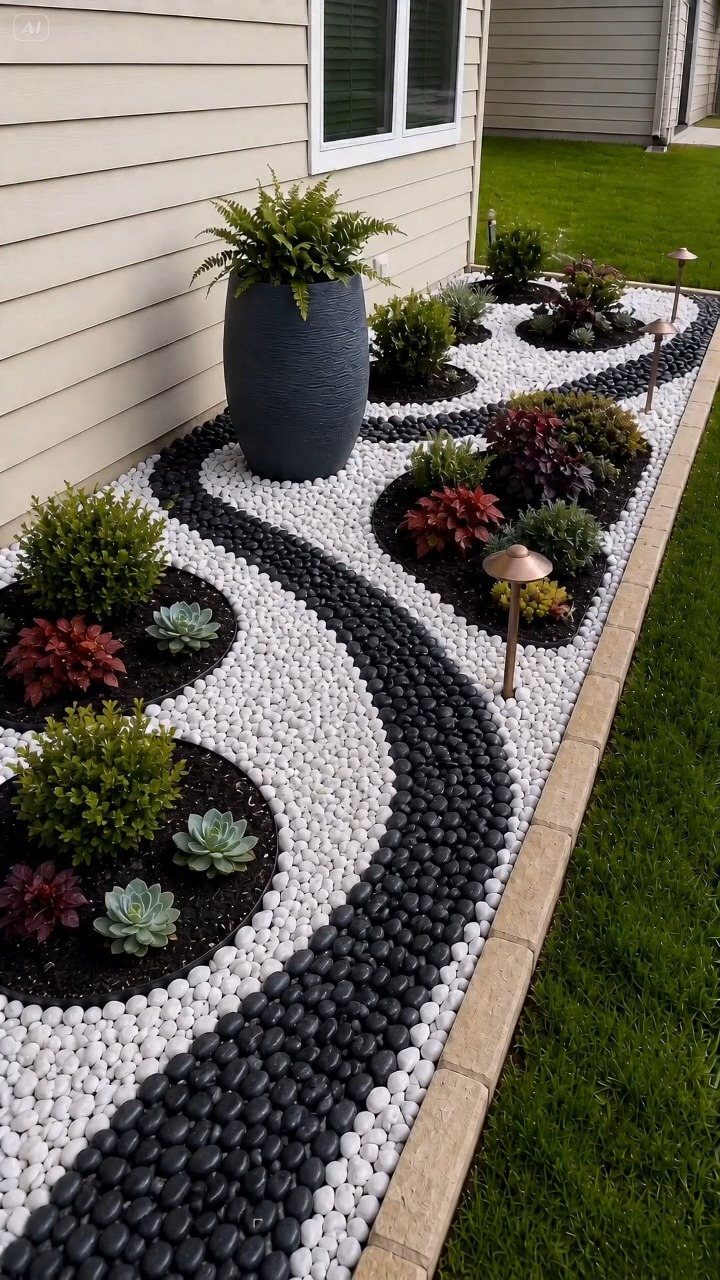
Defined circular pockets in swirling river rock turn a narrow foundation strip into graphic pattern, with each plant reading as a deliberate shape rather than a blob in mulch.
The black and white stone makes the geometry crisp even in low light.
I would install landscape fabric under the rock only around the bed edges, not everywhere.
Full coverage lets water pool and roots suffocate; the gaps between circles need drainage more than weed control. The circular shapes are easier to cut in flat ground than on a slope, where rock migrates and the pattern distorts.
Succulents in the pockets need soil that drains fast; I would mix half grit or pumice into whatever sits there now.
Current Trends in Landscape Design
Modern landscape design right now is less about chasing a look and more about redefining what a yard is for.
The shift is toward outdoor spaces treated as rooms you visit rather than plots you maintain, which changes every decision from plant count to hardscape size.
Minimalism still leads, but the version that lasts strips out visual noise without stripping out use.
Concrete, steel, and glass show up in fire pits and containers because they weather predictably and need little attention, not because they read as industrial.
Sustainability is folded in through plant choices and water management rather than announced with signage. The lawns that remain are perfect panels, tightly controlled, not the default ground cover they were a decade ago.
What I watch is how far this style travels beyond the modern homes that inspired it.
Ranch houses, mid-century builds, even updated farmhouses now carry these lines into their gardens, which suggests the taste has settled in for longer than a single cycle.
Importance of Professional Design
A modern landscape fails when it looks assembled rather than composed. The cohesion matters because every element is visible; there is no clutter to hide a mismatch in color, scale, or line.
I think the difference between a yard that looks designed and one that just looks nice is whether every plant, material, and color choice is answering the same question.
Without that point of view from the start, you end up with a dozen good decisions that never quite add up to anything.
The linear beds and simple plantings that define this style require planning from the first measurement, not adjustment as you go.
I would treat professional help as a way to test fit before commitment, not as a requirement.
A designer can map how clean lines and natural elements balance across your specific space, and whether your home’s architecture will accept modern geometry without looking dressed in someone else’s clothes.
The serenity this style promises comes from that predictability, which is hard to back into once planting starts.
Integration with Architecture
The shapes and proportions of your house should walk outside and keep going. Modern landscape design works when the architecture’s lines pull straight through into paths, walls, and planting geometry, so the property reads as one continuous decision.
This matters most with strong forms: a flat-roofed house wants level planes extended into terraces or lawn panels; a house with vertical emphasis needs upright elements, whether steel screens or columnar plants, to keep the conversation going.
The materials can shift from manufactured to natural, but the proportion and restraint should hold.
I would not force this match onto every home.
A Victorian or ornate colonial will fight modern landscaping rather than harmonize with it; in those cases, a single modern gesture, a gravel court or steel planter, reads as quotation rather than unity.
Where it does work, ranch homes and mid-century houses especially, the effect is to make both building and garden feel more current than either would alone.
Frequently Asked Questions
What is modern landscape design?
A modern landscape keeps only what earns its place, using clean lines, tight geometry, and a narrow set of materials to pull everything together.
It extends the shapes and proportions of modern architecture into outdoor spaces, so the house and garden read as one continuous decision.
The style favors concrete, steel, and glass for their predictable weathering, and uses mass plantings or simple evergreen structures rather than mixed beds.
What are the major landscaping trends for 2026?
The movement toward functional outdoor spaces continues, with built-in seating, dedicated dining zones, and fire pits turning yards into extensions of the house.
Sustainability drives plant selection and water management, while hardscaping in cooler tones like concrete and lighter woods creates the underlying structure.
Traditional styles with neat hedges and white flowering plants still get requested, but even those yards are seeing more sustainable lawn alternatives.
What is the 3-5-7 rule in landscaping?
I work with odd numbers when I plant, and the 3-5-7 rule follows that same instinct: group plants in sets of three, five, or seven for a look that feels natural rather than staged.
I would guess it refers to a traditional planting guideline about grouping in odd numbers for visual interest, but that is speculation rather than something I can confirm from this page.