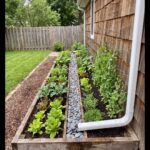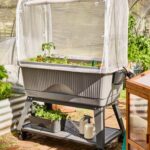
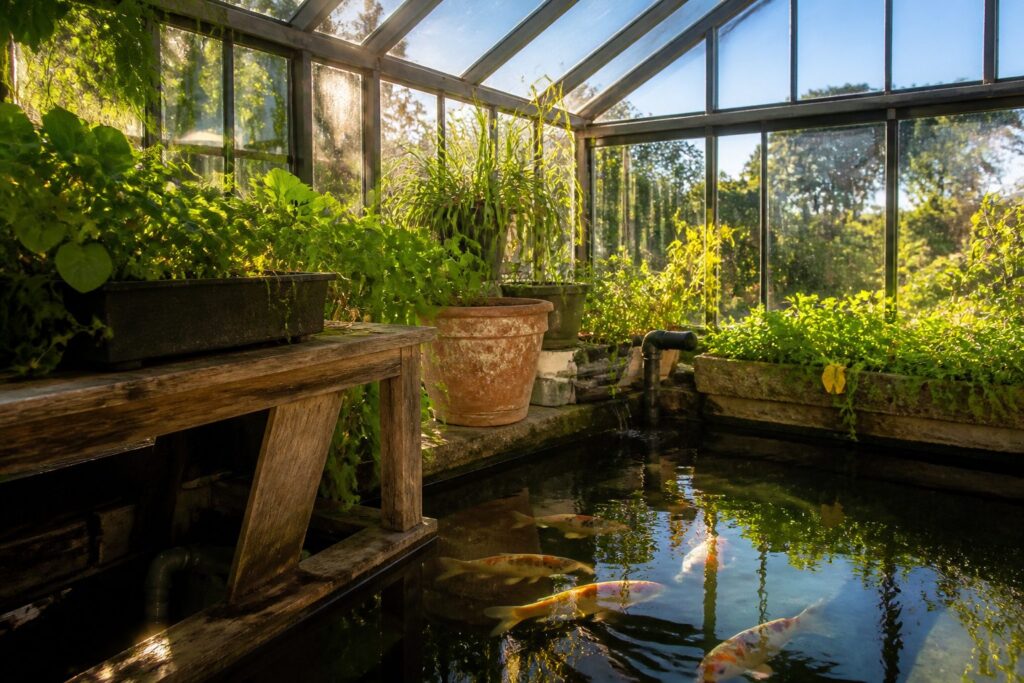
An aquaponics system is a greenhouse with fish pond that recirculates water between fish and plants so each feeds the other.
The thing that trips most builders is not construction but timing: adding fish before the bacteria colony is ready kills stock, and rushing it wastes the weeks of setup.
Cycling the system fishless with direct ammonia dosing, then testing for ammonia, nitrite, nitrate, and pH until both toxins read near zero, is the step impatient growers skip at a cost of dead fish and restarted beds.
[link-whisper-related-posts]Build the Pond
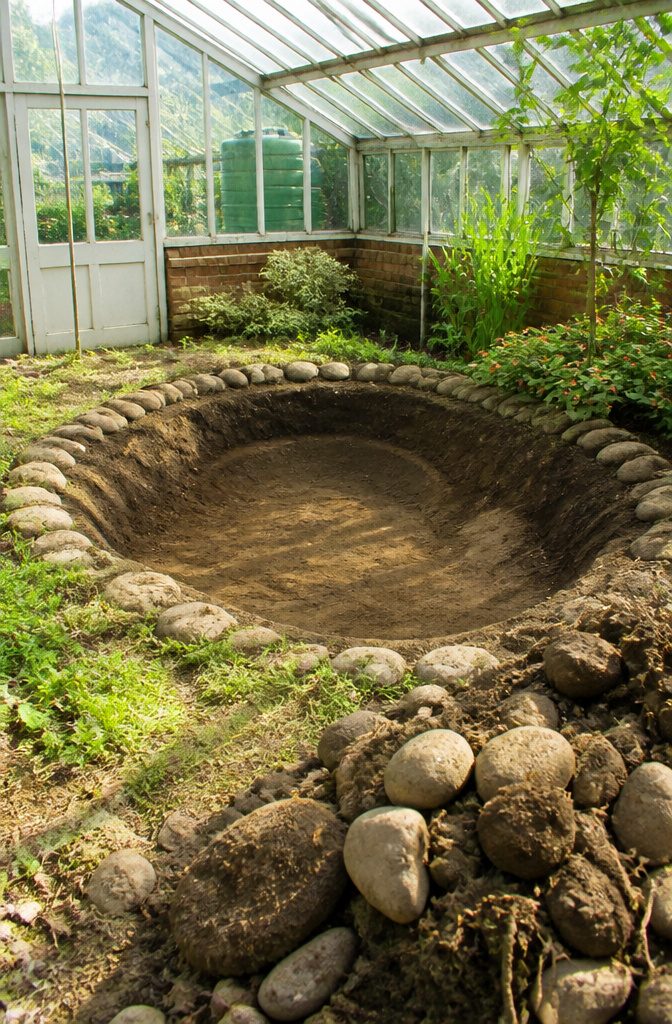
Excavating a pond by hand is the most satisfying part of the build, and the most punishing. I would dig to at least 18 inches for stable water temperatures, deeper if your greenhouse sits where winter actually bites.
Before the liner goes down, every sharp stone, root, and beer-can ring gets removed; one puncture turns a Saturday project into a Sunday regret. A layer of sand or underlayment buys cheap insurance against abrasion.
A 15-foot above-ground pool runs about $360 at Target and drops straight in with zero digging.
For a smaller footprint, IBC totes sell locally for roughly $100 each and stack into a tidy reservoir. Either skips the excavation entirely, which matters if your yard is clay, rocky, or just your back.
The liner gets filled slowly while you walk the wrinkles flat.
Once full, let it sit a day or two and watch the waterline. Any drop means a leak to find now, not after the fish arrive.

Specs & Dimensions: 4.33*3.5*4.1 inches; Max flow rate: 800 GPH (3000L/H); Max lift height: up to 10 ft.; Wattage: 50W; Voltage: 110-120V

Powerful: total output 300GPH; 4 outlets make it easy to run multiple sponge filters, air stones, bubbler decorations and air bubble discs.

【Provide You a Confortable & Quiet Environment】 : Our pumps works so quietly and smoothly, it keeps bring you a relax & peaceful time.
Install the Pump and Plumbing
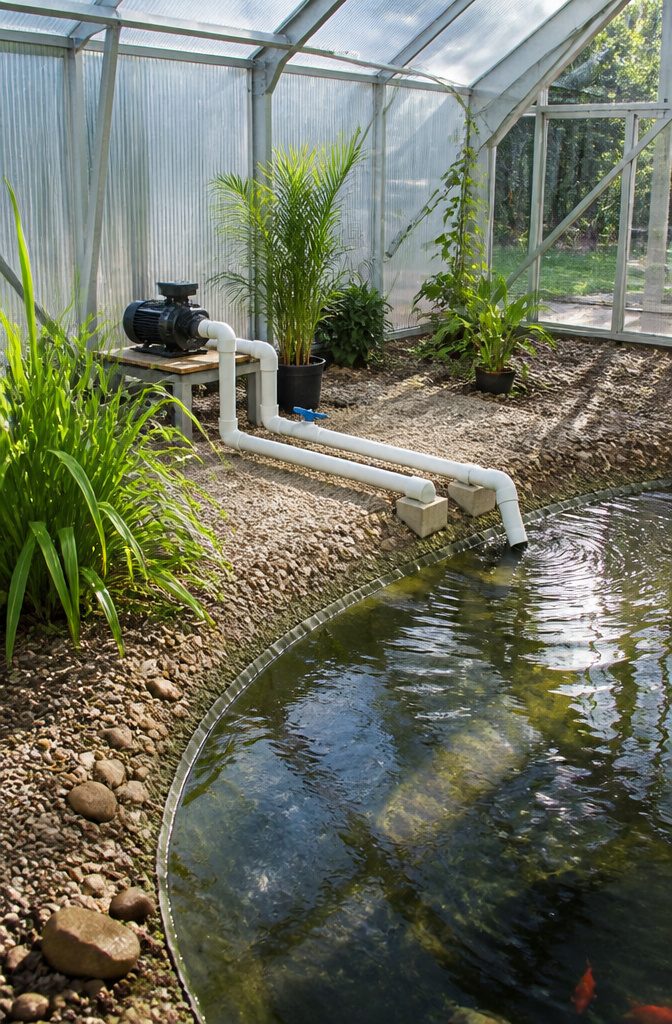
PVC pipe runs the whole show here, and the simpler the route the better. Every bend is a future leak waiting to happen, so keep the path from pond to grow beds as direct as your greenhouse layout allows.
I would set the pump somewhere I can reach without crawling over grow beds or disassembling anything.
You will need to clean the intake screen and check the impeller a few times a season, and burying it behind plumbing turns that quick chore into an afternoon project.
Ball valves at key junctions are non-negotiable for me.
Shutting off a single section for repair beats draining the whole system. Unions at the pump and filter connections serve the same purpose: twist, disconnect, and carry the part to a workbench instead of working hunched over a pond edge.
Run the pump before you add any grow media.
Water on the greenhouse floor is an annoyance now; once the beds are filled with gravel or clay pebbles, it is a teardown. Check every fitting, let it run for an hour, and only then call this part finished.
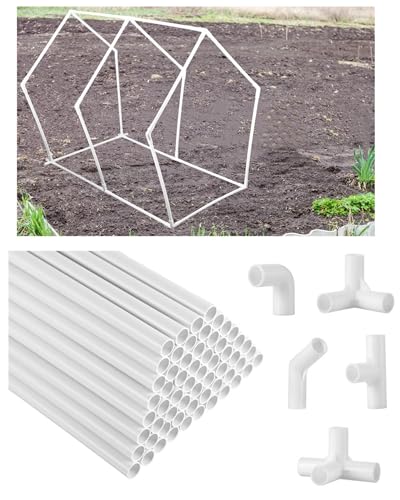
Abundant Quantity: our DIY PVC projects will receive 60 pieces of 1” diameter, 23.6” long PVC pipe, 42 PP material connecting pipe combination, including 4 120-degree elbows,4 three-dimensional five way joints,6 90-degree elbow joints,8 three-dimensional tees,8 three-dimensional four way joints and 12 flat tees for various DIY projects

EASY TO USE: Cut 3/4” PVC pipe to your desired lengths and insert into the sockets to quickly build right-angle, 90 degree pipe connections. Connects two PVC segments on a single plane

One 4" pvc rugged gravel shield 14" tall One 3" pvc bell x 12" high with CLEAR TOP cap and blue pull handle, One pair male and female threaded adapters with "o"ring to match for the bulkhead adapter Two 1" 90s One 4" and one 6" and one 7" pieces of 1" pvc pipe (you can swap the 6" and 7" 2 water depth adjuster rings
Set Up Mechanical and Biological Filtration
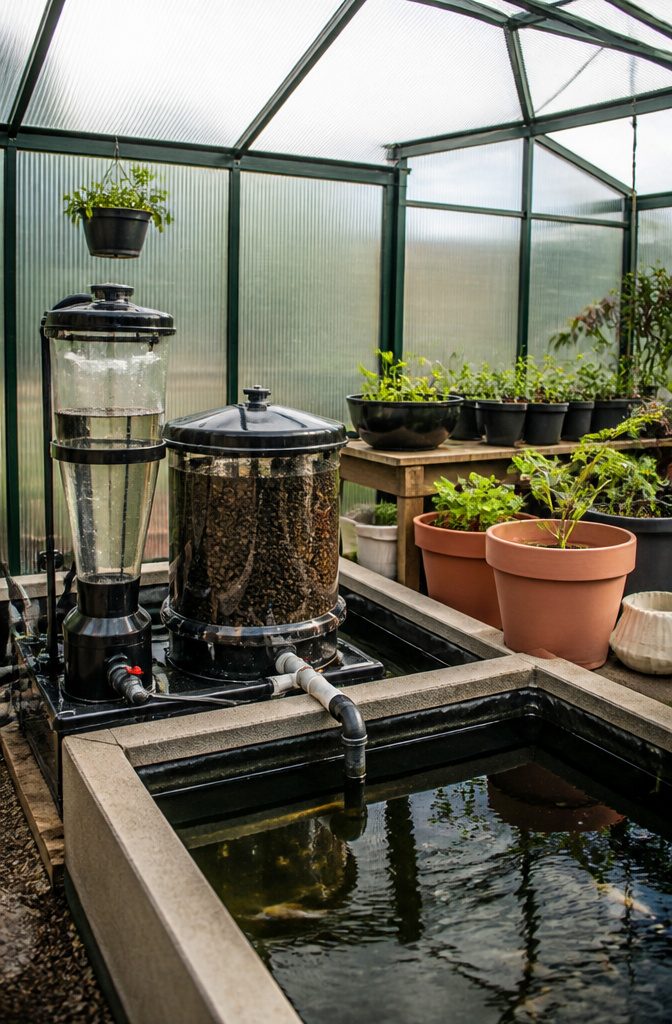
Mechanical filtration goes in first, before biological. A swirl filter, radial flow settler, or plain settling tank catches the solid waste that fish produce constantly.
Skip this stage and those solids drift into your grow beds, clog plumbing, and rot where plants need clean water. The mechanical filter is doing nothing fancy, just pulling out what you can see and touch.
What remains after that screening is ammonia, invisible and toxic to fish.
That is where biological filtration earns its place. Nitrifying bacteria colonize the surfaces inside a biofilter and convert that ammonia first to nitrite, then to nitrate, the form plants actually feed on.
Without them the symbiosis fails; fish poison themselves in their own water and plants starve. The Aztecs grew crops on lake peninsulas with bacteria doing this same work, though they did not name the chemistry.
Water must move through both stages, mechanical then biological, before it ever reaches the grow beds.
A filter skipped is a system that limps. The mechanical stage protects the biological one from smothering in gunk, and the biological stage turns what the mechanical stage cannot catch into the fertilizer your tomatoes are waiting for.

❀ Prevent the smallest dirt particles, while keep perfect water flow. ❀ Provides both mechanical and biological filtration ❀ Use for freshwater and saltwater aquariums....
Position the Grow Beds
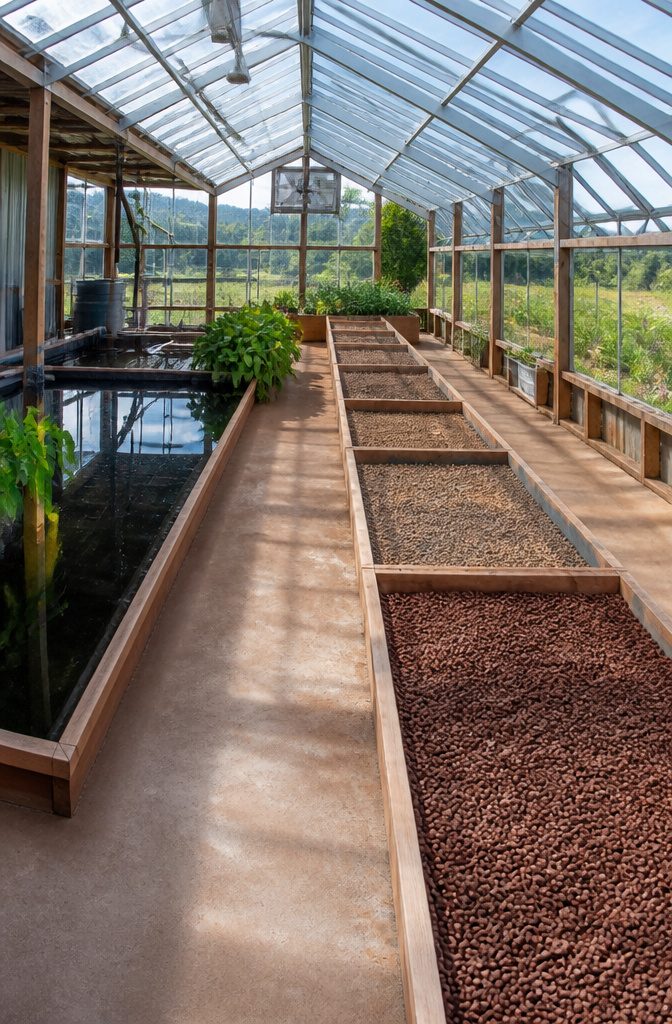
Grow beds sit best where they catch morning sun and stay reachable from both sides. I place mine with at least 30 inches of clear aisle on the long edges so planting and harvesting do not turn into a stretching contest.
Media beds need their gravel or expanded clay washed clean before it goes in. Fill evenly and resist the urge to pack it down; the water needs paths through the voids.
If you are running flood-and-drain, a bell siphon or standpipe handles the cycle automatically. Raft or NFT channels must sit dead level or some plants starve while others drown.
Once everything is in place, run the pump for several hours and watch the returns. Any puddle that lingers longer than the drain cycle is a clog waiting to happen.
Aquaponic gardening uses 90% less water than soil-based gardening because the water is re-circulated and only that which the plants take up or evaporates is ever replaced.
That 90% figure is not marketing; it is the math of a closed loop.
What leaves the system is what your plants actually drank or what dried on their leaves. Everything else keeps moving from fish to bed and back again.

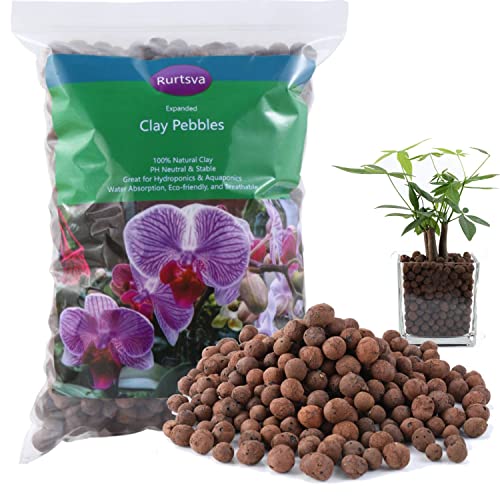
FOR INDOOR PLANT PARENTS & HYDROPONIC BEGINNERS No more overwatering worries. These 8-15mm LECA pebbles create air pockets around roots, so your monstera, pothos, or herb garden gets oxygen 24/7. Your plants thrive with less effort – even if you’ve never tried semi-hydroponics before. (Low dust – ready to use without endless rinsing.)

One 2" pvc gravel shield x 7" High One 1 1/4" pvc NO CLOG bell x 6.5" high with cap and pull handle One pair male and female threaded adapters with "o"ring to match for the bulkhead adapter Two 1/2" 90s One 1 1/2", one 2" and one 3" and one 4" piece of 1/2" pvc pipe and you can
Cycle the System Before Adding Fish
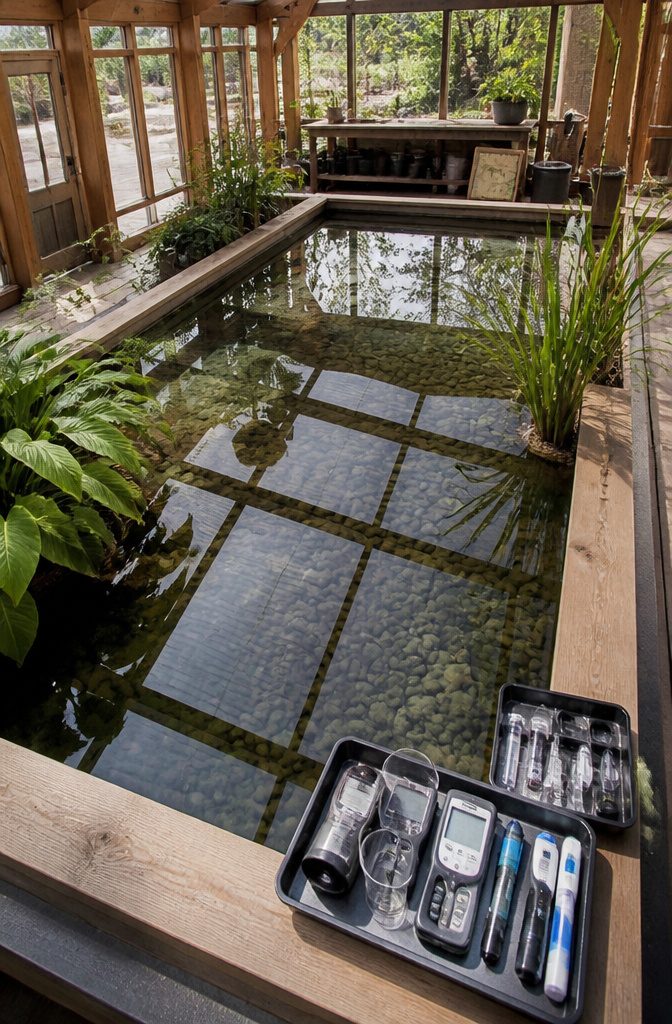
A brand-new aquaponics system is basically sterile water and empty surfaces.
The bacteria that convert fish waste into plant food do not arrive on their own, and without them, waste breaks down into ammonia that will stress or kill fish before you have had time to notice the problem.
Cycling builds that colony before any fish move in. I would go fishless: add an ammonia source directly, then test for ammonia, nitrite, nitrate, and pH on a regular schedule.
The pattern is predictable once you have seen it once. Ammonia spikes first.
Then nitrite appears as the first bacteria strain takes hold. A second strain converts that nitrite to nitrate, and only when both ammonia and nitrite read near zero and nitrate has climbed is the water ready.
The wait runs several weeks, longer in cooler water, shorter in warm. Most beginners I see online add fish during the ammonia spike because the water looks clear and they are impatient.
That impatience kills fish. The bacteria colony you grow in these weeks is the living engine of the whole system; every day of waiting buys months of stable water later.
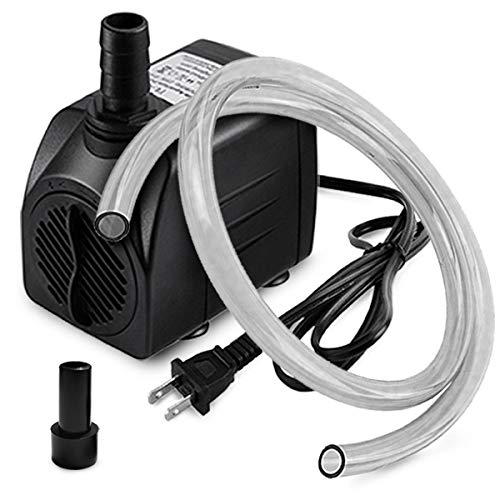
Multi Function: Pumps can help you to circulating your aquarium, and creat a nature aqua world for the fishes. Our pumps can continuously supply stable flow, a good choice for medium fish tanks, small pond, fountains, water spring artworks, garden, aquaponic, aquaculture and many more.


Package Including: 1Pc Aquarium Air Stone Disc. Size: 5.1" D x 0.75" T. The air stone disc is well-constructed for continual bubbling. Ideal for oxygenation in fish tanks, DWC systems or small ponds.
Introduce Fish Gradually
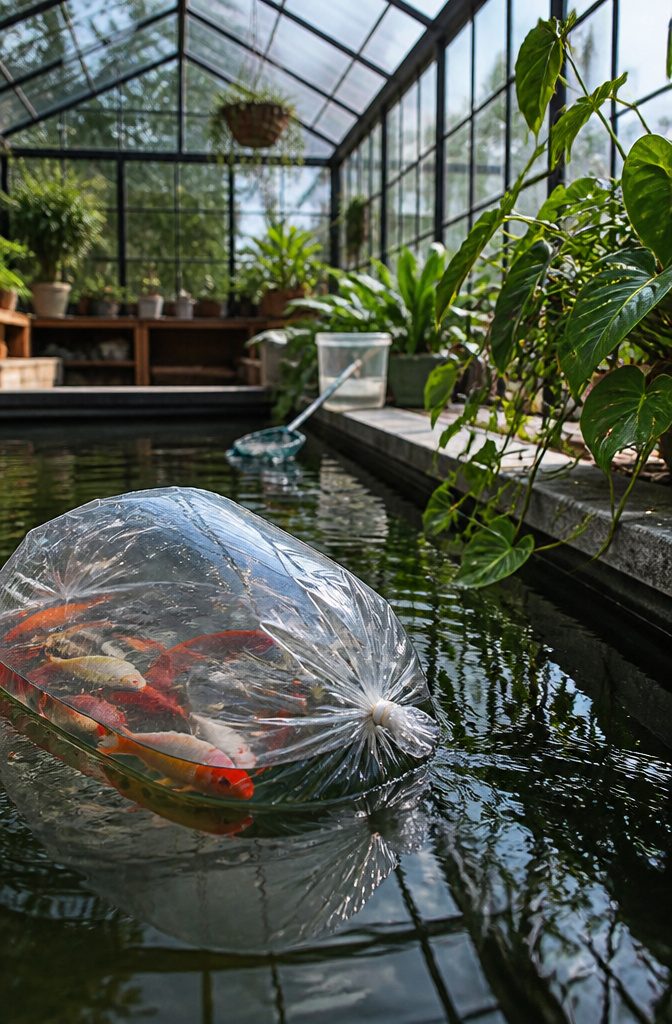
Fish added too fast to a new pond die from ammonia spikes even when the water looks clear.
I float the bag for twenty minutes, then mix in small amounts of pond water every ten minutes until the temperature inside matches the pond within a degree or two.
Tilapia, goldfish, koi, catfish, bluegill, and trout each handle this transition differently, so I pick the species before I fill the bag.
Tilapia tolerate the widest temperature swing and mature fast enough to harvest in six months, which is why I would choose them for a greenhouse focused on production.
Goldfish and koi suit systems where the fish are ornamental; koi in particular grow large and live long, but they need space I would rather devote to grow beds.
Catfish and bluegill both suit North American climates and eat aggressively, though catfish stir sediment that can clog filters if the intake sits low.
Trout demand the most care during acclimation; they thrive in water in the high 40s to low 50s, and temperatures above 65 stress them enough that I would skip them entirely in a greenhouse that sees summer sun.
I add half my planned stock the first week, feed lightly, and watch for gasping at the surface or lethargy that signals ammonia or low dissolved oxygen. Only when they swim actively and eat consistently do I consider adding more.

Include: Blue Gas Line, 5/16 ID, 9/16 OD, 25ft Length,eight pcs 10-16mm Hose clamps; Material: Food Grade PVC Material for Beer Gas Line and Stainless Steel for Hose Clamps;
Add the First Plants
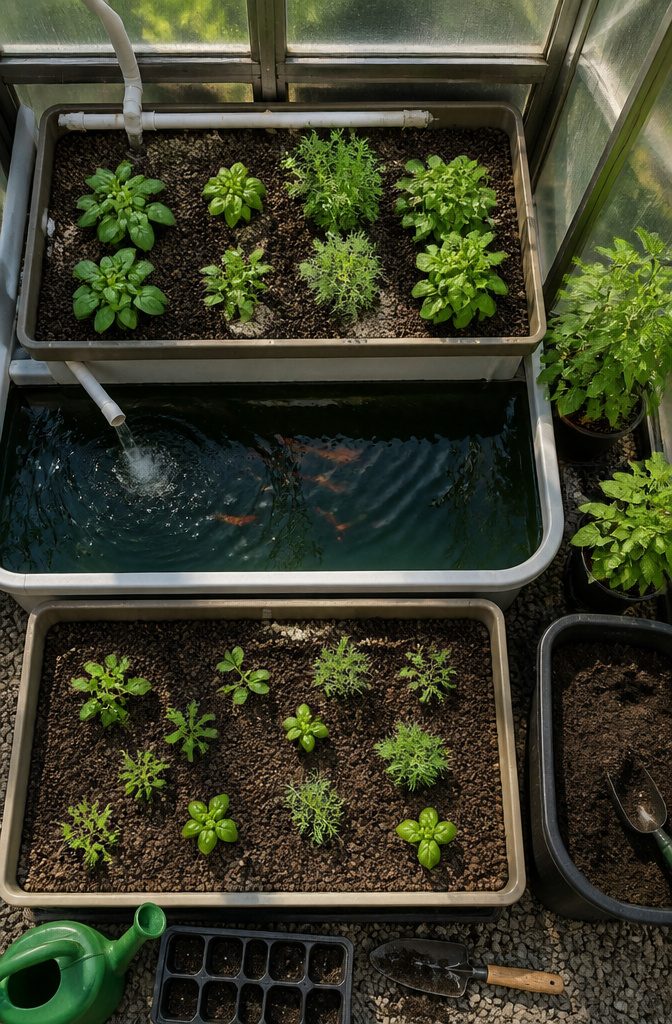
Lettuce and herbs are the plants I would start with in any new aquaponics system. They grow fast, pull nutrients out of the water quickly, and you can harvest within weeks instead of months.
Leafy greens like these do not demand heavy feeding, so they keep the system balanced while the fish population and bacteria colony find their rhythm.
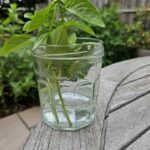
Herbs fit especially well because they stay compact and keep producing over a long season. Basil, parsley, cilantro, chives, mint, oregano, and thyme all handle the constant water flow without complaint, and a single plant yields cuttings for months.
Tomatoes and peppers can work too, but I would hold them until the system matures. They are heavy feeders and will dominate a small setup, hogging nutrients and sprawling across grow beds if you do not prune hard.
One grower found his three tomato plants so aggressive they overran a neighboring bed and starved out taro planted there.
If you do add them, treat tomatoes like a commitment: trim suckers regularly, strip non-fruiting leaves, and keep them manicured practically bare to force energy into fruiting branches rather than foliage.
Monitor and Fine-Tune
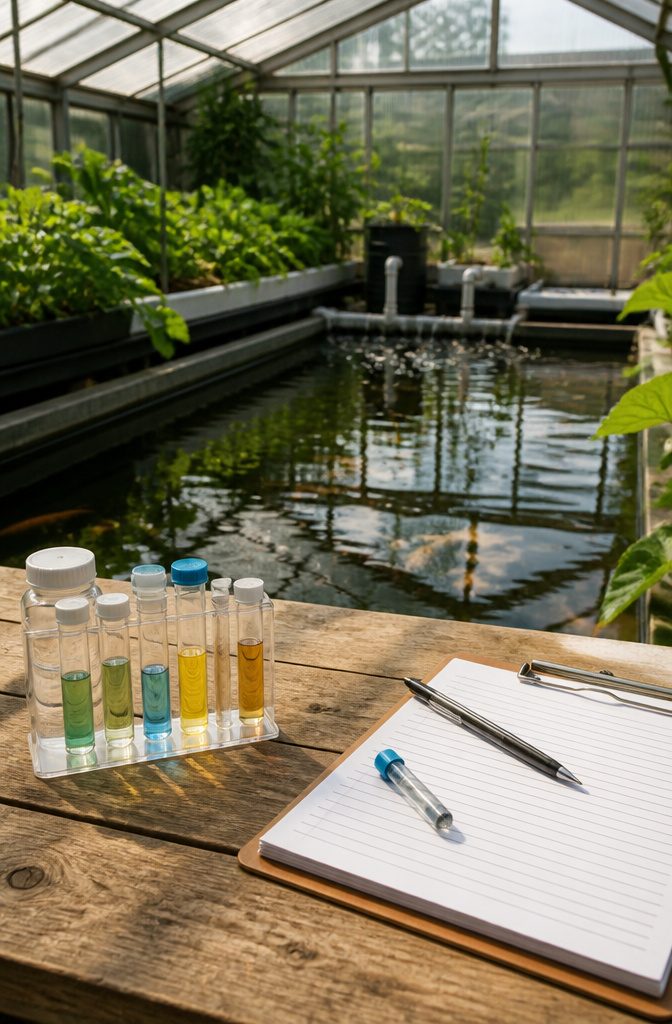
Once your greenhouse with fish pond is running, the real work shifts to watching numbers that tell you whether the biology is keeping pace. pH, ammonia, nitrite, and nitrate are the four readings that matter most, and a simple liquid test kit covers all of them for less than the cost of replacing a single fish.
Fish waste breaks down into ammonia first, which is highly toxic. Bacteria then convert it to nitrite, still dangerous, and finally to nitrate, which plants consume.
Until that colony of beneficial bacteria is fully established, which takes a few months, ammonia and nitrite can spike fast enough to kill. I would test twice weekly during startup, then settle into a weekly rhythm once readings flatten out.
Temperature and water level belong on the same checklist. A pump running dry for an afternoon will cost you more than a year’s worth of test strips, so I glance at the reservoir level every time I walk in.
The same goes for fish behavior, lethargy or gasping at the surface reads clearer than any strip.
One adjustment at a time is the rule I would follow.
Drop the pH with a small dose, wait three days, and retest before touching anything else. Early tweaks stay small; late corrections turn into emergencies.
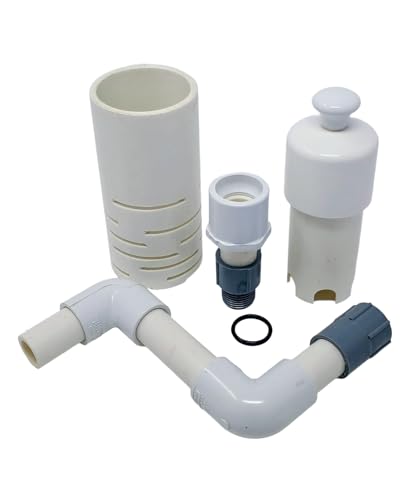
What you get is: One 2" pvc gravel shield x 5" High and SLOTTED for maximum drain and maximum One 1 1/4" pvc NO CLOG bell x 4" high with cap and pull handle One pair male and female threaded adapters with "o"ring to match for the bulkhead adapter Two 1/2" 90s One 2" and one 3" and one 4" piece of 1/2" pvc pipe One 1/2"
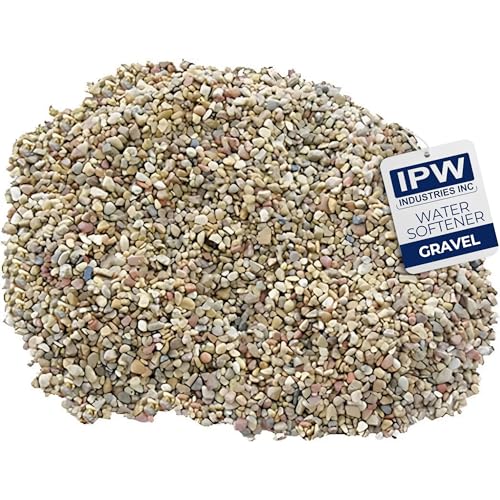
EXTENDS FILTRATION LIFESPAN: Increase the durability of your water softener, carbon filter, and aquarium filter with filtration-grade garnet gravel. Under-bed foundation design ensures prolonged performance in filter tanks and whole house water filter systems, reducing frequent replacements. Works as aquarium substrate for fish tank setups, terrarium substrate, landscape rocks, filter media for reverse osmosis water filter, and pool filter systems.

10LBS Expanded Clay Pebbles: 7-15mm leca balls,lightweight plants growth media(soil).
How Aquaponics Works
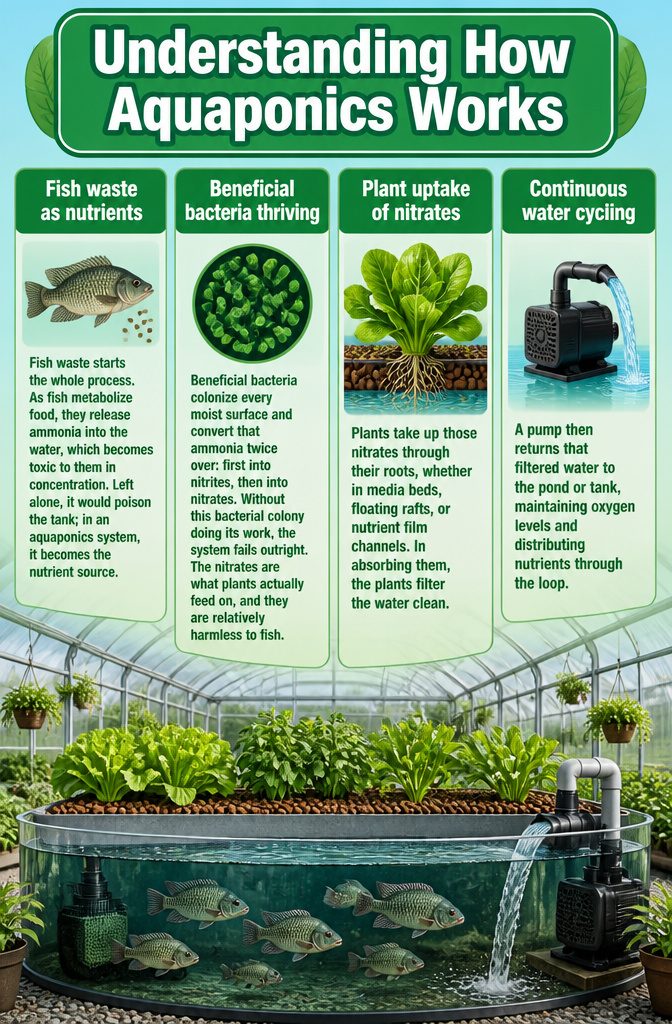
Fish waste starts the whole process.
As fish metabolize food, they release ammonia into the water, which becomes toxic to them in concentration. Left alone, it would poison the tank; in an aquaponics system, it becomes the nutrient source.
Beneficial bacteria colonize every moist surface and convert that ammonia twice over: first into nitrites, then into nitrates.
Without this bacterial colony doing its work, the system fails outright. The nitrates are what plants actually feed on, and they are relatively harmless to fish.
Plants take up those nitrates through their roots, whether in media beds, floating rafts, or nutrient film channels.
In absorbing them, the plants filter the water clean. A pump then returns that filtered water to the pond or tank, maintaining oxygen levels and distributing nutrients through the loop.
This continuous cycling means you are not adding fertilizer and you are not dumping wastewater. The fish feed the plants, the plants clean the water, the bacteria make the exchange possible, and the pump keeps everything moving.
Set it up right and the maintenance is mostly monitoring; set it up wrong and the fish die or the plants starve, usually because the bacterial colony was rushed or skipped.

Efficient Biological Filtration: This 100 pcs aquarium bio balls filter media features a porous design with an inner sponge core, creating increased surface area for biological filtration and supporting stable water conditions in freshwater and saltwater aquarium systems

Powerful Pump Functions: Includes a max flow rate of 660 GPH (2500 L/H) and a max lift height of 8.2 feet; Powered by 40W, 110-120V/60Hz – ideal for circulating large volumes of water efficiently; Product size: 5.9" x 4.3" x 6.1"; 5ft power cord for flexible installation

Epoxy-Sealed Motor & 176°F Over-Temp Protection: Epoxy resin resists moisture and corrosion. Thermal sensor triggers automatic shutoff at 176°F to prevent overheating — even during accidental dry runs. Suitable for extended use in small ponds, fountains, and water features.
What You Need First
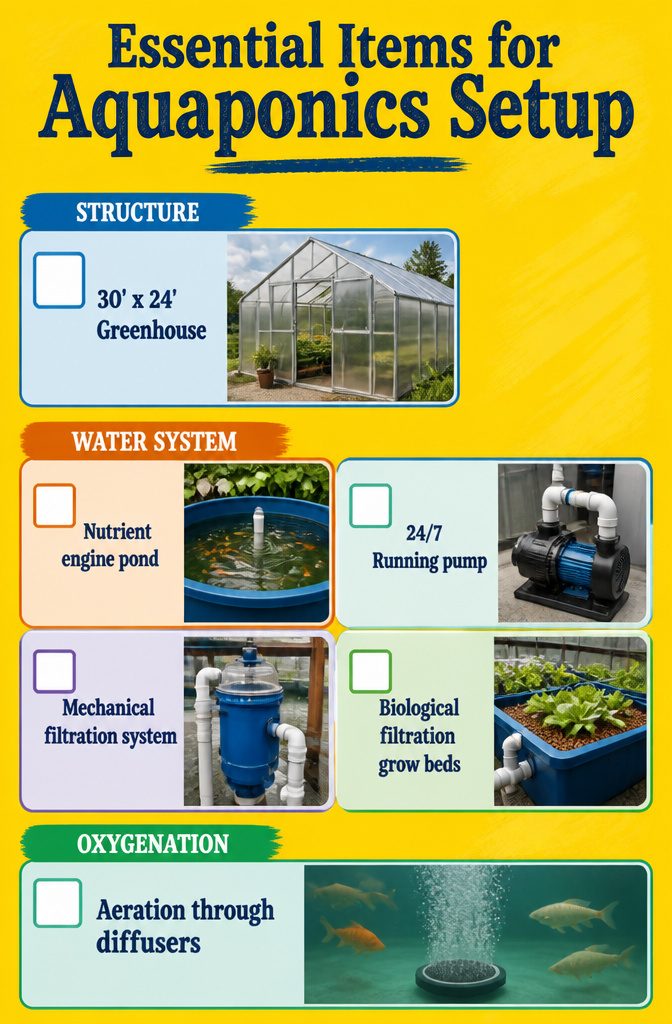
A 30′ x 24′ greenhouse gives you room to work with without swallowing the whole yard, and the components inside matter more than the frame itself.
The pond is your nutrient engine: fish waste feeds the system, but only if water keeps moving.
A pump running 24/7 draws from the bottom of the tank where solids settle, pushing that water through filtration before it ever reaches your plants.
Filtration splits into two jobs. Mechanical filtration, usually a swirl separator, traps solid waste so it doesn’t clog the grow beds.
Biological filtration happens in the grow beds themselves, where bacteria convert ammonia into nitrates the plants can actually use. Skip either step and you are cleaning sludge by hand or watching plants starve.
Grow beds sit above the pond, filled with media that roots can grip while water floods and drains on a cycle. The auto-siphon empties the bed back to a sump tank, then refills, giving roots alternating moisture and oxygen.
Aeration runs separately from water circulation. Warm weather drops dissolved oxygen fast, and fish, roots, and bacteria all compete for what is left.
An air pump pushing through diffusers at the pond bottom buys you margin on the hottest days. I would not run a system without it, even with good water movement, because circulation distributes oxygen but does not replace adding more.
Fish and Plant Pairings That Work
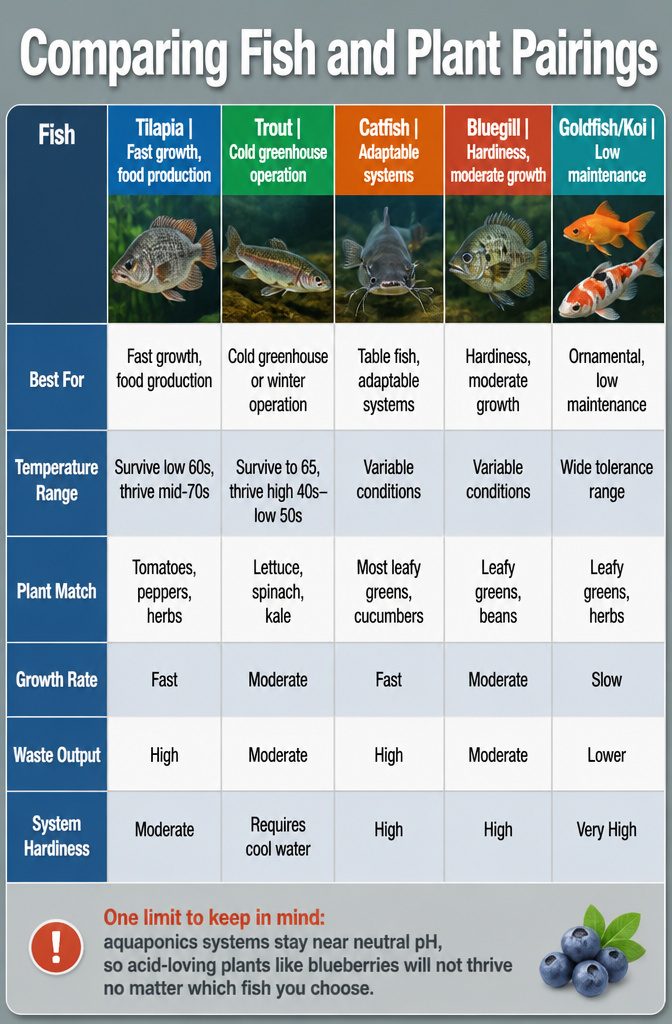
Tilapia is the workhorse most aquaponics growers start with, and I would too.
They survive water temperatures down to the low 60s but only put on real growth once the thermometer hits the mid-70s, which matches the warm conditions tomatoes and peppers prefer.
Trout run the opposite direction: they top out at 65 degrees and thrive in the high 40s to low 50s, pairing naturally with cool-weather greens like lettuce and spinach that would bolt in a tilapia tank.
Catfish and bluegill both tolerate variable pond conditions, and catfish in particular grow fast enough to make them worth raising for food.
Goldfish and koi trade harvest weight for hardiness, producing less concentrated waste but surviving temperature swings that would stress fish destined for the plate.
For a greenhouse with fish pond setup aimed at vegetables rather than fillets, I would skip the food fish entirely and run goldfish; the nutrient output is lower, but so is the maintenance and the risk of a die-off.
| Fish | Best For | Temperature Range | Plant Match |
|---|---|---|---|
| Tilapia | Fast growth, food production | Survive low 60s, thrive mid-70s | Tomatoes, peppers, herbs |
| Trout | Cold greenhouse or winter operation | Survive to 65, thrive high 40s–low 50s | Lettuce, spinach, kale |
| Catfish | Table fish, adaptable systems | Variable conditions | Most leafy greens, cucumbers |
| Bluegill | Hardiness, moderate growth | Variable conditions | Leafy greens, beans |
| Goldfish/Koi | Ornamental, low maintenance | Wide tolerance range | Leafy greens, herbs |
One limit to keep in mind: aquaponics systems stay near neutral pH, so acid-loving plants like blueberries will not thrive no matter which fish you choose.
Frequently Asked Questions
What are the best fish for aquaponics?
Tilapia, goldfish, koi, catfish, bluegill, and trout all work well, depending on your goals.
Tilapia grow fast and handle temperature swings, making them ideal for food production in warm greenhouses. Trout suit cold setups with lettuce and spinach, while goldfish and koi trade lower waste output for hardiness and less maintenance.
How do I maintain water quality in an aquaponics system?
Test pH, ammonia, nitrite, and nitrate twice weekly during startup, then weekly once readings stabilize.
Keep the pump reachable for intake cleaning, use ball valves at junctions so you can isolate sections for repair, and check the reservoir level every time you enter the greenhouse.
One adjustment at a time, with a three-day wait before retesting, prevents overcorrection.
What plants can I grow in aquaponics?
Lettuce, herbs, and leafy greens are the easiest starts, with harvest possible within weeks.
Tomatoes, peppers, cucumbers, and squash need a mature system with higher nutrient loads and heavier feeding. Avoid blueberries and azaleas; aquaponics stays near neutral pH, and acid-loving plants cannot thrive in that range.