The ideas ahead run from a weekend of potted flowers on a stone wall to a front foundation rose garden that asks for pruning and deadheading, with layered beds, curve-cut lawns, river stone mulch, and plenty in between.
What decides which one belongs in your yard is how much upkeep you will actually keep up after the planting day passes, not how pristine the bed looked when the camera came out.
A raised bed built from dry-stacked stone with drainage behind the wall can fix soggy spots and spare your back, though it heats up and loses moisture faster than ground-level soil, so I water more or mix in extra compost before planting.
[link-whisper-related-posts]1. Layered Flower Bed
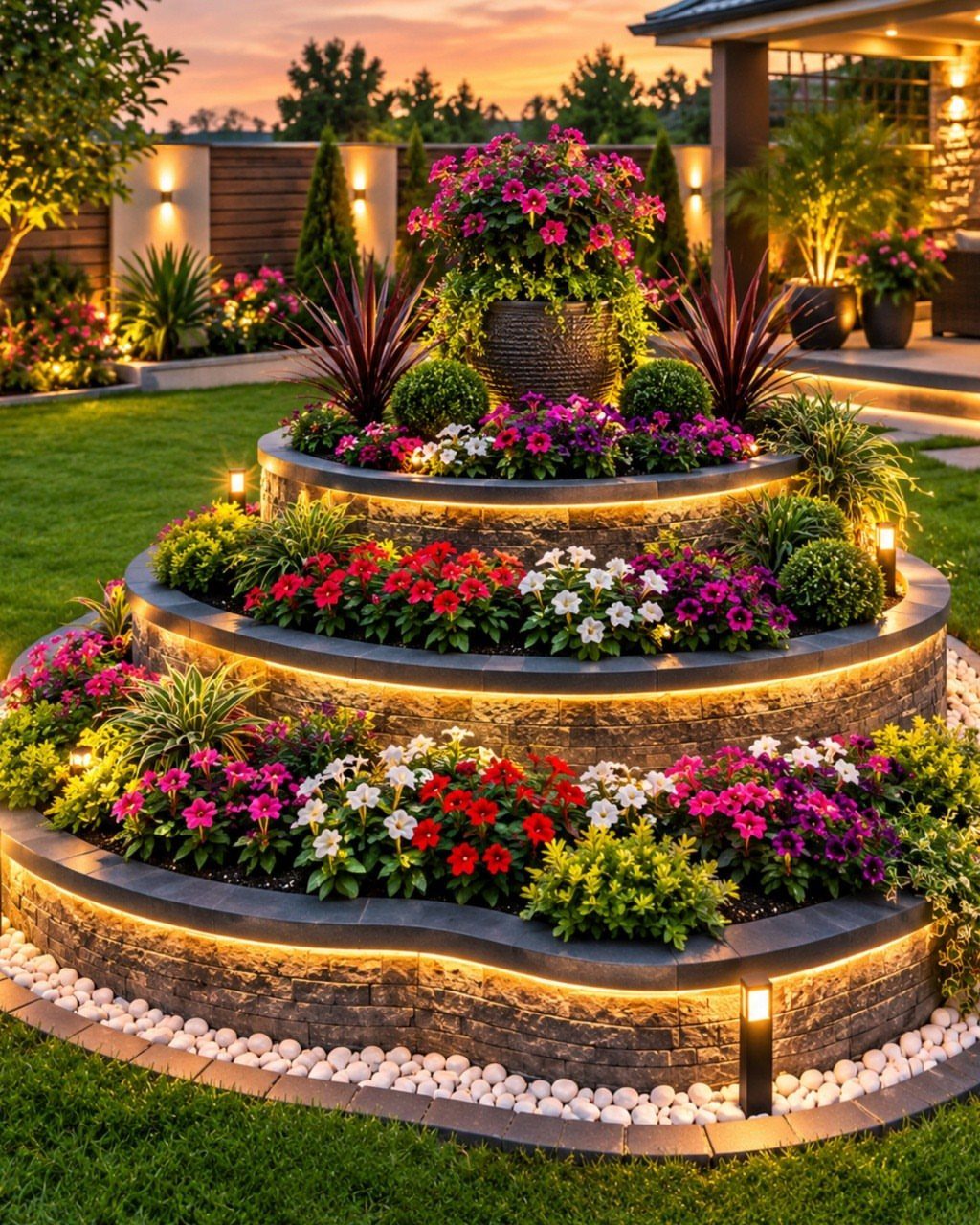
A layered bed builds height from back to front or center to edge, so every plant stays visible. Stone risers with tucked-in lighting mean you are buying retaining material as well as soil.
Check your slope and your sun before you commit. Tiering holds water differently at each level; the top dries fastest and suits plants that like sharp drainage, while the bottom collects runoff and wants something thirstier.
I would build the structure first, test the lighting, then plant, because the stone defines your working room and moving it after is not a weekend job.
2. Perennials in Front of House
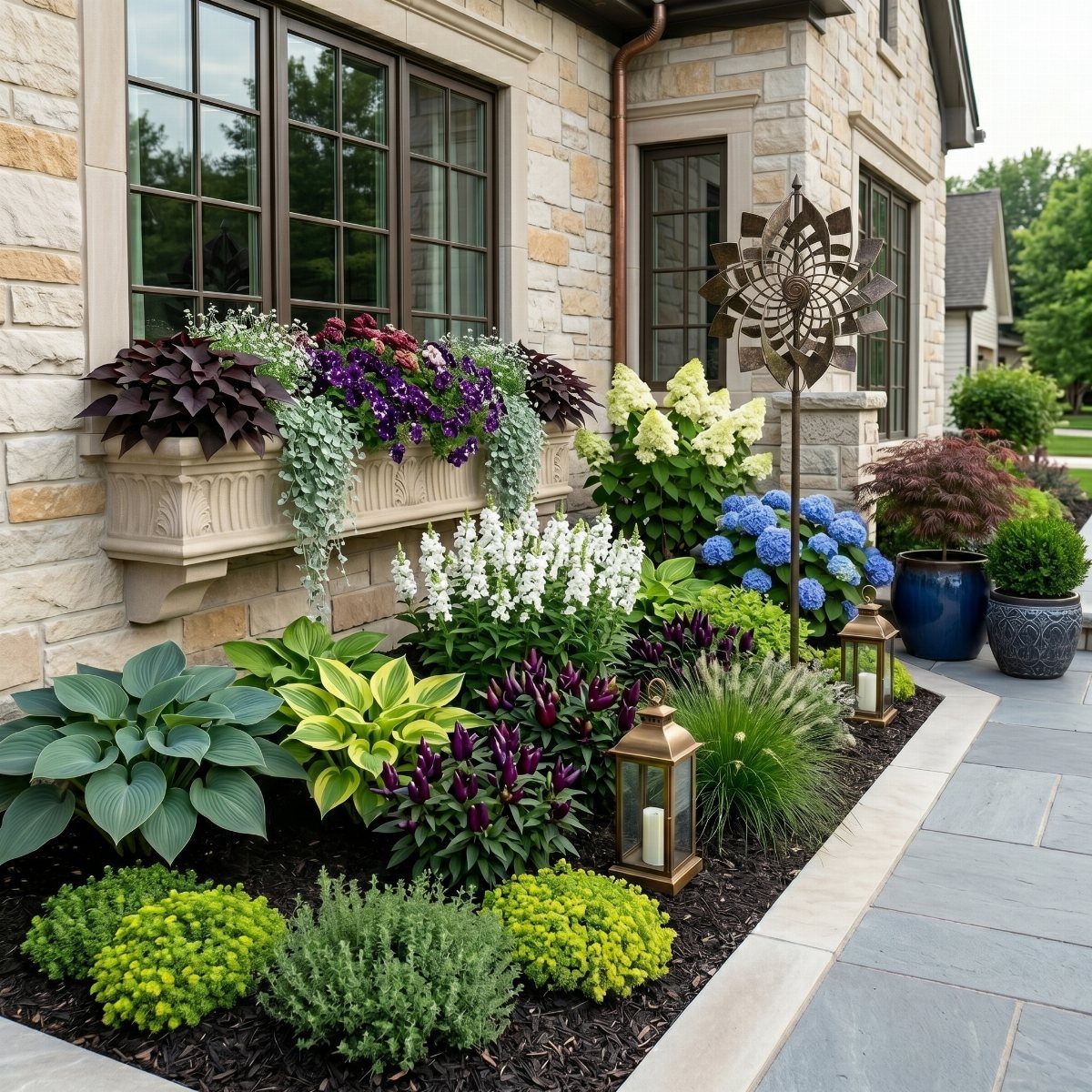
Perennials come back, which matters when you are putting in the work yourself and do not want to rebuy every spring.
Hostas, snapdragons, and hydrangeas share space with a window box and a few decorative pieces, so let foliage carry the months when nothing blooms.
Hostas take shade and fill space; snapdragons give you height and repeat bloom if you deadhead; hydrangeas anchor the corner and need room to spread.
I would decide early whether that window box is staying, because it competes for attention and water with the bed below. A wind spinner or lantern is fine, but one per bed is plenty.
The real test is year three, when the perennials have filled out or crowded each other. Plan to divide or relocate then, not to add more.

20-Pack Garden Edging Set: Includes 20 gray plastic edging panels. Each panel measures approx. 9.65 x 3.94 x 9.06 in and weighs about 0.13 lb. When connected, the full set covers up to 16 ft.

Quality Metal Material: Our galvanized garden edge is processed using high-precision CNC technology, ensuring accuracy down to every millimeter. Innovative 3D ripple design not only enhances the aesthetic appeal of the fence but also strengthens its structural integrity.
3. Cottage Look Flower Bed
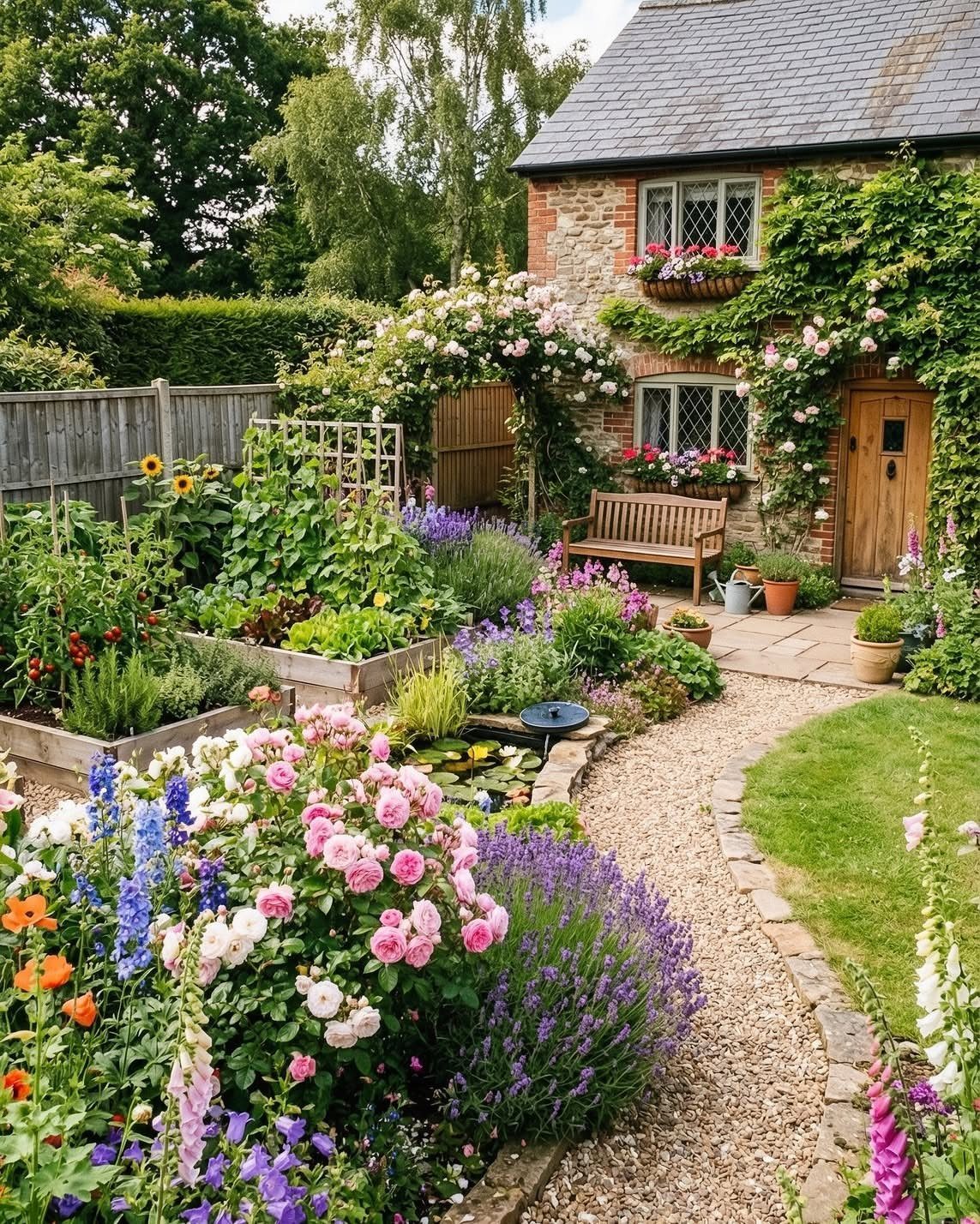
This is the loosest style on the list and the hardest to keep loose rather than messy.
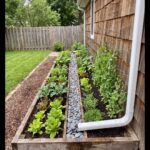
Roses, lavender, and climbers spill over a gravel path with raised vegetable beds mixed in, giving you scent, color, and a working garden in one view.
Gravel paths need edging or the stones wander into the beds every season.
I would use steel strip or brick set flush, not the plastic rolls that lift and snag your hoe. Lavender wants full sun and sharp drainage; plant it on the slope or mound if your front holds water.
Cottage style permits utility, but I would mix edibles and ornamentals only if you are willing to fence for rabbits or plan to replace what they take. Roses need spring pruning and fall cleanup; skipping either shows fast.
4. Modern Flower Bed with Evergreens and Grasses
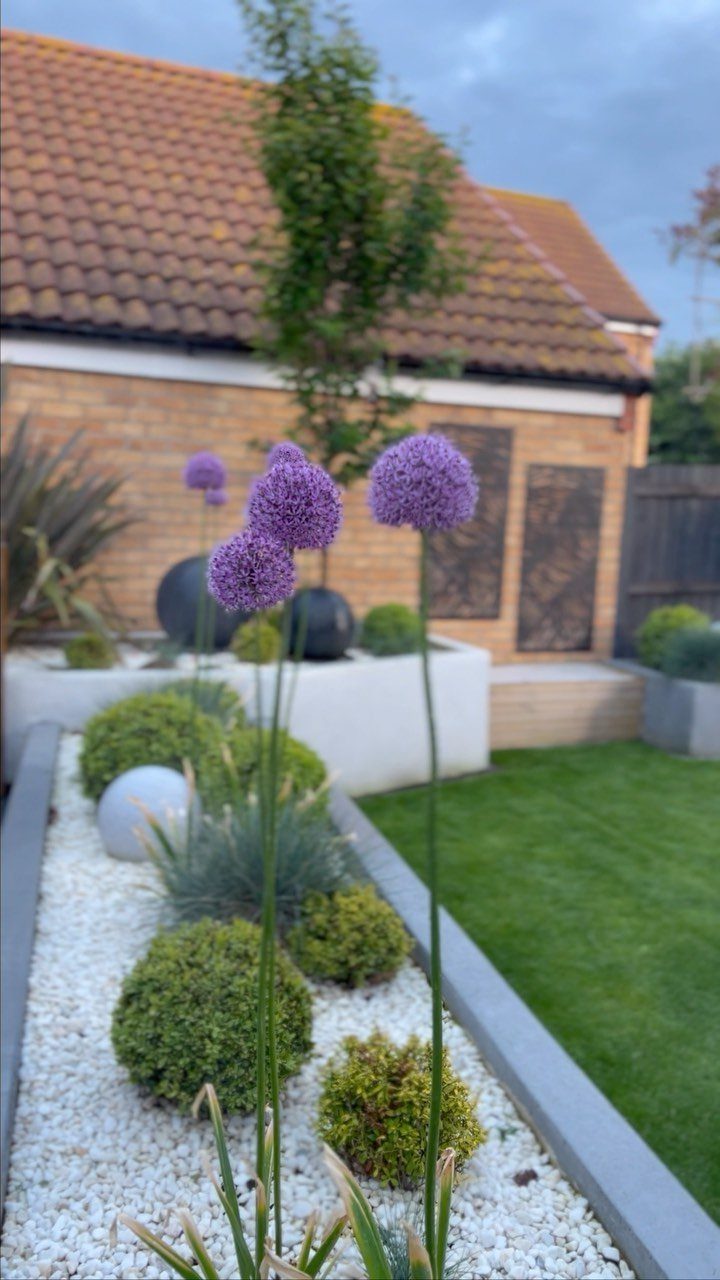
Simple shapes and a narrow palette read as modern: rounded shrubs, upright grasses, allium globes on tall stems, white gravel, clean edges.
This is the lowest-effort look after the first year, because evergreens and grasses do not demand the deadheading and dividing that keep cottage beds in check.
White gravel reflects heat and shows every leaf, so I would keep it to beds that do not sit under trees.
Alliums are spring bloomers; after they fade, the grass and shrub structure carries the bed through summer and fall. Ornamental grasses want a hard cut in late winter, before new growth starts.
I would plan for that chore when you place the bed, because a full-size grass clump is awkward work in a tight spot against the house. The evergreen shapes need shearing once or twice a year to stay crisp.
5. Raised Flower Beds
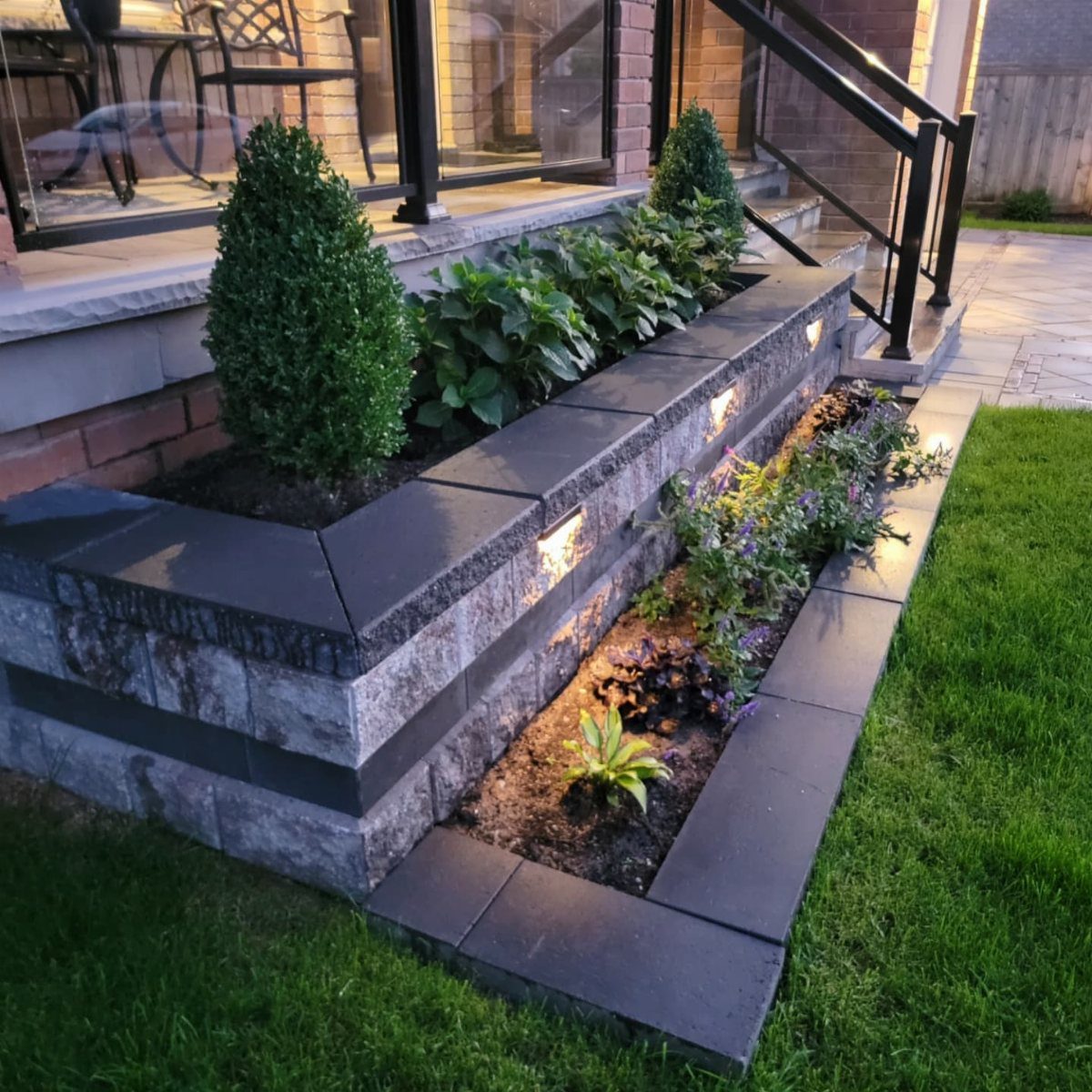
Raised beds lift the root zone above your existing grade, which solves drainage problems and saves your back. Stone construction, tiered and lit, running along porch steps means built-in and permanent, not a kit you move next season.
Stone holds heat and dries faster than wood or soil level; plan to water more often, or work in extra compost before you plant.
Lights under each rim look sharp but need conduit rated for wet locations and a transformer you can actually reach to replace.
I would check the porch footer and the bed depth against your frost line; a raised bed that heaves against the house foundation is expensive to fix.
Building dry-stacked with drainage behind the wall, not grouted tight, lets water escape and the stone adjust with the seasons.
6. Curved Lawn Bed
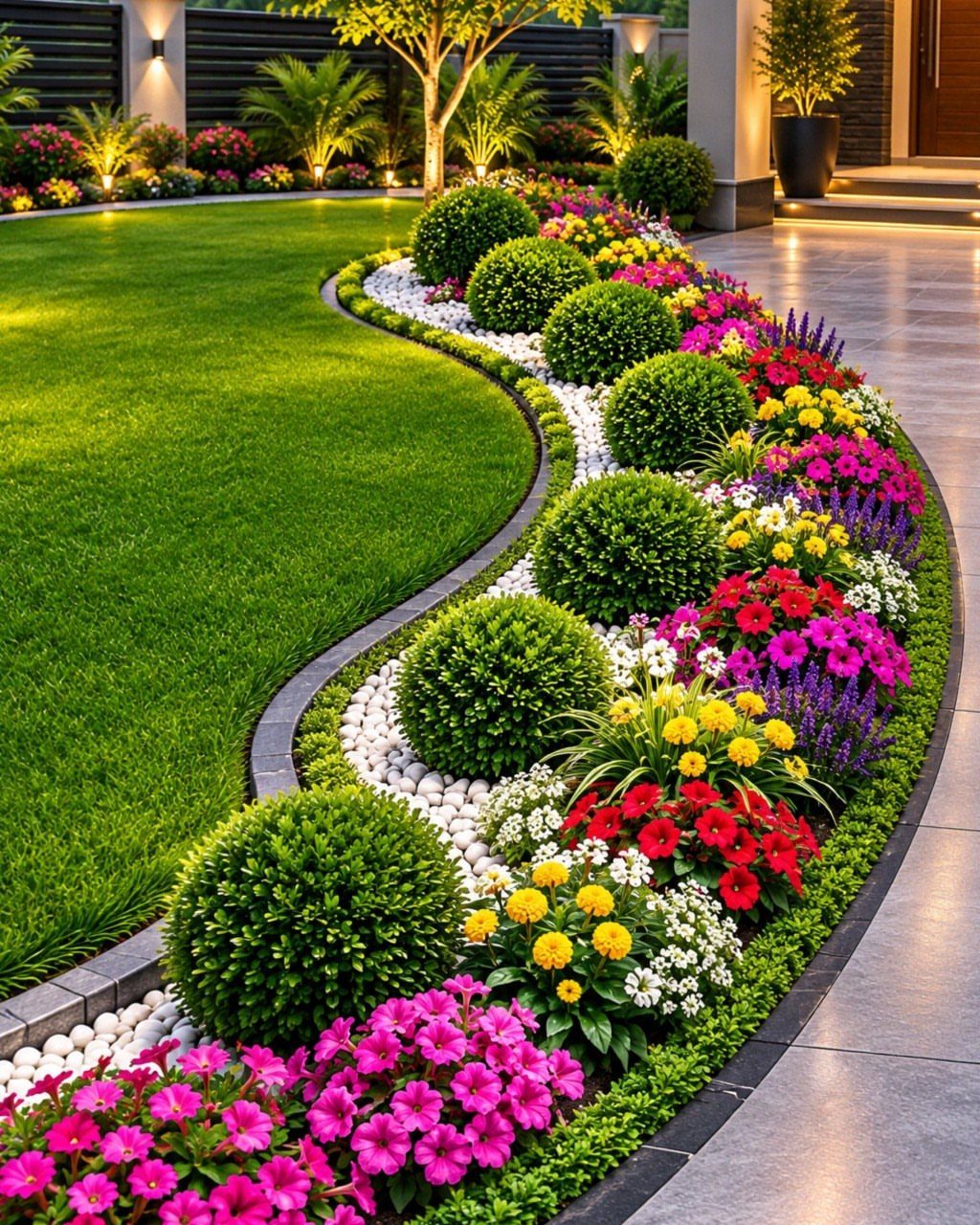
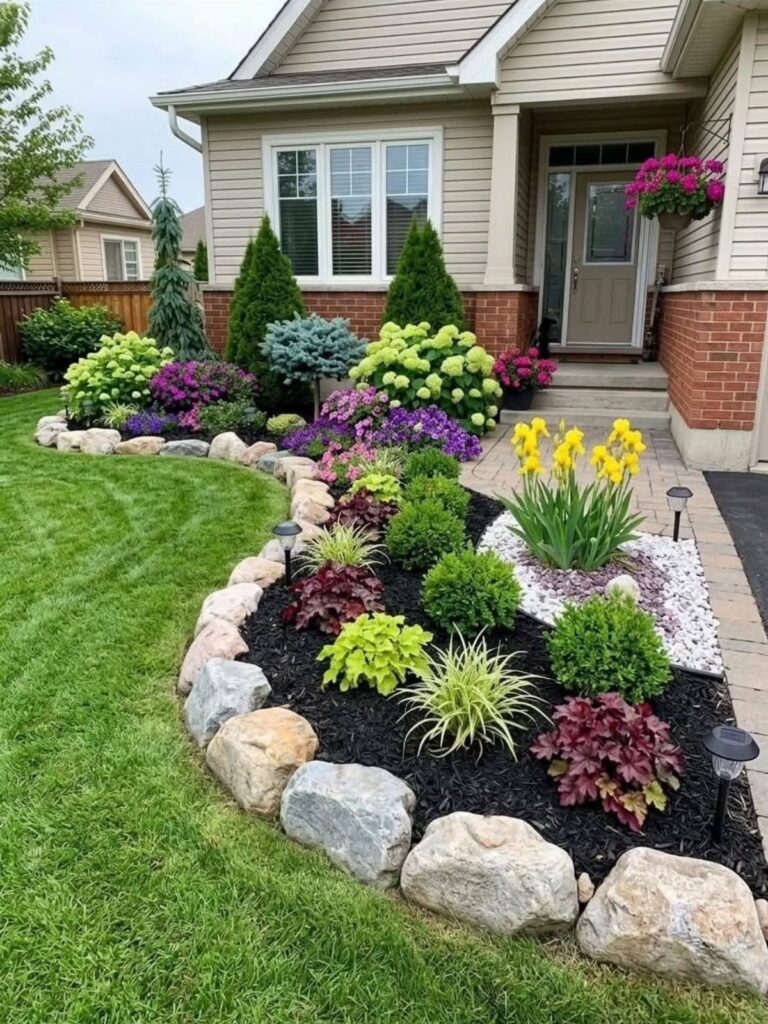
A straight bed against a rectangular house can feel like a fence; a curve softens the transition and leads the eye along the property line.
An S-shaped border with grey pavers separating bed from lawn, white river pebbles inside, and rounded boxwoods with mixed flowers.
The curve works only if you can maintain it. A wobbly, overgrown edge reads as neglected fast, so I would commit to a powered edger or a half-moon spade twice a season minimum.
Pavers give you a clean line to cut against; set them at soil level or your mower will hit them.
River pebbles as mulch suppress weeds and do not rot, but they do not enrich soil either, so I would lean on slow-release fertilizer and accept that some weeding still happens between stones.
Boxwoods need shearing to stay round; let them go and you have green blobs instead of structure.
7. River Stone Mulch Flower Bed
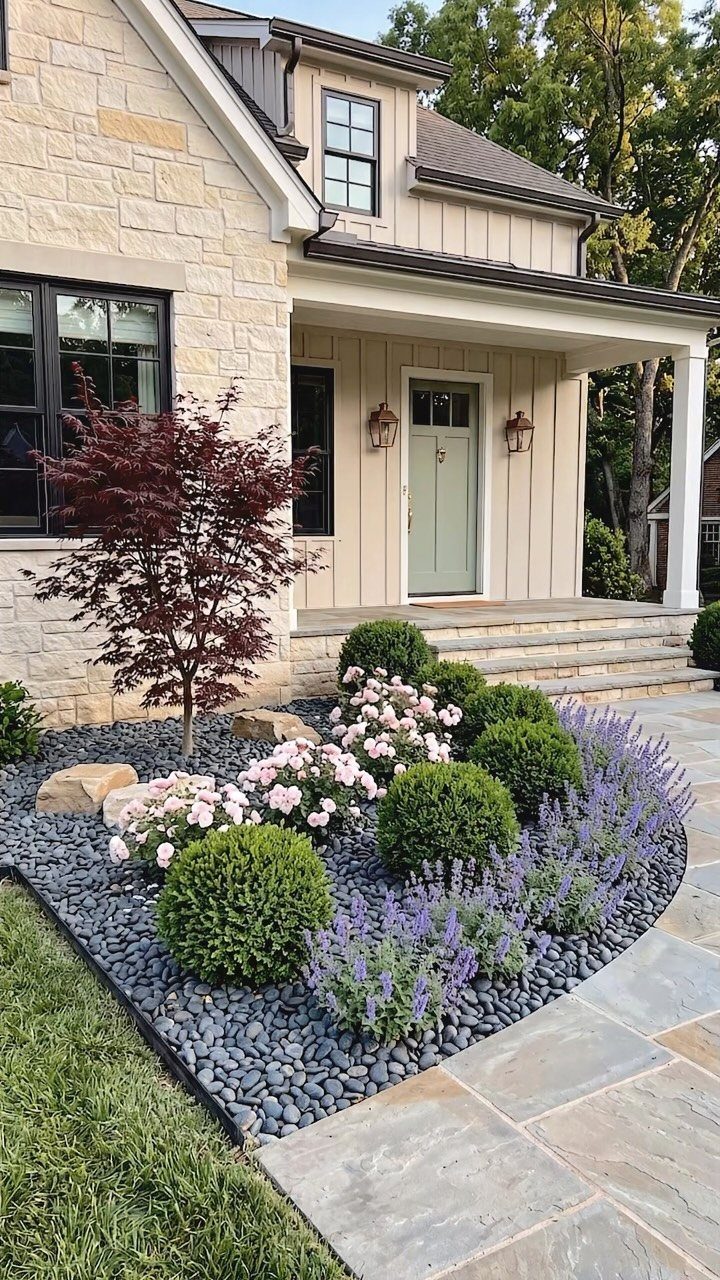
Dark grey river rock as mulch gives you a bed that does not rot, blow away, or need yearly refresh.
The stones sit heavy, suppress most weeds, and suit a dry front where bark would fade and float off in rain.
River stone holds heat and weighs a lot. Stone mulch warms the soil faster in spring and holds that warmth, which can stress shallow roots in a hot July.
I would lay landscape fabric first, not plastic, so water passes through but the stones do not sink into mud over time.
A Japanese maple in this mix wants its root flare clear of stone; build a shallow well of soil at the base and keep the rock back a few inches, or the trunk stays wet and invites rot.

EASYFLEX DECORATIVE NO-DIG LANDSCAPE EDGING: Get a beautifully landscaped yard without all the work of a dig-in lawn edging; simple installation without trenches or shovels; color may vary due to the unique manufacturing process.

EASYFLEX DECORATIVE NO-DIG LANDSCAPE EDGING: Get a beautifully landscaped yard without all the work of a dig-in lawn edging; simple installation without trenches or shovels

Durable & Flexible Material GTSABWAY garden edging is Made from high-quality metal, ensuring superior durability and flexibility. Easily shape it into straight lines,curves, circles, or unique contours ,without cracking,Can withstand all kinds of weather conditions, ensuring long-term durability and reliability. providing reliable Garden Border solutions.
8. Front Foundation Rose Garden
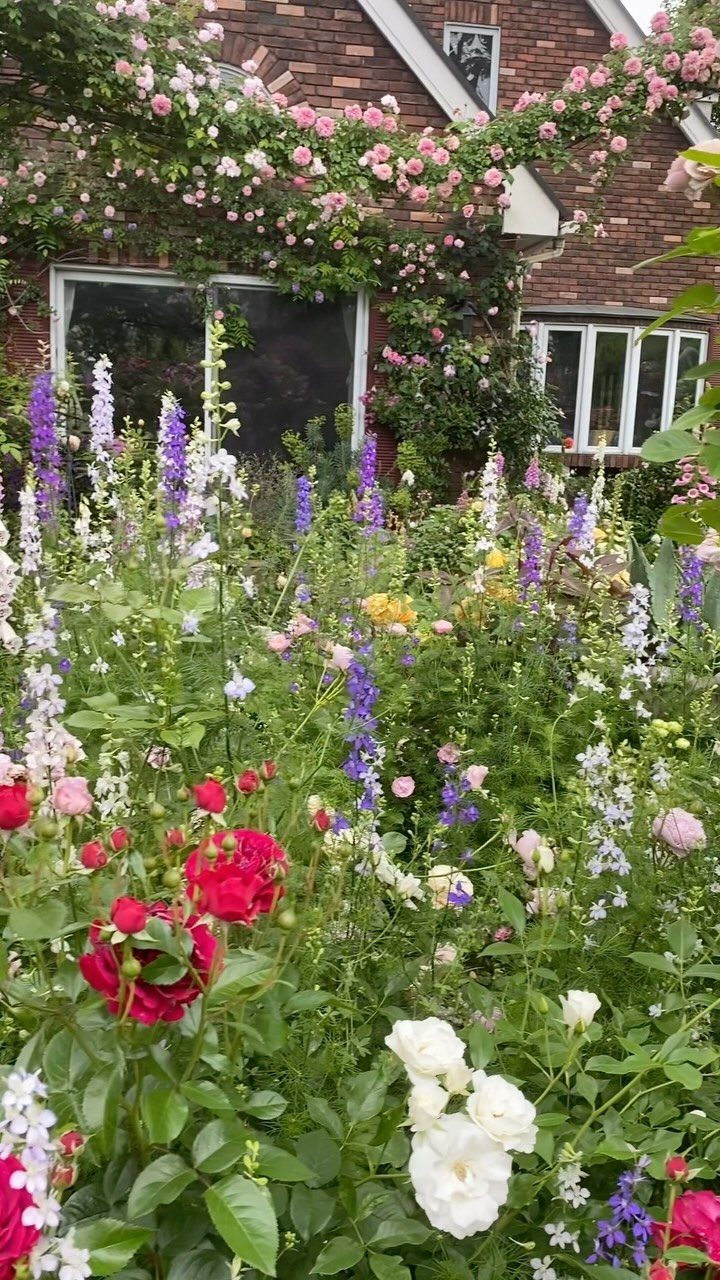
A rose garden against brick reads traditional and dense, with color from late spring through fall if you choose repeat bloomers and keep after them.
Red, white, and pink roses with tall purple delphiniums behind give you a classic palette that does not fight the brick.
This is the highest-effort entry on the list. Roses want spring pruning, summer deadheading, fall cleanup, and winter protection in zones 6 and colder; delphiniums are short-lived perennials that need staking and often replanting.
I would budget for a dedicated rose fertilizer and a spray program for black spot, because a diseased rose bed against your front windows is not a sight you want.
The density works only with air circulation; cram the stems tight and mildew arrives fast.
9. Hydrangea and Allium Front Bed
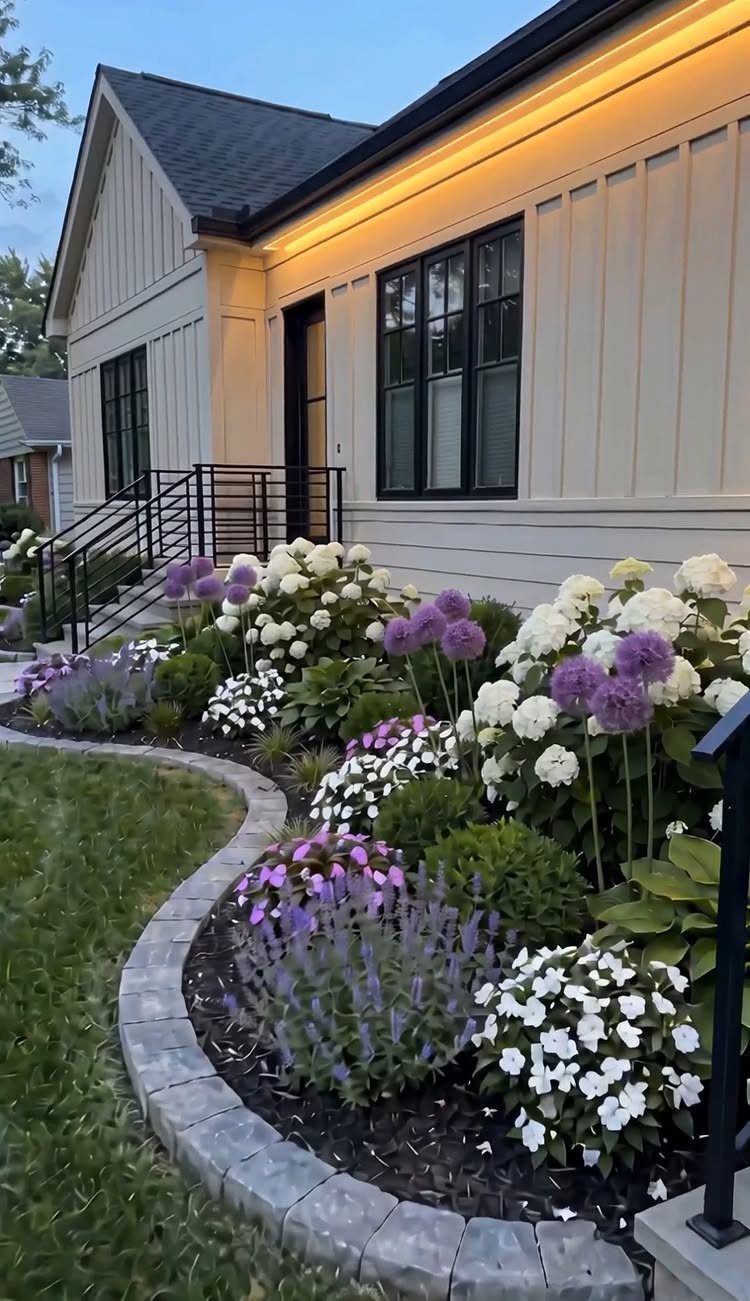
White hydrangeas with purple alliums give you 2 seasons of interest from a simple palette: allium globes in late spring, then hydrangea mopheads or lacecaps through summer.
Curved stone pavers as edging keep the bed neat against lawn without the upkeep of a clipped boxwood border.
Hydrangeas need water; alliums want drainage. Plant the alliums on a slight mound or toward the front edge where the bed dries fastest, and let the hydrangeas sit in the deeper soil toward the house.
I would check whether that hydrangea is a mophead or a panicle type, because pruning timing differs and cutting a mophead in fall removes next spring’s blooms.
The white annuals at the front are easy replacement color, but they do need replacing; budget for flats each May or let the allium foliage carry the bed after bloom.
10. Potted Flowers on Stone Wall
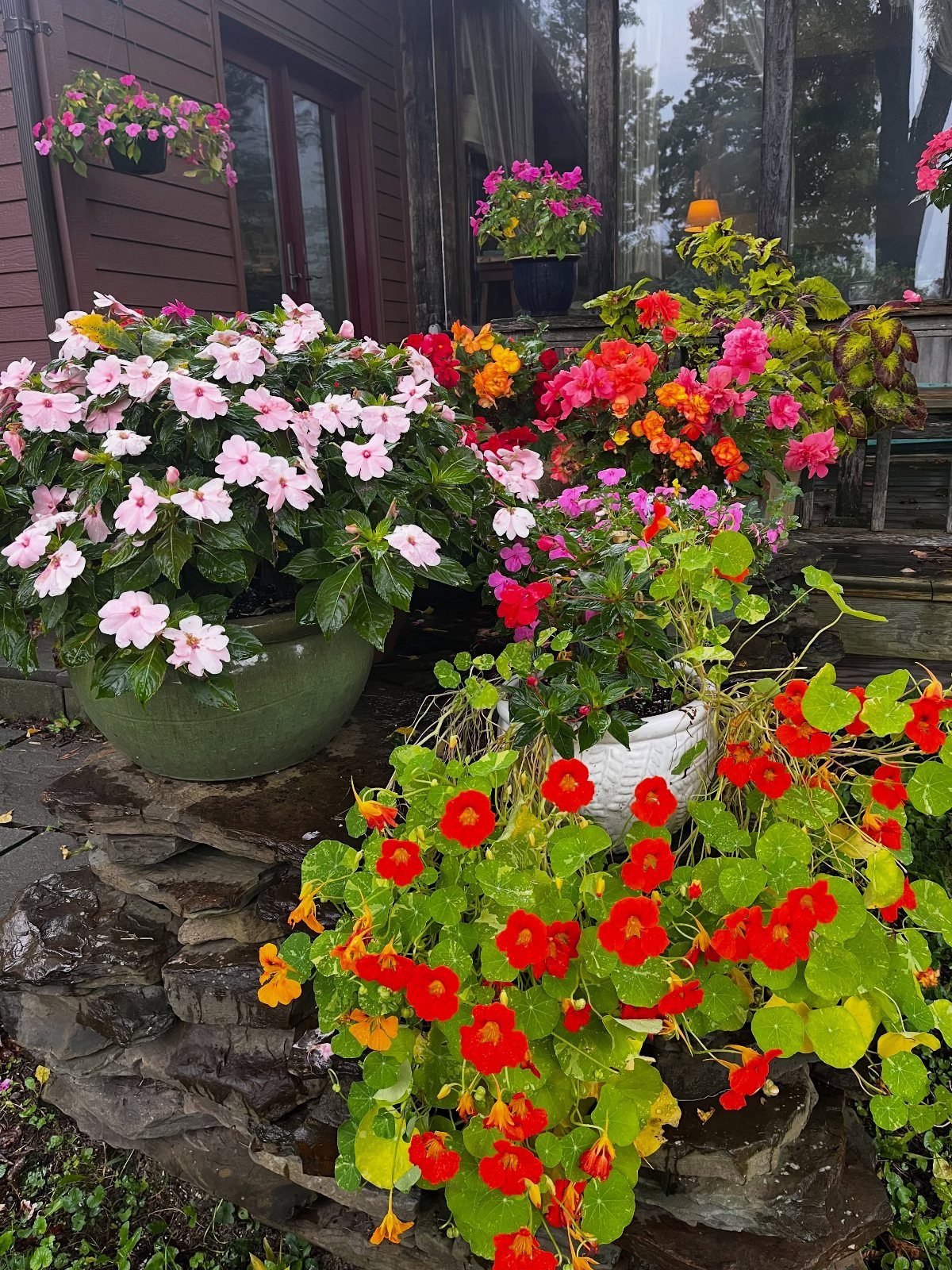
Pots on a low stone wall let you build color without digging into the ground, which matters when the soil is poor, the grade is steep, or you rent and cannot plant permanent beds.
Pink impatiens, begonias, and trailing nasturtiums spill over the rim and soften the stone.
The wall must be wide enough; a pot tipped by wind or a leaning elbow is a mess and a hazard on steps.
I would choose resin or fiberglass over terracotta at this scale, because a planter full of wet soil weighs enough without adding clay.
Nasturtiums trail far enough that you should set pots back from the wall edge or the stems hang into space instead of down the face.
Pots dry faster than any bed, and a stone wall reflects heat onto the roots. Plan to water daily in high summer, or install drip lines you can run on a timer.

10-PIECE LANDSCAPE EDGING BORDER - This lawn edging comes with 10 pieces of trim that create an eight-foot-long border for flower beds, gardens, or walkways. A trim-free flange on the side prevents grass from growing too close to the edging.
Choosing Plants
Sunlight exposure is the first filter I would apply to any plant choice. Six to eight hours of daily sun opens up full-sun shrubs, perennials, and annuals; anything less shifts you toward shade-tolerant options like hostas.
The only way to know your actual exposure is to check the same spot every 2 hours through a full day and record what you find.
I would do this in late spring, once the trees have leafed out and the angle is realistic for the growing season.
Mature size matters just as much. A hydrangea that grows large will swallow a narrow foundation bed; a delphinium that needs staking wants room where you can work around it.
Checking the label’s height and spread, then adding a third to both, is what I do; plants in good soil outperform the estimate. Layering by height only works if the back row does not outgrow its allotment.
Maintenance Tips
Mulch once a year, in spring after soil warms.
I lay enough mulch to block light from weed seeds without suffocating established roots. Keep it off plant stems and tree trunks; wet mulch against bark invites rot.
Water early morning, and water deeply rather than daily.
A single long soak once a week drives roots downward; frequent light sprinkling keeps them shallow and dependent. Annuals like petunias repay deadheading with longer bloom, so I would pinch spent flowers weekly.
I cut shrubs back once or twice a year to keep their shape and cut out anything dead.
The right season depends on the shrub: spring bloomers get trimmed after flowering, summer bloomers before spring growth starts. A missed cut is less damaging than a wrong-season cut on a hydrangea.
Soil Preparation
I would turn the existing soil to a spade’s depth before adding anything, breaking up compaction so roots can penetrate.
Mixing topsoil and compost in roughly equal parts with your native soil gives you better drainage and more nutrients; you are not trying to replace the whole bed, which would leave a sudden boundary between layers.
Compost feeds soil life and loosens clay; topsoil adds volume without the nitrogen spike of fresh manure. I would avoid peat-based mixes for front beds, because peat dries to a water-repelling crust and is hard to rewet once shrunken.
Test the mix by squeezing a handful: it should hold together then crumble when poked.
If water pools in the hole you dig, add more compost or consider a raised bed instead. The bed is only ready when a trowel slides in without meeting a hardpan layer.
Frequently Asked Questions
What flowers are good for the front of a house?
Hostas and hydrangeas are solid perennials for foundation beds, with hostas handling shade and hydrangeas anchoring corners; I fill in the gaps with annuals like snapdragons for season-long color.
Lavender and roses fit a cottage style if you have full sun and time for pruning.
Ornamental grasses and alliums carry a modern bed with less fuss. I would filter any choice first by how many hours of sun the spot actually gets.
How do I keep weeds out of flower beds?
Lay mulch once a year in spring after the soil warms, deep enough to block light from weed seeds. I keep it off stems and trunks; wet mulch against bark causes rot.
What is the cheapest way to landscape my front yard?
Perennials come back each spring so you are not rebuying annually. I would divide crowded plants after year three and spread them to new spots rather than buying more.