Plant care for houseplants is the practice of matching a plant’s needs to the conditions you actually have, not the ones you wish you had.
The most common mistake is overwatering on a schedule instead of checking whether the top 1 to 2 inches of soil are dry.
A $10 light meter reading in foot-candles removes the guesswork from placement, because a south-facing window in December delivers a completely different intensity than the same window in July.
[link-whisper-related-posts]Choosing the Right Plant
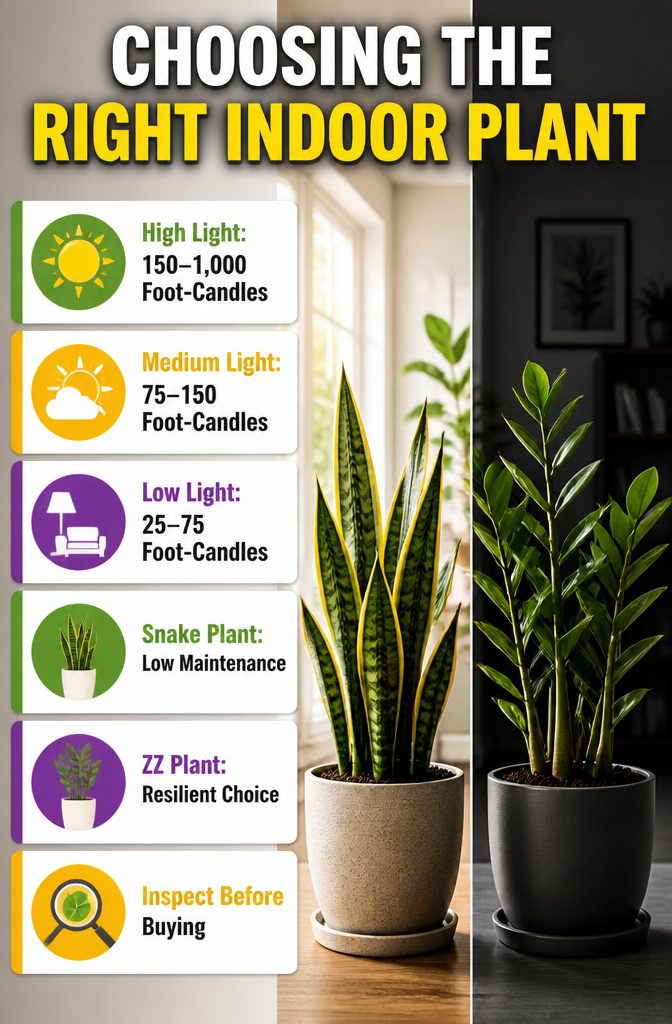
The best plant choice starts with an honest look at the light your space actually delivers.
Arizona Cooperative Extension puts the numbers in useful ranges: high light runs 150–1,000 foot-candles, medium sits at 75–150, and low light is 25–75. A cheap light meter from any garden center reads in those same three bands and removes the guesswork.
Optimum light levels ensure healthy, long-lived indoor plants. Match plants with locations that satisfy their basic light requirements.
For that 25–75 foot-candle zone, snake plants and ZZ plants are the pair I would point any beginner toward. Both tolerate the dim corners where most houseplants slowly decline, and neither punishes the inconsistent watering that comes with learning.
Before you buy, though, inspect the plant like you would any other purchase.
Check leaf undersides and the axils where leaves meet stem for insects or early disease damage. Pass on anything with yellowing, brown margins, wilted tissue, or the fake gloss of leaf shine.
Healthy new buds and young growth usually signal a plant worth taking home, while leggy, sparse foliage means it has already struggled under poor care.
Light Requirements
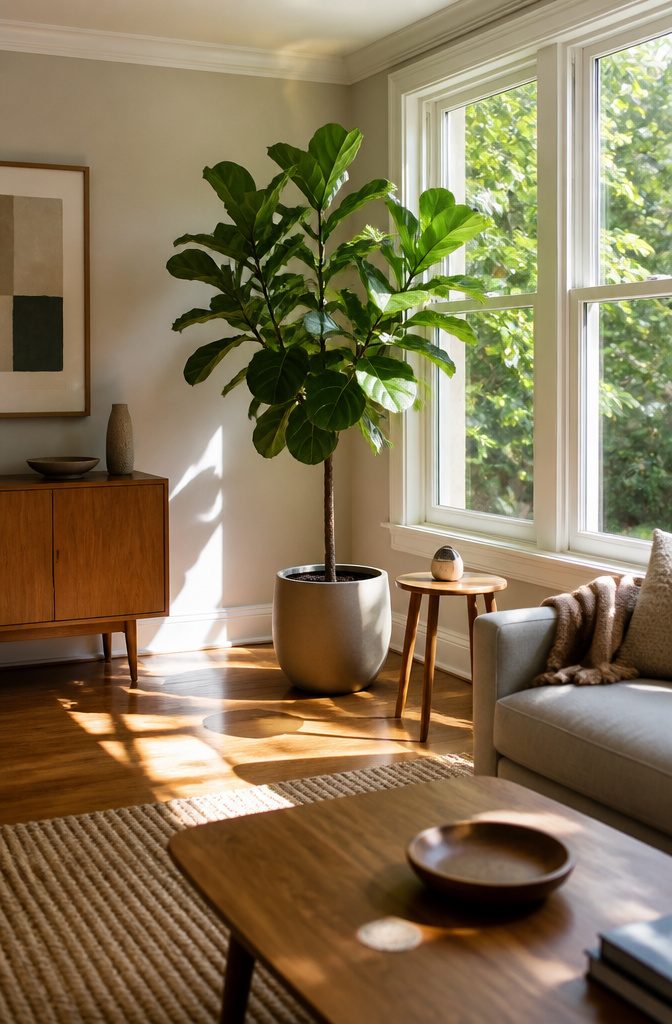
Foot-candles are the unit that actually matters when you are deciding where a plant lives. High light runs 150–1,000 foot-candles, medium sits at 75–150, and low is 25–75.
A south-facing window delivers the most intensity; east and west windows run about half that, and northern exposure drops to a quarter, which often lands even a windowsill in the low band.
Distance steals light fast. Within four feet of a large southeast or west window counts as high.
Four to eight feet back, or spots out of direct sun, fall to medium. More than eight feet from any window, or the center of a room, is low light territory.
Most flowering plants need high light to set buds.
Foliage plants split across all three bands. I would place a fiddle-leaf fig or a cactus in that bright south window without hesitation.
A snake plant or a pothos I would keep where the meter reads medium or even low, and I would water them less there and cut fertilizer by half.
A plant in too little light survives for months but stretches leggy and dull.
Too much, and the green pigment burns: leaves yellow overall, then brown in dead patches. The direction of your window matters more than most plant tags admit, and the season shifts it.
Winter light arrives from a lower, more southerly angle, so a south window that skirts a plant in summer may blast it in December.
I check mine with a cheap meter from the garden center. The ballpark reading beats guessing, and it costs less than replacing one plant you misjudged.
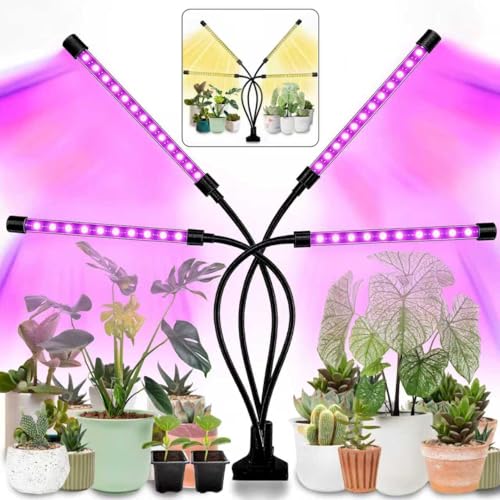
🌻Efficient LED Combination: This LED lamp has grow lights made up of 80 efficient growing LEDs ( 32 red lights, 12 blue lights,20 yellow lights and 16 white lights). It meets the conditions of plant growth without sunlight. 1--Full Spectrum(380nm-800nm): Suitable for all plants to root and sprout. 2--Red(660nm)+BLUE(460nm) Spectrum: for blooming and fruits. 3--Red+Blue+Full Spectrum: A mix of Red+Blue+Warm White is best to fuel the growth of your plants.

6000K Daylight Full Spectrum- Packed with 40 white and 8 red LEDs, this growth light throws a crisp 6000K beam that reads like real sunshine indoors. Built for flowers, herbs, peppermint, succulents, and seed starting, and flexible enough for hanging baskets, trellises, floor pots, and bonsai alike.
Watering
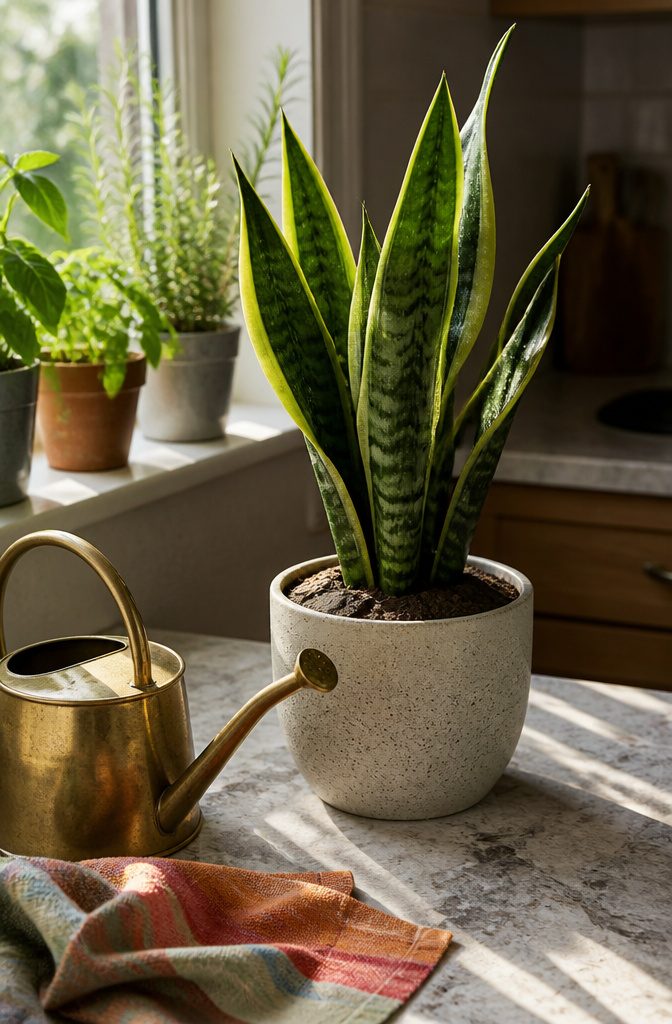
Overwatering kills more houseplants than pests ever do, and the culprit is almost always frequency, not volume. Water when the top 1 to 2 inches of soil are dry, never because the calendar says so.
Push your finger straight into the soil to the second knuckle. Any dampness at the tip means wait; dry means water now.
Pour room-temperature water evenly across the whole surface until it runs freely from the drainage holes. Half-measures create shallow roots and let fertilizer salts accumulate.
Come back in 30 minutes and empty the saucer. A plant standing in a puddle is being overwatered no matter how carefully you poured.
The leaves tell you what you missed. Yellowing lower leaves and a mushy stem base mean rot; crisp brown edges and drooping mean thirst.
Wilting is the confusing one: soggy soil plus wilting means rotting roots that cannot move water, while dry soil plus wilting means genuine thirst. When you are unsure, the finger test breaks the tie.
Schedules fail because a plant in bright sun dries out in four days and the same plant in a dim corner needs ten.
Small pots dry faster than large ones. Growth slows in winter, so evaporation does too; cut the frequency by half and let the soil speak for itself.
Soil
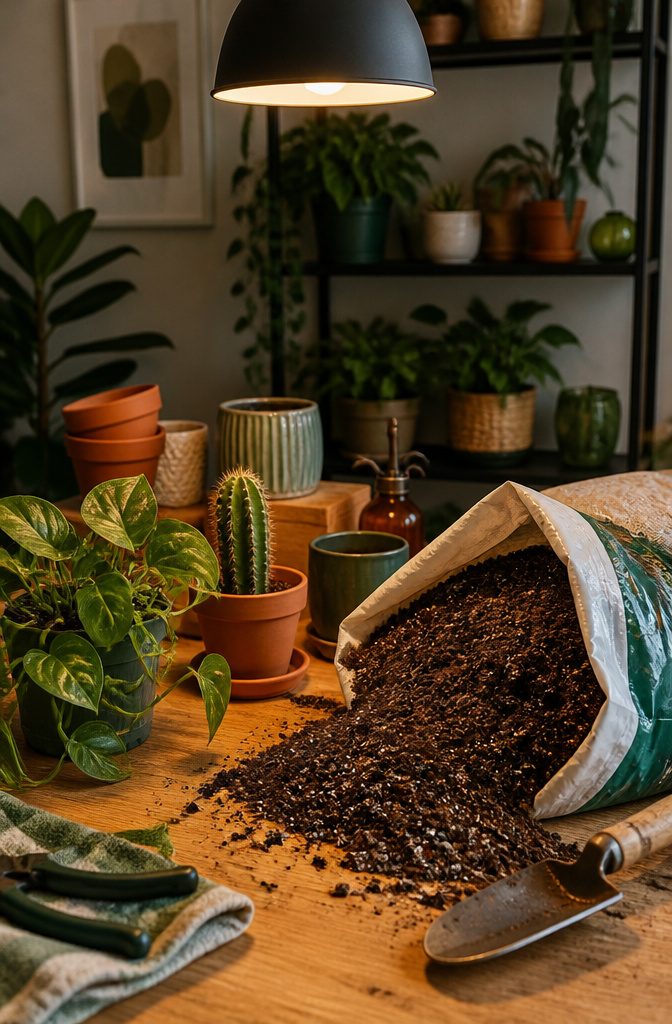
Garden soil from the yard turns into a brick inside a pot. It compacts, stops draining, and drags in fungus gnats and disease organisms that thrive indoors where no natural predators keep them in check.
A commercial potting mix is sterile and lightweight by design, engineered specifically for containers rather than open ground.
Peat moss or coco coir forms the spongy base that holds water and nutrients; coir edges ahead as the more renewable pick. Perlite or pumice, those white granules, create the air pockets roots need to breathe.
Vermiculite adds golden flakes that absorb moisture and release it slowly. Knowing these three lets you read any bag without marketing fog.
The mix has to match the plant.
Succulents and cacti need a gritty cactus blend that drains in seconds; standard tropical mix holds too much moisture and rots them fast. Tropical foliage plants do fine with a standard houseplant mix.
Orchids are the exception entirely, growing on bark chunks rather than anything resembling soil. Over time, organic components in any mix decompose and settle, increasing water retention while choking off aeration.
Freshen the pot by gently removing the plant, adding new medium at the bottom, roughing up the original root ball’s sides and top, then firming fresh mix around the surface.
Humidity
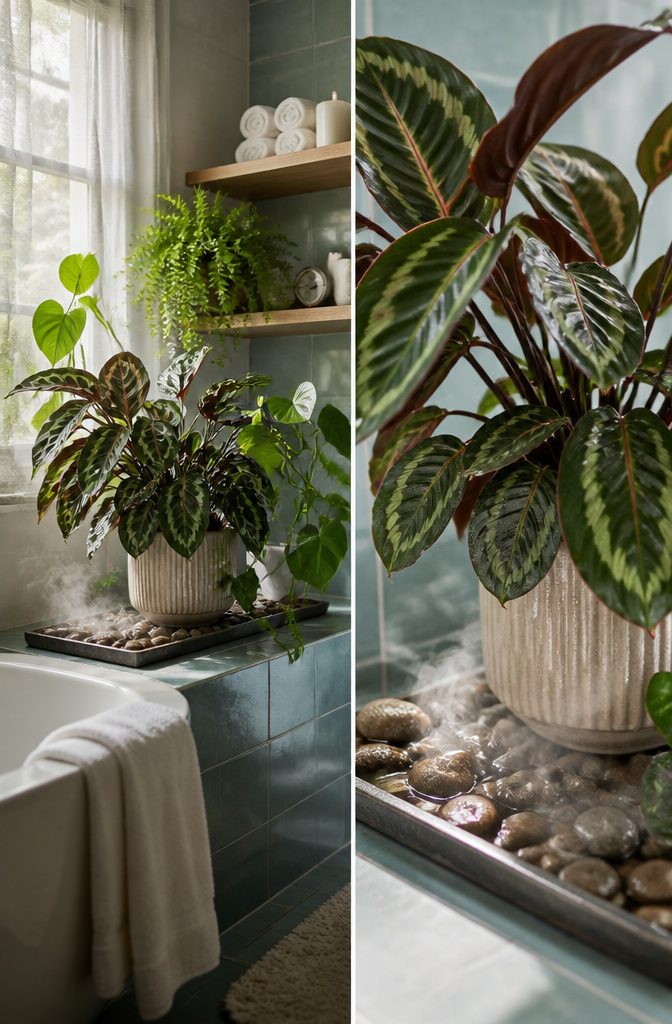
Most tropical houseplants evolved in understory conditions where humidity sits between 60 and 80 percent. A heated home in January can crash below 20 percent, which is desert air by any measure.
The plants tell you first: brown, crispy tips and edges on otherwise healthy leaves mean the air is too dry, not that you forgot to water.
Aim for 40 to 60 percent around your tropicals. Grouping plants together is the easiest fix; each leaf releases vapor through transpiration, so a cluster builds its own humid pocket.
Pebble trays work next: set the pot on a tray of pebbles with water kept just below the tops, and evaporation humidifies right at leaf level.
A small cool-mist humidifier is the only reliable option in genuinely dry climates or for thin-leafed varieties like calatheas that sulk below 50 percent.
Misting, for the record, raises humidity for minutes, not hours.
Pleasant routine, not a strategy. If you do mist, morning is the only time; wet foliage overnight invites fungal spots.

Get a Healthy Shine Back on Your Leaves: This botanical leaf shine spray lifts dust and water spots from your plant leaves while leaving behind a light, protective layer of natural nourishment. Formulated with neem oil and plant extracts, it helps foliage look clean and healthy without clogging the leaf's pores, so your plants can breathe and show off their natural shine.

Green Glo plant Polish adds an instant natural gloss to leaves of plants and cut foliage in floral bouquets.

INSTANT LEAF REVITALIZER: This plant care solution works as a powerful foliar spray for plants, lifting dust and dirt from leaves to reveal glossy, healthy foliage, keeping plants vibrant and fresh.
Temperature
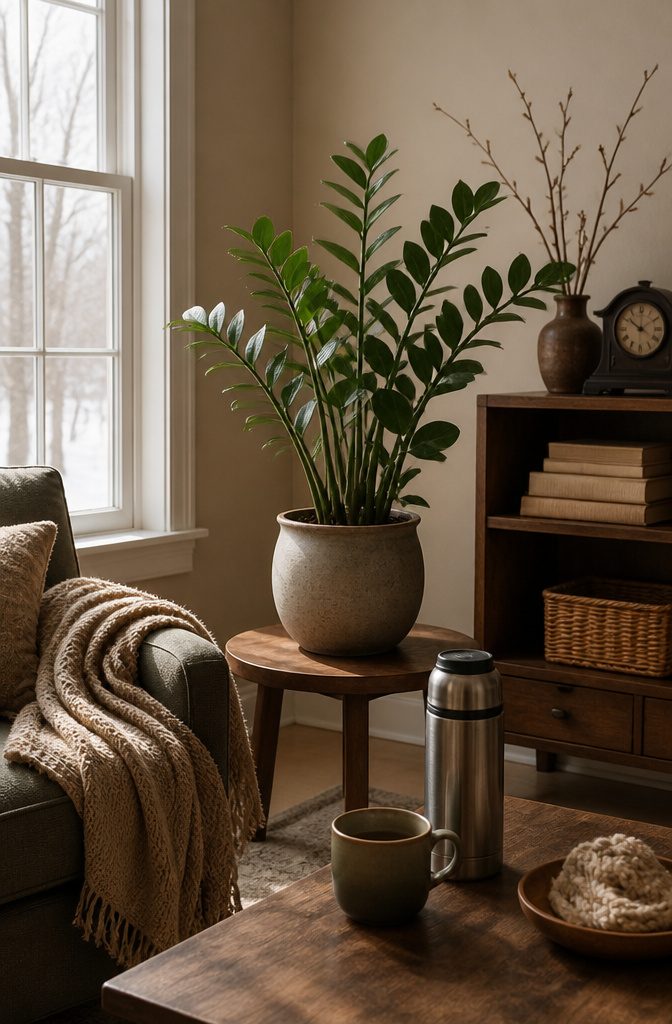
Most houseplants handle the same 70–80°F days and 60–70°F nights that keep humans comfortable, though flowering varieties often last longer at the cooler end of that range.
The real problem is not the thermostat reading but where the plant actually sits.
A window sill in January can run 10–15 degrees below the room temperature once the sun drops, and the glass radiates cold that a thermometer across the room never registers.
I move anything tender back at least a foot from glass in winter, or I lose leaves to a chill the dial says does not exist.
Drafts from doors and heat from registers do damage faster than steady cool.
A plant next to a fireplace or heat vent dries and drops foliage even when the room averages 72°F. I check the microclimate with a cheap min-max thermometer before I commit a plant to a spot for the season.
Night temperatures 5–10 degrees below daytime suit most species, and the easiest way to hit that range is simply not fighting the house’s natural cool-down.
I skip the radiator-adjacent shelf everyone wants to fill, and I save the tender stuff for interior tables where the air stays even.

High Precision & Fast Response: This high-precision illuminance meter delivers lightning-fast readings 2 times per second, ensuring you get accurate light intensity data—perfect for creating the ideal growing environment for your plants.

UNI-T professional digital illuminance meter UT383. Effectively measures light intensity and display results in units of Lux or FC. Range: 0 to 199,900 Lux / 0 to 18,500 Fc. High accuracy of +/-(4 %+8)
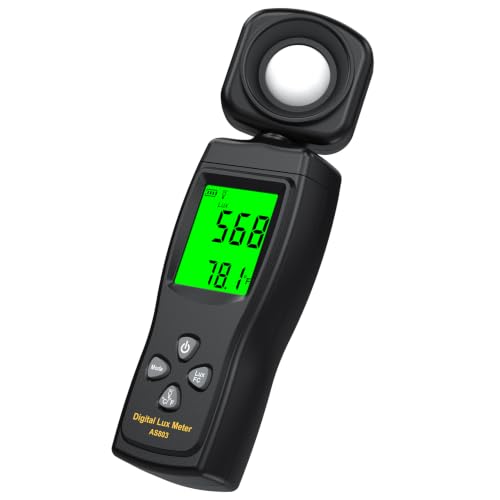
【Wide Range & Reliable Accuracy】Measure from 0 ~ 200,000 Lux with high accuracy ±4% +10. This professional foot candle light meter helps optimize light levels for plants, libraries, offices, and indoor spaces. With accurate light measurements, growers can ensure that plants receive appropriate photosynthesis light, optimize and adjust light conditions, and achieve a healthier growth environment
Fertilization
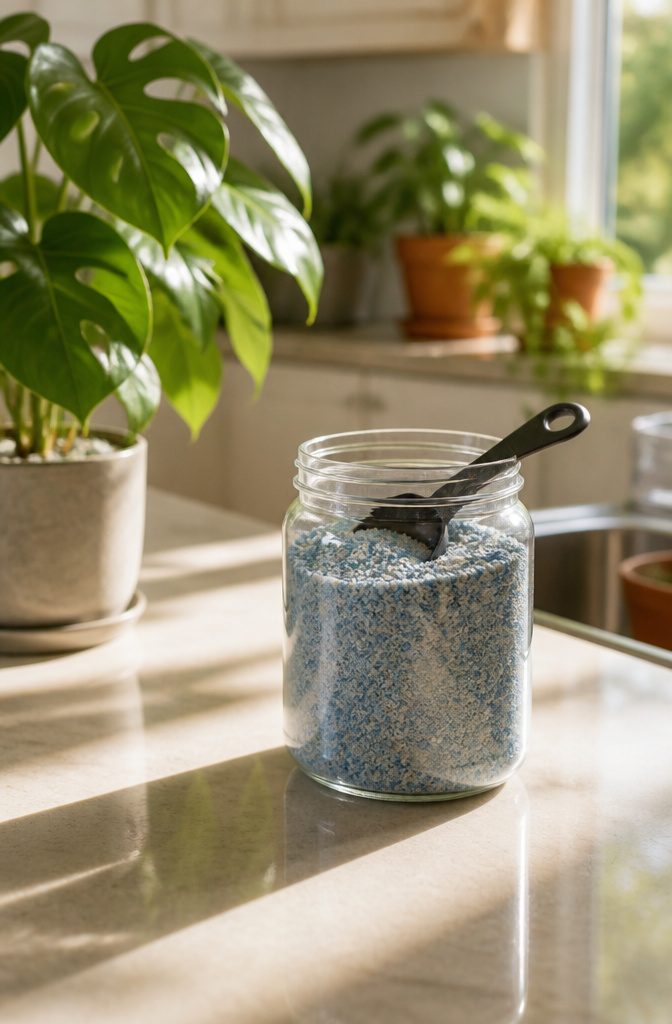
A balanced 10-10-10 N-P-K formula covers nearly every foliage plant in your collection.
Those three numbers are nitrogen for leaf growth, phosphorus for roots and blooms, and potassium for overall vigor, and equal thirds keep you from guessing what any one plant wants.
I feed only during spring and summer, when the plant is actually putting out new growth. Every two to four weeks works, though I cut liquid fertilizer to half the strength on the label.
More fertilizer does not mean more plant; excess salts burn roots and brown leaf tips, and a pale, well-lit plant in August is usually hungry, not overfed. A half-strength dose typically greens back up within a few weeks.
I stop entirely in fall and winter. A resting plant cannot use the nutrients, so the salts just accumulate in the soil.
I also skip feeding for the first few months after repotting if the new mix already carries slow-release fertilizer. The bag will say so, and doubling up is an easy mistake to make.

【Upgraded Full Spectrum】Eqqiuped with 5 Red+37 Sunlight White LEDs in each bar, which is similar to the sunlight at noon to meet the needs of various plant growth processes. 6000K LED grow light with high efficiency and high PPFD, providing flicker-free and soft light.

【8.6'' Light Strip and 78 Full Spectrum LEDs】The Grow Light has 78 LEDs and each light bar has 26pcs 3500K LEDs. High quality LEDs help plants grow with high light efficiency, high PPFD, low heat and longer lifespan. Indoor plant light emits all wavelengths from 380nm to 800nm, simulating natural sunlight to more effectively promote the growth of indoor plants.

6000K White Low Light for Plants - the pot succulent light is equipped with super bright 96pcs LED beads(16 Red+80 White), Red light contributes to seed starting, flowering and result, 6000K White light is suitable for all variety small house plants.
Pruning and Maintenance
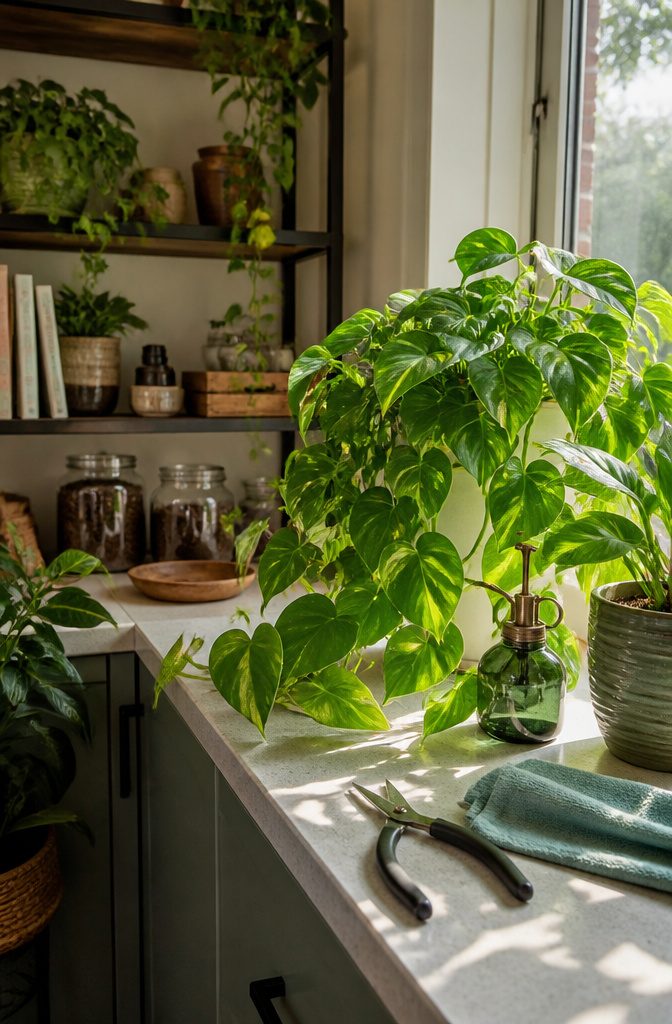
Regular grooming keeps a houseplant looking like something you want to live with.
I wipe leaves with a damp cloth every few weeks, not for the shine but because dust blocks a meaningful fraction of light. A clean leaf photosynthesizes better, and the plant stays fuller longer.
Pest inspection matters just as much. Spider mites and mealybugs show up quietly, so I check leaf undersides and stem joints when I water.
Catching them early means a dab of insecticidal soap or neem oil instead of a full-blown infestation. I also quarantine anything new for a couple weeks before it joins the rest, a step that has saved me more than once.
Repotting belongs on your calendar every 1 to 3 years, not when the plant is already struggling. Roots circling the pot or poking through drainage holes are your signal, and so is water racing straight through without soaking in.
Spring or early summer is the time: tip the plant out, loosen the root ball, and move it to a pot 1 to 2 inches wider with fresh mix, keeping the same depth it sat before.
Water it in, then give it a week out of harsh direct sun while it settles.
Young plants typically need this every 1 to 2 years, mature ones every 2 to 3. Succulents are the exception, dry before and after the move.

SLEEK ROOM DÉCOR: The architectural upright leaves of the large ZZ Plant provide a modern, sleek look that defines minimalist decor. An excellent, stylish choice for a floor accent in your living room, dining room, bedroom, or office
Repotting Signs
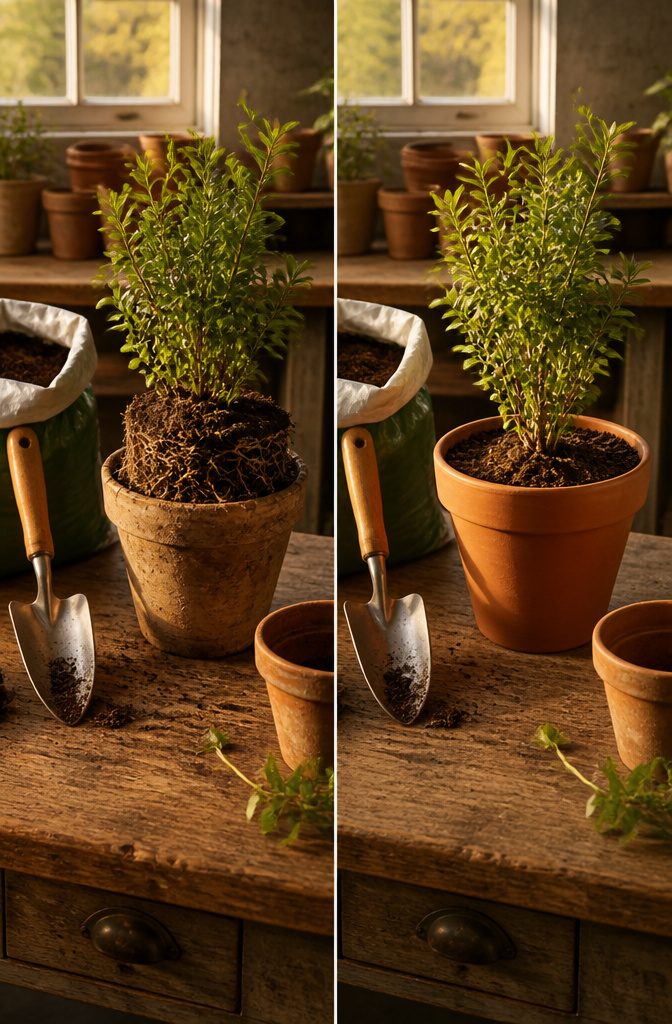
Roots circling the inside of the pot or poking through drainage holes mean the plant has run out of room to grow.
Water racing straight through the container, barely wetting the soil, is another giveaway: the root ball has displaced so much mix that moisture has nowhere to linger.
These three signals together, or even just one that keeps showing up, tell me it is time to repot.
Most young houseplants need this every 1 to 2 years, mature ones every 2 to 3.
The move should happen in spring or early summer, when the plant has the energy to recover. Go up only 1 to 2 inches in diameter, or one container size, roughly 2 to 4 inches wider than the old pot.
A jump much larger than that leaves excess soil holding moisture the roots cannot absorb, and root rot follows fast. I would rather repot a year early than bury a plant in a pot it cannot fill.
Seasonal Adjustments
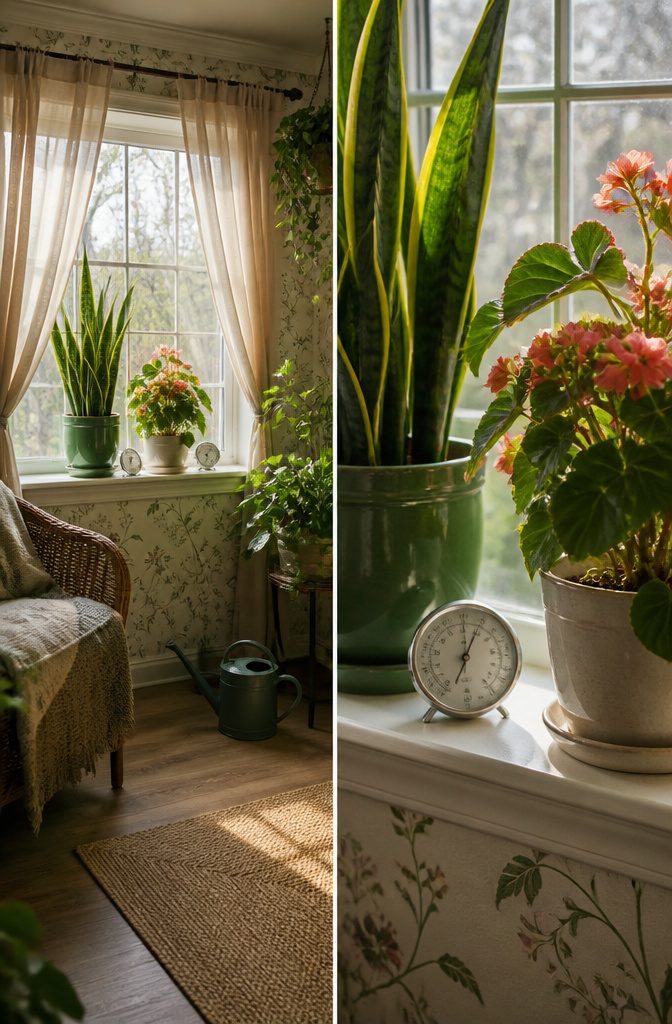
From November through February, most houseplants need water half as often as in summer. Growth slows, evaporation drops, and soil stays wet longer.
The finger test still decides when: push 1 to 2 inches in, and if you feel moisture at the fingertip, wait. Dry means water today, even if that routine now falls every two or three weeks instead of weekly.
I skip fertilizer entirely in winter. The plant is not building tissue, so unused nutrients sit in the soil and concentrate as soluble salts.
Those salts make it harder for roots to take up water later, and the damage shows up as browning edges or stalled growth that is easy to blame on other causes.
Resume monthly feeding in spring when new growth actually appears.
Light is the one thing I do not cut back on. The sun sits lower and days shorten, so the same south-facing window that was almost too bright in July becomes merely adequate in December.
I move plants closer to glass if I can, but I do not shuffle them to darker corners to "rest." They rest by growing slower; they do not rest in the dark.
Common Pests
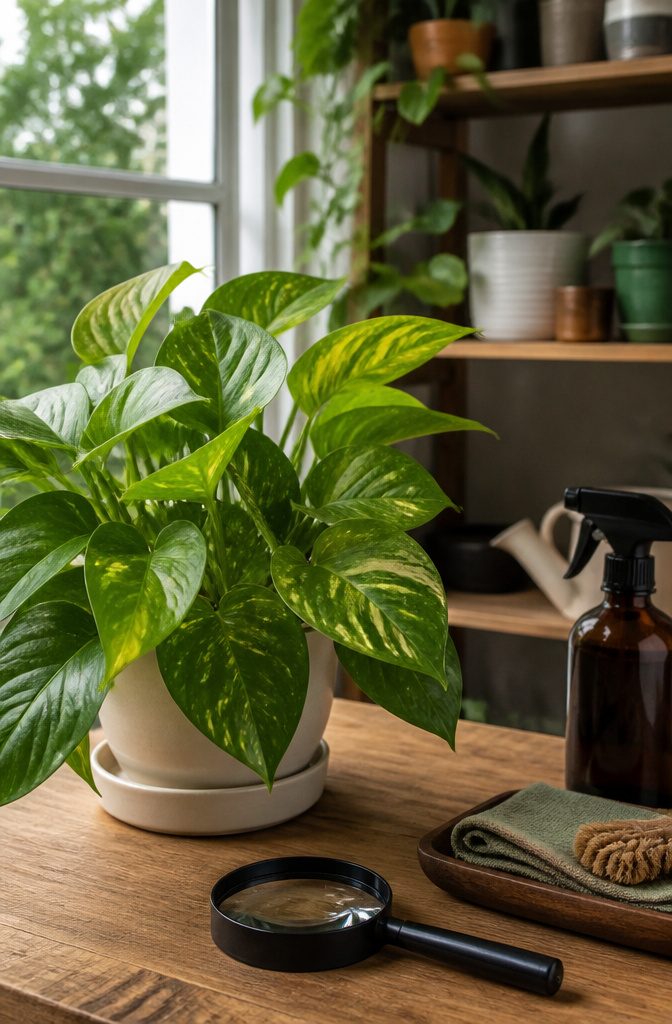
Spider mites and mealybugs are the two pests that show up most often on houseplants, and both hide where you are least likely to look.
Spider mites wedge themselves along the veins on leaf undersides, spinning almost invisible webbing that catches light if you tilt the pot. Mealybugs cluster at leaf joints and stem crotches, looking like stray cotton fuzz until the colony spreads.
I check my plants weekly, turning leaves over and running a finger along the stems, because catching either pest early is the only thing that keeps a small problem from becoming a plant-wide infestation.
At first sight, isolation comes before anything else. I move the affected plant away from the others immediately, then decide whether the infestation is light enough for a simple wipe-down or heavy enough to need insecticidal soap or neem oil.
Fungus gnats sometimes tag along too, though they signal wet soil more than plant damage, so I let the top inch dry before I water again.
New plants stay quarantined for a few weeks before they join the rest of my collection; skipping that step has cost me more time than the wait ever does.
Beginner Plants That Forgive
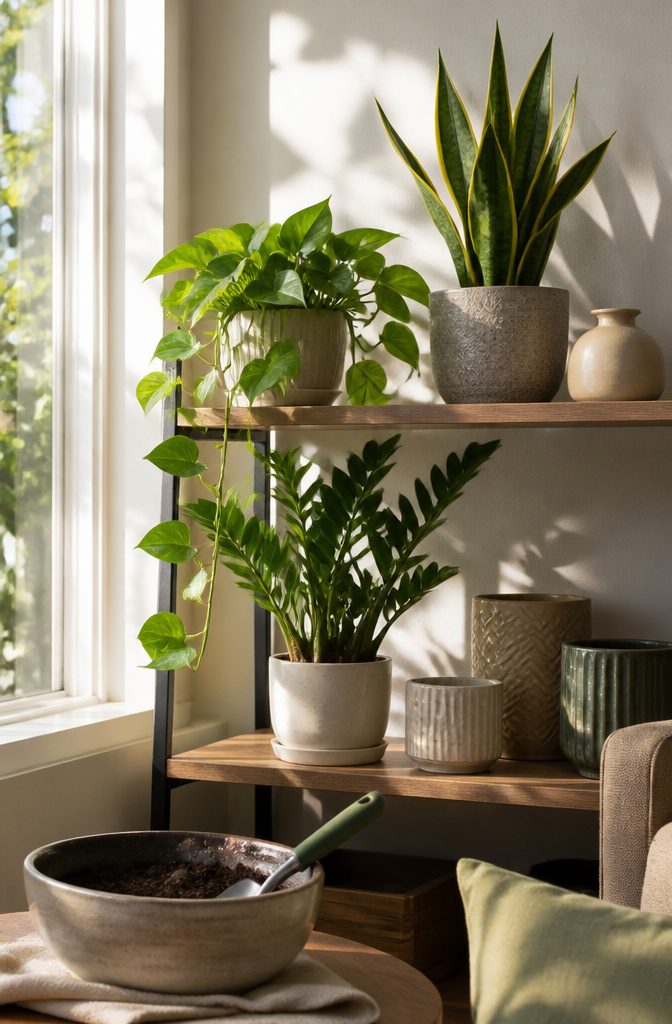
Some plants ask for almost nothing and still look presentable. The snake plant and ZZ plant are the two I would hand to anyone who has killed a succulent.
Snake plants tolerate light levels below 200 footcandles, the threshold most sources call low light, and a ZZ plant shrugs off weeks between waterings because its rhizomes store moisture like a canteen.
I would put either in a north-facing room or a hallway with no window at all, though they grow slower there than in brighter spots.
For a third option, pothos handles the same neglect and trails nicely from a shelf. A fourth is the cast iron plant, which earned its name in Victorian parlors heated by coal and lit by gaslight.
What makes these forgiving is not toughness alone but patience: they decline slowly, so you notice the yellow leaf in time to correct the mistake.
Low light means 6 or more feet from an east- or west-facing window, or past 4 feet from north glass, and these four will survive it.
They will not thrive in a closet; no plant food arrives in total darkness. But for a beginner who forgets to water, they buy time.
What Overwatering Looks Like
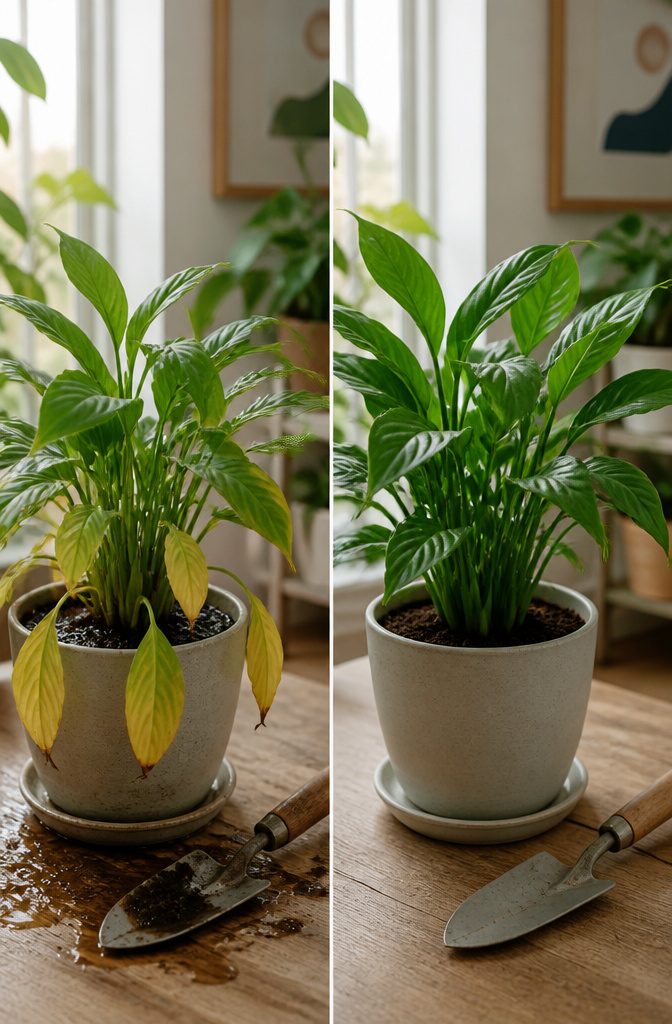
Yellow leaves on the lower part of the plant are usually the first sign of overwatering, but the real giveaway is the texture. Those leaves feel soft, not crisp, and the stem at the base turns mushy.
Sometimes the soil gives off a musty, sour smell that means rot has already set in. What confuses people is that overwatered plants also wilt, since roots sitting in a swamp can’t move water up to the leaves.
Underwatering looks different: brown edges that feel dry and brittle, soil pulling away from the pot walls, drooping without that base-level softness.
When the symptoms blur together, the finger test decides it. Push your index finger 1 to 2 inches into the soil.
Moisture at the fingertip means wait, even if the calendar says watering day. Dry means water now.
A schedule guesses; your finger knows whether the bottom two-thirds has dried out. Soggy soil plus wilting points to rot.
Dry soil plus wilting means the plant is actually thirsty. I would skip any app or printed chart and trust the test instead.
Frequently Asked Questions
How often should I water my houseplants?
Water when the top 1 to 2 inches of soil are dry, testing with your finger to the second knuckle.
A plant in bright sun might need water every four days while the same plant in a dim corner needs ten. Growth slows in winter, so cut frequency by half and let the soil tell you when.
What type of light do houseplants need?
It depends on the plant. High light plants need 150 to 1,000 foot-candles, medium light sits at 75 to 150, and low light is 25 to 75.
Snake plants and ZZ plants tolerate low light, while succulents and cacti need bright direct sun. A cheap light meter removes the guesswork.
How do I know when to repot my plants?
Repot when roots circle the inside of the pot or poke through drainage holes, or when water races straight through without soaking in.
Most young houseplants need this every 1 to 2 years, mature ones every 2 to 3. Spring or early summer is the right season, and you should go up only 1 to 2 inches in pot diameter.
What is the best temperature for houseplants?
Most houseplants handle 70 to 80 degree days and 60 to 70 degree nights, though flowering varieties often last longer at the cooler end.
The bigger risk is microclimates: a window sill in January can run 10 to 15 degrees below room temperature, and heat vents or fireplaces dry and damage foliage even at normal thermostat readings.
How can I increase humidity for my houseplants?
Group plants together so their transpiration builds a humid pocket, use a pebble tray with water kept just below the pebble tops, or run a small cool-mist humidifier for thin-leafed varieties that sulk below 50 percent.
Misting raises humidity for minutes, not hours, and wet foliage overnight invites fungal spots.
Do houseplants need water every day?
No. Overwatering kills more houseplants than pests, and watering by calendar rather than soil moisture is the usual cause.
The finger test decides: push 1 to 2 inches into the soil, and if you feel dampness at the tip, wait. Even in summer, most plants need days between drinks, and winter can stretch to two or three weeks.
What are the biggest mistakes when repotting?
The biggest is jumping too many pot sizes, which leaves excess soil holding moisture the roots cannot absorb and leads to rot. Go up only 1 to 2 inches in diameter.
Another is repotting into dry garden soil instead of a commercial potting mix, which compacts and stops draining. Timing matters too: spring or early summer gives the plant energy to recover.