These 11 ceiling ideas run from a few dollars in eye bolts and straps to a motorized lift that needs its own circuit, and the one that belongs in your garage depends on whether your ceiling is open joists you can bolt into directly or finished drywall that hides what is above it.
[link-whisper-related-posts]1. Multi-Bike Ceiling Rack
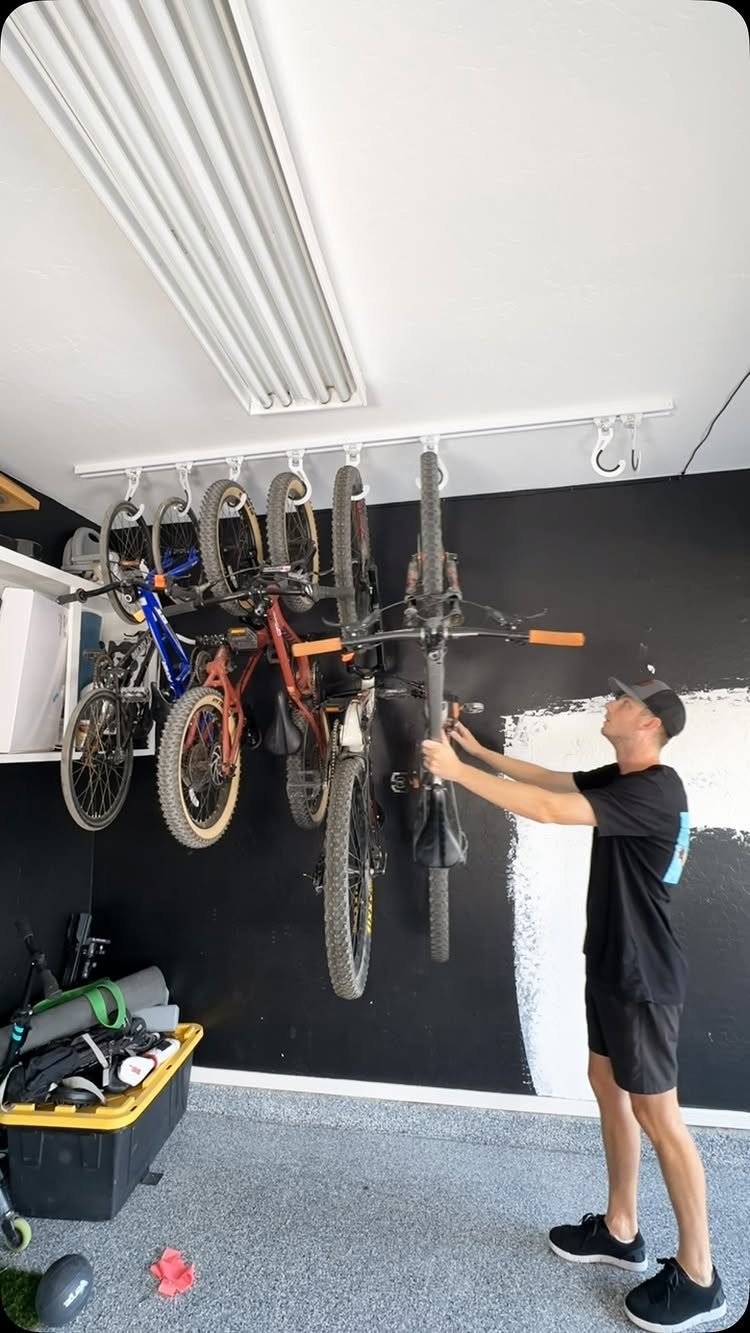
A sliding track of hooks lets you stagger bikes at different depths so handlebars no longer collide.
Before you mount anything, check that your ceiling is tall enough to lift and slide each bike without hitting your head or the handlebars on the joists; low ceilings make this system more trouble than it is worth.
Check that your joists run where the track needs them, or plan on adding a perpendicular backing board.
The black track against a dark wall also tells me paint color matters more than I first thought, ceiling systems tend to look like clutter against light drywall.
2. Ladder Holder
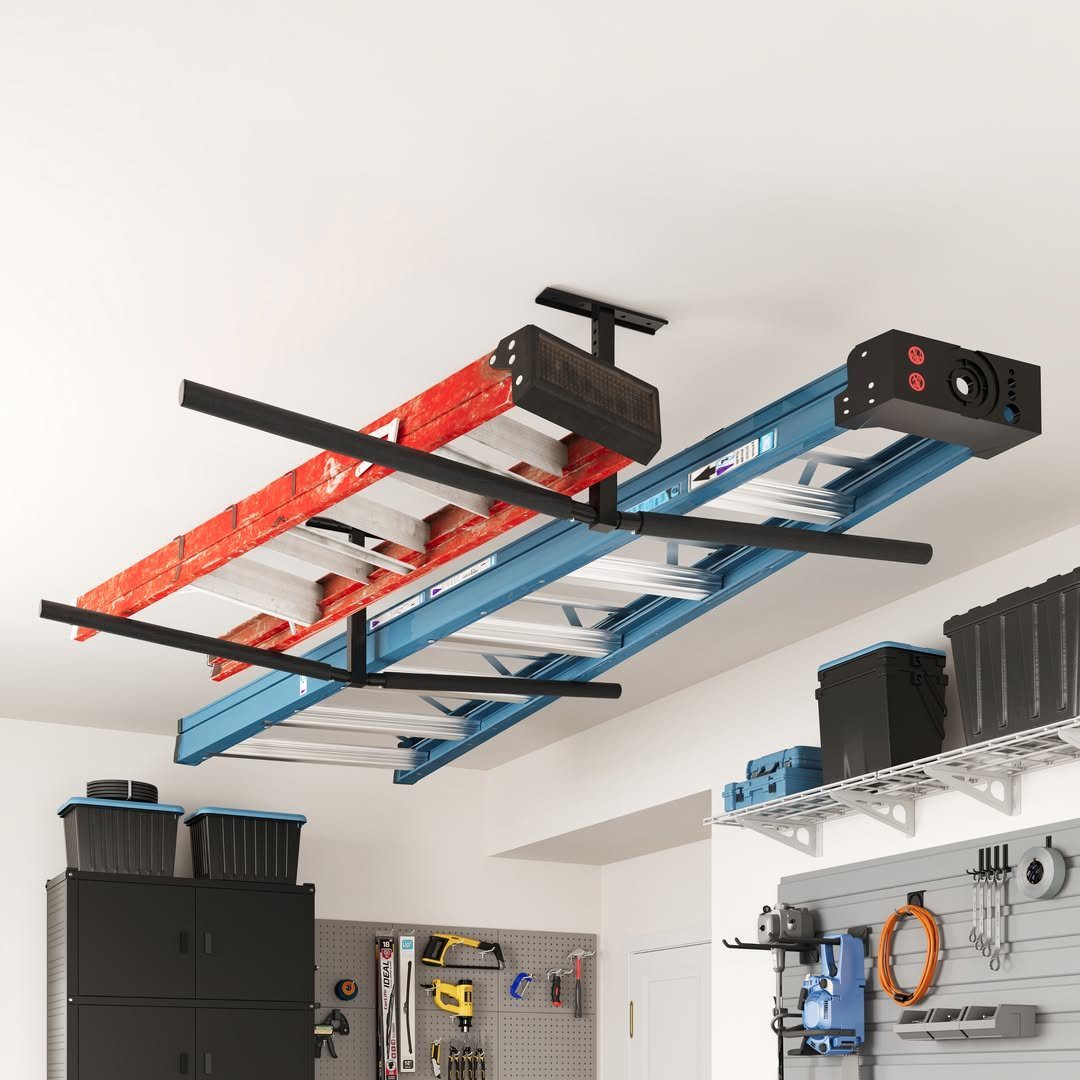
Extension ladders are long, awkward, and always in the way until you need one. Flat mounting against joists with simple brackets solves this without swallowing headroom, since the ladder sits between or flush to the beams rather than dangling below.
I would note the bracket spacing; a long extension ladder needs at least 3 points of support to keep it from sagging or levering loose.
3. Ceiling-Mounted Overhead Storage Racks
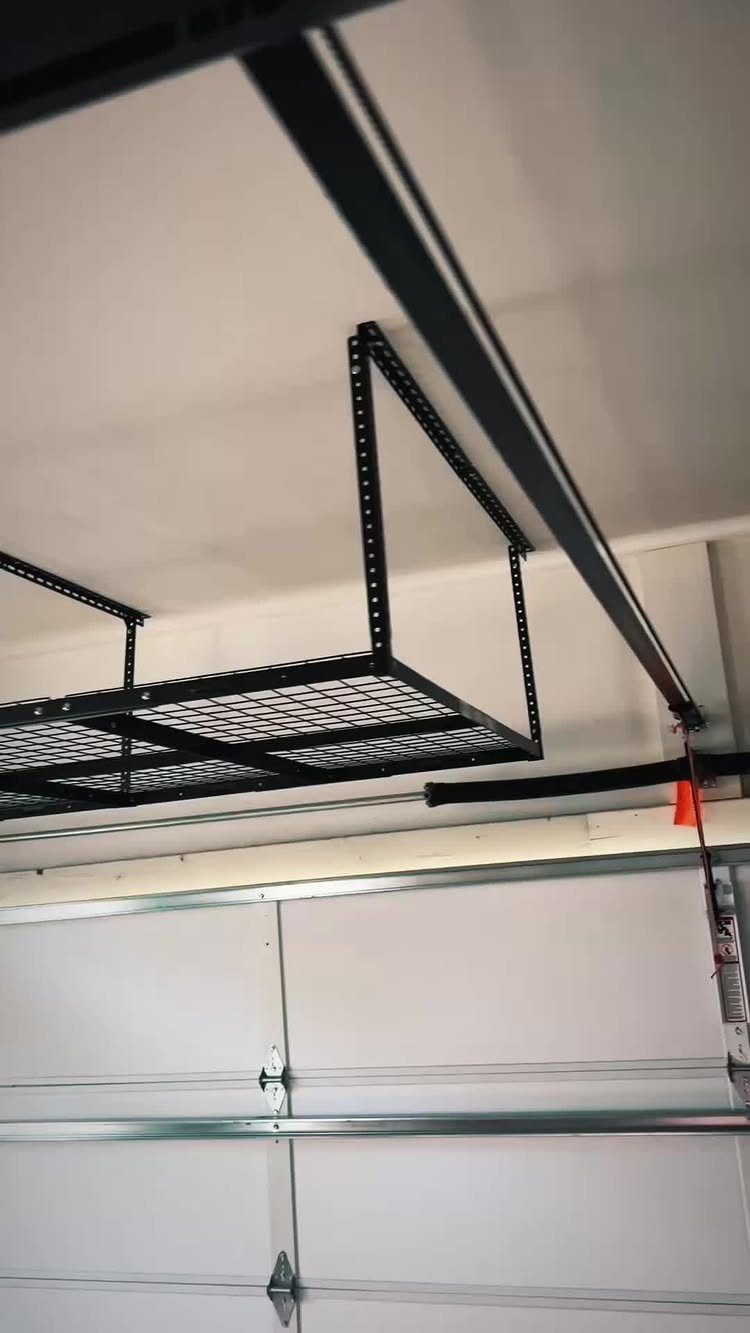
Wire mesh racks bolted above the door frame turn dead air into storage for the bins and holiday decorations that otherwise colonize your floor.
The grid I find worth choosing over solid shelving; you can see what you stowed without pulling everything down, and light still passes through so the garage stays brighter.
Weight ratings matter more here than with wall mounts since everything loads downward onto a single joist line.
Lag bolts into the framing, not the drywall, and on a wide rack I would add a center support to prevent the long edge from bowing once you load it with bins.

1200 lbs Tested, 750 lbs Rated: Our overhead garage storage rack undergoes rigorous 1.6 times load testing (1200 lbs) to ensure unmatched safety and durability, supporting up to 750 lbs for your tools and equipment.
4. Pulley-Operated Hoist Systems
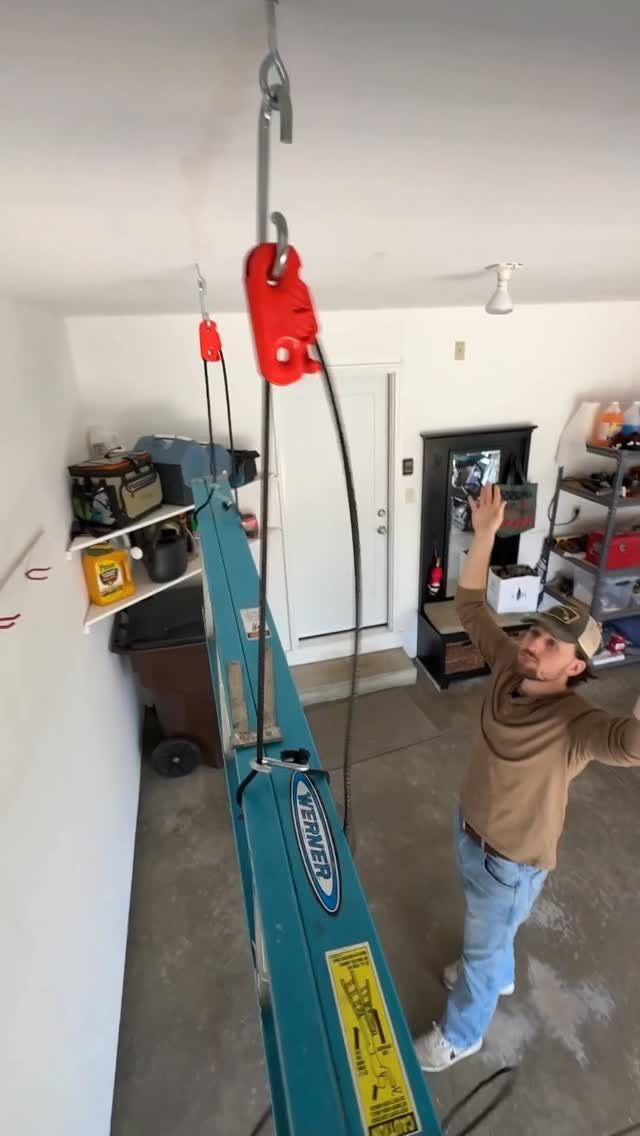
A rope-and-pulley hoist turns one person’s pull into enough lift for a heavy extension ladder or a kayak, the mechanical advantage doing what muscle cannot.
I would paint or tape my hoist a bright color so the rope hangs where I expect it and I do not walk into a swinging load.
Mount to a doubled joist or blocking, never a single 2 x 4, the concentrated load while raising is higher than the static weight alone. Test the brake or cleat twice before you trust it with anything above your car.
5. Motorized Ceiling Lifts
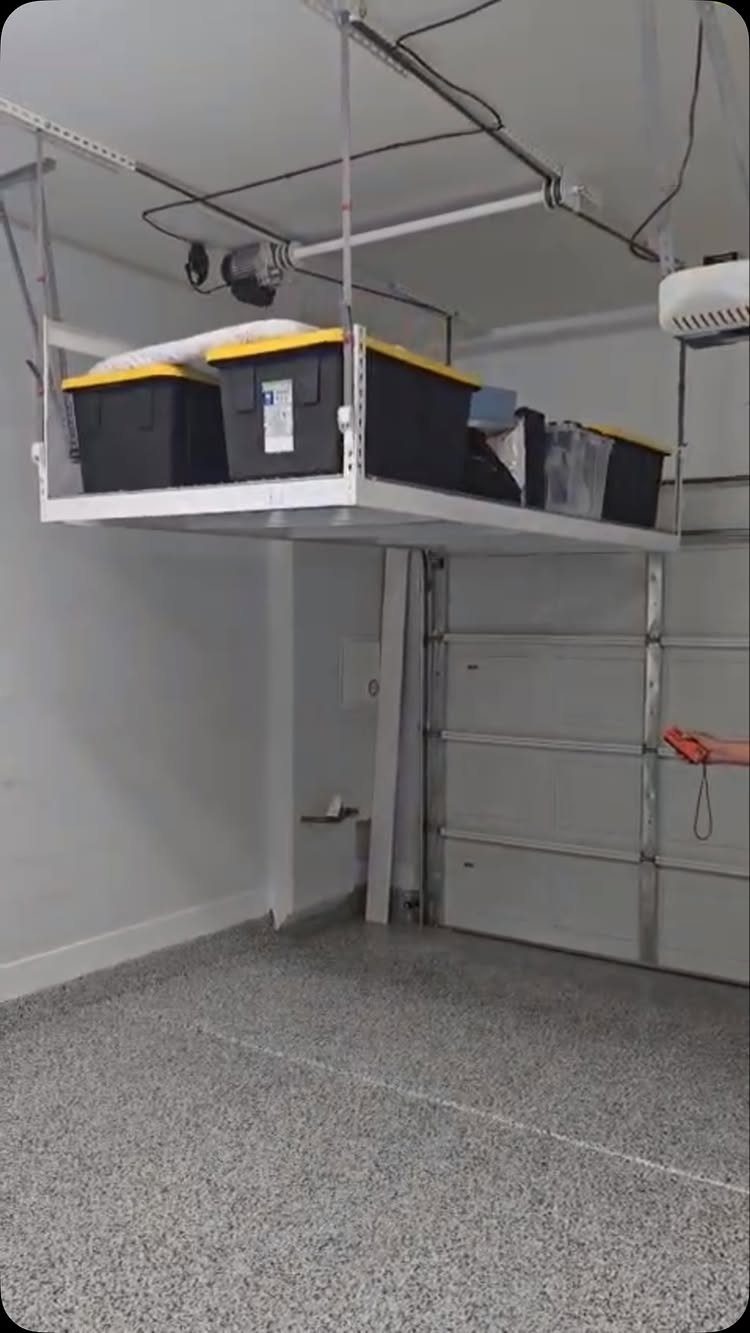
An electric winch with a handheld remote removes the physical part entirely, which matters if you store heavy bins seasonally or if ladders are getting harder to heave overhead.
The platform I would size to carry 4 to 6 of my largest bins at once; loading half a platform wastes the trip and the electricity.
Check that your garage door track does not intersect the lift path; many layouts do not allow the clean run you need for this to work safely.
A manual backup crank is worth confirming in any model you consider, power outages happen and you will want your stuff back down.
6. Ceiling Fishing Rod Storage
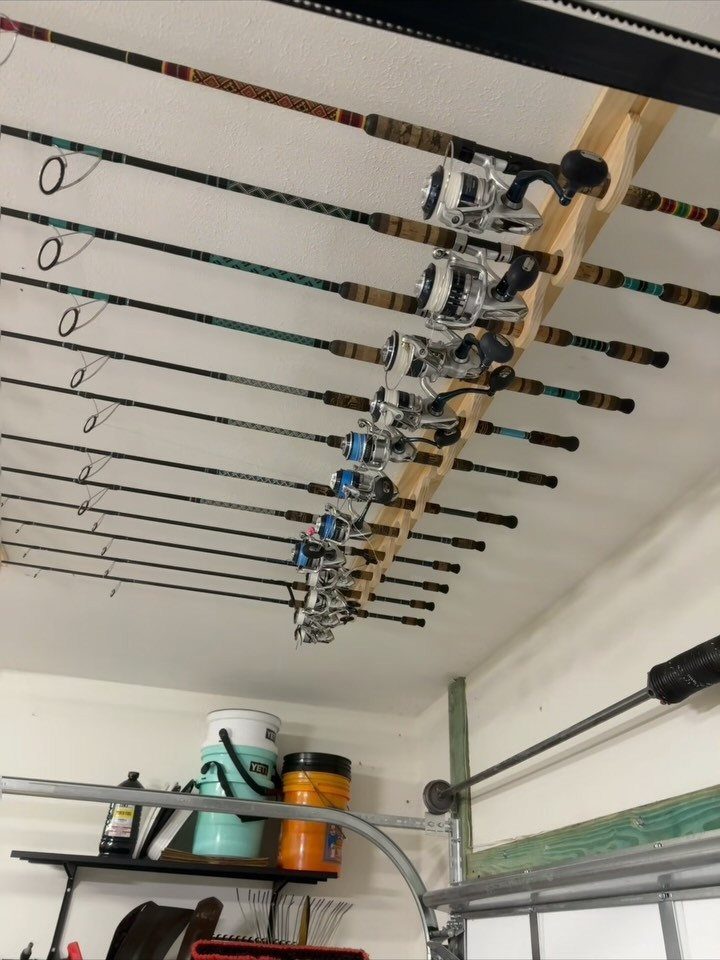
Horizontal rod storage on a ceiling beam keeps reels out of the tangle and tips pointed away from passing heads.
I would match whatever ceiling finish I already have rather than fight it; a warm wood rack looks right in some garages and out of place in others.
Mount height is your judgment call; rods horizontal at eye level snag sleeves, too high and you need a stepstool every Saturday morning.
I would leave enough space between rods for reel clearance, and angle the forward cradle slightly upward so a loosening strap does not send your favorite setup sliding.
7. DIY Plywood Ceiling Platform
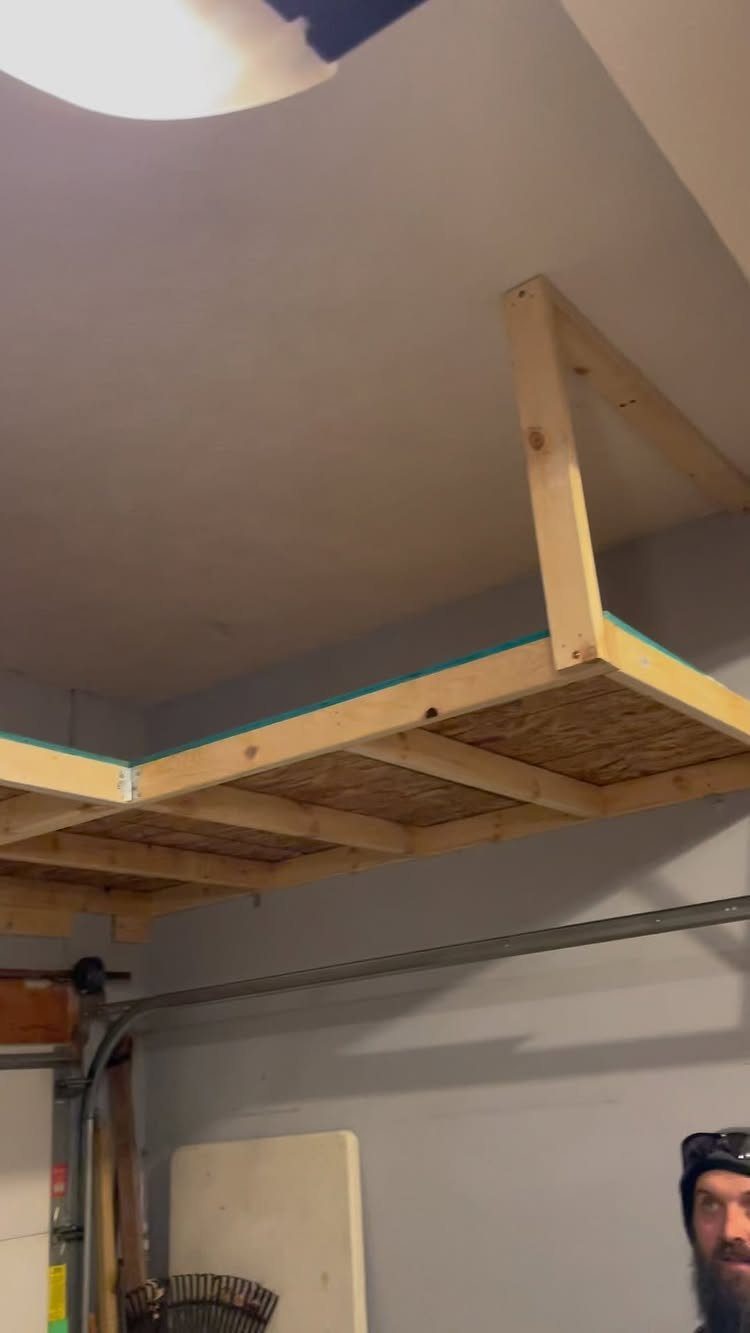
A plywood platform framed with 2 x 4s and hung from eye bolts turns the void above your garage door into a shelf you size yourself.
I would build it in sections small enough to muscle up without a crew; a full sheet of plywood gets heavy fast overhead.
Check your eye bolt rating against the load, and use fender washers on top of the joist so the bolt head does not pull through over time.
8. Garage Loft
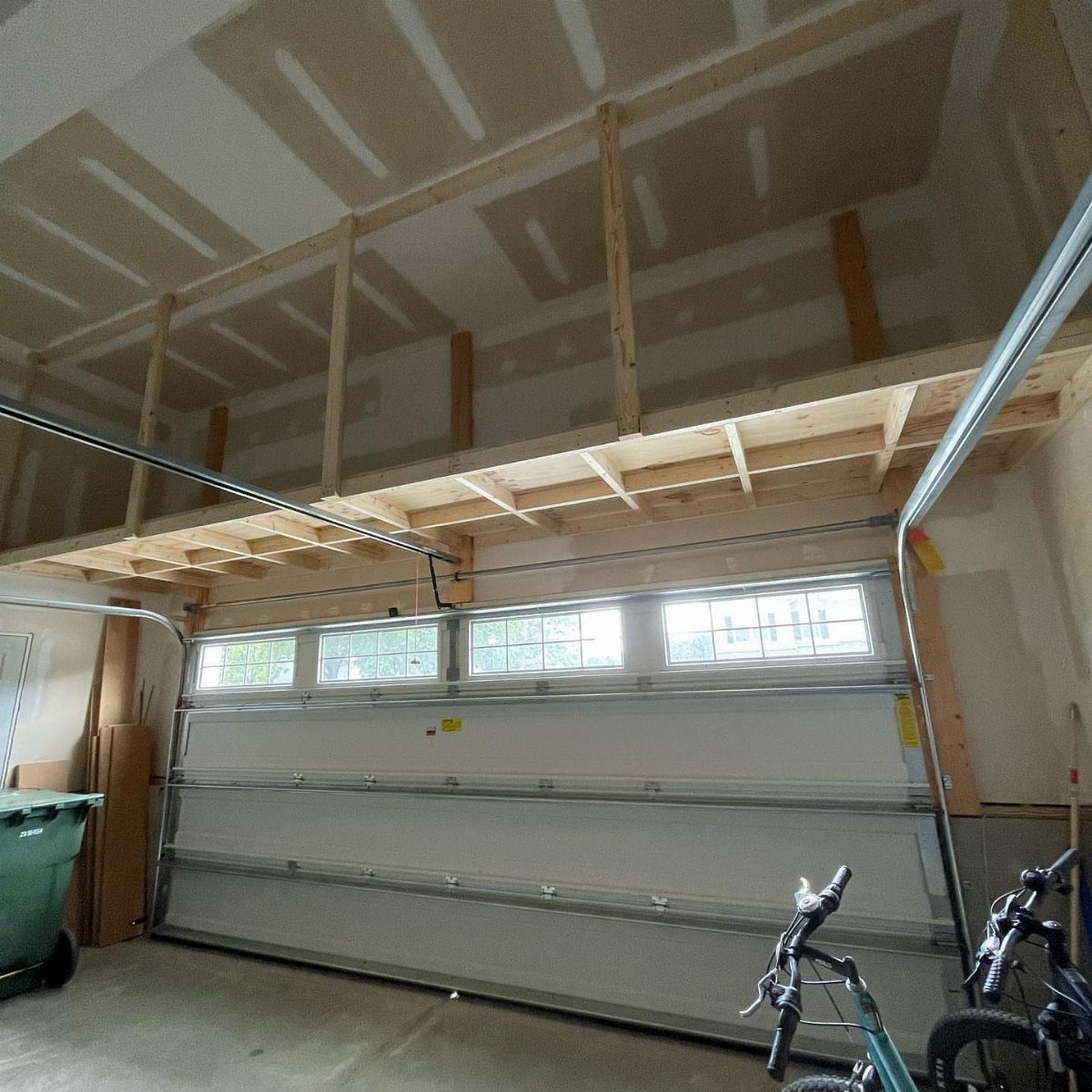
A framed loft above the garage door track steals back the air that openers and rails waste, giving you a floor for bins or seldom-used gear.
Headroom is the first thing I would measure; in a finished garage you may lose too much vertical space to make a loft practical.
I would also confirm the door spring and track layout leave you a clean rectangle to frame into; some opener setups fight you for every inch.

Innovative Design for Easy Access: Elevate your garage organization with this overhead garage storage lift. Unlike traditional garage storage shelves, our product allows for effortless access, making storing and retrieving items a breeze, without the need for ladders.

LIFTING DESIGN: Use the included hand crank or power drill (not included) to raise and lower the garage storage rack, making it easy to place items without a ladder. The maximum lifting range is 79", and the suitable ceiling height is less than 10 feet.

MAXIMIZE SPACE WITH OVERHEAD STORAGE: With over 30 cubic feet of storage space, this ceiling rack can hold bins, baskets, luggage, coolers and more
9. Ceiling Sliding Tote Rails
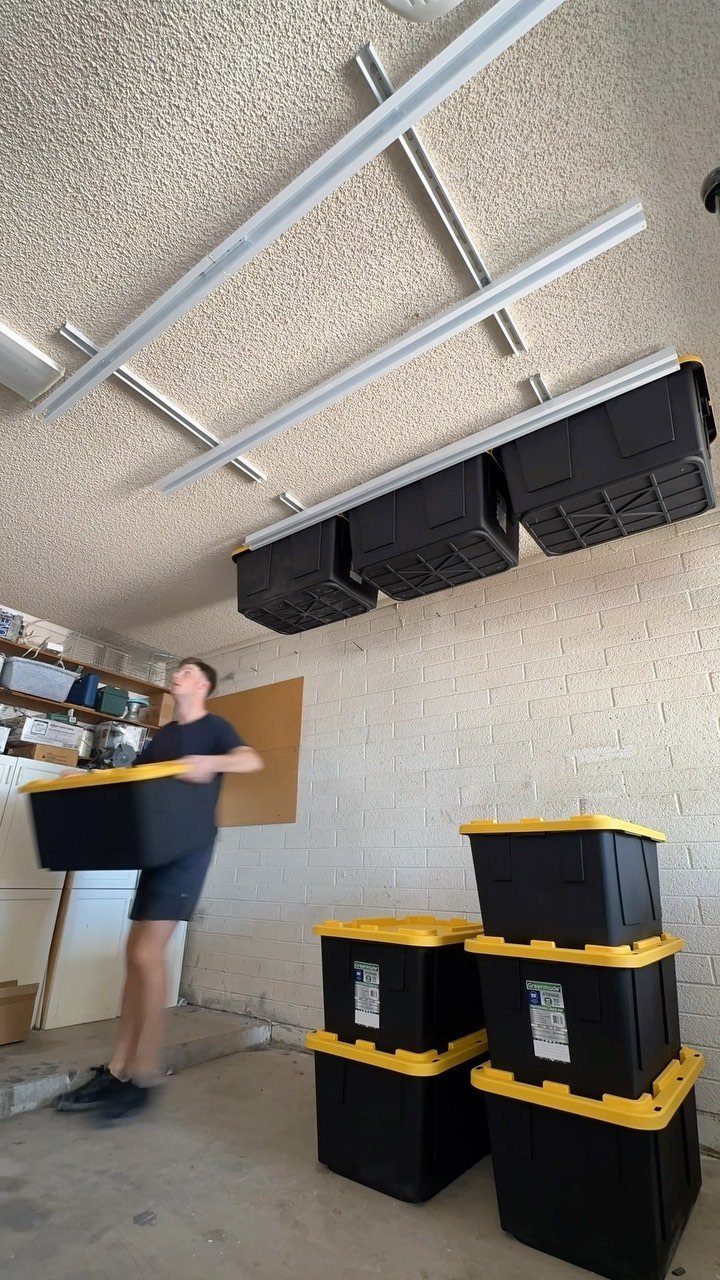
Metal rails screwed to joists carry matching totes by their rims, turning your ceiling into a filing cabinet you slide in and out.
The system lives or dies on bin compatibility; I would buy the rails and one bin to test fit before committing to a fleet.
Check that the rail span matches your joist spacing, or add a cross-member so the track lands on solid wood every time.

【Core Lifting Performance】This block and tackle pulley system features 5:1 mechanical lifting power, supporting 1000 LB working capacity and 2000 LB break strength for stable manual heavy load lifting without external power supply.

Rope Pulley System: comes with 2pcs M20 Pulleys Block, 2pcs Snap Hook, 2pcs Oblong Eye Pad Plate, 2pcs Rope Cleat Hook, 66ft Nylon Pulley Rope And screw Accessories. This pulley rope kit includes everything you need for a pulley system, saving you the hassle of buying each part separately.

4:1 LIFT RATIO & 700LB CAPACITY: Atflbox gambrel pulley boasts a 4:1 lift ratio and is rated to handle up to 700 lbs, Not only easy to lift whitetail deer, but it's great for heavy game such as elk and caribou! making it the perfect tool for effortlessly hoisting game after hunting for easy cleaning and skinning.
10. Ceiling Kayak Storage Straps
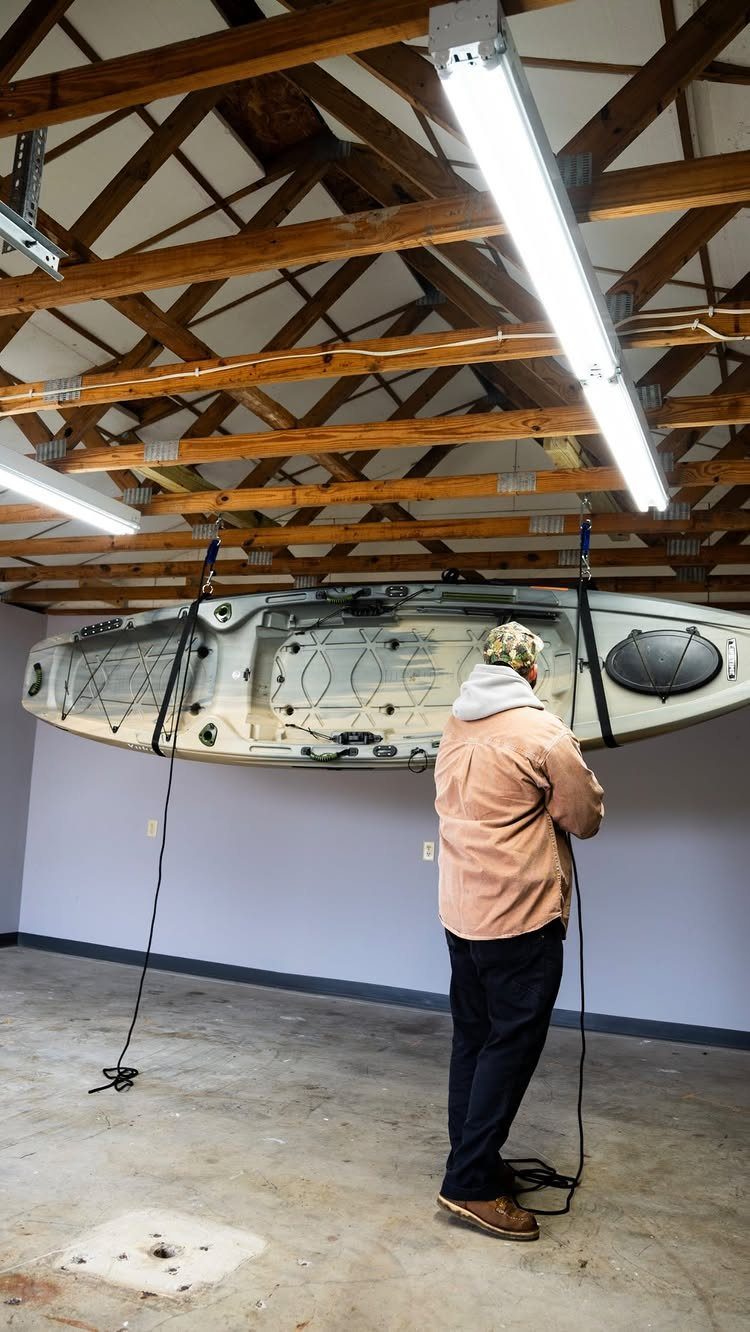
2 straps looped under a kayak and anchored to rafters hold the hull flat and level, keeping your boat out of the way and off the ground where it gets kicked.
I would pad the strap contact points with old towels or pipe insulation; the hanging pressure can deform plastic hulls over a season.
Exposed rafters make this simple, but if your ceiling is finished you will need to locate joists and add eye bolts rated for the load.

Proven Stable Structure for Safe Storage:FERO overhead garage storage rack features a time-tested structural design built for long-term durability and stability. The reinforced H-shaped steel frame provides better weight distribution than standard four-point racks overhead garage storage systems. A manual safety lock adds extra protection, making this overhead storage garage solution strong, safe, and reliable.

Upgraded Winch: The Overhead Garage Storage Lift's winch structure has been optimized to eliminate issues such as gear jamming, friction, and metal shavings. Furthermore, it comes equipped with a dedicated electric wrench, which, when used with a handheld drill, enables electric lifting for heavy-duty operations, saving manpower and increasing efficiency

Universal Compatibility: The garage hoist is designed to safely and easily store your heavy vehicle hardtop while organizing your garage. Commonly used with all Jeep Wrangler, Jeep Gladiator and Ford Bronco models, but compatible with all vehicle hardtops. In addition, it can also be used to store your idle bicycle, surfboard, roof suitcase and other large items, saving space in the garage
11. Ceiling-Mounted Drop-Down TV Lift
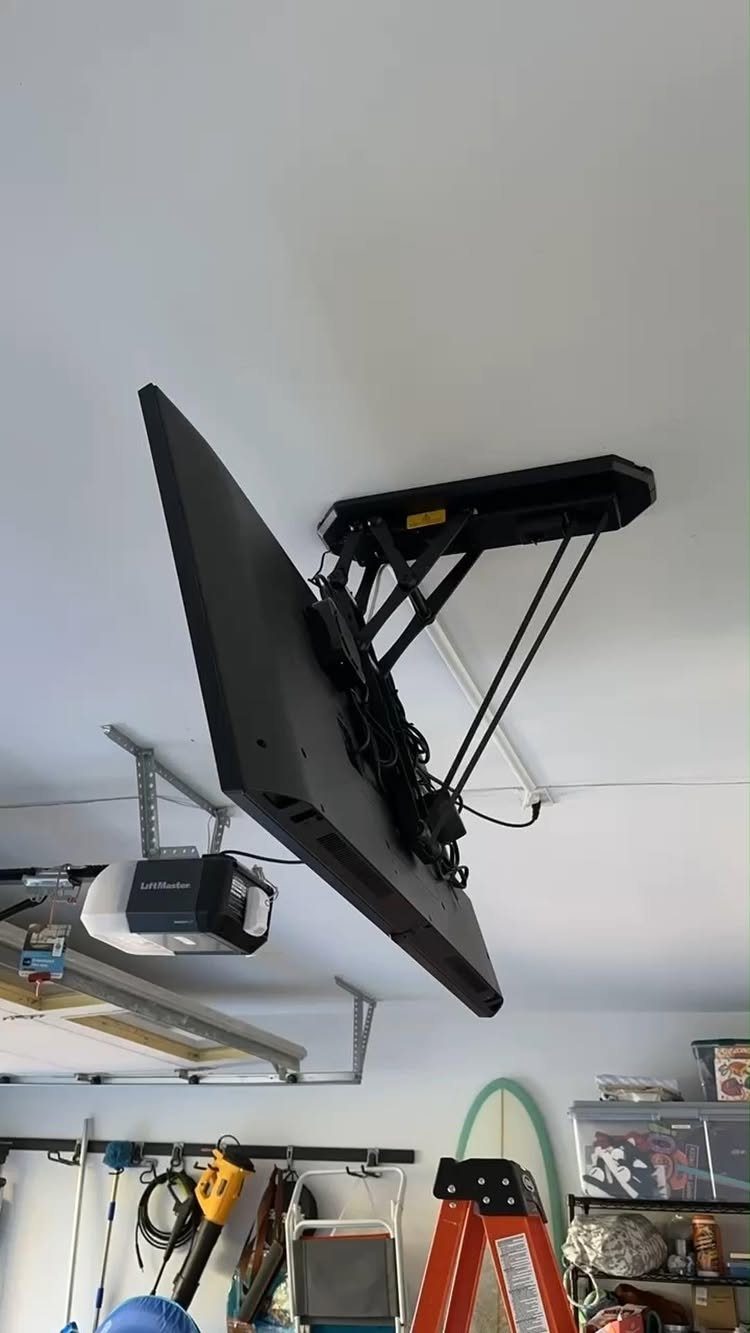
A motorized bracket stores a flatscreen flat against the ceiling and flips it down when you want to watch from a workbench or seating area below.
I would check the lift’s folded depth against my garage door opener and any hanging lights; those motors and rails do not move for your TV.
Run power to the mount location before you install, extension cords across a garage ceiling are a hazard waiting to happen.
Installation Tips
What the rack is rated for means less than what you actually bolt it into.
A 600-pound rack does not turn a weak ceiling connection into 600 pounds of support, so identify your joists or engineered framing and do not trust drywall or thin ceiling material to hold anything.
If you are not fully confident you can locate solid framing and use hardware rated for the load, hire a professional.
The common mistakes I would avoid are using inadequate hardware, skipping the joist location step, failing to check garage door clearance, and not leveling the rack or platform properly.
Local building codes also apply overhead, and ignoring them can cost more than the install itself.
For the rails and motorized systems in particular, lag bolts into framing, never drywall. On a wide span, add a center support.
Weight Capacity Considerations
Ceiling type sets your real limit, not the box rating. Joist ceilings run 20 to 30 pounds per square foot, which is enough for lightweight bins and seasonal gear but not for heavy tools or bulk storage.
Reinforced ceilings may reach 50 pounds per square foot, opening up options for heavier items like totes of camping equipment or spare building materials.
If you do not know which you have or what shape it is in, a structural engineer or qualified installer can tell you before you bolt anything up.
The 250 to 600 pound ratings you see on overhead racks assume perfect installation into sound joists. I have seen honest installers cap older garages closer to 400 pounds once joist age and condition factor in.
My own read: if your garage is past twenty years, trust the lower number. The rack brand does not matter if the wood above it has dried, cracked, or been notched by previous owners.
Safety Precautions
Accessing overhead storage safely starts with what you climb on.
Use a sturdy, slip-resistant ladder or step stool, not a wobbly chair or a tire. Keep frequently used items lower; the ceiling is for what you touch once or twice a year.
Light matters.
A dim garage makes it hard to see worn straps, loose bolts, or a bin corner starting to crack. Add fixtures if you need them before you stack fifteen bins overhead.
Motorized lifts need the same caution.
Inspect everything seasonally.
Look for sagging platforms, rust on eye bolts, frayed hoist rope, or straps that have hardened or cracked. A quick check beats a Saturday spent sweeping up what fell.
Some items do not belong overhead no matter the rating. Skip extremely heavy, unstable, sharp, or hazardous objects unless the system was specifically engineered for them.
Heavy machinery, dense boxes of books, large tool collections, unsecured metal, chemicals, and anything prone to rolling or sliding stay on the floor or low shelving.
Frequently Asked Questions
What’s the best garage ceiling storage for a small garage?
Low-profile slide-in trays or slatwall systems that mount tight to the ceiling keep the door track clear and the floor open.
I would avoid wide fixed racks that eat up the limited airspace you still need to walk through; anything you mount low enough to hit your head is too low.
Ceiling-mounted racks or hooks that use vertical space above your parking zone keep your floor and wall space free.
Should I hire someone to install garage ceiling storage?
I would handle a compact rack under four feet myself, but I’d call in a pro for motorized lifts or heavy steel platforms that need precise balancing.
I would hire out anything I cannot lift and hold steady overhead alone, or any system that needs electrical run to a motorized mount.
Why does my garage ceiling sag near a storage rack?
Sagging almost always traces back to anchors that missed the joists and bit into drywall instead, or to a load that pushes past what those joists were built to carry.
Sagging is a warning to unload and reassess before something gives way.
When should I choose a pulley hoist over a fixed rack?
I would rig a pulley system for anything I need to raise and lower regularly, bikes and kayaks especially, since a fixed rack means hauling out the ladder every single time.
The mechanical advantage does what muscle cannot for heavy loads.