A plain panel door with surface-mounted hardware reads as craftsman on a budget; a custom cedar carriage house build does it with material and joinery.
Most of what I will show you falls between those poles, using paint, stain, or hardware to shift what you already have.
What separates one choice from another is whether your garage faces the street and how much wall it occupies there. A side-facing garage can carry more weight than a door that dominates your facade.
Flat mounting surfaces and panel width matter more than the hardware price. Straps that sit crooked or span two panels instead of one centerline read as stuck-on, not craftsman.
[link-whisper-related-posts]1. Faux-wood Finishes
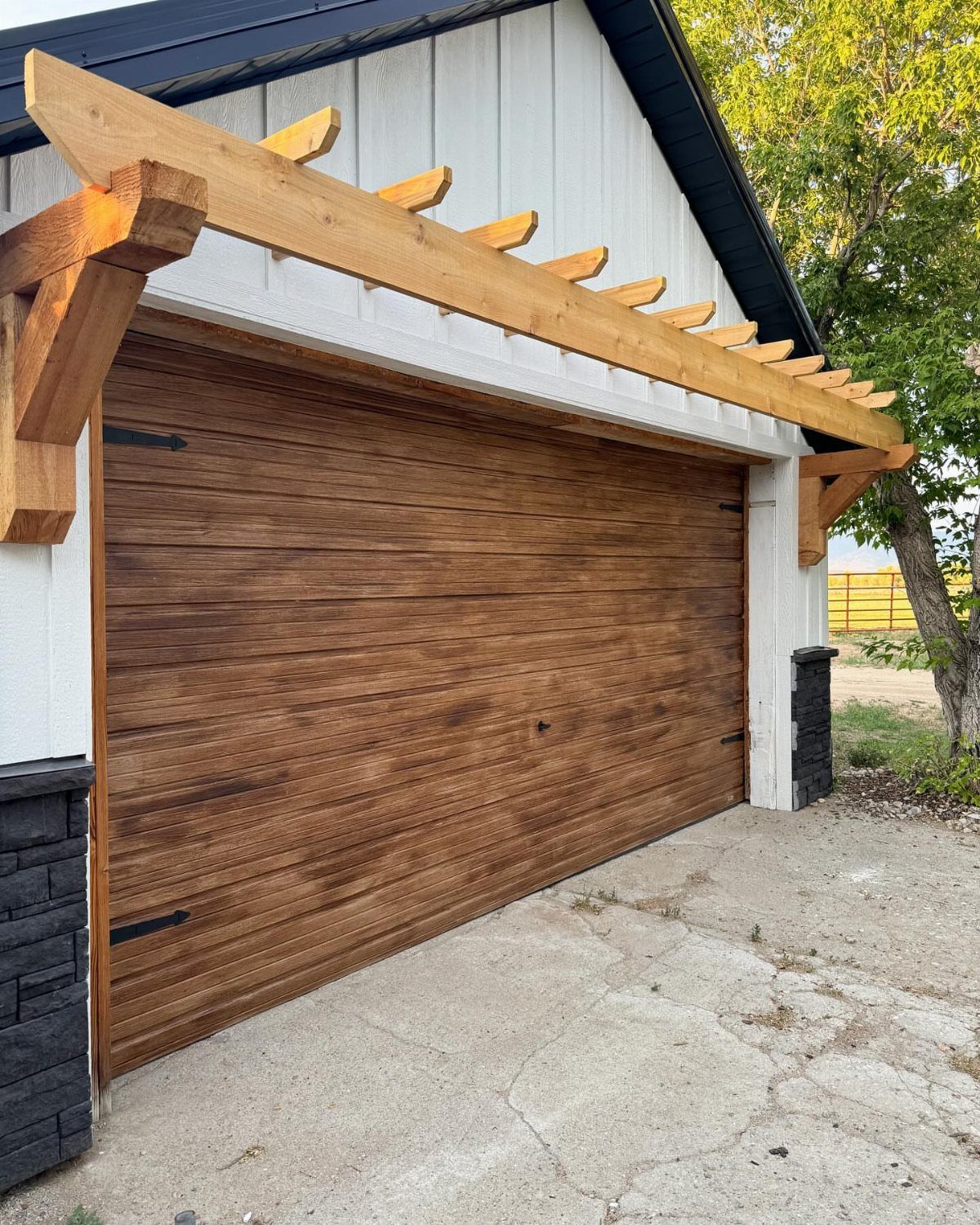
A painted faux-wood grain gives you the look of timber without the warping, rotting, or refinishing that real wood demands in most climates.
Horizontal planks read traditional, vertical boards lean more modern, and a warm brown tone sits well with stone and white siding.
The finish works on steel or fiberglass doors, which cuts the weight and the price. Ask your installer whether the coating carries a warranty against peeling, since some faux-wood paints need periodic reapplication in sun-heavy exposures.

From cold, plain white or simple solid, paint your garage door to look like wood in a single morning or afternoon with Giani Wood Look Paint for Garage Doors!

The 16 oz. English Oak Finish Coat is the Wood Grain Coat included in the Giani English Oak Garage Door Kit

From cold, plain white or simple solid, paint your garage door to look like wood in a single morning or afternoon with Giani Wood Look Paint for Garage Doors!
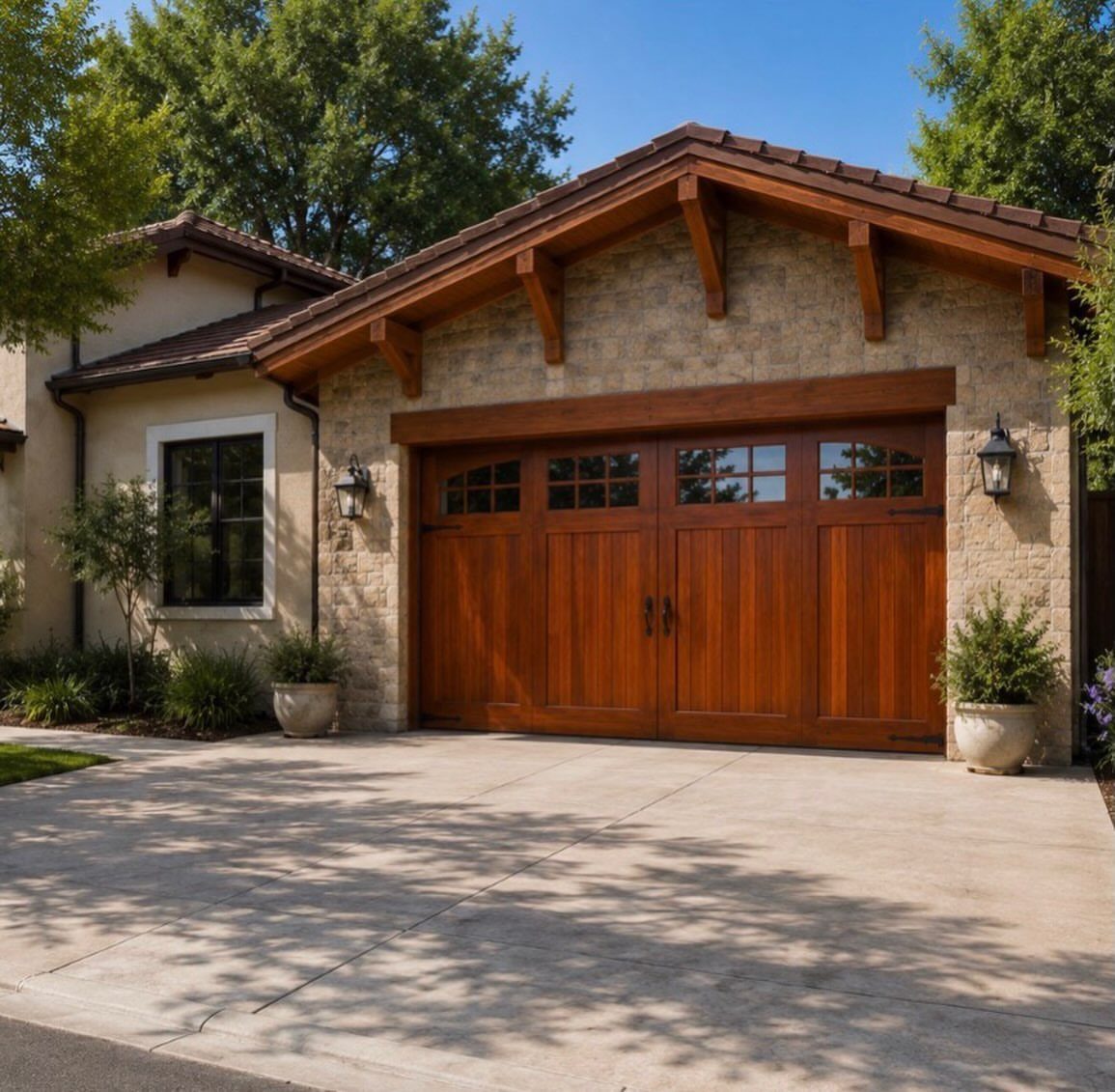
2. Carriage House Style
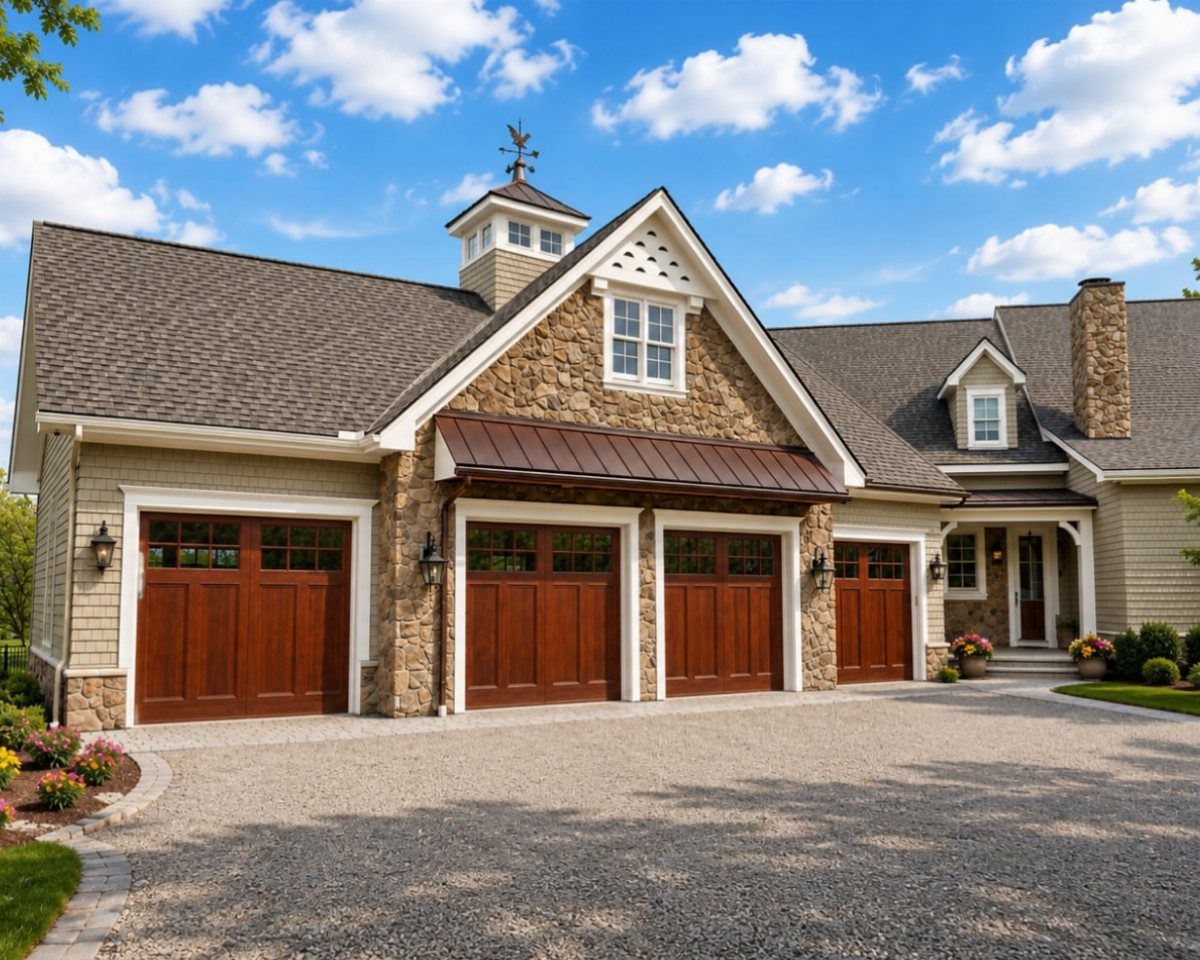
The swing-out look of carriage house doors, built to roll up on a modern track, fits the Craftsman love of hand-wrought detail without the drafty gaps of actual barn doors.
What I like about this version is the deep reddish-brown stain against stone; it picks up the roof tone and anchors the facade.
Multiple doors on a wide frontage need coordinated hardware placement or the rhythm falls apart.
Insulated wood composite runs mid-range installed, less for steel with an overlay, more for custom cedar. The rustic effect suits older neighborhoods where a sleek modern door would look out of place.

Create a strong, durable and beautiful accent for your Homes exterior, make a big difference in the curb appeal of a house.

Screw Mounted Decorative Garage Door Hardware: 8 hinges and 1 handles for 2 car garage, quickly and easily change your basic door into a more stylish carriage door that adds a lot of curb appeal to the front of your house.

【Garage Door Hardware】The magnetic decorative garage door hinges with strong magnets on the back, can be firmly attached to the door and will not fall off in any weather conditions (Recommended for steel or metal alloy doors).
3. Black Handles and Hinges
Hardware is the fastest way to push a plain door toward Craftsman territory, and black iron-look straps with lift handles cost a fraction of a full replacement.
Dark metal plays against warm wood and repeats the window and light fixture trim; that coordination matters more than the size of the pieces.
I would measure the panel width before ordering.
Strap hinges need flat surfaces to mount flush, and handles centered at a comfortable height suit most drivers. Avoid anything that projects too far if you have a tight garage depth; you will catch a hip or a car door.

【Superior Powerful Magnet】Our Decorative Garage Door Hinges designed with UPGRADED SUPER STRONG MAGNET that has twice the suction power of normal magnets so it can stick to the garage door firmly without falling off in all season, all weather(Recommended for steel or metal alloy door ONLY!)

AUTHENTIC COLONIAL FLEUR DE LIS - Decorative dummy hinges feature period-authentic Fleur De Lis detailing for a traditional Colonial reproduction look on doors, cabinets, shutters, furniture and more.

【Novel style】:Innovative and improved styling we injected , let you can use a simple magnetic Faux hardware accent curb appeal to make your garage door unique !
4. Wood Doors with Top Windows
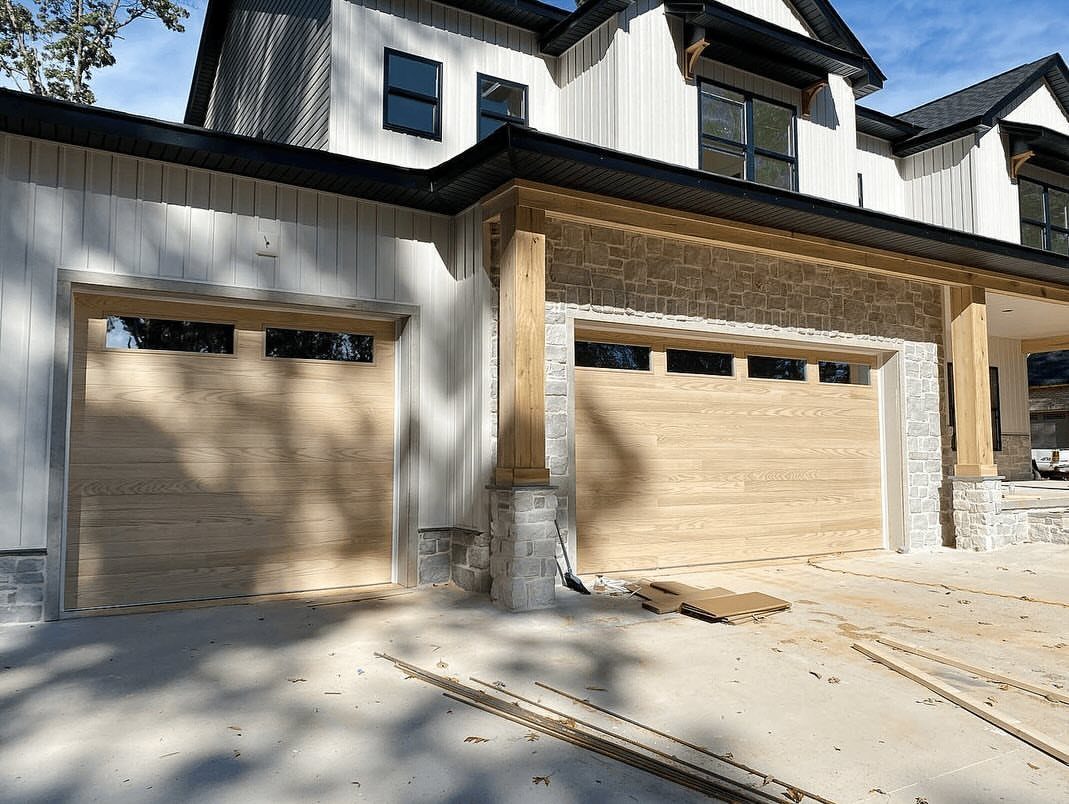
A narrow band of horizontal windows across the top third keeps the garage from reading as a solid wall, especially important on front-facing garages that dominate the facade.
Light wood grain works with stone and white columns of a farmhouse-craftsman mix, and small rectangular panes match divided-light entry door styles I have seen on the same builds.
I would place the windows well below the header or structural elements show through.
Tempered glass is code for operable windows; most fixed lites above garage doors skip it, but I would confirm local requirements if you are swapping in real sashes.
The row read works best on double doors or wider singles; a broad opening can handle the horizontal emphasis, a narrow single door looks stretched.
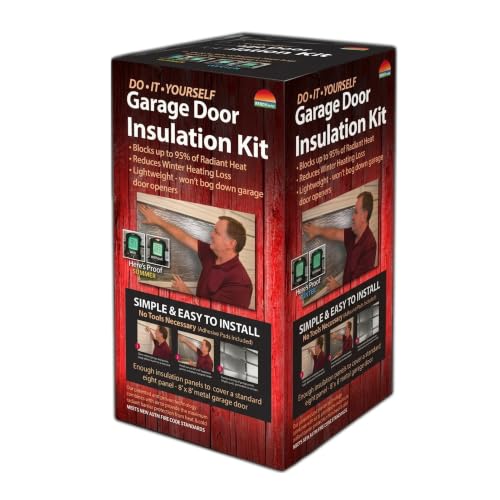
SINGLE DOOR COVERAGE (8ft x 8ft): Designed to insulate one standard single garage door. For double-wide or two-car garage doors, purchase two kits for full coverage.

COVERAGE: This kit is designed to insulate one single-car garage door. For a two-car garage, you will need two kits. For a three-car garage, you will need three kits.

This Kit Includes: 4 rolls of 2ft x 18ft White/Foil Foam Core Insulation, Heavy Duty Double Sided Tape, Razor, Squeegee, Easy Instructions
5. Solid Black Garage Doors
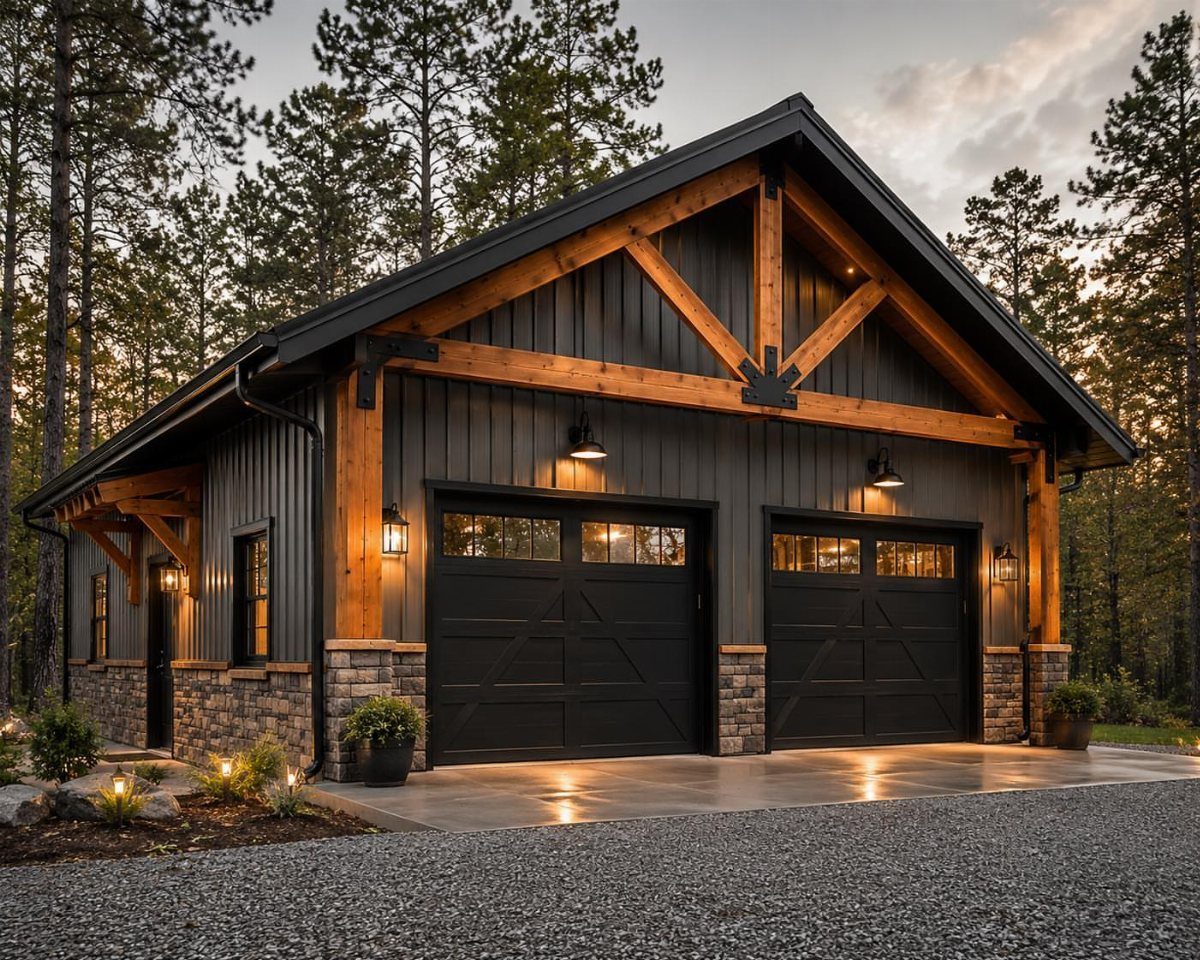
Black reads as shadow against dark siding, which helps a large garage mass disappear into the trees the way this one does after sunset.
The small windows keep it from going completely flat, and the warm interior light through them at dusk is a detail I would keep even if I sealed the workspace for temperature control.
What trades away is visibility of dust and pollen; black shows everything. I would budget for an annual wash or accept the matte look that develops.
In hot climates, black steel runs noticeably hotter than lighter colors, which degrades exterior paint faster and radiates heat into the garage; insulated panels with a reflective backer help, and I would not skip that upgrade in the South.

PREMIUM CAST ACRYLIC SHEET - Duco’s 1/8 inch 8 x 12" plexiglass sheet offers protective paper mask on both sides, glass-like clarity, and long-term durability. NOTE: Our 3mm acrylic sheet has a ±1/8 inch cut tolerance

【Size & Customizability】Our neoprene sponge foam tape measures 1/2 inch wide x 1/4 inch thick x 21 feet long x 2 rolls and is easily customizable. Simply use scissors or a blade to cut it to the desired size. The tape is flexible and can conform to any shape

🌬️ Block Out Cold Drafts: Crafted from windproof Oxford fabric and 180G thick cotton padding, this garage door insulation panels effectively keeps cold air, rain, and wind out. Perfect for winter—stay warm indoors while cutting down on heating bills.
6. White Painted Craftsman Door
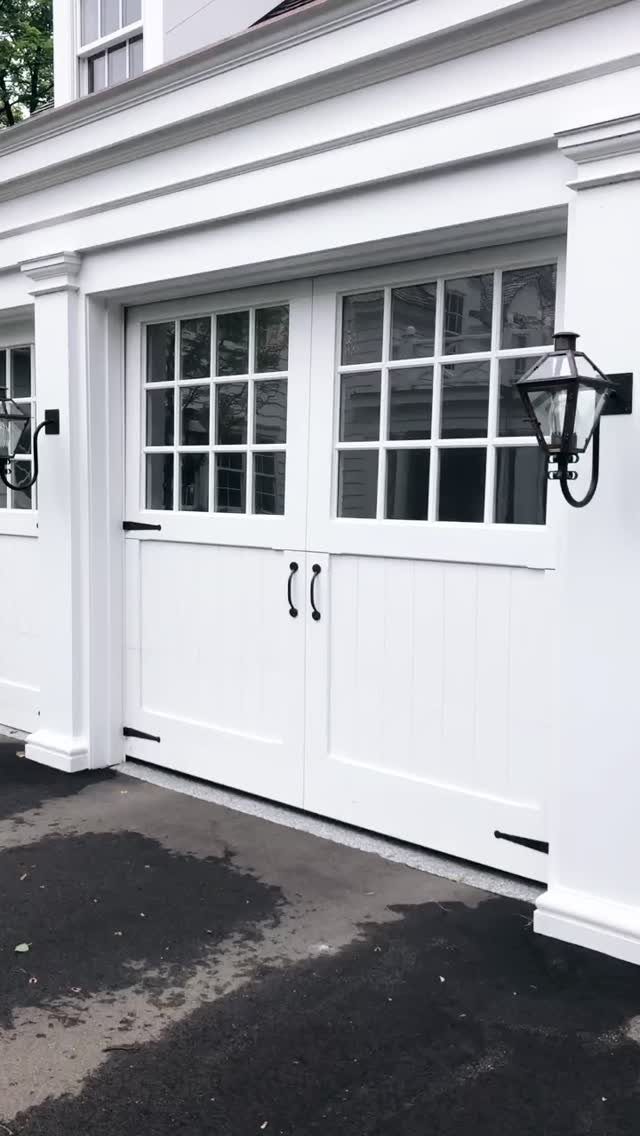
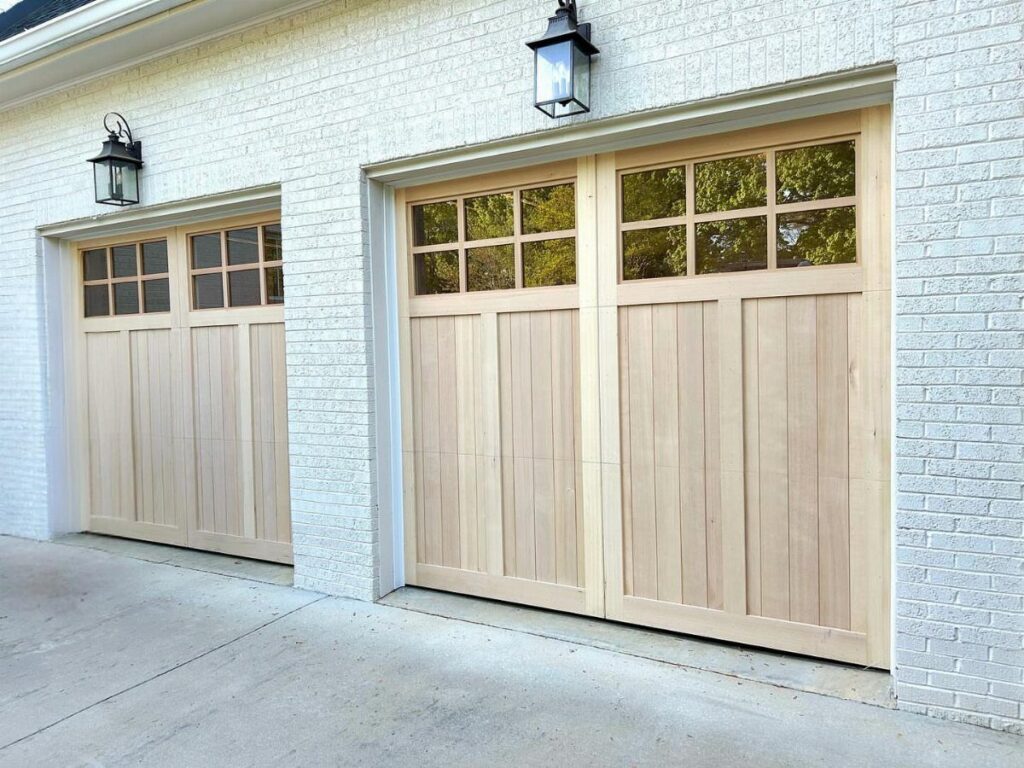
White garage doors suit houses where the trim and siding already read light, and the divided-light upper panes here echo the front door style without competing for attention.
The vertical tongue-and-groove panels below the windows give the lower half texture that reads from the street better than flat factory stamping.
I would specify exterior-grade acrylic-latex enamel or a factory-applied baked finish; standard interior paint on a moving, flexing outdoor panel chalks and cracks within 2 seasons.
The black hardware adds punctuation, but I would keep the pieces minimal on a door this pale; too much ironwork turns costume quickly.
A lantern on the adjacent pillar completes the Craftsman entry gesture without loading every element onto the door itself.

From cold, plain white or simple solid, paint your garage door to look like wood in a single morning or afternoon with Giani Wood Look Paint for Garage Doors!

The 8 oz. English Oak Grain Coat is the finish coat included in the Giani English Oak Wood Look Paint Kit for Front Doors. It is the second step in our three-step application process.

【Perfect for Home Decor】You can use the DIY wood graining roller to decorate your walls, floors, furniture, fences, decks and more. Wood grain roller tools are excellent, really look like artificial wood grain and give your home a new look.
7. Dark Grey Craftsman Garage Door
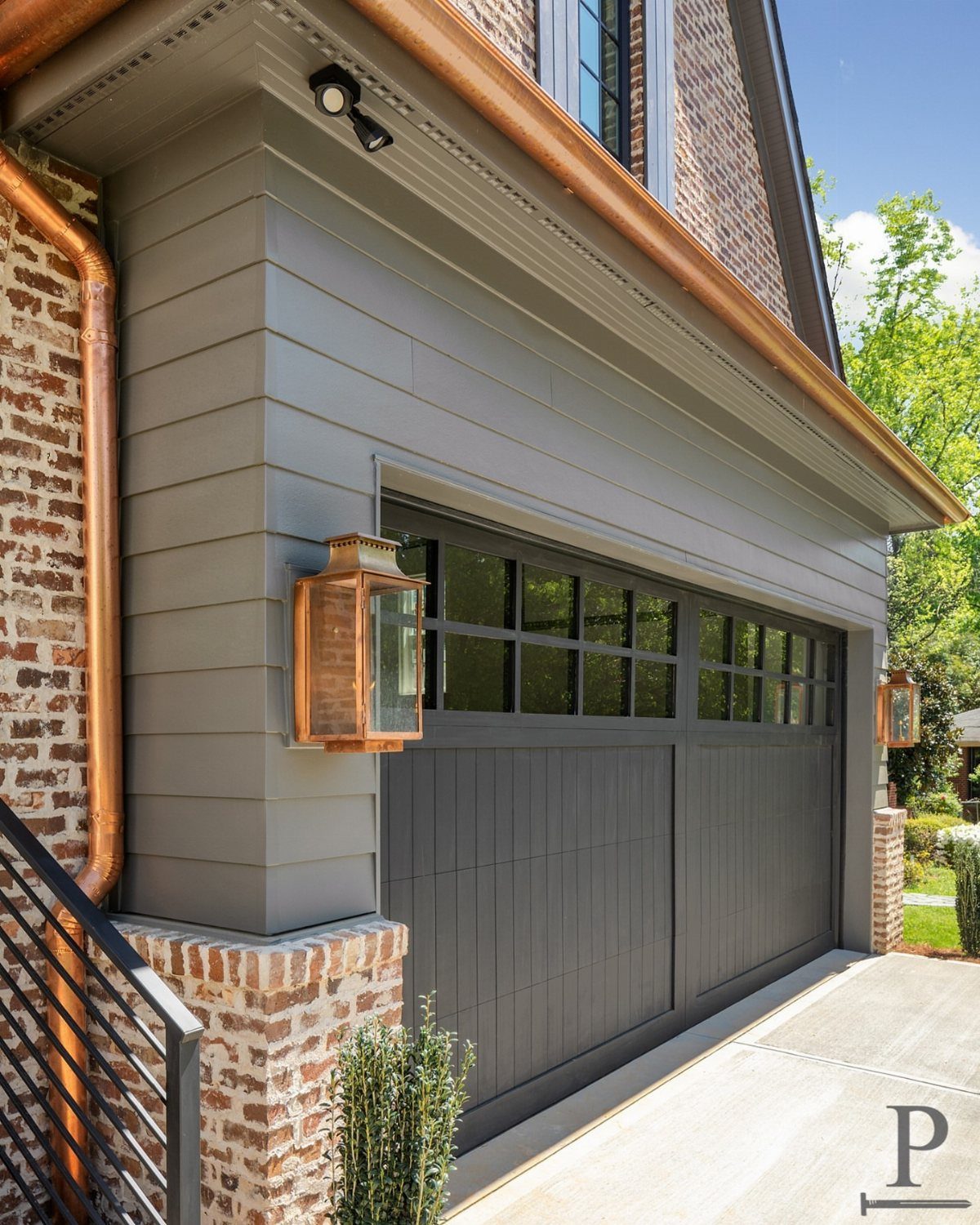
Dark grey reads as color without the heat absorption of black, and the copper gutters and lanterns here pick up warmth that keeps the facade from going flat.
The upper window panes repeat the divided-light pattern of Craftsman entry doors I have seen on similar builds.
I would match the grey to the siding undertone; a green-grey against a blue-grey base clashes from the street.
Factory-finished steel or aluminum holds the color longer than a field-applied paint on wood. The copper accents will patina to green in most climates; decide whether you want that contrast or plan to maintain the bright metal.

High Quality Steel: CCJH garage door decorative hardware is made of solid steel; upgrade steel decorative garage door hardware is more durable than the magnetic one;

A decorative garage door magnet set in black, designed to instantly upgrade steel garage doors

6-Piece Premium Decorative Magnetic Hardware Lever Carriage House Garage Door Magnet Set, Black
8. Tilt-up Wooden Garage Door
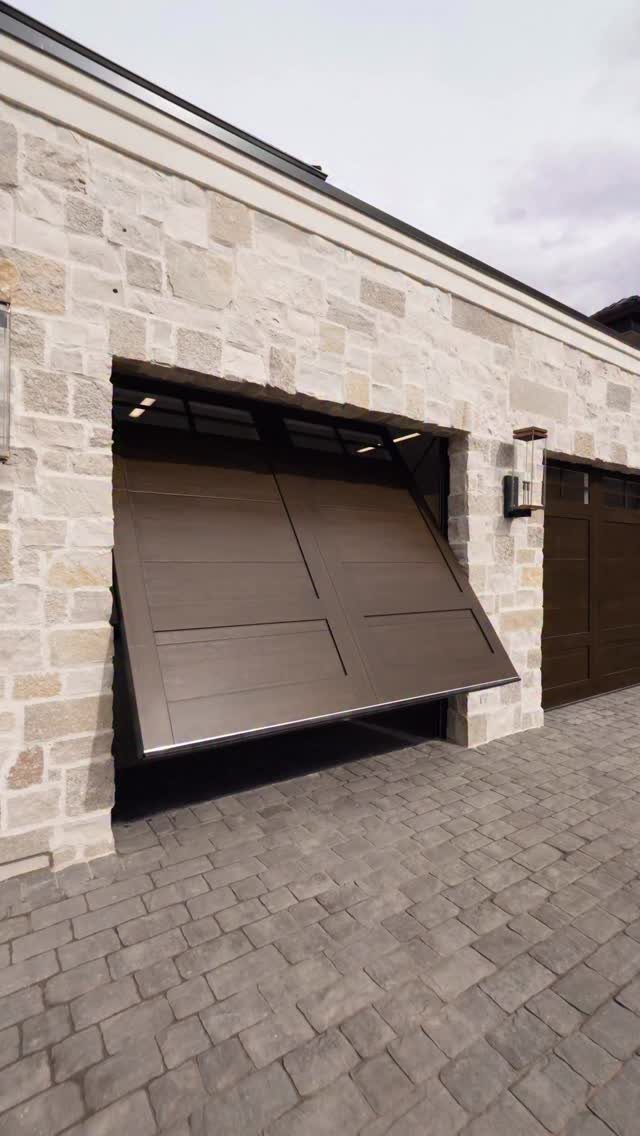
A tilt-up slab swings outward on pivot hardware rather than rolling overhead, which suits low headroom garages where a standard track won’t fit.
The dark stain against light stone creates the contrast that defines the Craftsman look; the cobblestone driveway below repeats the hand-laid texture.
I would check local wind-load requirements before ordering. Tilt-up doors need heavier framing and stronger springs than sectional doors, and the outward swing demands clear space in the driveway; a car parked too close blocks opening.
Wood construction means periodic refinishing, and I would budget for that more often in sun-heavy exposures, where the finish takes a real beating.


MATERIAL - These decorative Fleur De Lis Antique Reproduction designed dummy strap door hinges are made of sturdy and durable heavy duty wrought iron material. Pack of 8

Benefits of Craftsman Style Doors
A Craftsman garage door earns its place by repeating the visual language of the house itself.
Windows do more than look correct. They let working light into a garage that otherwise needs fixtures burning all day, and they soften what can be a massive blank plane on front-facing houses.
I would place them where they do not expose stored items to the street; top-third placement solves this on most doors.
The materials that last in this style, steel with a factory finish or insulated wood composite, also insulate.
I would not treat insulation as optional in zones with real winter or summer; the cost difference pays back in load on the house HVAC and in paint life on the door itself.
And when it comes to designing craftsman style garages — whether you’re embarking on a ground-up project or just looking to integrate more authentic details into your existing craftsman home — create continuity by having your doors underscore signature architectural traits.
— Hunker

【Thermal Insulated Garage Door Curtain】FEGO【16.3 feet Width x 7.15 feet Height】 garage door screen fits door size up to 16ftx7ft, reserve extra length and width for door frame. not only for your garage, but also for back patio gazebo, outdoor workshop, a home gym, garden, floor to ceiling windows of veranda etc. Please carefully measure door size (Excluding door frame part)
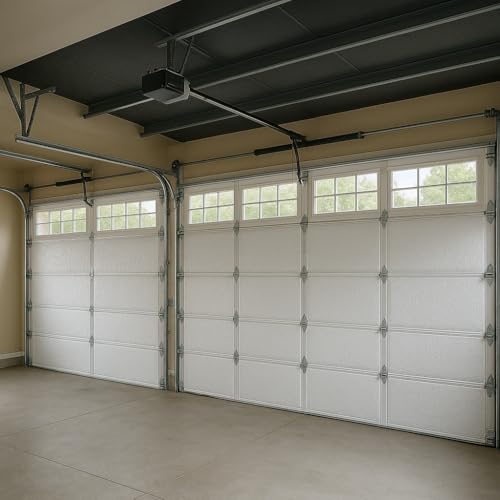
COVERAGE: This kit is designed to insulate one single-car garage door. For a two-car garage, you will need two kits. For a three-car garage, you will need three kits.

THERMAL GARAGE DOOR INSULATION KIT: This insulated garage door screen measures 16.3 x 7.15 ft, fitting garage doors up to 16.04 x 7.02 ft. Ideal for not just garages, but also front doors, back doors, patio entrances, porches, balconies, etc. Tips: Please measure your door size accurately and allow extra length and width for the door frame.
Factors to Consider
Start with the door’s relationship to the house, not the door alone. I would hold a paint chip or factory sample against the actual siding in outdoor light before ordering, not trust a screen.
Material sets the maintenance schedule you are signing up for. Fiberglass splits the difference on weight and weather resistance.
Insulation rating, measured in R-value, matters for attached garages and for any door with living space nearby.
I would ask for the whole-door R-value, not the panel rating alone; the seal system and track hardware create gaps the headline number ignores.
Hardware placement on double or multiple doors needs planning. Strap hinges and handles set at matching heights keep the rhythm; eyeballing it reads as amateur from the curb.
Measure panel width before ordering, confirm flat mounting surfaces, and check that handles and any projecting hardware clear your interior space and your car doors.

Craftsman 3-button garage door remote

BEFORE YOU BUY - Each panel is 4"X6". Ensure your garage door panels are at least 8.5X12.5 inches to fit 4 magnetic panels. Verify your garage door is magnetic. Note: Window frames are not included in this package.

BEFORE YOU BUY - Each panel is 3.25"X5.5". Ensure your garage door panels are at least 7X11.5 inches to fit 4 magnetic panels. Verify your garage door is magnetic. Note: Window frames are not included in this package.
Frequently Asked Questions
Are Chamberlain and Craftsman the same?
No. Chamberlain Group manufactures Craftsman garage door openers under license, but the 2 names remain separate product lines with different features and price points.
Chamberlain openers typically sell through professional dealers and home improvement stores, while Craftsman branded openers often appear at Sears and affiliated retailers.
The internal rail and motor designs overlap more than the externals suggest, so parts compatibility depends on the specific model year.
What is the cheapest garage door option?
Uninsulated steel raised panel doors run lowest, skipping the foam core and extra hardware that insulated versions carry. You will still find a wide spread inside that category: color range, panel proportion, and warranty length all move the price.
I would not buy on sticker price alone; a door without enough rigidity dents easily, and the savings disappear on early replacement.
Are faux wood garage doors good?
Yes, for the look of timber without the warping, rotting, or periodic refinishing that real wood demands in most climates.
The grain is printed or embossed onto steel or fiberglass skins, which drops the price per door and takes load off the springs and opener.
Some factory finishes carry ten-year warranties against chalking or flaking; budget faux-wood paints may need recoating after five years of southern or western exposure, so I would read the warranty page before signing.
Factory photos never match siding in person; I would request a physical sample and hold it against the actual clapboard or brick in midday sun.
What is the best raised panel garage door for Craftsman homes?
Steel raised-panel doors with squat, four- or five-row grids pick up the rhythm of Craftsman window sashes and porch spindles better than tall two-row layouts.
I would look for a solid color or faux-woodtone option that matches the earthy palette of stone, brick, or cedar already on the facade.
Manufacturers often publish the panel R-value; the whole-door number is lower once you factor in the joints and edges, and that is the figure that affects your utility bill.
What colors work on a Craftsman home?
Muted, ground-down shades like bronze, sandstone, and almond grew out of the brick, river stone, and unpainted cedar that Bungalow builders actually used.
A warm mid-tone brown stamped with a vertical grain reads like stained cedar from the curb but never demands a ladder and a can of Thompson’s.
Charcoal softens the contrast where pure black would soak up afternoon heat, and a soft ivory door sits quietly on a house already wrapped in pale trim and clapboard.
What is the difference between short and long raised panels?
Short panels break the door face into eight or ten small raised blocks, which pairs naturally with a facade full of divided-light windows and boxed cornices.
Long panels stretch the door into two or three broad horizontal bands; the calmer grid fits a Craftsman where the remodel stripped away some of the original busy detail.
Insulation is an option on either panel style, not a requirement tied to one, so I would pick the visual match first and add the core upgrade second.
The choice matters most when the garage door faces the street and the panel rhythm needs to echo the house’s window pattern.