A garage paint color has to earn its keep under fluorescent bulbs, against concrete, and around whatever you haul in from the yard, so the range here runs from crisp white walls that bounce every lumen to matte black that swallows light whole.
What decides it is how much wall abuse your space takes and whether you need every lumen you can get.
The honest timeline for that speckled epoxy floor you are seeing everywhere is five days, not two, with concrete etching and cure windows that do not bend for weekend ambition.
[link-whisper-related-posts]1. Garage Door Color
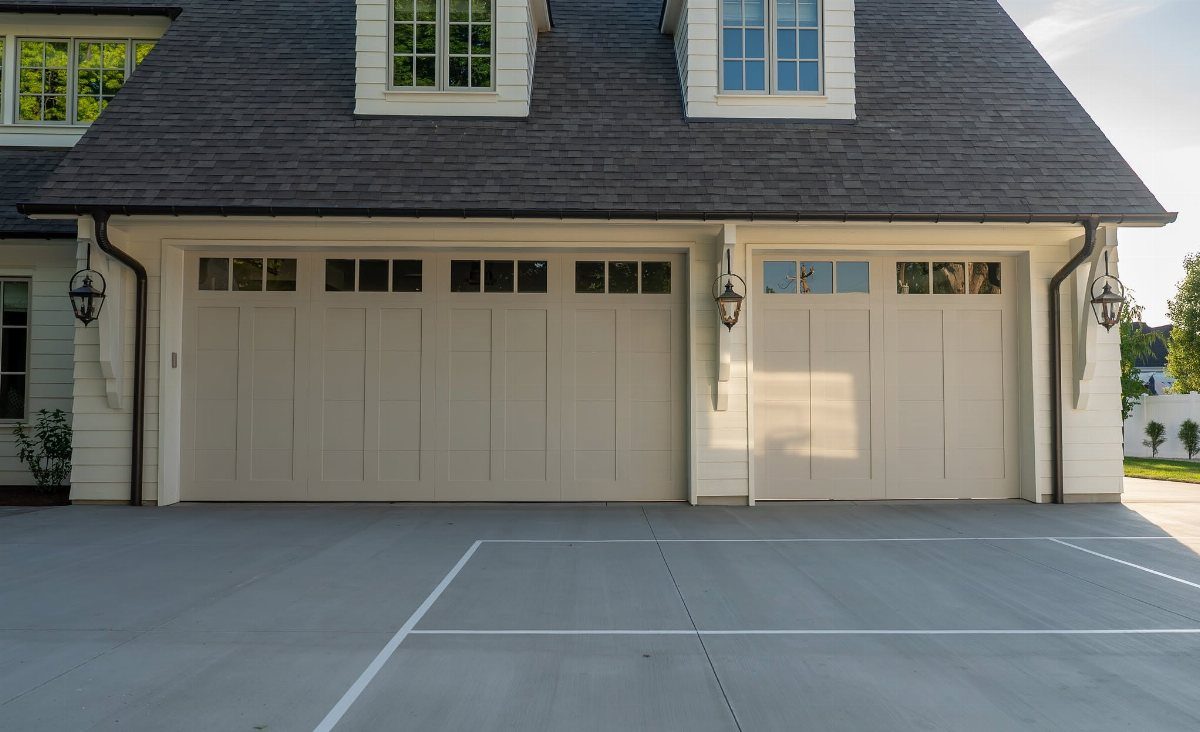
A garage door can swallow nearly a third of what people see from the street, so its color is doing more work than most trim.
Warm cream doors settle into the facade rather than fight it, which is the smarter move on most houses.
I would pick up the undertone of the siding first, hold samples against it at morning and afternoon light, and check that any window grids stay the same finish.
Too cool a white against warm siding turns the whole front sour.

From cold, plain white or simple solid, paint your garage door to look like wood in a single morning or afternoon with Giani Wood Look Paint for Garage Doors!

ALL-IN-1 PAINT & PRIMER: A hardy multi-purpose and multi-surface one-coat paint and primer in one for almost any indoor or outdoor surface. A wall, ceiling, floor, skirting board, cabinet, furniture and door paint for your bathroom, kitchen, home and garden.
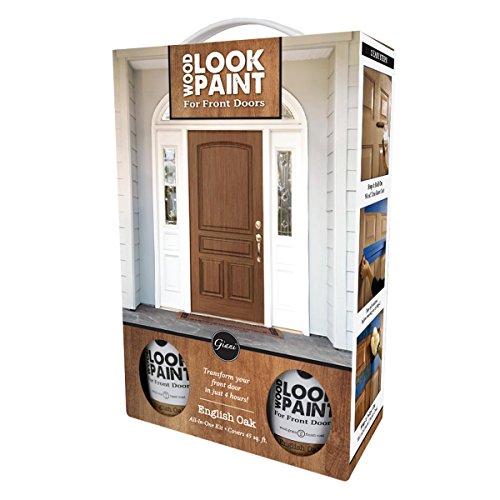
Add instant curb appeal to your home in just 4 hours
2. Garage Floor Paint Colors
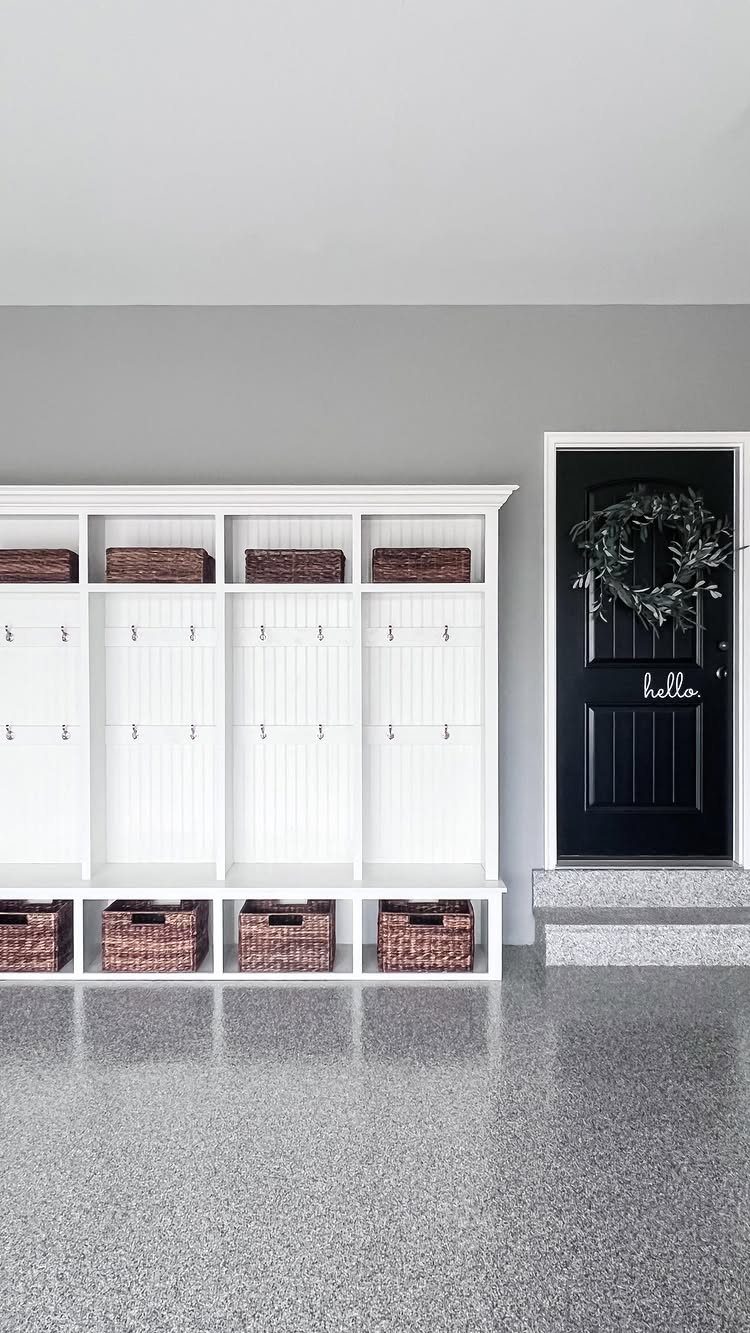
The glossy, speckled floor you are looking at is epoxy with colored flakes broadcast into wet resin. That maker blocked out roughly 5 days for the full job, 2 of them just for wall painting before the floor work began.
I would treat the timeline as realistic, not padded: concrete etching, patching, primer, base coat, flake drop and topcoat all need their own cure windows, and rushing any layer ruins the finish.
A weekend warrior with patience and a respirator can handle it, but the 5-day plan beats the 2-day fantasy I have seen fail more than once.

HIGH-GLOSS MARBLE EFFECT – Upgrade plain floors with a rich colored-sand finish that creates a glossy, speckled marble-inspired look. Adds visual depth and a clean, premium appearance to garages, basements, workshops and more.
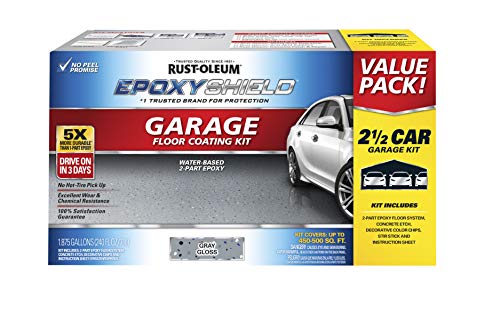
2-PART EPOXY COATING: Water-based epoxy kit finishes concrete garage floors in good, sound condition with a gloss, color-flecked finish

Package: This package includes 1 pack of epoxy floor flakes weighing 453 g (1 lb), featuring a selection of understated yet versatile colors. It effectively caters to a wide range of your decorative requirements, whether for partial accents or full-area coverage.
3. Garage Lighting
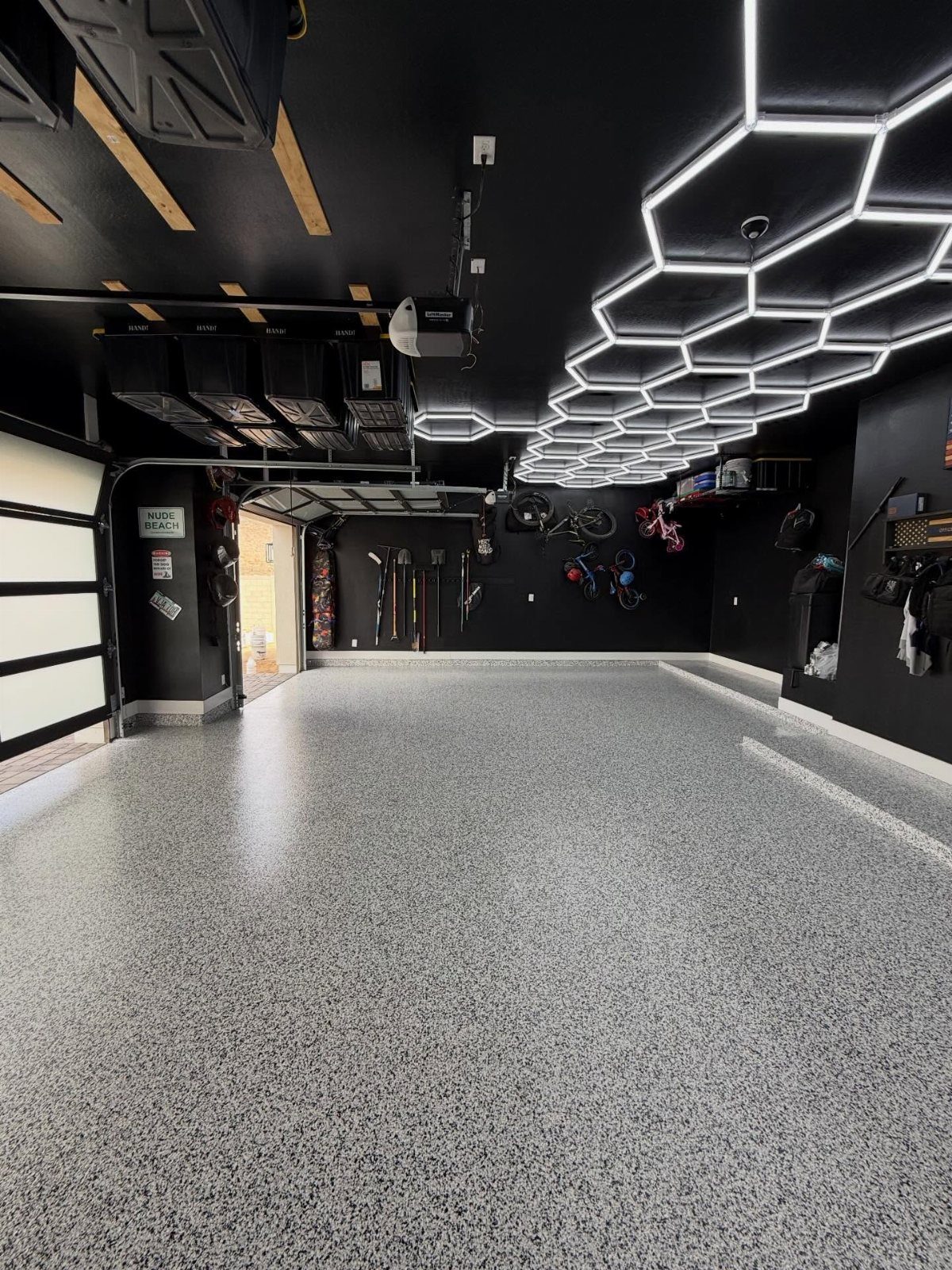
Those hexagon panels throw a clean, even grid across the whole bay, and on black walls they are doing double duty as the ceiling’s only break in tone.
Color depends on temperature as much as pigment: a warm wall under cool LEDs goes flat and sickly, and the same paint under 3000K reads cozier than intended.
I would test any wall color with the actual bulbs I planned to keep, at night, before cutting in on a whole ceiling. The chips alone tell you nothing.

HIGH GLOSS BLACK FINISH: Self-leveling polycuramine coating creates a durable, showroom-quality garage floor finish

✔Epoxy Spike Shoes: In self-flowing flat paint construction, wearing epoxy resin nail shoes will prevent tracks and ensure your design remains intact. Epoxy nail shoes are essential for self-leveling, epoxy flooring, and overlay construction.

Durable Epoxy Acrylic Formula: Resists hot tire pickup, scuffing, cracking, peeling, and fading. KILZ 1-Part Epoxy Floor Paint delivers long-lasting protection and a satin finish that looks great on concrete surfaces.
4. Painting the Ceiling
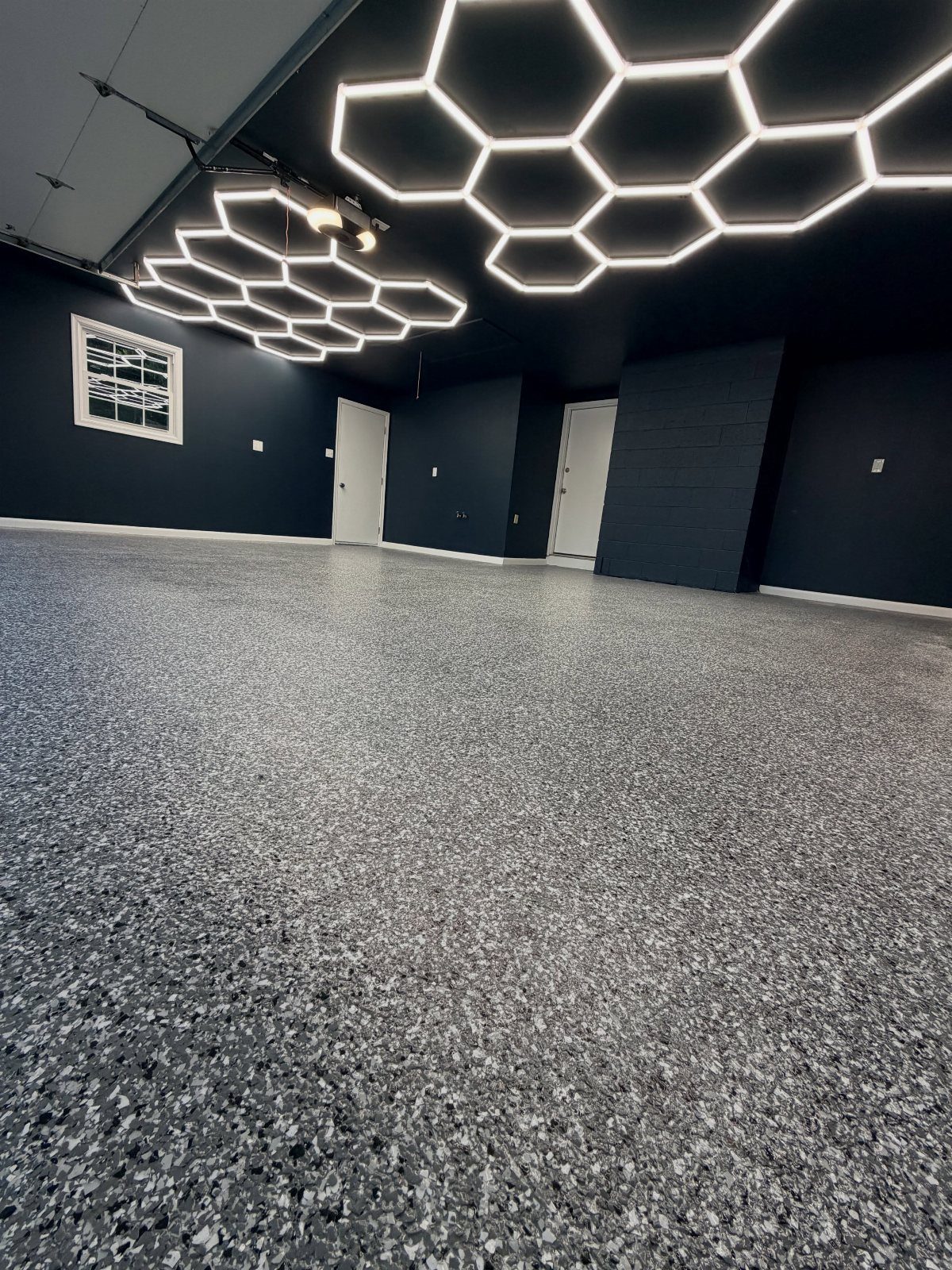
A dark ceiling drops the visual roof of the space by a foot or two in perception, not measurement, which can make a tall garage feel cozier or a low one feel cramped.
The visible example pairs black overhead with black walls, so the boundary dissolves entirely and the light fixtures turn into floating shapes.
I would only commit to a dark ceiling if my garage had the height to spare and the lighting to compensate; in a standard low box I would keep the ceiling lighter and spend the drama on one wall instead.

💗 【More Brightness】【This product has LZHOME's unique design, appearance and functionality, please check if it is LZHOME brand before purchasing.】Using More high quality LED inside, this car detailing hexagon light system produce , up to 26400 lumens. “CRI >85” which will make your garage or work bench looks very good and bright. Light color is 5000K(Nature white) which is the best color temperature for daylight using, providing the best car lighting experience.

DIY & Mutiples Sets Wiring--Hexagonal garage lights are highly adaptable, allowing you to customize their shape to match your desired look and ensure a perfect fit for your garage. When linking multiple sets, it's crucial to use additional power cords as needed for the electrical setup. Please be cautious as a single power cord has a maximum capacity of 36x1.2m light tubes or 75x0.42m light tubes, which corresponds to about 17-18 hexagons. Overloading a power cord with too many lights can lead to overheating and potential damage. Should you encounter any issues, please don't hesitate to reach out for a replacement or refund.

Ultra-Bright Led Hexagon Lights: Our hexagon led lights feature a maximum power of 168W, an ultra-bright 16800LM output, and a 6500K color temperature, built-in high-quality LED chip, the light is stable, no flicker, no glare, and not hurt the eyes. Compare with traditional lamps, Our led hexagon lights provide brighter, more stylish, and uniquely designed lighting, and no shadows in the illuminated area
5. Crisp White Garage Walls
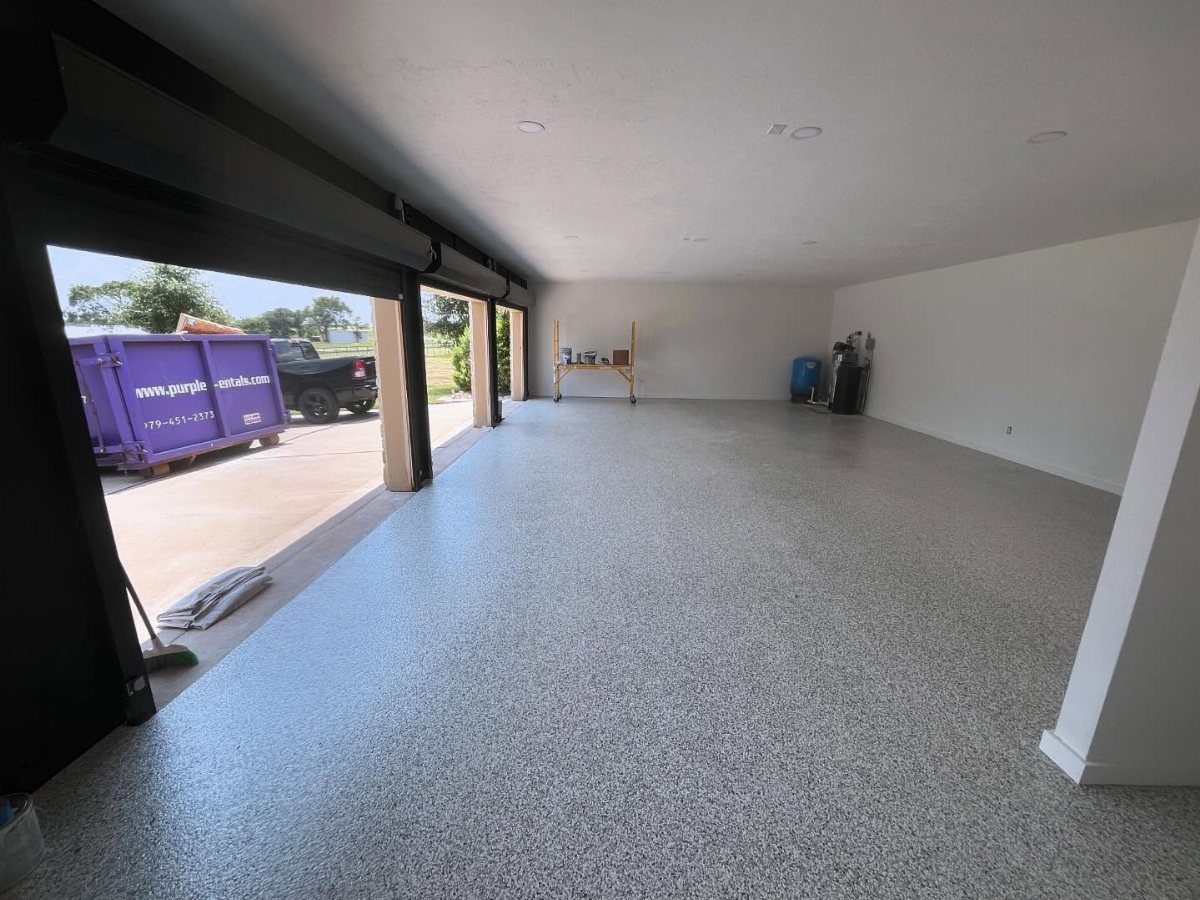
White walls bounce every lumen the door opening gives you, which matters in a space with no windows and one overhead fixture.
A grey speckled floor keeps the contrast gentle rather than stark, and I would stick with that relationship: pure white above, warm grey below, nothing else fighting for attention until the space actually needs storing.
This is the safe choice that also makes everything you bring into the garage later read clearly against it.

ALL-IN-1 PAINT & PRIMER: A hardy multi-purpose and multi-surface one-coat paint and primer in one for almost any indoor or outdoor surface. A wall, ceiling, floor, skirting board, cabinet, furniture and door paint for your bathroom, kitchen, home and garden.

PREMIUM EXTERIOR & INTERIOR BLACK PAINT: Kompozit ONE Paint & Primer is a high-quality, Made in USA, 100% acrylic coating, perfect for both exterior paint and interior paint projects, offering exceptional durability and finish.

Made in United States
6. Light Grey Garage Walls
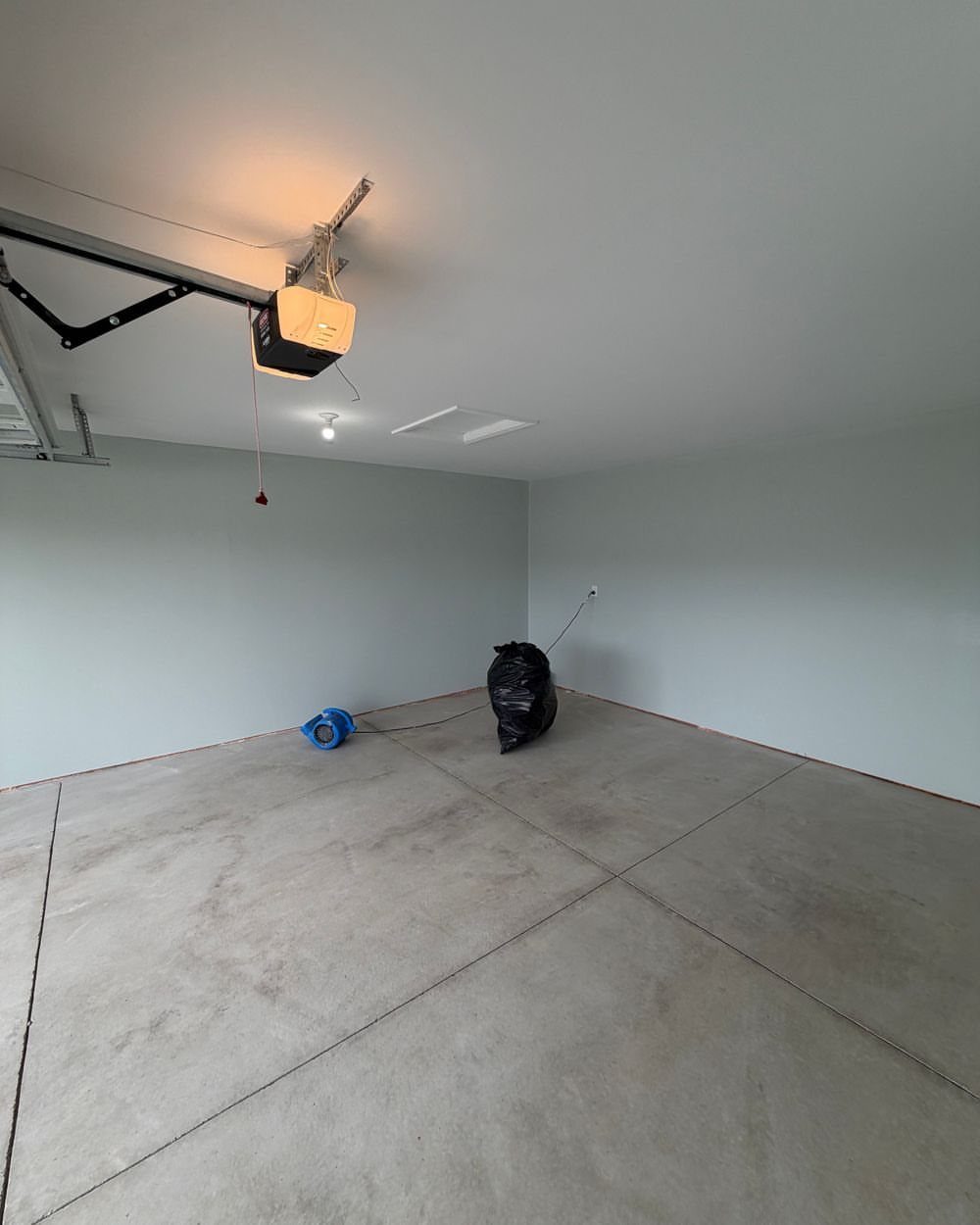
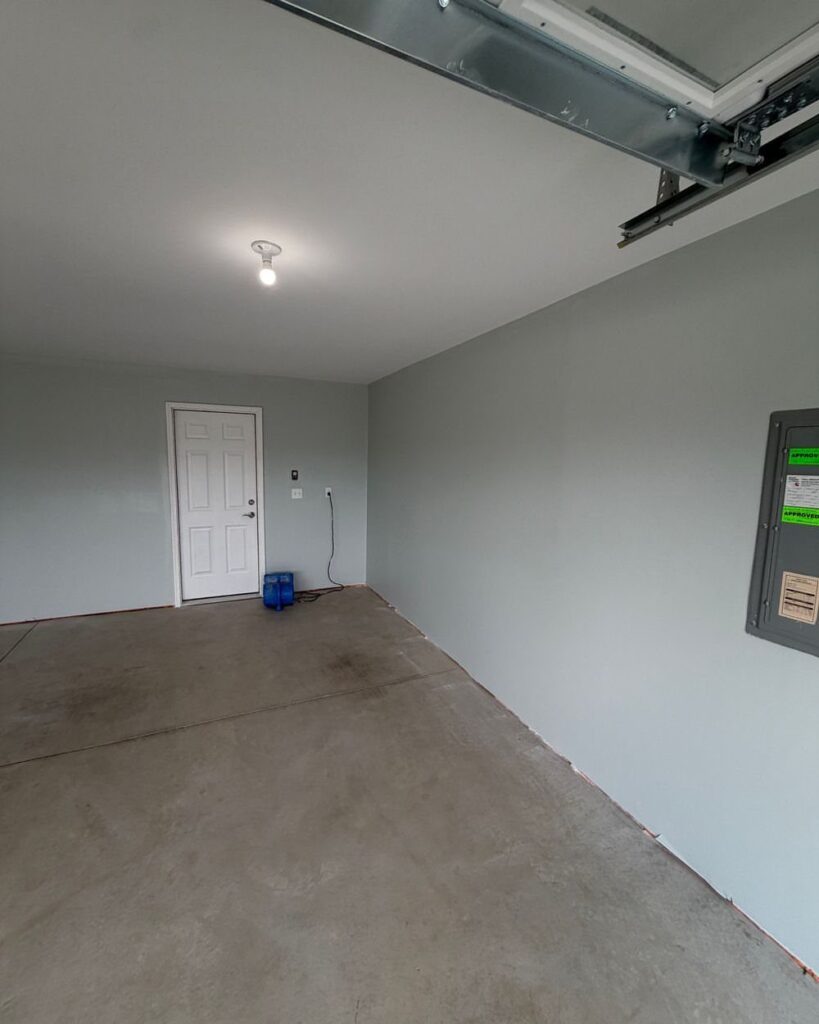
Light grey carries less glare than white under single-bulb conditions, and the concrete floor here stays unfinished, so the whole palette stays in one quiet family.
I would use this when the garage faces harsh afternoon sun or doubles as workshop space, since the softer wall cuts eye strain without losing the reflective help you need.
The trade is mood: this reads utilitarian, not polished, and I would not pair it with a dark floor unless I wanted the cave effect on purpose.

From cold, plain white or simple solid, paint your garage door to look like wood in a single morning or afternoon with Giani Wood Look Paint for Garage Doors!
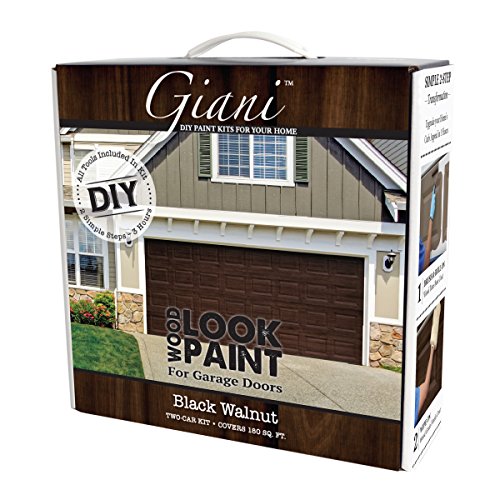
From cold, plain white or simple solid, paint your garage door to look like wood in a single morning or afternoon with Giani Wood Look Paint for Garage Doors!

From cold, plain white or simple solid, paint your garage door to look like wood in a single morning or afternoon with Giani Wood Look Paint for Garage Doors!
7. Neutral Beige Garage Walls
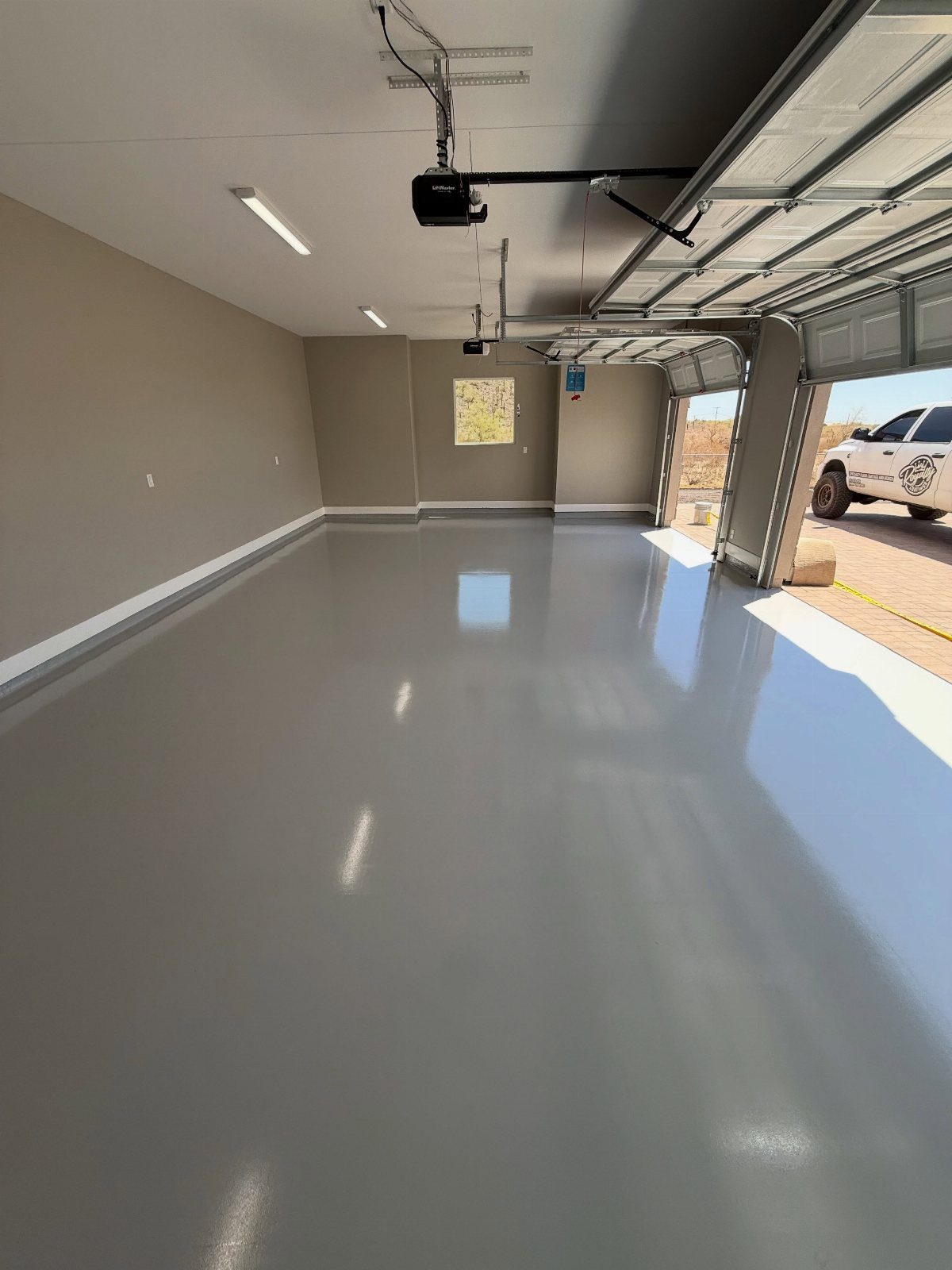
Beige walls warm up a garage without the glare of white or the flatness of grey. I would check the undertone against any trim already in the space, since a peachy beige against cool white baseboards turns muddy fast.
The glossy grey epoxy floor here gives enough contrast to keep the whole room from going soft, and I would not attempt that floor myself unless I had the full curing window and the respirator the earlier entries mentioned.
This pairing suits anyone who wants the garage to feel finished but not fussy.

ADDS SLIP RESISTANCE: Aluminum oxide–based additive designed to increase skid resistance when mixed into epoxy, latex, or oil‑based paints or stains
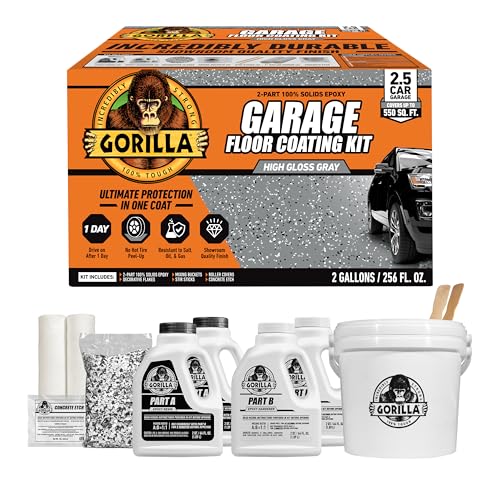
Ultimate Protection in One Coat: 2-part 100% solids epoxy delivers, incredibly durable, exceptional resistance to chemicals, abrasions, salt, oil, gas, and hot tire peel-up that is ideal for garages, basements, workshops, & more.

This 1‑gallon colored‑sand epoxy kit delivers authentic marble‑texture appearance. 100% solids self‑leveling formula flows smoothly, covers up to 35 Sq Ft for medium‑sized renovation projects.
8. Matte Black Garage Walls
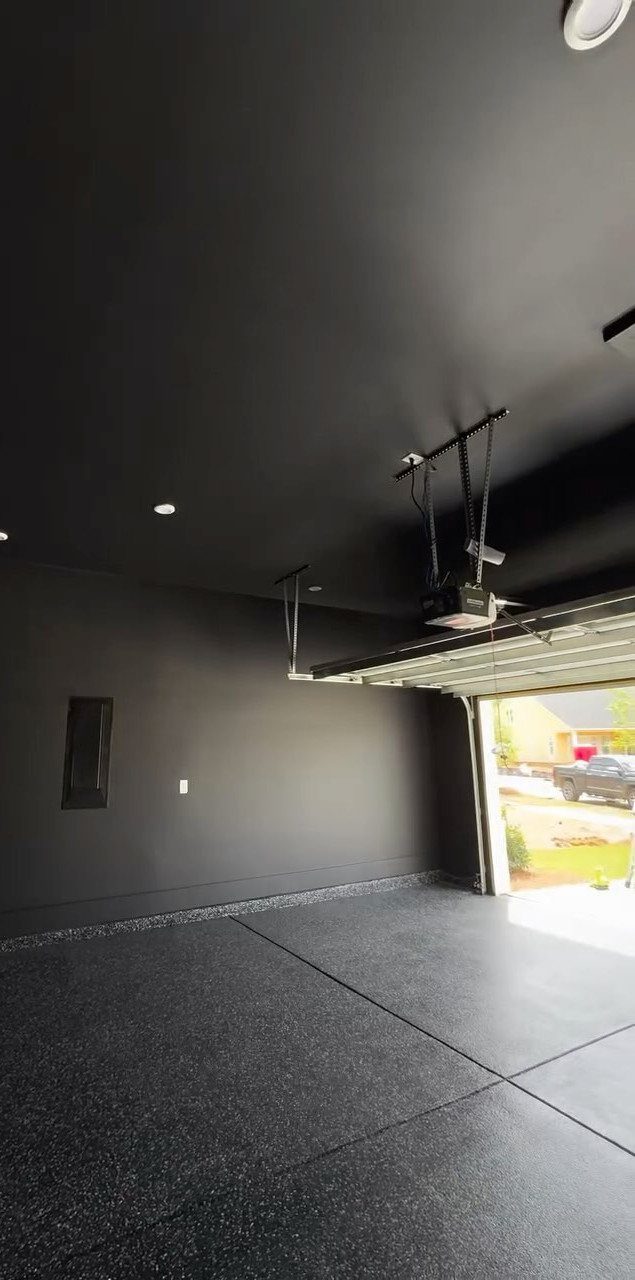
Matte black sucks light in and hides every imperfection, which is useful on walls that take abuse from lumber and bike tires.
2 coats minimum over a tinted primer, and I would plan on touching up annually where hoses and corners meet the paint.
Matte black garage walls trade every scrap of brightness for drama, and I would only commit if the lighting budget matches the paint budget.

【 Heavy-Duty Durability】This 2-part garage floor epoxy resin forms a strong concrete coating that can withstand vehicle passage and the use of heavy equipment, offering excellent durability with a lifespan of 5 to 10 years, thus avoiding the costly need for repainting.

NO SANDING OR GRINDING REQUIRED: Coats directly over previously coated or sealed concrete floors without scuffing or sanding
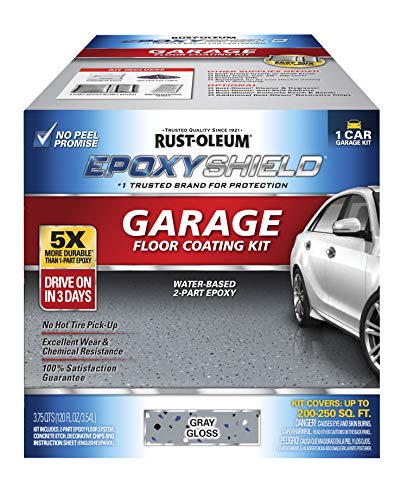
2-PART EPOXY COATING: Water-based epoxy kit finishes concrete garage floors in good, sound condition with a gloss, color-flecked finish
9. Two-Tone Grey and Red Walls
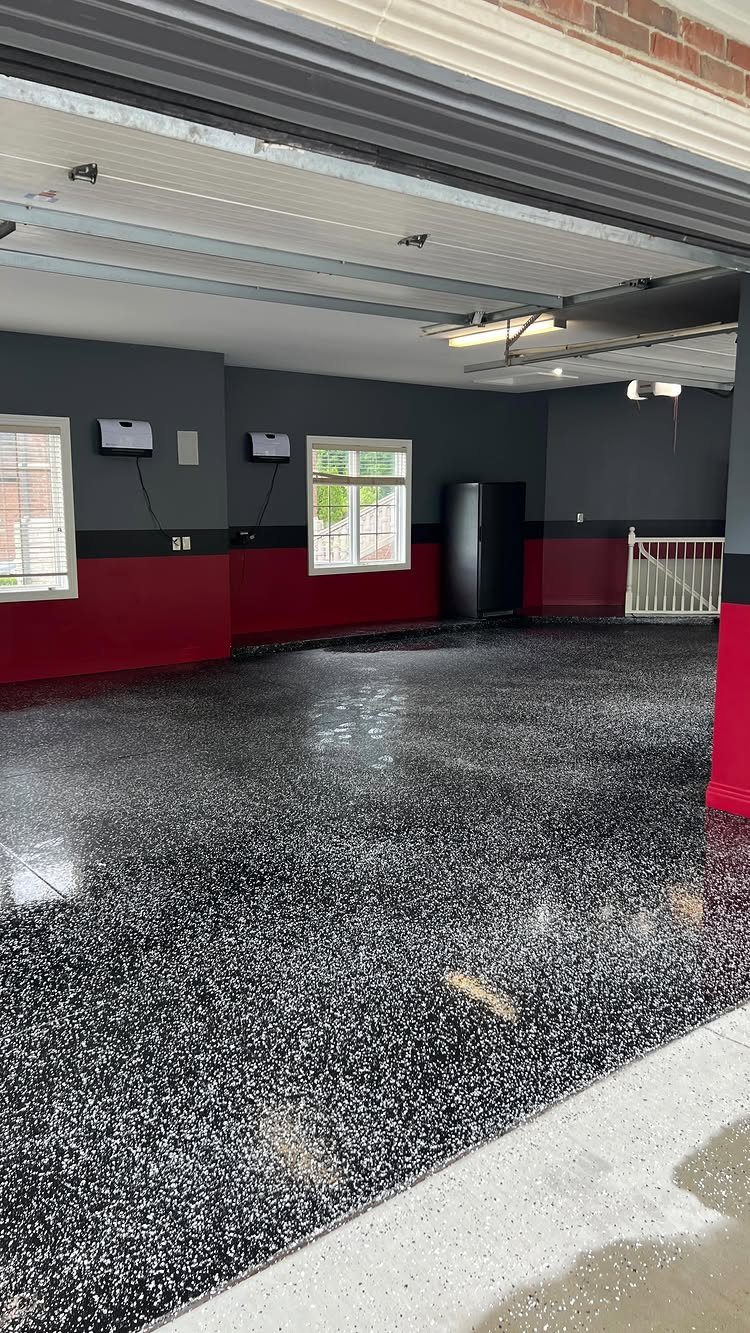
A two-tone wall splits the visual weight so the dark color does not press down from all sides.
I would put the red low where scuffs actually happen and the grey high where eye level lives, since warm colors advance and the red would feel closer than it is if it sat above.
The break line needs to be dead level; I would snap a chalk line and mask carefully, not trust my eye across a whole wall.
A glossy black flake floor here reads as a third tone, so the palette stays tight at 3 pieces. This takes more planning than a single color, but it gives a workshop some personality without going full man cave.

Higher Brightness--Much More Brighter 720W Hexagon Garage Light features LED technology with 3132PCS top quality SMD2835 that produce brightness up to 86400 Lumens, and the color temperature 6500K can provide a brighter, natural white light and will not harmful to your eyes at the same time. It is the perfect color for garage, shopping mall, barber shop and exhibition room etc..

【Bright & Uniform Illumination】168W hexagon garage light with 24 high-quality 410mm LED tubes delivers 20160LM intense light (110-120lm/w) at 6500K cool white. CRI>85 ensures no shadows or glare, covering every corner of garages, warehouses, or car detailing shops.

【Ultra-Bright Hexagon LED Garage Lighting】Our garage hexagon LED lights deliver a powerful 17,280LM output at 6500K, replicating the clarity of daylight. Perfect for auto detailing, repairs, or simply showcasing your vehicle’s finish. These honeycomb LED lights provide even, shadow-free illumination—ideal for super-bright hexagonal garage lights or modern honeycomb ceiling lighting.
Preparing Garage Walls
Garage walls collect more grime than interior rooms, and paint will lock in whatever you leave behind.
I wash mine with TSP substitute first, then fill cracks with vinyl spackling and caulk gaps at the sill plate. The patched spots need a dedicated primer or they will flash through the finish.
Oil-based primer hides stains and grips raw drywall or patched areas harder, but the fumes linger and cleanup needs solvent.
Water-based latex primer dries faster, smells less, and cleans up with soap; the low-VOC formulas are easier to work with in a space that already has limited airflow.
In humid climates, I would spend the extra on a moisture-resistant primer to block the mildew that garage corners tend to grow.
Either way, primer is not a corner to cut: bare or patched walls will drink your topcoat and leave you repainting sooner than you planned.

Ready to use, pre-mixed door and trim paint offers a fresh new look on interior or exterior metal, wood and fiberglass
ALL-IN-1 PAINT & PRIMER: A hardy multi-purpose and multi-surface one-coat paint and primer in one for almost any indoor or outdoor surface. A wall, ceiling, floor, skirting board, cabinet, furniture and door paint for your bathroom, kitchen, home and garden.
ALL-IN-1 PAINT & PRIMER: A hardy multi-purpose and multi-surface one-coat paint and primer in one for almost any indoor or outdoor surface. A wall, ceiling, floor, skirting board, cabinet, furniture and door paint for your bathroom, kitchen, home and garden.
Maintenance Tips
The finish sheen matters more for cleanup than the color does. I would not go below satin on any wall that sees lumber, bikes, or garden tools; eggshell and flat hold stains and scrub off along with the mark.
Durable paint costs more per gallon but saves the repeat work of touching up tire marks and scuff lines every spring. I factor that into the budget up front rather than planning on a refresh every other year.
The real test is whether a damp rag lifts the mark without lifting the film; if it does not, you are looking at spot-priming and re-rolling, which never blends perfectly.
“Hands down, your best choice between the two is the 1-part epoxy paint,” the company notes. The epoxy mixed in with the paint helps create “a paint that is more resistant to mold and mildew, chemicals, gasoline stains, oil, scuff marks and chipping.”
Environmental Considerations
Garage walls expand and contract with the seasons more than interior walls do, especially if the space lacks insulation. Elastomeric paint stretches with that movement without cracking, and I would use it in any garage that sees real temperature swings.
Moisture-resistant or exterior-grade paint handles the damp that rolls in with wet cars and snow blowers.
Mildew-resistant formulas are worth the upgrade in humid regions or anywhere the slab sweats; the black spots they prevent are harder to kill than the upcharge is to pay.
Ventilation while you work is not optional. I keep the door open and a fan running so solvents flash off evenly and the air stays breathable; trapped fumes slow cure times and leave a tacky surface that collects dust.
Frequently Asked Questions
What is the best color to paint a garage?
Light colors win for most garages because they bounce every lumen you have, which matters in a space with one overhead fixture and no windows.
Pure white overhead with warm grey on the floor is the safest pairing I would pick; it keeps contrast gentle and makes everything you store later read clearly against it.
Should garage walls be painted flat or satin?
Satin is the lowest sheen I would use on any wall that sees lumber, bikes, or garden tools. Semi-gloss goes a step further on washability if the garage is a real workshop.
How do I make my garage feel brighter?
White or pale grey walls are the cheapest light source you can add, since they reflect both daylight and whatever your fixtures give off.
Keep the ceiling lighter than the walls unless you have height to spare, because a dark overhead drops the visual roof by a foot or two in perception.