A large yard can swallow a modest budget or demand a crew and a major spend, and the ideas below run that full range.
What picks one over another is not how pretty the photo looks but whether you are doing the work yourself on a weekend, or hiring out and waiting on permits.
The fire pit section alone puts a built-in gas insert against a wood-burning ring you stack in block and capstone, and the cost spread between them is enough to cover a finished patio besides.
[link-whisper-related-posts]1. Build a Patio
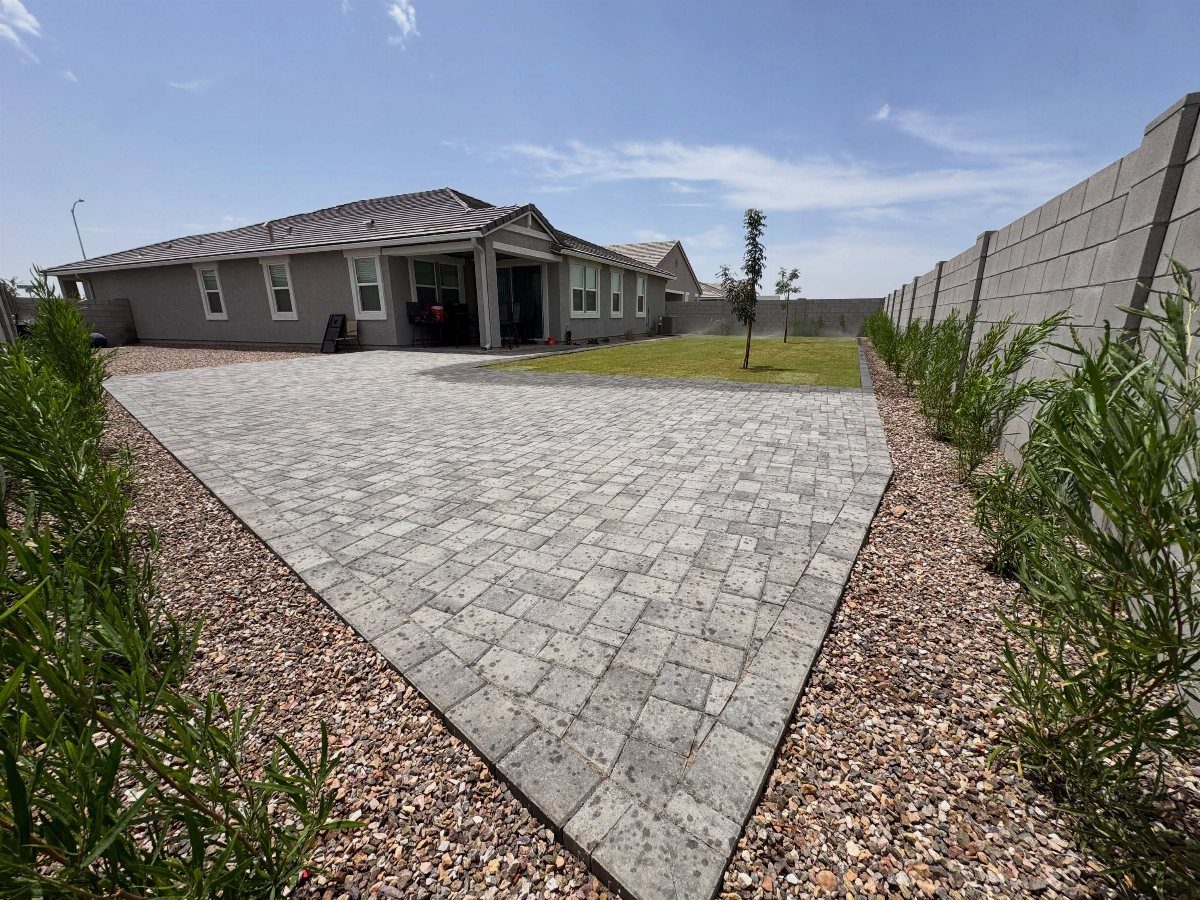
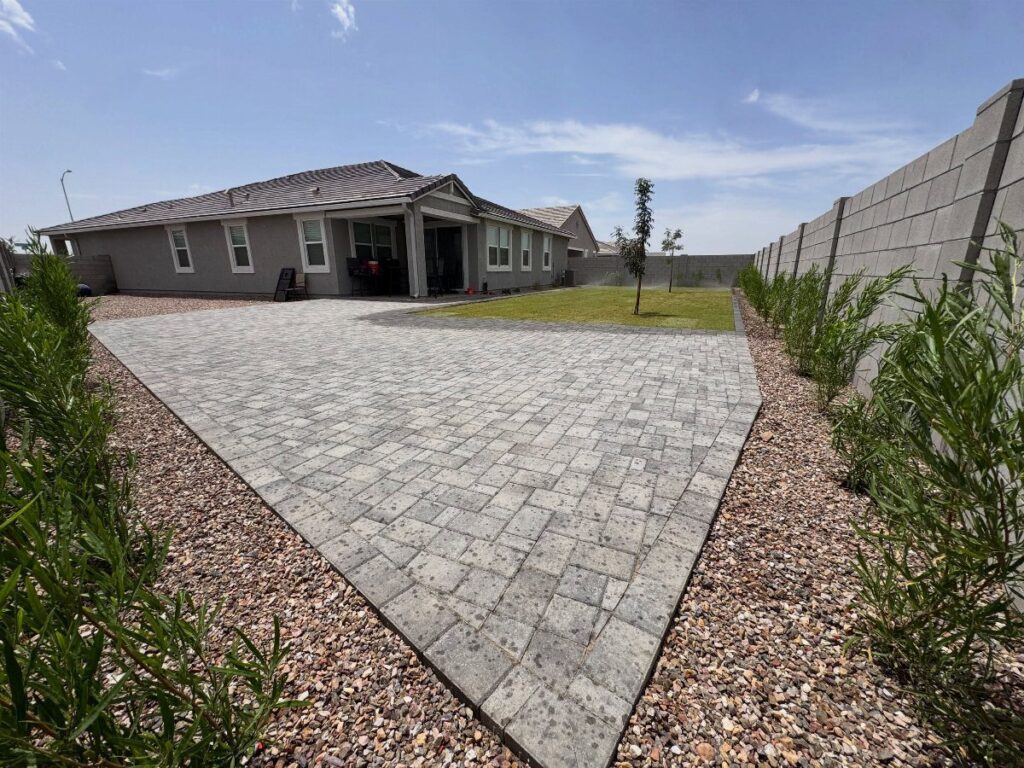
A patio gives you a flat, usable surface where lawn turns to mud every spring.
For a yard this size, I would draw the outline with a garden hose and live with it for a week before ordering anything; a patio that looks generous on paper can feel like a postage stamp once the furniture sits on it.
I would set pavers with a slight pitch away from the house so water does not pool against the foundation.
Concrete pavers are priced by the square foot, and a project this scale is at least a full weekend of excavation and leveling.
If your yard slopes, I would build up with compacted gravel rather than digging in; it drains better and saves your back.

Brighter and Larger Illumination Area: Our 12V low voltage flood lights integrated 9W 950LM LED beadsap, the lens of wired LED flood lights is composed of 12 15-degree small-angle lenses, which can illuminate a longer distance. At the same time, this led floodlights outdoor forms a larger 60-degree lighting area, achieving a higher, brighter, and larger lighting area. This type of uplight is more suitable for spotlights that require a wide range of flood light, perfect for tall palm trees, tall flags, and dense shrubbery

[Upgraded Landscape Lights] 4 pack of 600LM 3000K warm white led low voltage landscape lighting with heavy-duty aluminum housing for excellent rust resistance and heat dissipation. Built-in 6 LED Chips with a CRI of 90.
2. Add Outdoor Lighting
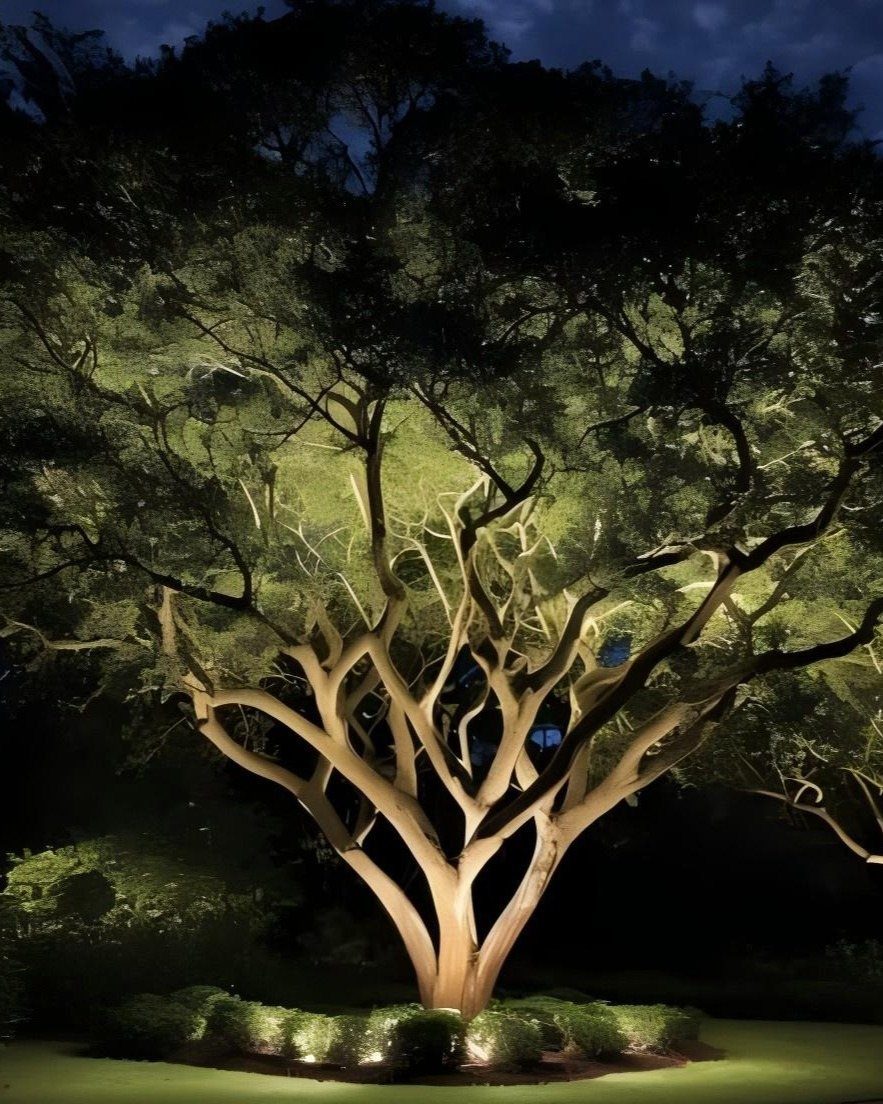
Uplighting a mature tree turns it into a room in the evening, not just something you pass on the way to the door.
The fixture sits at the base, aimed up through the branch structure, and the light it throws reads as moonlight if the color temperature stays at 2700K or below.
I would spend money on a transformer and timer I can set once and forget. The low-wattage LED spots I prefer are plenty for a trunk this size; anything brighter bleaches bark and draws insects.
Plan for one fixture per major trunk or structural branch, and bury low-voltage cable shallow enough to keep it out of aeration and ordinary digging. Total cost for a single tree setup is manageable if you do the burying yourself.
I would locate the transformer near the power source and run lines from there; voltage drop dims the last light in a longer run, so keeping runs short matters more than where you start.

Dimmable DIY Colors & Modes: 70W LED stage lights 6 Packshave Multi colors and modes available. Point the remote at the flood lights, turn on the lights, pick up your favorite color, brightness, modes for birthday, Christmas celebration, Halloween Christmas or wedding party (Tips: For the first time, please keep the power on for 1-5 seconds, then turn on the RGB flood light )
[Adjustable Spotlight] This landscape lighting features 500lm, 90° beam angle and 180° adjustable light direction, offering precise lighting with a classic bullet‑shaped housing. Tilt upward to light up trees, statues and textured surfaces. Great for lawns, palm trees, flags and walls for dramatic eye‑catching effects.

Set the Mood with Color: The 30W RGB floodlight lets you choose from 20 solid colors and 6 dynamic modes (Auto, Flash, Fade, Jump), all with adjustable speed and brightness. Customize your space with 4900 unique color blends using the included 44-key remote – perfect for setting the vibe at parties, in your yard, or at any event.
3. Curved Paths and Garden Beds
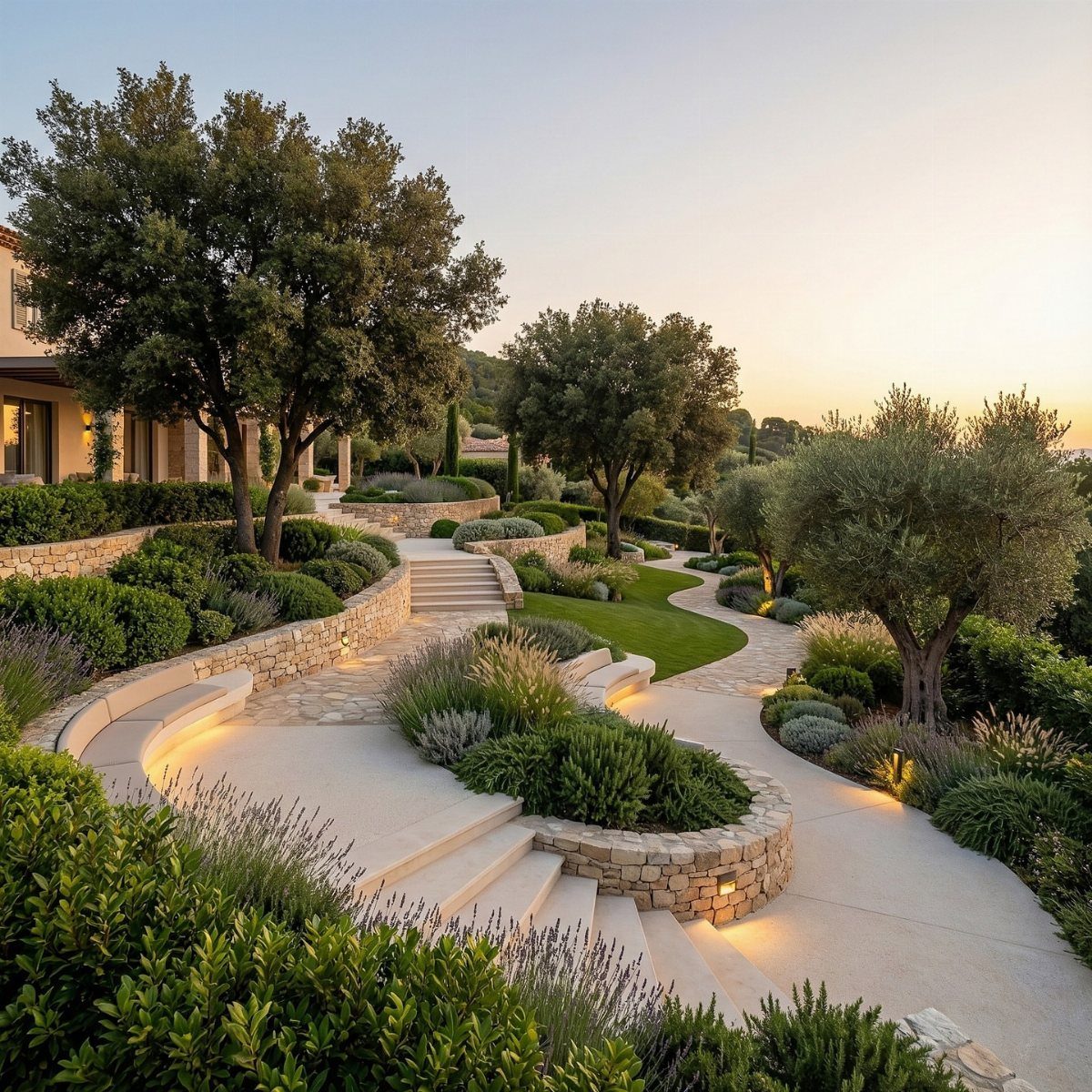
Curved lines read as larger yards because the eye travels slower and cannot take the whole thing in at once.
The stone here is mortared in place, which I would skip unless drainage is already excellent; dry-laid pavers on a compacted base let water through and heave less in freeze-thaw.
The low retaining walls double as seating and plant ledges, but they need footings below the frost line, depth varying by your zone.
That is not weekend work. I would start with the path alone: mark curves with a layout line, then excavate for compacted gravel and sand layers.
Stone this size is heavy; I would rent a compact loader for a longer run. Under-lighting along steps is a detail I would add later, once I know where I actually walk after dark.

Realistic Faux Stone Texture: Our landscape edging boasts a lifelike stone texture with detailed surface patterns that add depth and a polished look to your outdoor space. It beautifully enhances garden beds, lawns, pathways and flower beds, bringing a natural, decorative touch to any yard.

COMPLETE EDGING KIT: Professional-grade 20-foot black landscape edging coil & YardPack comes with everything needed for installation including 10 anchoring spikes, 1 connector, and 1 corner coupler for seamless borders

EASY TO INSTALL: EasyFlex Aluminum No-Dig Edging provides an easy installation for a permanent and maintenance-free edging solution
4. Build a Pergola or Pavilion
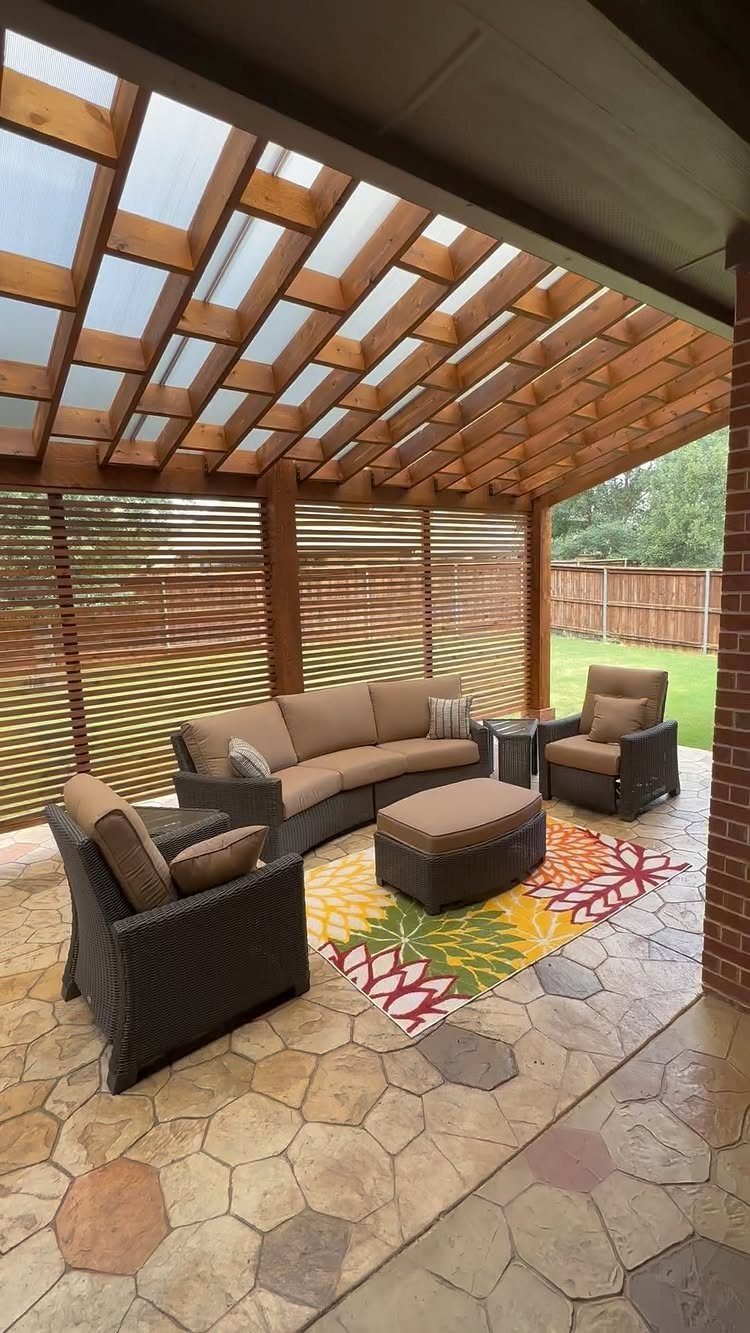
A pergola defines a space without walls and gives enough shade to keep a patio usable through July.
The slatted roof here is polycarbonate, not open lath, so it actually blocks rain; I would choose that for a dining area, and stay with open slats only over a seating spot where dappled light is the point.
The privacy wall on one side is a detail I would copy exactly: it blocks the neighbor’s window without making the space feel boxed.
Cedar or pressure-treated 4x4s last well over a decade, but I would stain every cut end and re-stain on a regular schedule.
A kit pergola this size runs into the thousands, and I would anchor posts to concrete piers rather than surface-mounting on the patio; frost heave will loosen surface mounts in a couple of years.
The translucent panels need noticeable slope or water pools and algae grows underneath.

HEAVY-DUTY INTERLOCKING PAVER SYSTEM: Strol's reinforced honeycomb cell structure locks gravel securely, supporting up to 600,000kg/m (122,889.6 lbs/f) for driveways, walkways, patios, and erosion-prone areas

HEAVY-DUTY, DURABLE CONSTRUCTION : Our permeable pavers each piece measures 41 x 41 x 2.5 centimeters (16x16x1inch) and is made of thick, high-strength plastic mesh that can withstand vehicular traffic without deformation, ensuring the long-term durability of your permeable paving system

5. Build a Fire Pit
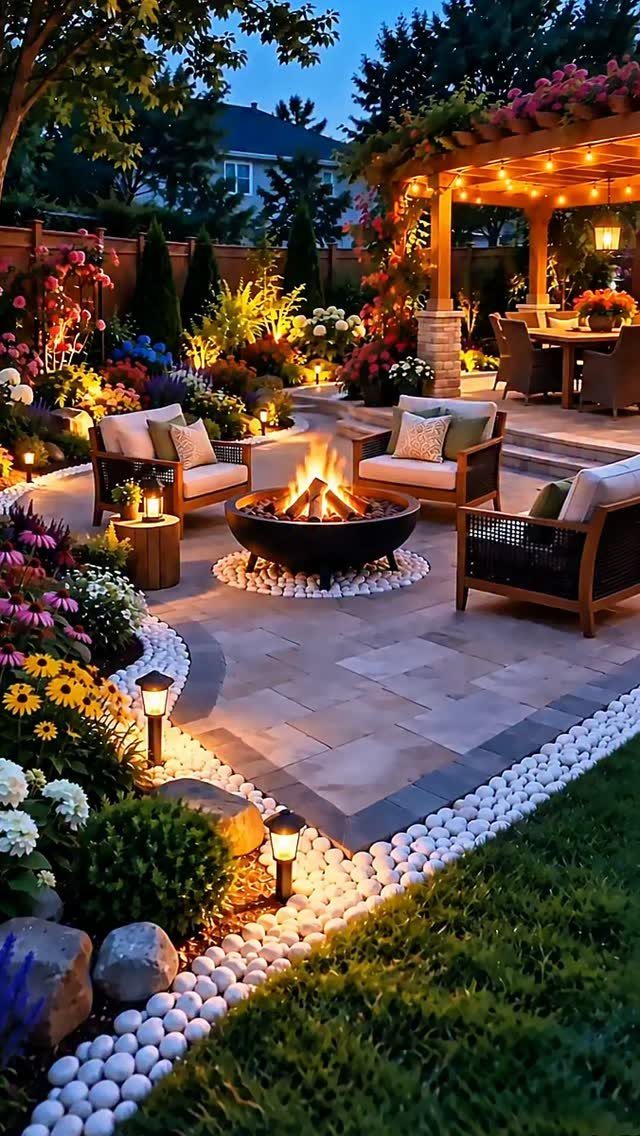
A built-in fire pit at patio level, not raised, lets you put your feet up and feels less like a campfire concession.
The stone ring here is dry-laid, but I would use fire brick on the interior face; standard pavers spall and crack from repeated heating.
Check your local burn ordinance before anything else. Many counties restrict open burning, and some require a spark screen even for gas.
The seating radius I prefer keeps flame center to chair front at a comfortable distance; closer and you are sweating, farther and you lose the conversational circle.
Gas insert with lava rock or glass runs higher installed, while a wood-burning ring you build yourself is far less in block and capstone.
I would run a gas line only if I already had propane at the house; trenching a new line costs more than the pit.
Nothing screams summer more than the sound of a crackling campfire. Firepits make perfect focal points in a backyard, so if you want one, consider planning the rest of your landscaping around it.

[Complete Drop-In Fire Pit Kit] - This 36" x 12" drop-in fire pit kit is designed for DIY fire tables and fire pits, offering a true all-in-one solution. The set includes a linear burner, fire pit pan, upgraded spark ignition system with shut-off valve, regulator hose, air mixer, sealing tape, plus a tempered glass wind guard and stainless steel lid—no extra accessories needed

12 pcs Accessory Set: Our fire pit pan burner kit comes with a 4ft extended connection hose and a 4.4ft propane regulator hose, igniter, and valve, all certified by CSA for safety. No need for additional purchases, this comprehensive set is ready to use right out of the box.

[APPLICATION] --- The fire pit gas control valve kit suitable for Low Pressure Repair Control System for Grill, Fire Pit, Fireplace & Heater (max BTU rating: 50000 working pressure 65mbar).
6. Plants of Varying Heights and Textures
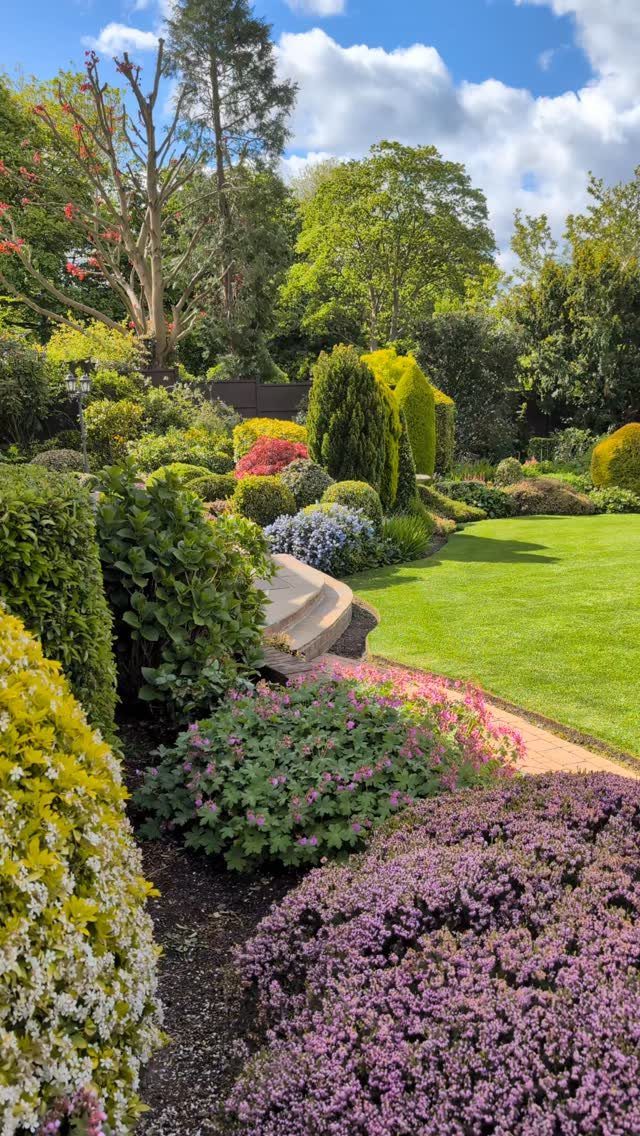
Layered planting keeps a large yard from reading as flat lawn plus flat bed. The formula I use is simple: evergreen backbone, deciduous middle, seasonal front, ground cover where feet do not walk.
Here the conifers give winter structure, the flowering shrubs carry May through July, and the low stuff fills the knee-high gap that makes new plantings look sparse.
I would plant for mature size, not nursery size; a small tagged spruce becomes tall and wide with enough years. Spacing at two-thirds mature spread saves you from moving everything in year five.
The textural contrast I like best is broad leaf against needle, and matte against glossy; it shows even in shade and at dusk when color has gone flat.
Budget per shrub varies widely, and expect to lose some to transplant shock no matter how well you water.

7W 800LM Landscape Lighting: With SMD LED Beads, 800 Lumens high brightness great for illuminating your Patio, Garden Path Back Yard fences—Both make security and decoration with beautiful warm white lights

SOLID BRASS CONSTRUCTION: The complete housing is constructed of cast brass, instead of flimsy sheet brass. Exceptional durability from solid brass construction with antique brass finish, tempered flat glass lens, and high temperature silicone O-ring. Suitable for outdoor use in all weathers.

6W Landscape Light with Connectors: This 2 set 6W LED landscape lights include 4 connectors. 120° beam angle and 270° adjustable heads for flexible lighting. With 700LM output and 3000K warm white light, it is ideal for gardens, patios, paths, and more. ETL certified for safe and reliable use
7. Add a Water Feature
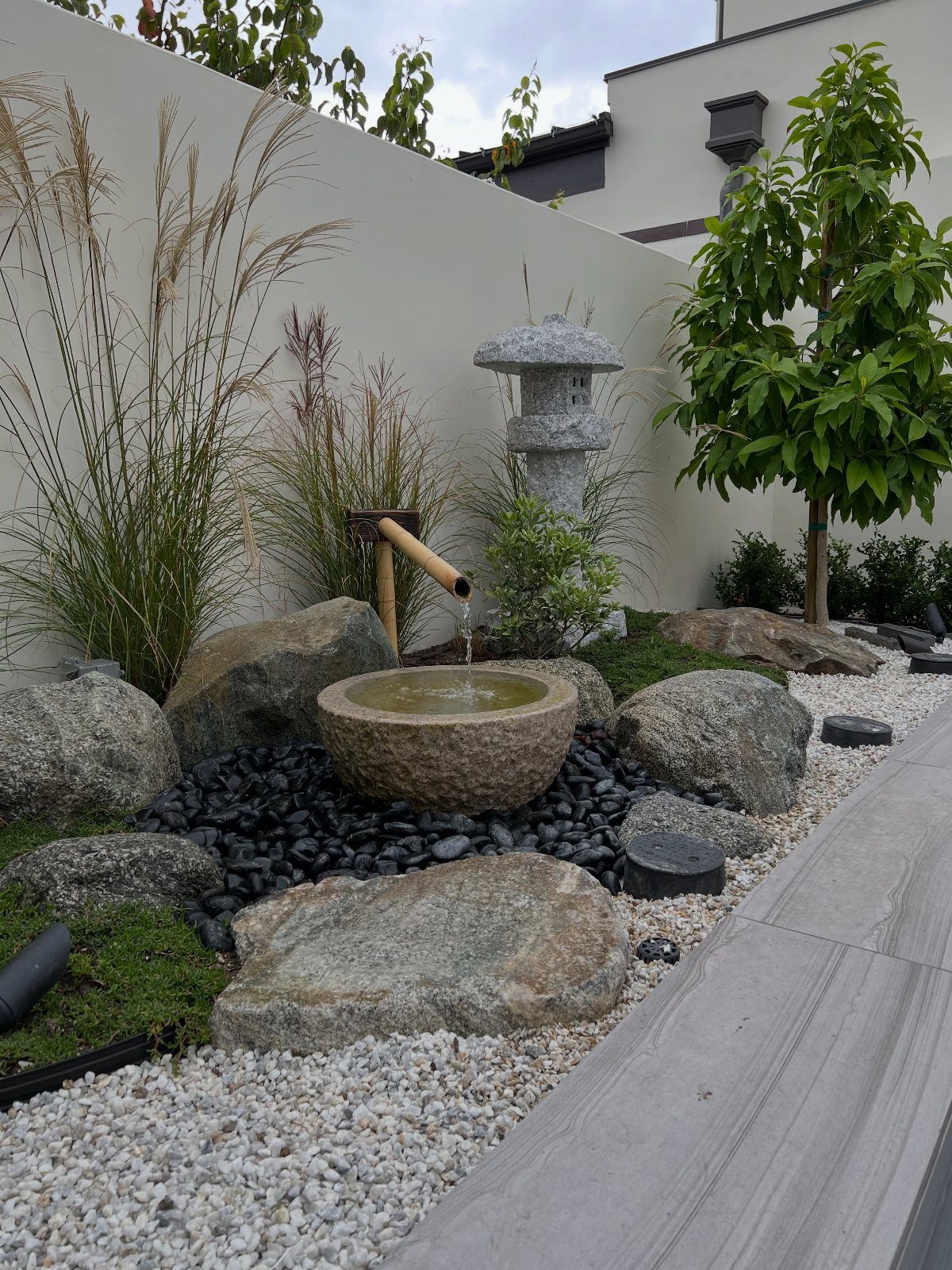
Water moving over stone masks traffic noise and gives a yard a reason to slow down.
The bamboo spout and stone basin here are a tsukubai, a Japanese hand-washing arrangement scaled up for garden viewing; the pump sits hidden below the gravel and recirculates the same water.
I would size the pump to turn the basin over once per hour, no more, or the sound turns to white noise.
A 300-gallon-per-hour unit handles this scale. Solar pumps exist, but I would run low-voltage cable from the house; solar dies at dusk exactly when I want the sound.
Check local codes: some counties count recirculating water features as landscaping, others as pools, and the permitting splits from there.

High Brightness Landscape Lights: Aluminum head with SMD LED beads, makes this spotlight can provide better heat dissipation and 900lm high brightness, lighting distance and range can reach 3-4M

High-Intensity Illumination & Zero Installation Cost: These 120V outdoor spot lights are capable of providing intense and far-reaching illumination. They can effectively light up large outdoor areas such as parks, gardens and plazas. This high-intensity light ensures that every corner is well-lit, enhancing the safety and visibility of the outdoor space during the night. And zero-installation-cost feature makes these lights an ideal choice for those looking to upgrade their lighting without breaking the bank.

SOLID COPPER CONSTRUCTION - The VOLT Fat Boy Mini spotlight is one of the landscape lighting industry's most affordable solid copper fixtures and is ideal for any uplighting application.
8. Vegetable Garden
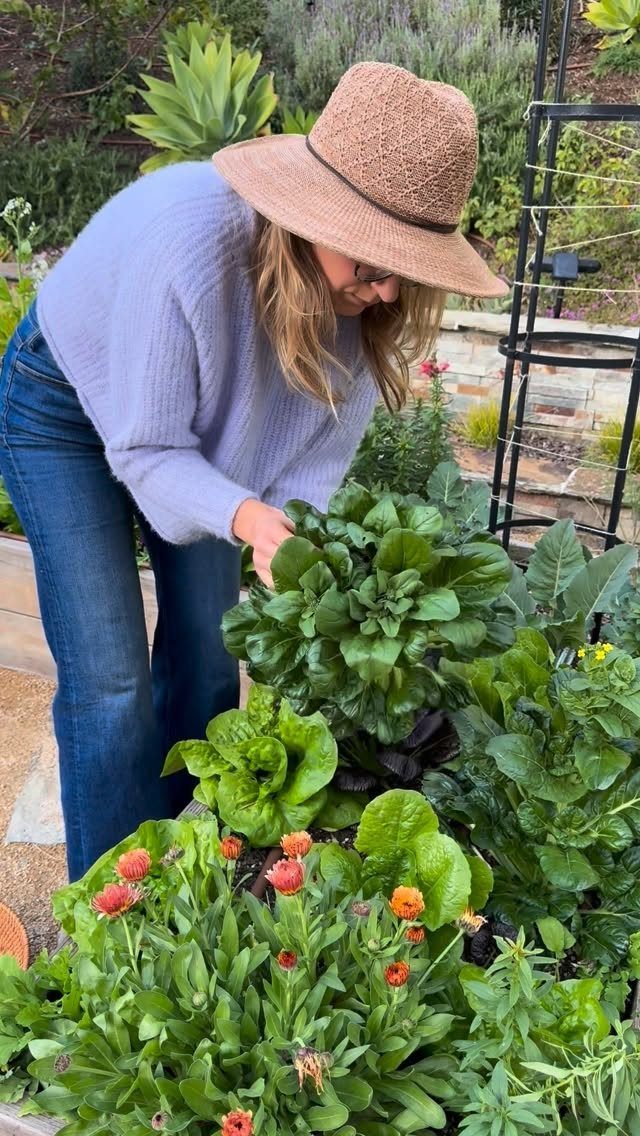
A kitchen garden this size feeds a household from June through September if the soil is right.
The leafy greens and flowers mixed here are companion planting: marigolds deter some pests, and the flowers bring pollinators that boost tomato and squash set.
Raised beds warm faster in spring and drain better than native clay, but they dry out faster too. I would start with one bed and expand once I know how much I actually harvest; enthusiasm outpaces appetite in March.
The creator of this garden wrote that city backyards need particular attention to soil testing and sun mapping before breaking ground, which I would follow exactly.
Compost your own or buy by the cubic yard; bagged garden soil gets expensive fast at this scale.

Will not rust, crack, rot, or become brittle, virtually maintenance free

Heavy Duty - Professional, contractor grade plastic landscape edging border is designed for any commercial or DIY landscaping and gardening edging projects

Contractor grade professional landscape edging made for commercial or DIY landscape projects
9. Design an European Courtyard
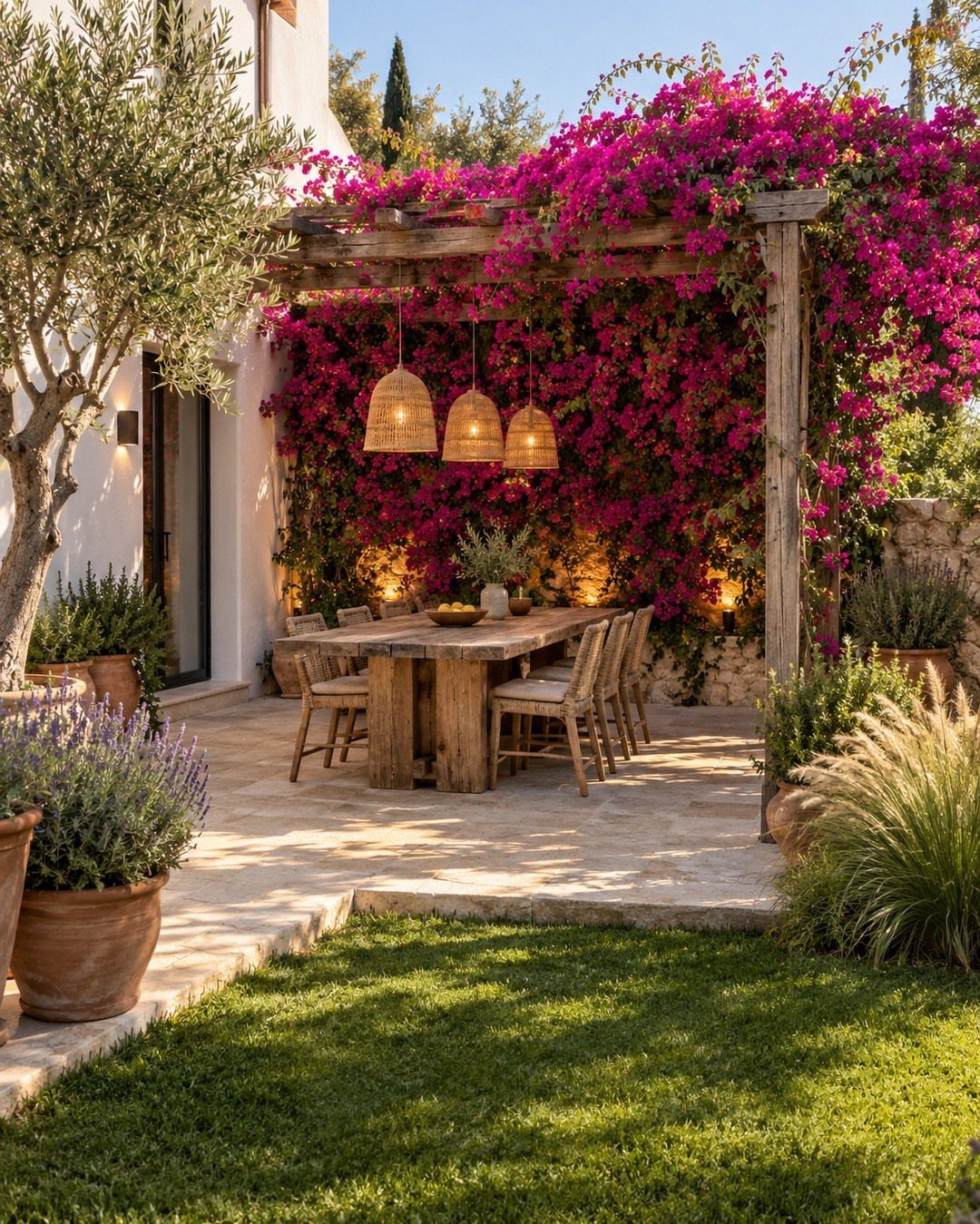
A courtyard is an outdoor room with walls implied, not built: the pergola overhead, the dining table as anchor, the paving underfoot.
The bougainvillea here needs hard frost protection, so I would treat it as annual in zones 7 and colder, or substitute clematis or climbing rose where winters are real.
Stone this color and cut reads as old precisely because it is irregular; sawn uniform pavers read as new parking lot.
I would source reclaimed or tumbled stone for the same weathered surface, and lay it dry with joints of compacted sand.
The hanging lanterns are battery-operated LED, not wired, which means you move them with the seasons and replace rather than repair. A pergola this loaded with bloom needs structural timbers sized for the weight; 6×6 posts minimum, not 4×4.

Exceptional Durability: Each of our permeable paving bricks measures 16 inches * 16 inches *1 inch. Made from HDPE, they offer excellent wear resistance, toughness, and cold resistance, ensuring long-term durability
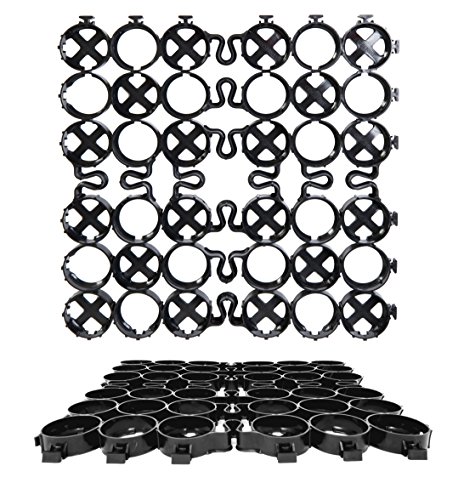
EASY TO USE: Our lightweight permeable pavers are easy for any level of DIYer to install; Feel proud of your own outdoor home improvements!

DURABLE AND ECO-FRIENDLY: Crafted from 100% recycled PPE plastic, our gravel paver system delivers exceptional strength and longevity; This set includes 22 units with a 1-inch depth, covering an area of 65 square feet
10. Add Contrast with Purple Foliage
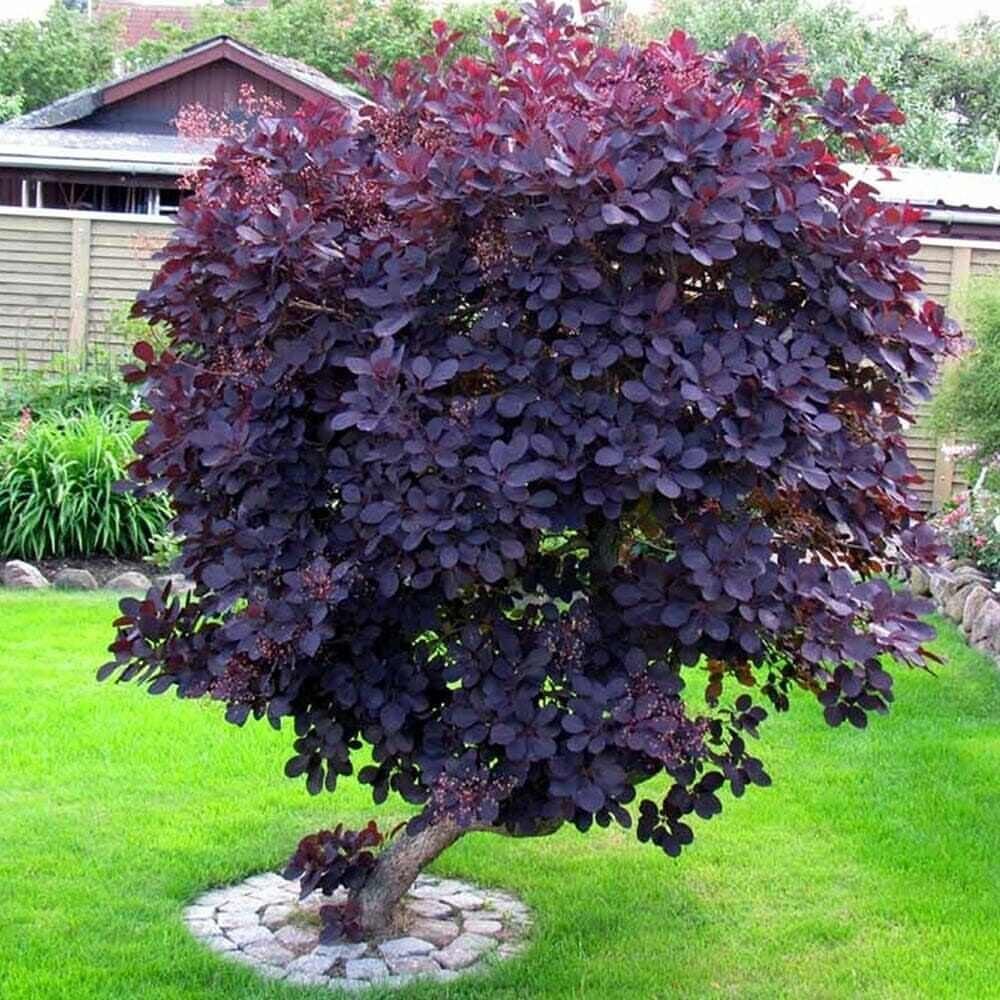
Smokebush reads as a tree here because it has been pruned to a single trunk, but left alone it grows as a large shrub.
The purple cultivar, ‘Royal Purple’ or similar, holds its color best in full sun; shade turns it muddy green by August.
I would plant it where the low western sun backlights the leaves, because that is when the color shifts to near-black and the effect actually happens.
The gravel ring is practical, not decorative: it keeps mower blasts off the trunk and reduces root competition from grass.
Smokebush tolerates poor soil and drought once established, which makes it low-maintenance in the right spot, but it suckers from the base and needs yearly removal of shoots if you want to keep the tree form.
Hard prune in early spring for the biggest leaves; light prune for more bloom.

NATURAL GAS FIRE PIT PAN--30 by 6 Inch gas fire pit kit come with spark ignition kit, which used for natural gas fuel ,more clean and smoker free. Burner Rated by up to 54,000 BTU’S.

►DIY Fire Pit - 12 inch fire pit ring includes 16 Pcs kits: fire pit round burner, ►propane hose kit includes 4.4ft propane regulator hose and 4ft connect hose, ►fire pit igniter kit includes 1 x stainless mounting plate, 1 x 1/2" shut-off ball valve, 1 x 1/2" air mixer valve, 1 x 1/2" brass adapter, 1 x 1/2" stainless connector, 1 x 1/4 chrome qtr-turn key valve with 3" key, 1 x spark ignitor, 1 x removable mounting plate and spark ignitor wire & ground wire, and screws.

[Complete Square Drop-In Fire Pit Kit] - This 18" x 18" square drop-in fire pit kit is designed for compact fire pit tables and DIY fire pit builds, offering a balanced all-in-one solution. The kit includes a square burner, fire pit pan, upgraded spark ignition system with shut-off valve, regulator hose, air mixer, sealing tape, plus a tempered glass wind guard and stainless steel lid—no additional accessories required
11. Yard Divided Into Functional Zones
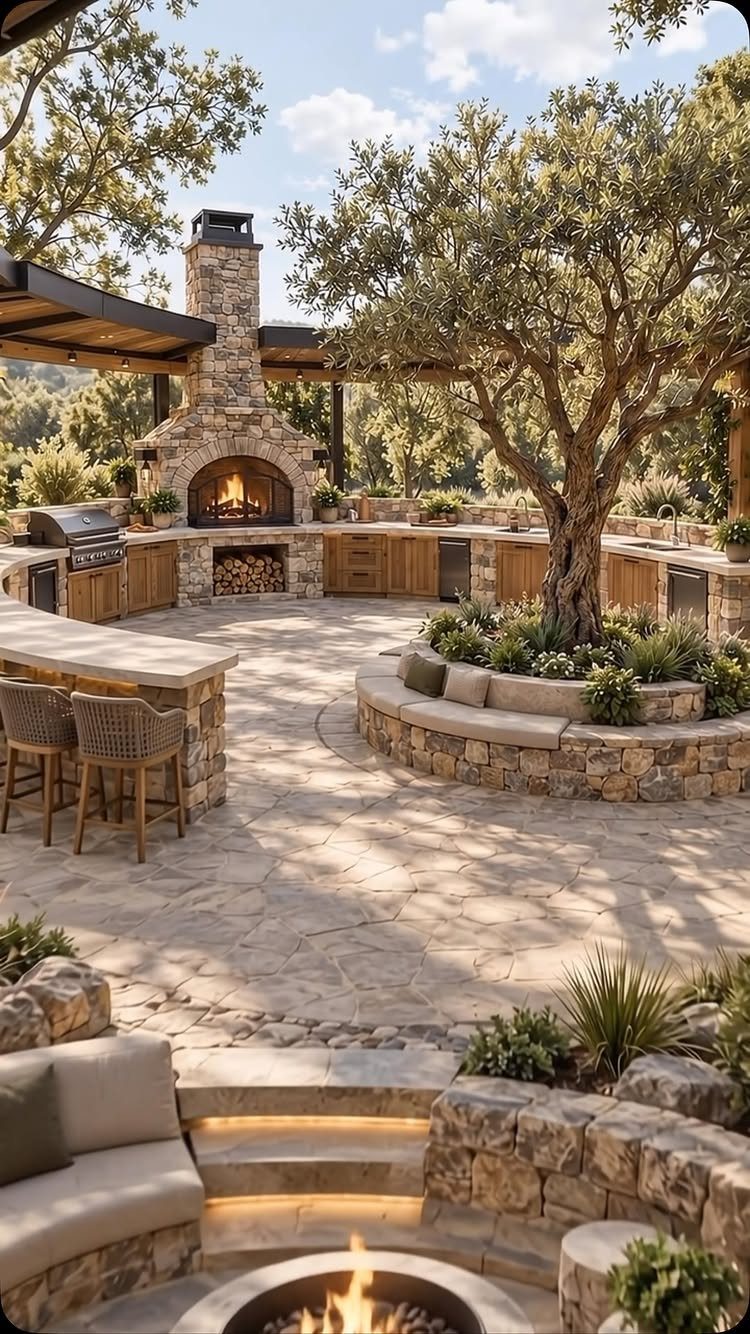
A yard this size becomes manageable when each area has a single job: cook here, sit there, gather around the fire.
The level change to sunken seating is slight, but it reads as privacy and containment without blocking sightlines. I would check drainage carefully before cutting down; a sunken area that pools is useless.
The tree in the planter needs root space, and an olive this size means a built box with deep soil in every direction, plus drainage through the wall.
Zoning works best when paths are obvious; here the paving pattern changes at each boundary, which I would copy rather than rely on furniture alone to mark edges.
12. Create a Kid-Friendly Paradise
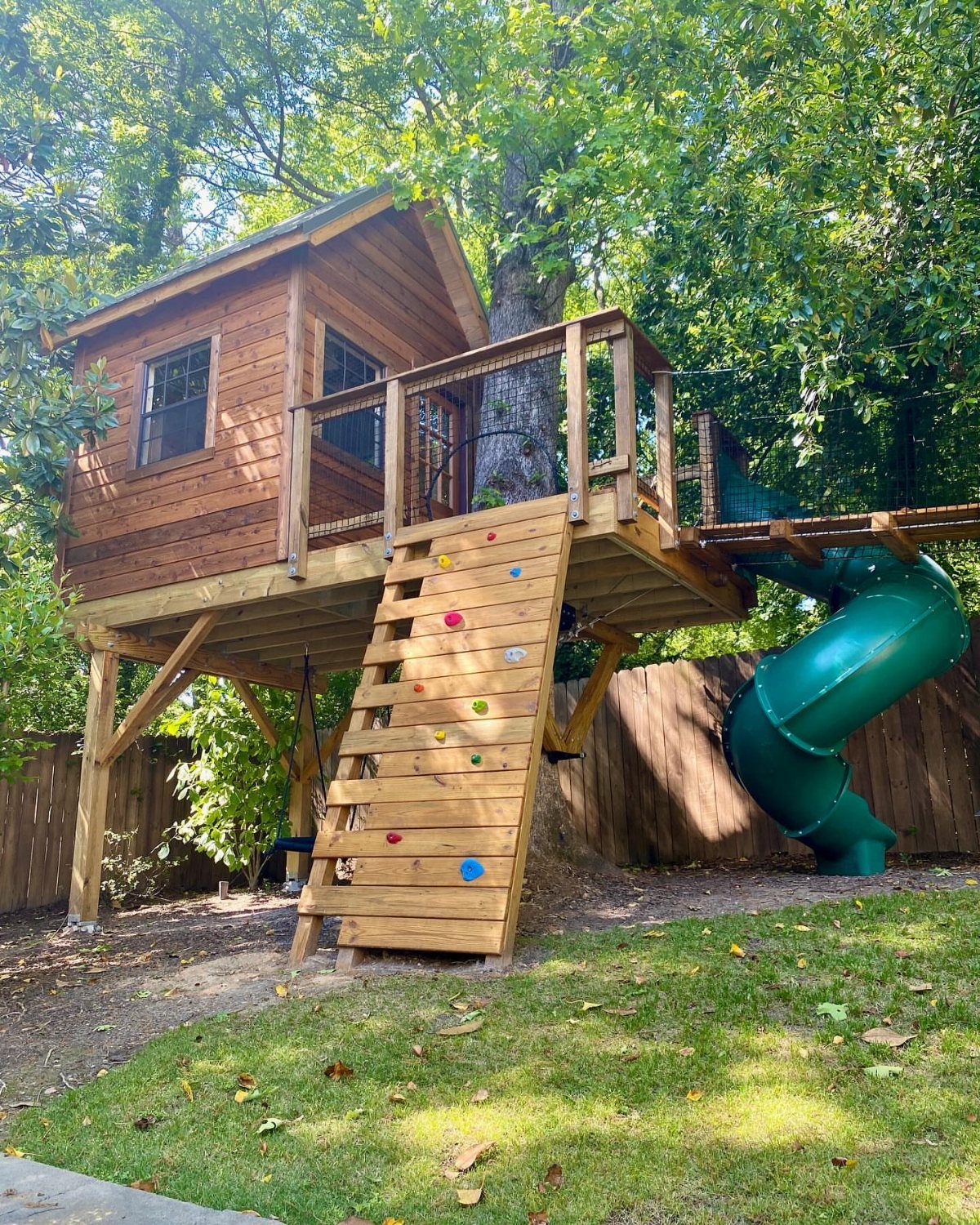
A play structure this complex is a major build, but the individual pieces scale down.
The climbing wall ramp, tube slide, suspension bridge and swing each work standalone, and I would start with one element my kids actually use at the park rather than build the whole thing and watch half go ignored.
Pressure-treated lumber rated for ground contact lasts a long time, but I would seal cut ends with copper naphthenate anyway, especially where bolts pass through.
The rock-climbing holds need expansion anchors into solid framing, not just decking; a spinning hold is a fall.
Tube slides need full sun or they stay damp and grow algae inside. Check head clearance at every platform, swing arc, and slide exit against the Consumer Product Safety Commission guidelines; they are conservative for a reason.
Fence proximity matters: a swing needs clear space in front and back, which this yard has but a smaller one might not.
13. Use Artificial Grass
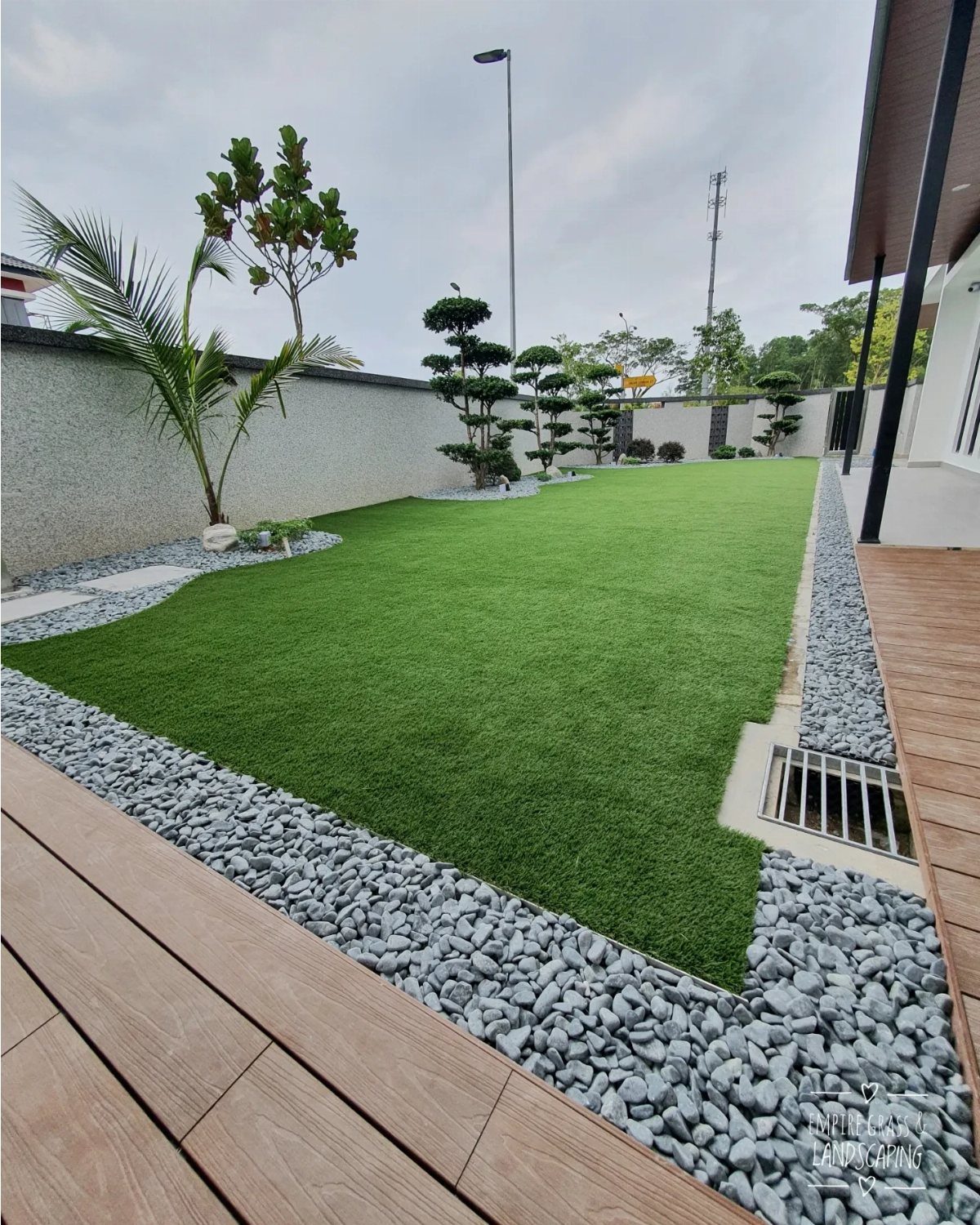
Artificial grass replaces mowing, watering, and mud with a surface that stays green through August.
Short pile turf looks maintained without the plastic sheen of putting-green styles, and I would aim for that matte, clipped-lawn look rather than anything too uniform.
Infill type matters more than blade color: silica sand keeps fibers upright, while rubber gets hot enough to burn bare feet in Texas sun.
I would request samples and leave them on my own patio for an afternoon before deciding. Drainage through the backing needs a compacted gravel base sloped away from the house; without it, rainwater pools on top and smells.
14. Archways with Climbing Plants
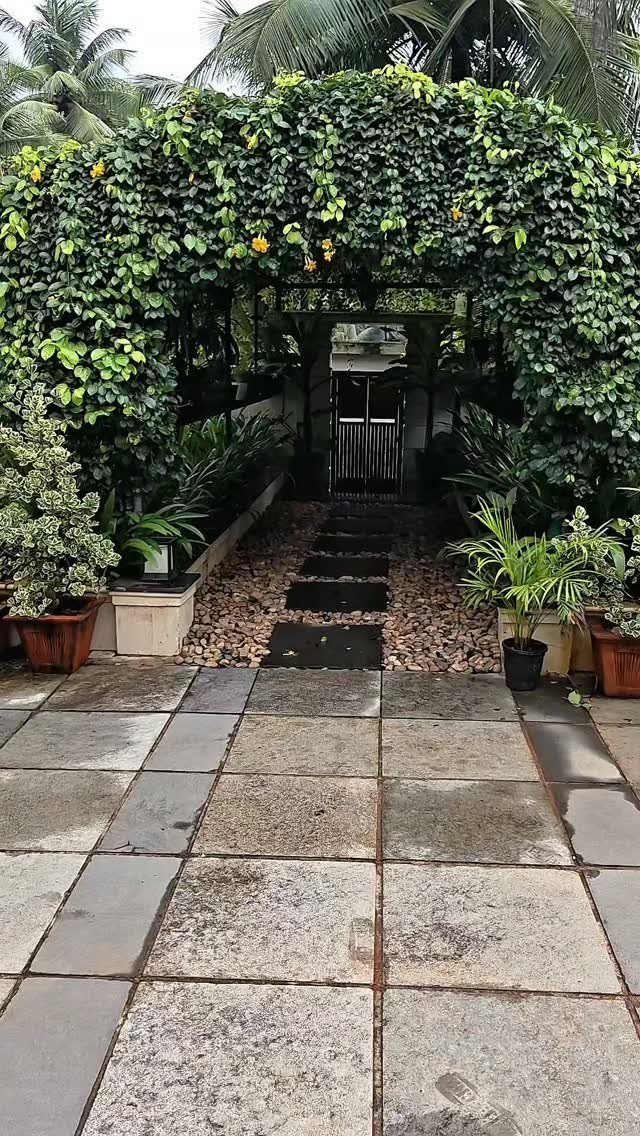
A steel or timber arch trains climbers overhead and turns a straight path into something worth walking slowly.
Yellow flowers that bloom before leaf-out read as Carolina jessamine or early clematis, both of which need only yearly hard pruning to keep from becoming a bare-legged tangle.
I would set posts in concrete below frost line and check the finished height against my own reach; pruning shears only work on what you can actually reach.
The gravel underfoot drains better than pavers but shifts under heels; compacted decomposed granite holds firmer if you want a cleaner surface.
15. Inground Swimming Pool
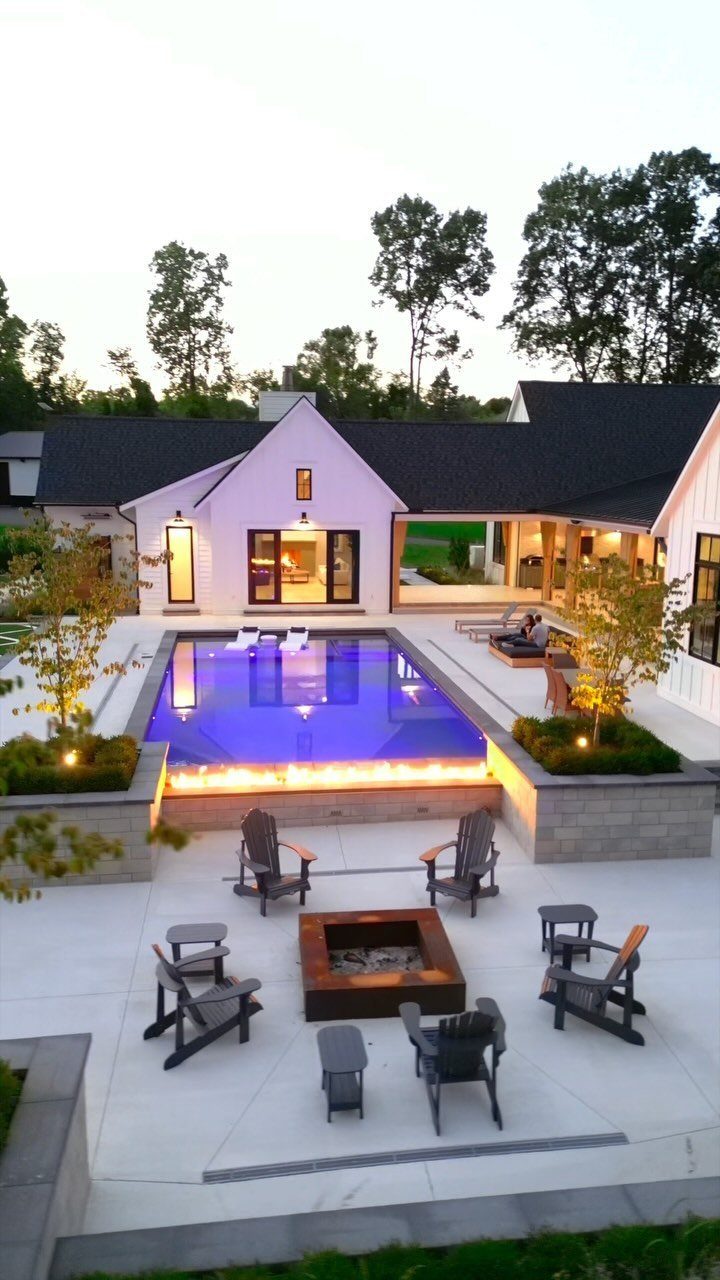
A rectangular pool with straight edges fits modern architecture better than freeform, and stone coping that repeats the patio material lets the water read as a cut in the deck rather than a separate object.
The fire pit at the far end gives the yard a second focal point for evenings when swimming is done.
I would size the heater for the volume, not the surface; 400,000 BTU handles this scale in most climates.
The LED lighting needs a transformer sized for total wattage, and I would put it on a separate circuit from the house panel. Fencing requirements vary by county, and some mandate alarmed gates even for adult-only households.
16. Outdoor Kitchen and Dining
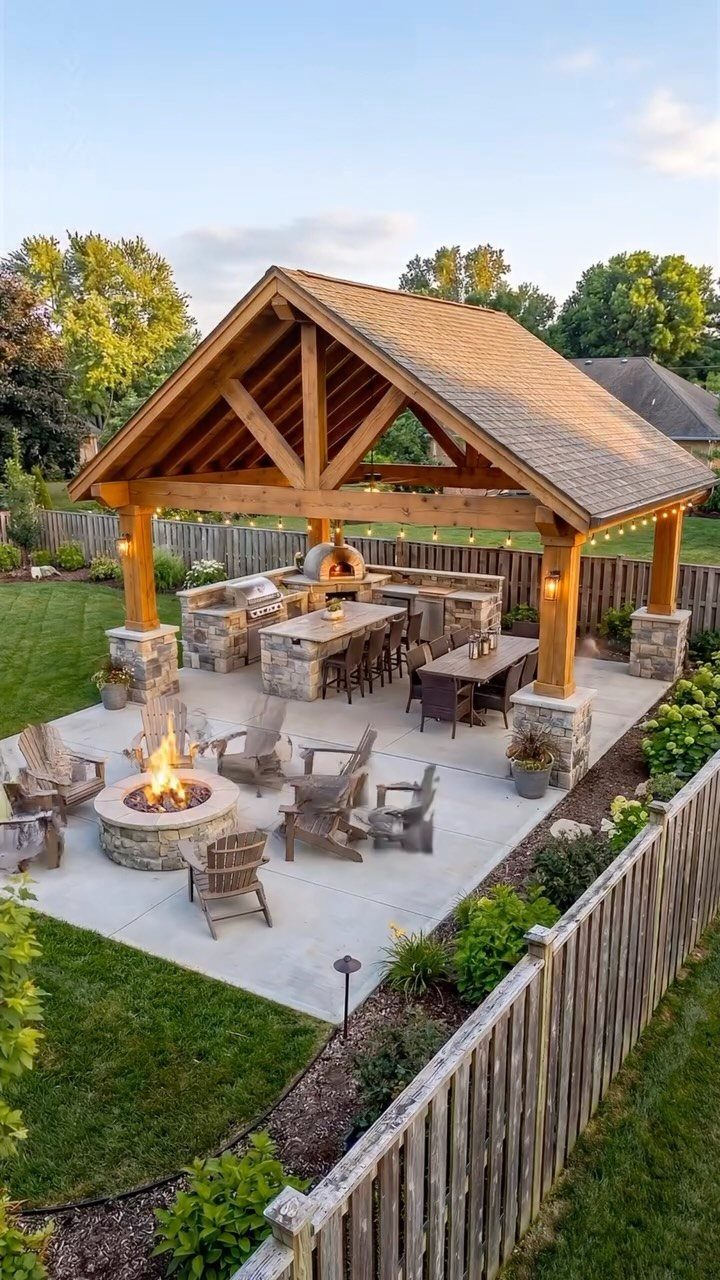
A timber pavilion lets you cook and eat through weather that drives everyone else inside.
The pizza oven and grill here share a stone counter that also holds prep space, which I would extend to a generous width; anything too narrow and plates teeter at the edge.
The roof pitch needs to clear smoke from the pizza oven, and I would run a stainless flue straight up through the ridge rather than out the side where it stains the timber.
Counter-height seating at the bar side is a detail I would add, but only if it does not crowd the dining table behind it.
Gas lines from the house are cheaper than propane tank swaps, but trenching adds to the total.
17. Terraced Retaining Walls
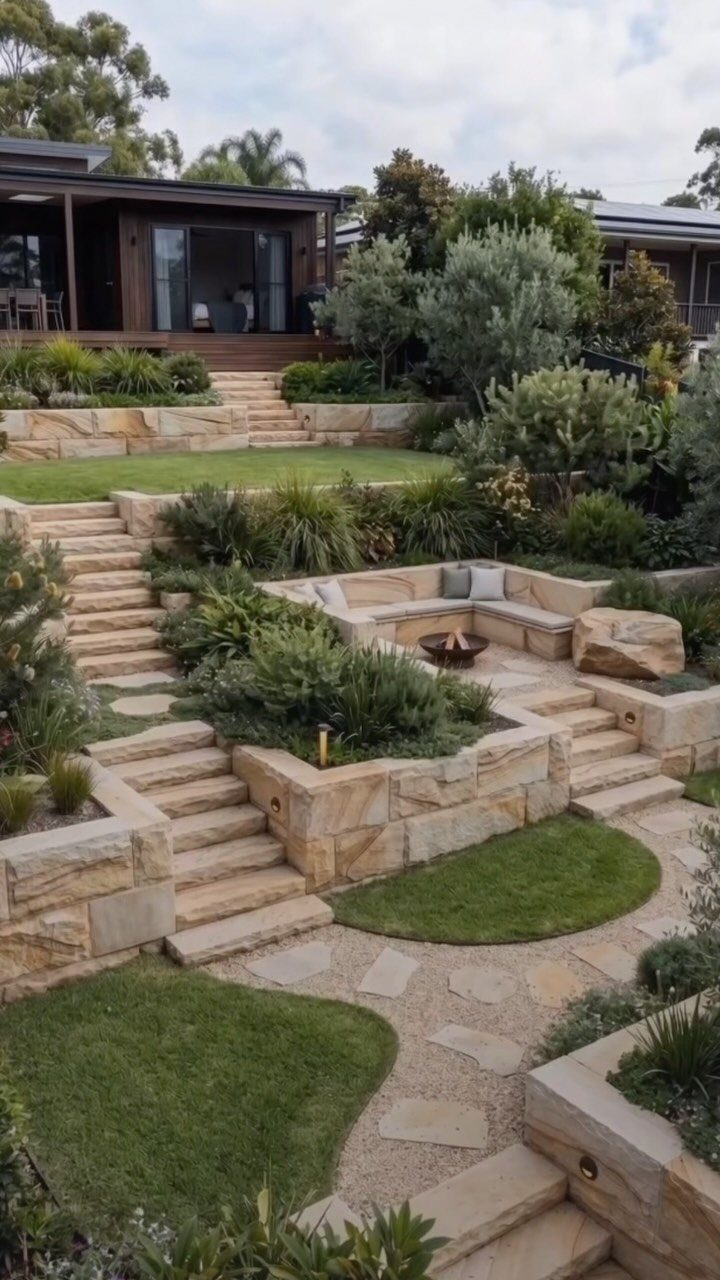
Terraced walls turn a slope into flat ground you can actually use, but each level needs its own drainage or water exits through the face and undermines the base.
Mortared sandstone needs weep holes spaced along its length; dry-stacked walls drain naturally but need wider footing.
The built-in seating around the fire pit saves furniture cost and stays put in wind, but the stone gets cold after dark unless you add cushions stored nearby.
I would build the lowest terrace first and live with it a season before adding the upper levels; grading mistakes compound upward and are expensive to undo.
18. Stepping Stones Across Lawn
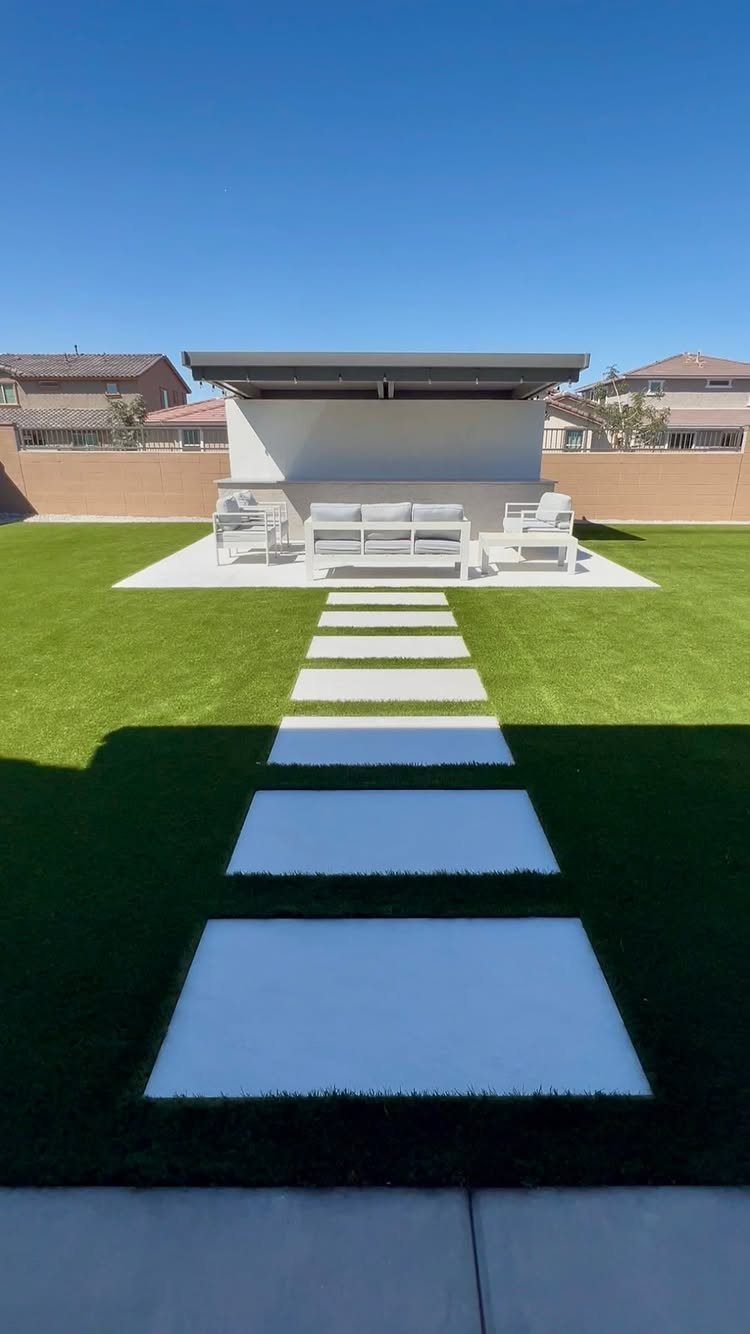
Oversized stepping stones read as deliberate, not improvised, when they share one dimension and sit flush with the turf.
Large rectangular slabs accommodate 2 strides or a stance with a wheelbarrow, which is the practical size I would look for rather than small rounds that force mincing steps.
I would set them on compacted sand, not dirt, with a narrow gap filled with soil so grass can knit between them.
Mowing over the stones works only if they sit truly level with the lawn; a high lip catches the deck and scalps the surrounding grass.
The path needs to go somewhere worth arriving at, or it reads as decoration without function; this one leads to covered seating, which earns the walk.
Planning Your Backyard
I would start any large yard project with a wish list written out in full, then cross off what the space actually allows.
A fire pit seating circle needs more radius than most people sketch on paper, and a kitchen garden that feeds a family through September takes sun hours I would measure with a notebook, not guess at noon.
Soil testing comes before plant buying, every time. Turf lawns compact their own dirt over years, so I would send samples off for pH and nutrients before amending with compost or buying by the cubic yard.
The results decide whether drainage work comes first or whether native plants that tolerate clay are the smarter pick.
For privacy and shade, trees and shrubs planted for mature size at two-thirds spread save the work of moving everything in year five.
I would also track what blooms when, so something carries color from May through first frost without my replacing it all at once.
Maintenance Tips
Regular mowing at the right height matters more than frequency. Cutting too low stresses grass and opens space for weeds, so I would raise the deck and take off a third of the blade length at most.
An irrigation system pays for itself in time saved on yards this scale, but I would zone it by plant type: vegetables and turf need different schedules, and running them together over-waters one and under-waters the other.
Drip at the base of shrubs beats overhead spray that wets leaves and invites disease.
For plant selection, I would lean on easy-care perennials that flower repeatedly without staking, deadheading, or dividing every season. Ornamental grasses in mass plantings need almost nothing once established, and they move in wind the way static shrubs never do.
Where the facts note that elaborate landscapes need hired help for mowing and weeding, I would take that as warning, not aspiration; design for what I can handle myself, or costs climb fast.
Budget Considerations
I would set a hard ceiling before picking up a shovel.
A common rule is up to 10% of home value, which keeps the return in line with the spend. Average yards with average work run $2,500 to $10,000, and that range collapses toward the lower end only where I do the labor myself.
Plant choices swing costs more than most people expect.
Boxwood hedges that snake through a yard and perennial beds planted thick end up costing more than you’d think, especially next to a cluster of ornamental grasses or one well-chosen tree that carries the whole space.
Even mulch adds up: gray river rock at $10 to $20 a yard against decorative stone at multiples of that, multiplied across a large bed, is the difference between staying on budget and not.
I would price materials before finalizing any design, and where a fact notes that larger projects "obviously increase" in cost, I would read that as permission to scale back rather than to expand the budget.
Buying plants as small tags rather than mature specimens also helps, if I have the years to wait.
Frequently Asked Questions
What is the rule of 3 in landscaping?
The rule of three in planting is thriller, filler, spiller: one upright plant as the focal point, mid-height plants to fill around it, and trailing plants that spill over the edges.
It works in containers and garden beds alike, and it keeps a planting from reading as flat or sparse. I use it for planters and would scale the same logic to a large bed.
What are some new backyard ideas for 2026?
Backyards are trending toward multi-functional zones that handle cooking, dining, and gathering without feeling crowded. Artificial grass, built-in fire pits, and outdoor kitchens with timber pavilions are holding strong because they cut maintenance and extend the usable season.
I would put money into lighting and shade first; they make everything else usable after dark and through July heat.
What to do with a huge front yard?
A huge front yard benefits from the same zoning logic as a backyard: give each area one job, such as a defined entry path, a seating spot, or a layered planting bed.
A winding path or curved bed edge breaks the view into pieces, so the yard feels bigger than a straight shot would let it read.
I would start with structure, evergreen backbone, and a clear walkway; fill in color and detail once the bones are in place.
What are the best ways of managing a lawn in a large backyard?
A ride-on mower saves hours on grass over a half-acre, and letting parts grow longer for a season rewilds the space and cuts maintenance.
I would leave strips or corners unmowed during the growing season, then strim them down in fall so the clippings feed the soil.
Artificial grass is another option I would consider where water is scarce or the goal is year-round green without the machine noise.
How do I design my backyard?
Start with a written wish list, then cross off what the space actually allows; a fire pit seating circle needs more radius than most people sketch, and a kitchen garden needs measured sun hours, not a guess at noon.
I would live with the layout for a week using a hose or spray paint before ordering anything permanent.