These ideas run from a free afternoon with a shovel to a full deck build, and the one that fits you depends on whether your tree is the destination or just something to work around.
A bench belongs somewhere people already pause; a pond needs natural drainage you cannot force.
Neither of those is this list’s easiest option, but they are on it, and what you pick depends on how much weekend you have and what your yard already gives you.
The mulch ring I would start with to stop mower damage costs nothing but labor and a bag of dark brown mulch kept a couple inches thick.
[link-whisper-related-posts]1. The Tree Bench
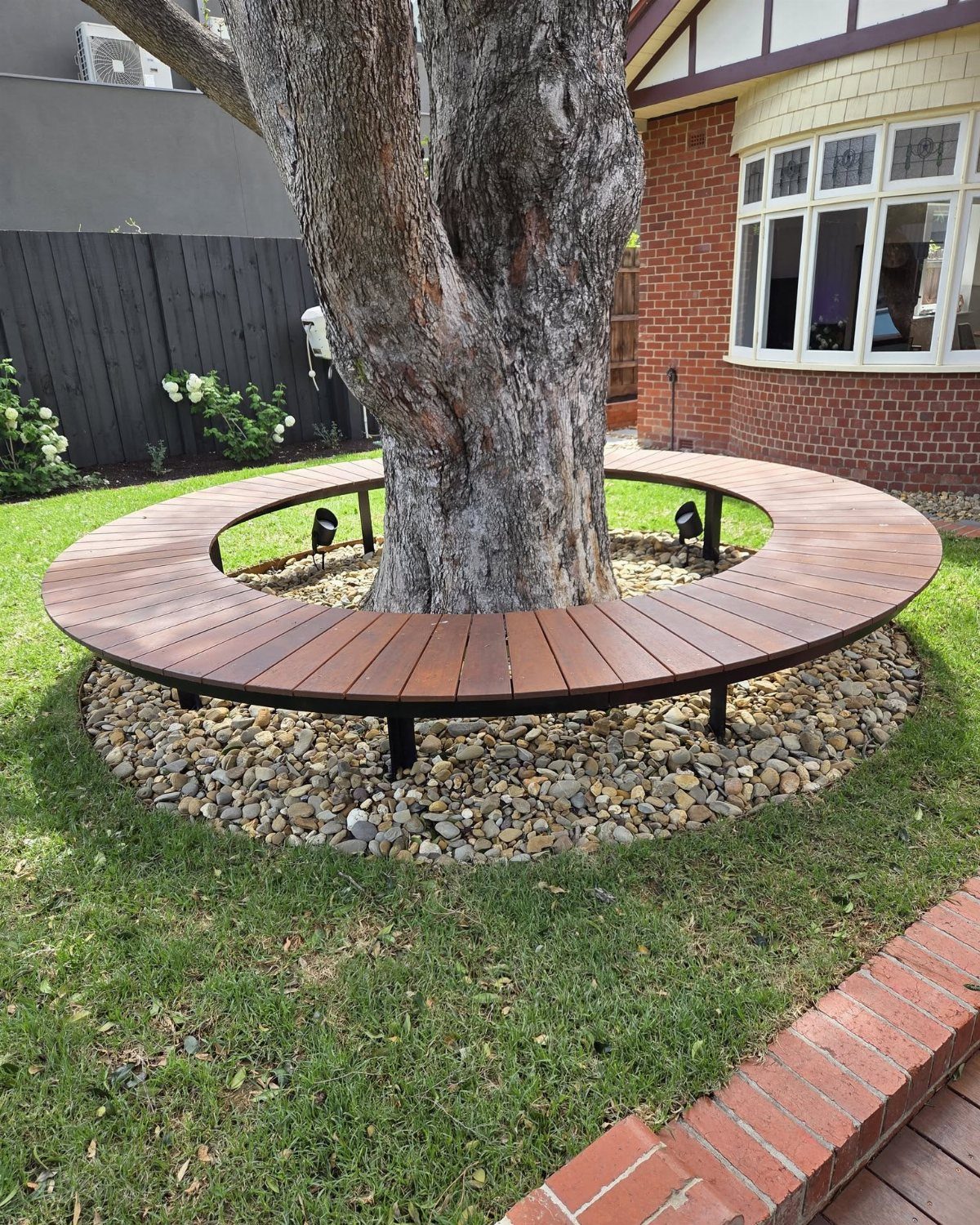
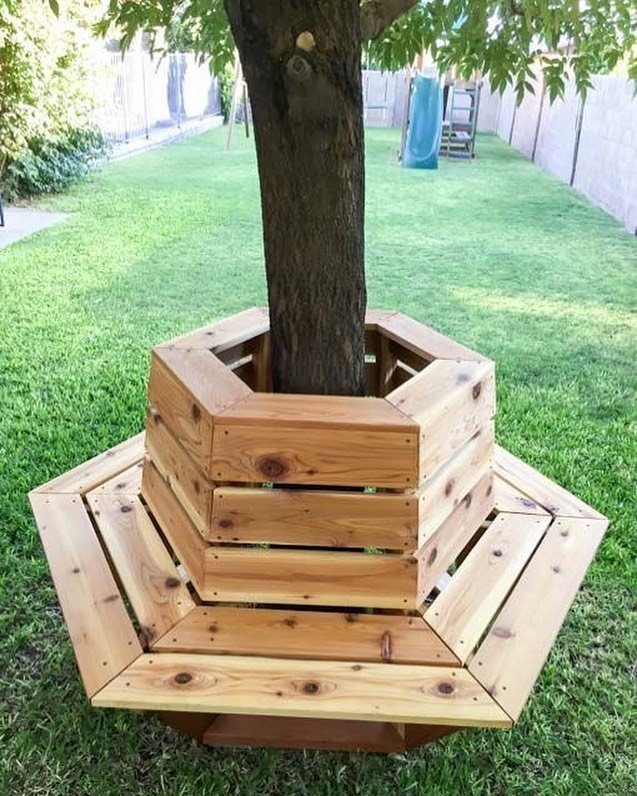
A tree bench turns the trunk into the center of a sitting circle, which I like for yards where the tree is already the natural gathering point.
River stone underneath drains better than bare dirt and saves you from mowing right up to the wood.
Before you build, measure your tree’s trunk diameter and look up its expected mature caliper; a bench that fits a young oak now will crack the wood or buckle the frame as the trunk thickens over the years.

Unique Wrap Around Design: this half-round tree bench features a distinctive semi-circular shape with a 15.5" inner diameter, designed to neatly around trees; It turns shaded ground into useful seating while blending beautifully with your patio, yard, or garden landscape

Our half circle wrought iron tree bench is a unique outdoor bench, garden bench and yard bench, specially designed to wrap around tree trunks. This metal garden bench serves as perfect outdoor seating under trees for your backyard, lawn and garden.

[TREE BENCH]: SAFAVIEH Abia Tree Bench is a garden bench that suits the garden, lawn, backyard, shade tree or patio, wrapping the trunk so the shade under a mature tree becomes a seat.
2. Landscaping Around Trees with Stone
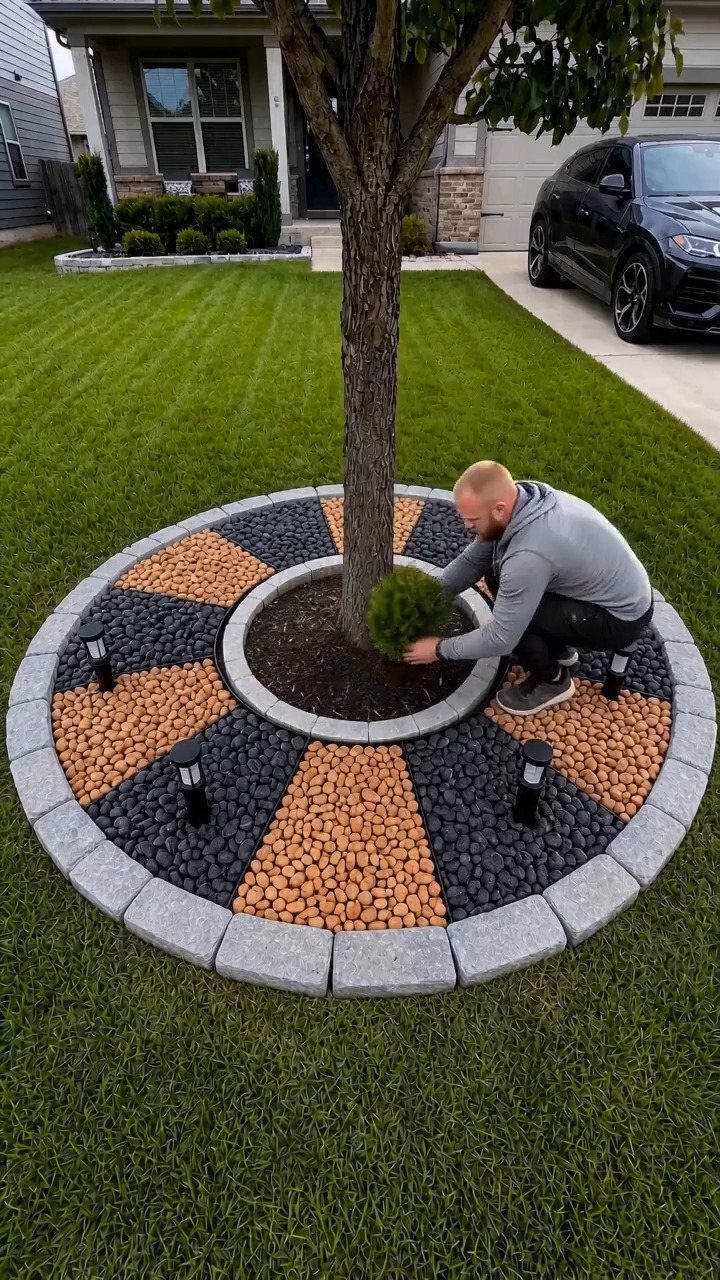
Stone rings keep mower lines away from roots and give you a clean edge that does not need redoing every spring. A single layer of mixed dark and orange stone with pebble fill inside is 100% DIY despite looking professional.
I would start with a hose laid in a circle to find your shape, then cut the sod out rather than just edging over it; the ring needs to sit at or slightly below lawn level to catch the string trimmer instead of the blade.
One layer of stone is enough for a finished look if your ground is fairly level; on a slope, I would step the back side down or the ring will look sunk on one end.

20-Pack Garden Edging Set: Includes 20 gray plastic edging panels. Each panel measures approx. 9.65 x 3.94 x 9.06 in and weighs about 0.13 lb. When connected, the full set covers up to 16 ft.

Natural Organic Tree Ring: These tree mulch rings are made of natural coconut fiber, which is very thick, the fiber is evenly distributed, and sturdy, it can keep the soil moisture in the pot well, they can also prevent weeds from growing arbitrarily

Product Dimension: landscape edging measures 33FT/10M in length, extra tall 4IN/10CM in high, come with 50pcs anchoring stakes (20cm tall), it's perfect for DIY looking to achieve professional-looking results without the effort.
3. Deck Around the Tree
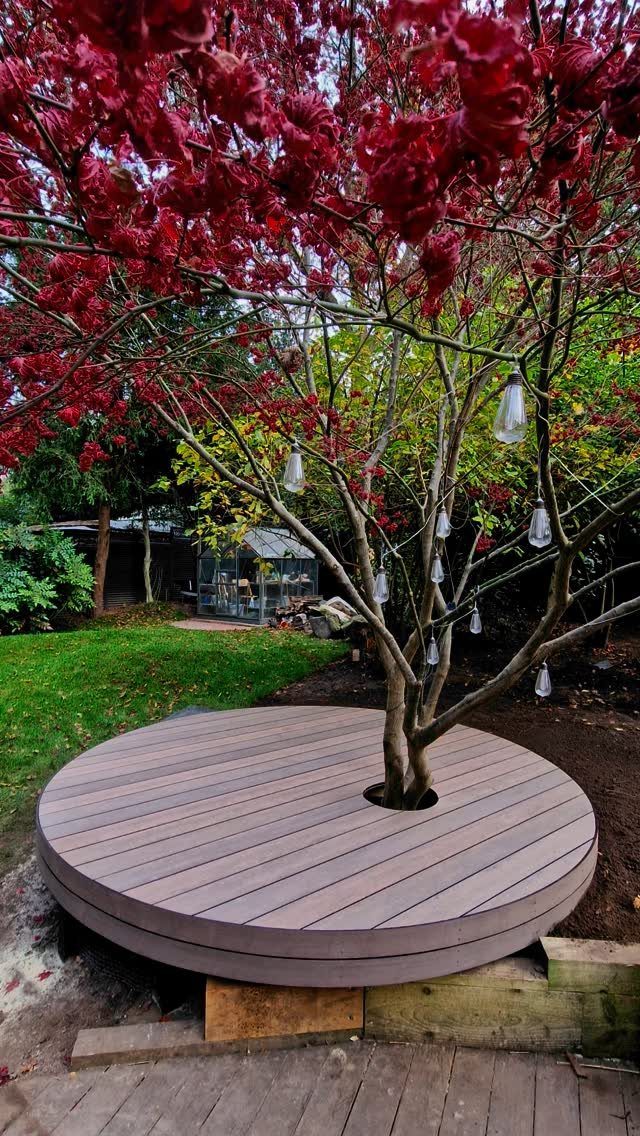
A deck built around the trunk lets the tree stay as a feature instead of an obstacle you work around. A circular platform with a cutout for the tree, hung with bulb lights, turns it into evening seating.
Check your tree’s growth rate before cutting the opening.
I would make the hole wider than the trunk diameter and use a floating rim rather than anchoring boards to the trunk; the tree will move in wind and grow, and a fixed connection splits wood or bark.
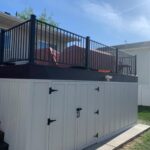
The greenhouse in the background tells me this is a mild-climate setup; in hard freeze zones, I would use footings below frost line and accept that the deck may need re-leveling as roots shift over years.

Cardboard Standee Details: Standing size is 44"W x 72"H. Cardboard cutouts are shipped flat and come with pre-scored lines and fold-out flaps, making assembly easy and quick.

Realistic Tree Display: This package provides a complete setup featuring a 5ft tall cypress tree cardboard cutout. The kit includes the main tree piece, three support backboards, twenty-two connection sticks, eleven foam tapes, and a guide
4. Zen Garden
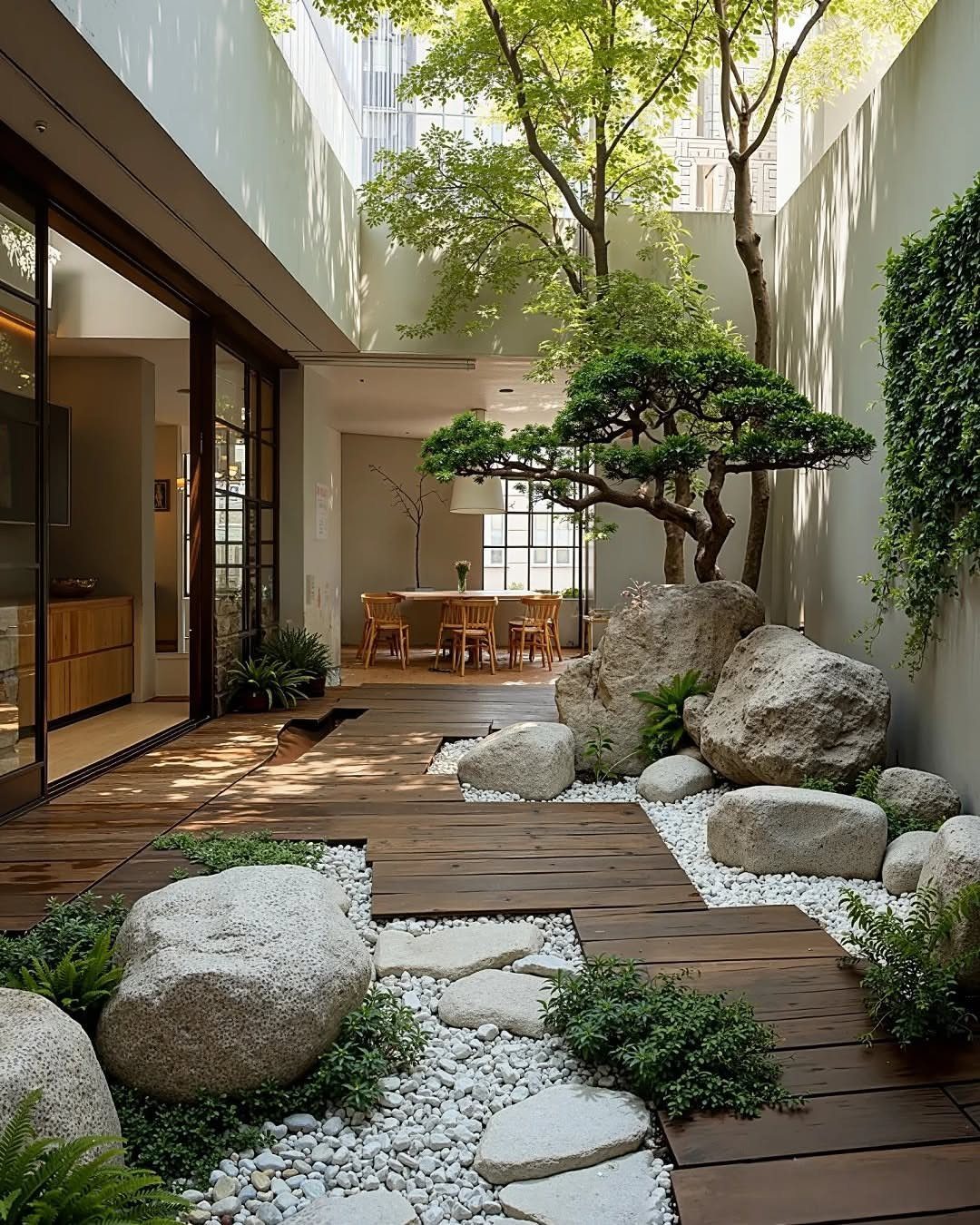
Zen gardens around trees trade planting beds for raked gravel and placed stone, which suits anyone tired of weeding or watering. White gravel, large boulders, and a dark wood walkway run from the tree zone straight into the dining area.
I would copy that indoor-outdoor connection if your layout allows it; the tree reads as part of the house instead of leftover yard.
Maintenance is lower than a planted bed but not zero; leaves fall on gravel and sit there, so I would keep a light rake handy and choose a tree with small leaves or dense canopy if I planned to rake the gravel often.
The walkway needs to stay above the gravel or it will drift underfoot.

WONDERFUL HIGH End GIFT- Treat yourself or bring calm & happiness to loved ones. Japanese Zen Garden for desk; gorgeously packaged with the elements for inner peace. A delightful, deluxe, Zen gift set

Premium Porcelain Construction - Crafted from high-quality ceramic material with a smooth, glossy glazed finish that resists chipping and fading for lasting beauty

⛩ 【Relax and play】 Our zen garden is a beautifully designed zen decor that's all about bringing the peace of the Zen into your life. Easy-to-set and move sandbox is perfect for anyone who wants to escape from their bussy life for a few minutes.
5. Raised Garden Bed Around the Tree
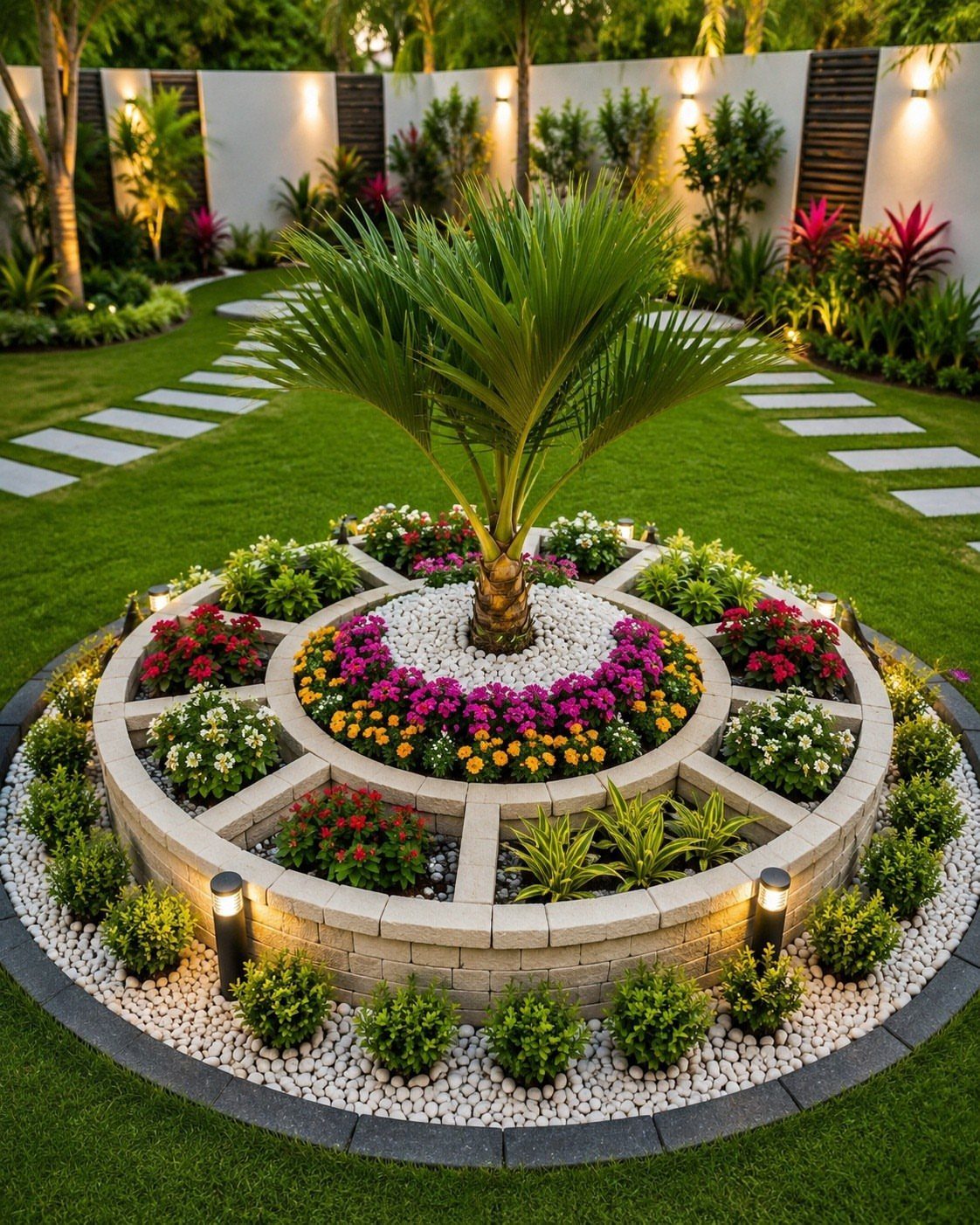
Raised beds around trees give you planting space above root-heavy ground where digging in is nearly impossible. 3 stone tiers circle a palm, planted with flowers and shrubs and lit with small lanterns.
I would not build this tight to a young tree; the soil and stone load can compress roots, and the watering that keeps flowers happy may rot bark if the bed sits against the trunk.
A single trunk makes the circle easier; for a multi-trunk tree, I would gap the bed between trunks or build a partial arc instead of a full ring.
The stepping stones leading in suggest this is a destination spot, not a pass-through, which I think is the right call for a bed you light at night.

Natural & Organic Material: Each pack includes 10 pack 9-inch plant pot cover mulch rings, which are made of 100% natural coconut fiber, breathable, lightweight, thick and durable. Evenly distributed fibers can cover potted plants well to maintain soil moisture and temperature

Natural Organic Mulch Ring: These plant covers rings are made of natural coconut fiber, which is very thick, the fiber is evenly distributed, and sturdy, it can keep the soil moisture in the pot well, they can also prevent weeds from growing arbitrarily

Natural Organic Mulch Ring: These plant covers rings are made of natural coconut fiber, which is very thick, the fiber is evenly distributed, and sturdy, it can keep the soil moisture in the pot well, they can also prevent weeds from growing arbitrarily
6. Tree Surrounding Pond
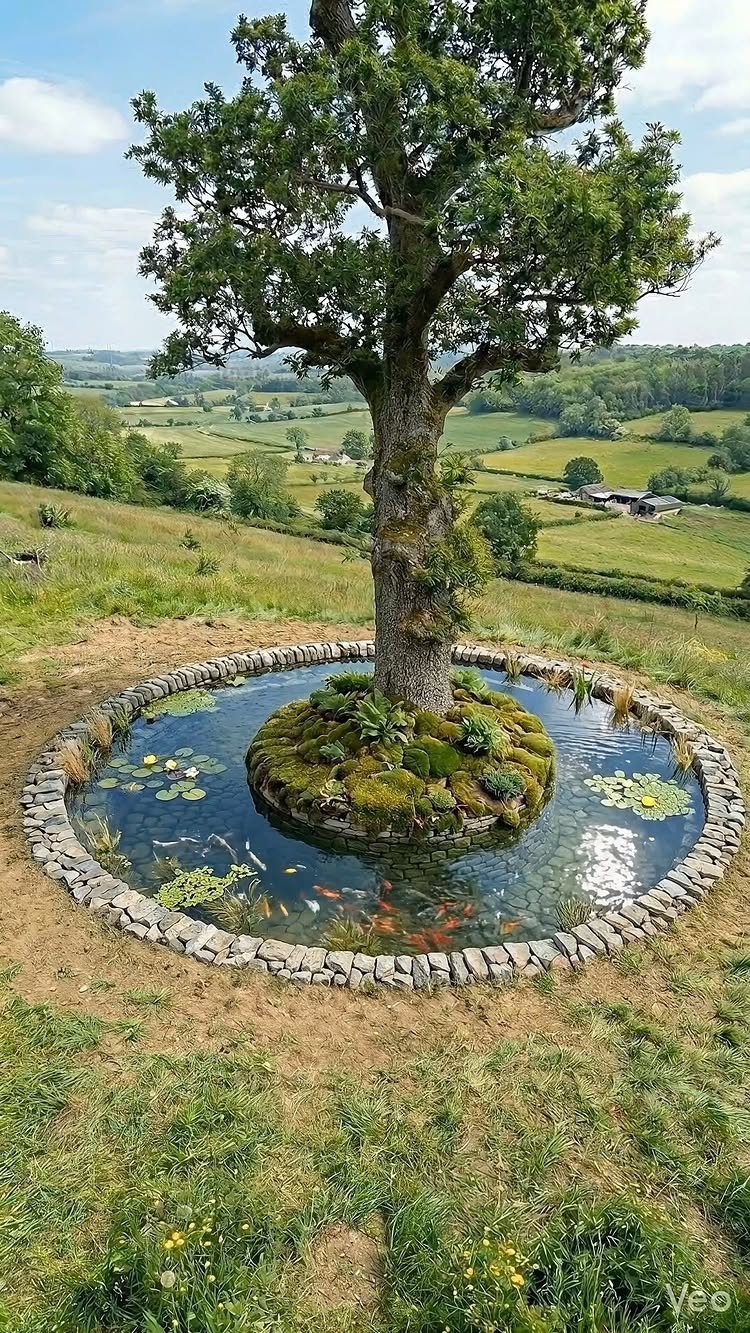
A pond ring turns the tree into an island, which I have only seen work where the grade already slopes for drainage. Mortared stone holds water, with lily pads and koi visible between the tree and the viewer.
Before you consider this, check your tree species; willows and poplars drink enough to drop a pond level weekly, and any tree with surface roots will eventually heave the stone ring.
I would want a liner under the stone, not just mortar, because roots find cracks.
The moss on the island tells me this stays damp and partly shaded, which is right for moss but means the tree tolerates wet feet; if your species needs dry soil, a dry creek bed in a circle gives a similar look without the standing water.

Wrap-Around Design: Encloses trunks seamlessly to transform shaded areas under trees into inviting seating spots, allowing guests to relax and view surrounding outdoor natural landscapes comfortably.

TRADITIONAL & ELEGANT: Whether you’re creating a lovely memorial site among the flowers, a picnic area in your yard, or private reading nook for your front porch or deck, this timeless design can convert any space into a charming sanctuary

Heavy-Duty Load-Bearing Structure: Reinforced wooden frame with stable legs supports up to 400kg, ensuring strong stability for holding potted plants or as a resting bench
7. Solar Path Lights Around Tree
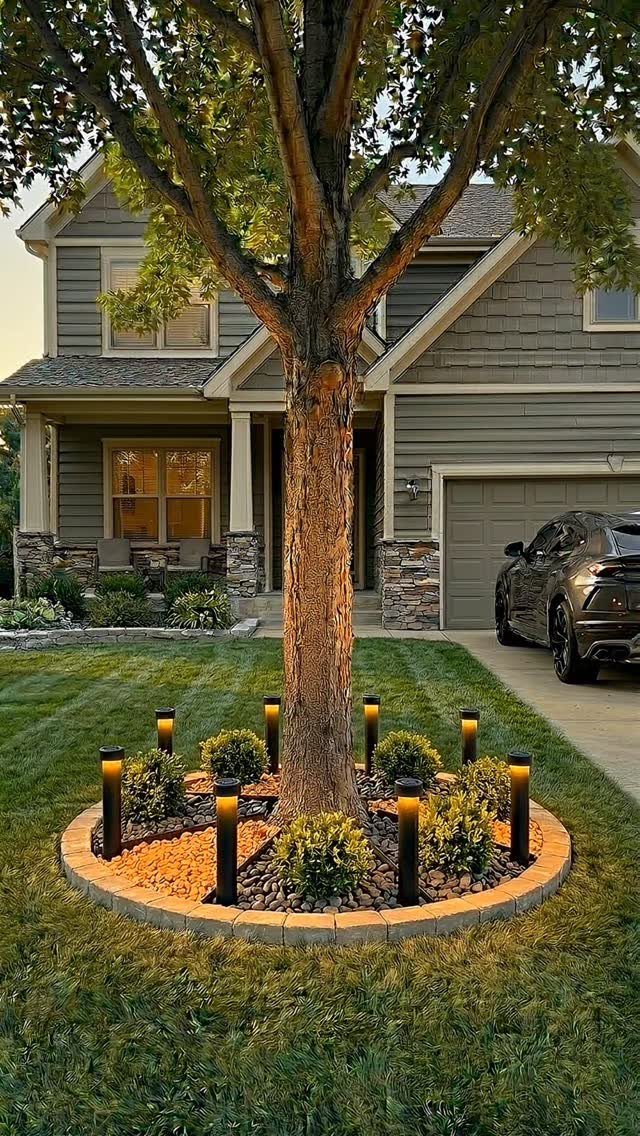
Solar bollard lights around a tree need no wiring, which makes this one of the few lighting ideas you can finish in an afternoon.
I would check that the panels receive direct sun for most of the day; partial shade from the tree itself often cuts charging enough to dim or shorten the night run.
Rechargeable batteries wear down over time and swap out easily when output drops.

High-Quality Non-Woven Fabric: Crafted from top-tier felt, these tree ring mulch mat offer long-lasting performance, ensuring optimal care for your trees.Before purchasing, please be aware of the hardness of this type of non-woven felt mat, which is different from the wooden tree ring

【Biodegradable and Long-lasting】: These non woven tree rings are made of high-quality high-density thick non-woven fabric, which is durable and saves resources. Tree-based covering non-woven fabrics naturally degrade over time, reducing waste and the need for constant replacement.

LARGE COVERAGE: 40.15-inch diameter tree mulch rings provide extensive protection around tree bases, perfect for landscaping and garden maintenance
8. Outdoor Dining and Patio Area
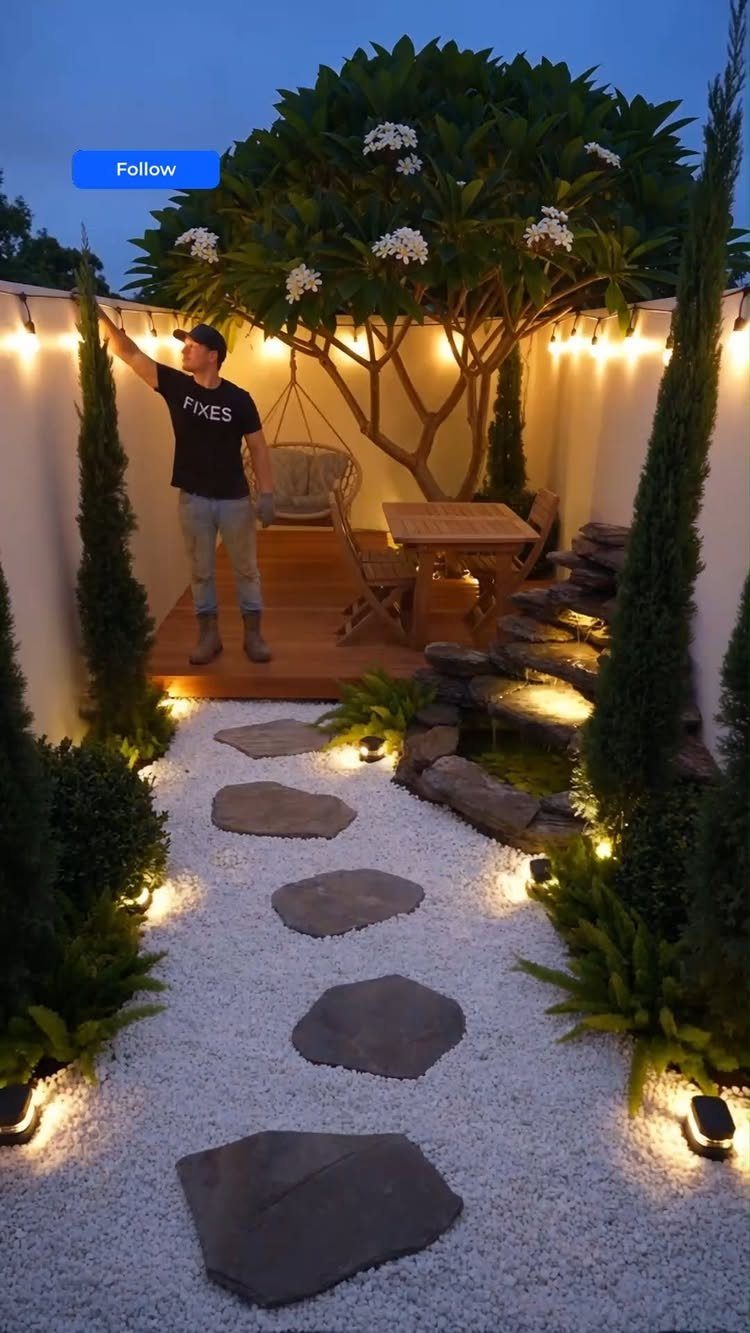
A dining table set under a flowering tree gives you shade without building a structure, though the petals and pollen that drop on the table are part of the deal.
A narrow courtyard works best with the tree centered and the stone path running alongside rather than through the seating; that keeps the dining zone intact and the traffic separate.
String lights in the branches extend usable hours, but I would use a battery or solar set rather than running cord up the trunk, which girdles bark over time.
The wooden deck and stone path are two materials; three would start to look busy in a space this size.
9. Mulch Ring Around Tree
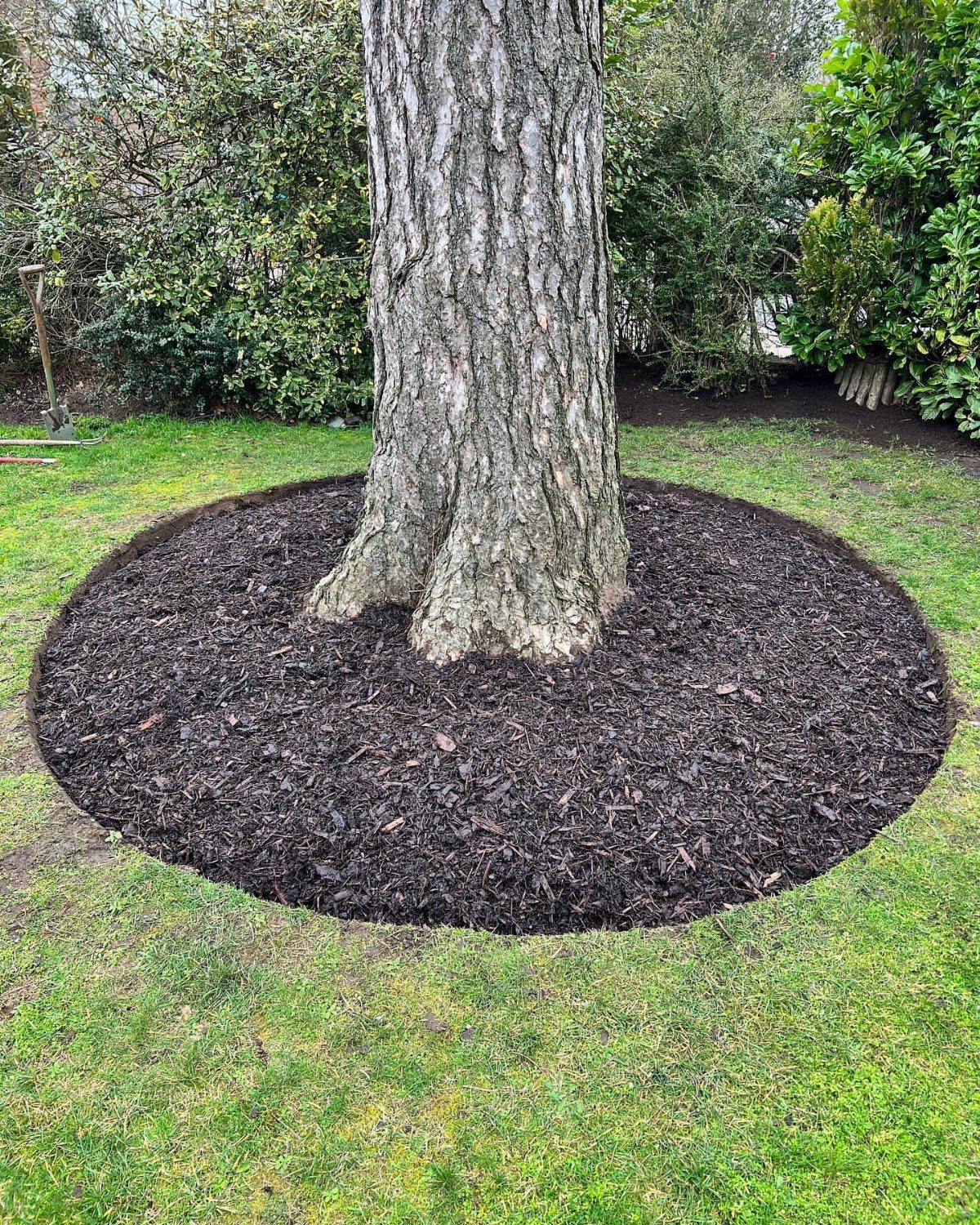
A clean-edged mulch ring is the simplest ground treatment on this list and the one I would start with if the goal is just to stop mower damage to bark.
Dark brown mulch sits a couple inches thick, cut into sod with a visible edge, which keeps it from feathering into the lawn.
I would keep mulch back from the trunk itself; piled against bark traps moisture and invites rot.
Refresh once a year in spring, and expect some nitrogen draw-down from fresh wood mulch; a light fertilizer on the lawn edge helps the grass recover from the cut line.

WONDERFUL HIGH End GIFT- Treat yourself or bring calm & happiness to loved ones. Japanese Zen Garden for desk; gorgeously packaged with the elements for inner peace. A delightful, deluxe, Zen gift set

🙏 【Relax and play】 Stepping away from your work and getting your hands dirty for a minute is a proven way to reduce stress and give yourself the creative boost you need to solve your work problems. This little sandbox will give you a moment to relax and let your mind wander without leaving your desk, enjoy Zen time.

Create Serene Patterns with this Desktop Zen Garden Kit Set: Our Japanese tabletop Zen garden decors,Zen Garden tools,Zen Garden Accessories Rakes set includes 9pcs mini bamboo zen rakes that allow you to effortlessly create intricate and soothing patterns in the Zen garden sand, promoting relaxation and mindfulness.
10. Fire Pit and Stump Seating
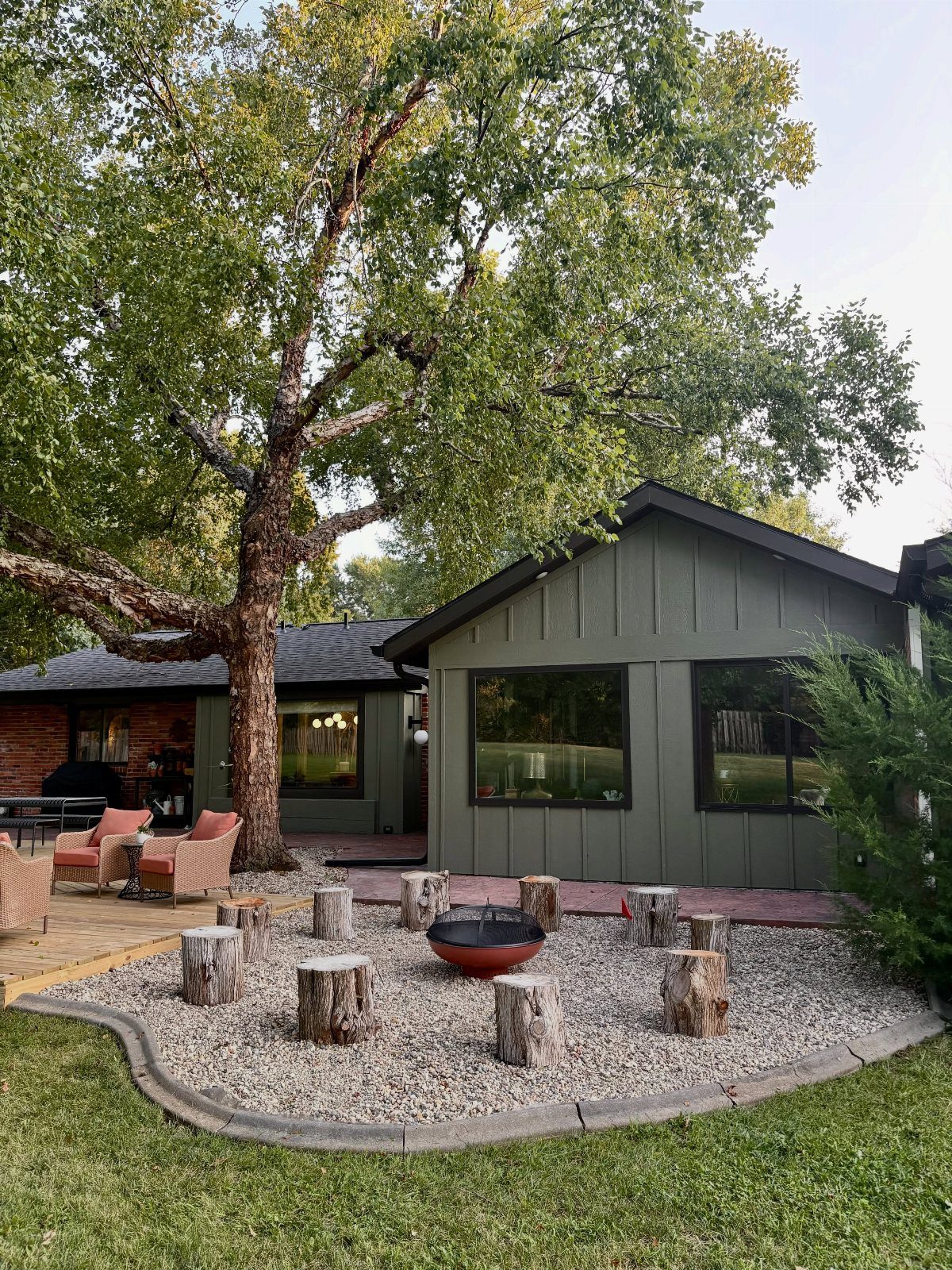
Log stumps around a metal fire pit read rustic because they are unfinished, not in spite of it; sanding the tops smooth enough for drinks is worth the hour.
A gravel base drains well and stops ember damage to grass, though it will need raking level each spring.
A mature shade tree overhead is the reason this spot works in daylight; for evening, I would check branch height against flame height, and keep the pit well clear of any low limb.
The red metal bowl is a store-bought unit; a dug fire pit under a tree root zone risks slow root damage from heat.
Frequently Asked Questions
What is the best thing to put around a tree?
Mulch is where I would start if the goal is simply to protect bark from mower damage: a couple inches of dark brown mulch, cut into sod with a clean visible edge, sits at or just below lawn level so the string trimmer catches it.
Stone rings work better if you want a permanent edge that never needs redoing; a single layer of mixed stone with pebble fill looks professional and is fully DIY.
Either way, keep the material back from the trunk itself to avoid trapping moisture against bark.
What is the 3-3-3 rule for mulch?
I work with a simpler practical rule: keep mulch a couple inches thick and a couple inches back from the trunk, which matches the spirit without the precise numbers.
I refresh once a year in spring and expect some nitrogen draw-down from fresh wood mulch; a light fertilizer on the lawn edge helps the grass recover from the cut line.
Which is the most common mistake made in tree planting?
The common mistake I see echoed in edging and mulching work is placing material too close to the trunk, often called a mulch volcano.
Trapping mulch or stone against bark keeps it permanently moist, softening the bark and opening it to rot, insects, and rodents that damage the tree.
I would keep any ring or bed back from the trunk so the root flare stays visible and free of contact, with the edge extending toward the drip line where the absorptive roots actually live.