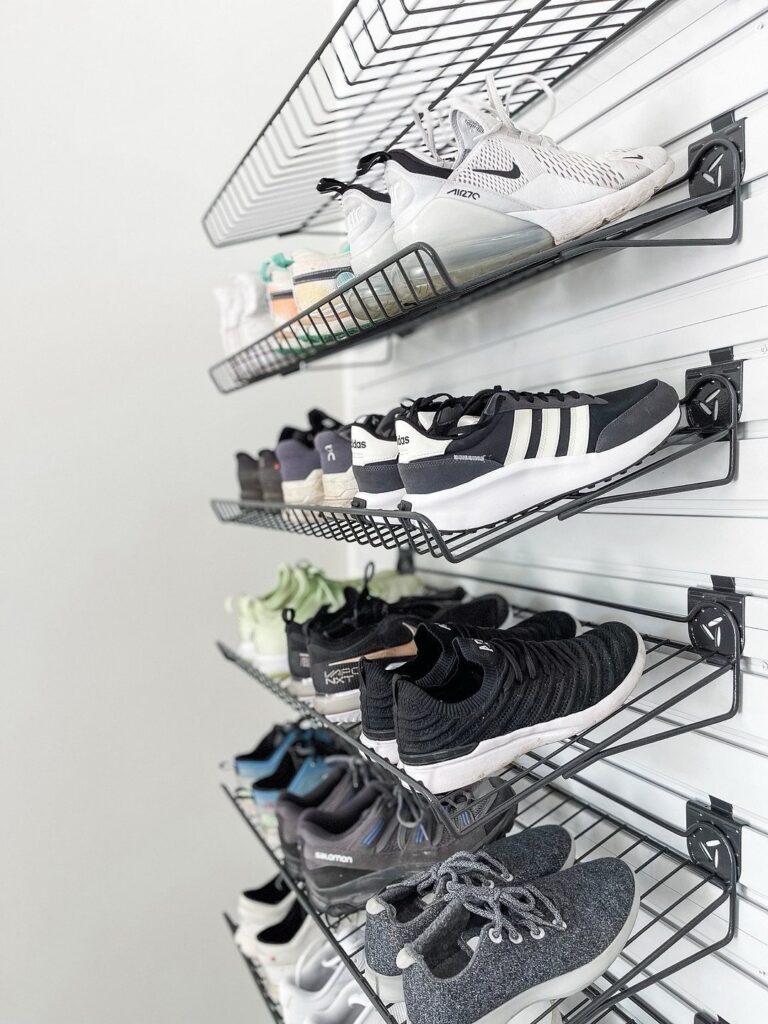
Garage shoe storage runs from a simple shoe bench to a full wall of heavy-duty metal shelving, and the right pick depends on whether you need quick-grab access or a place to hide the visual clutter.
I would start by measuring your bay depth and your tallest boots before deciding; a bench or cabinet that blocks a car door or leaves winter gear flopped sideways defeats the purpose.
The 10 to 12 inch vertical spacing I use for wall-mounted shelves is the kind of figure that only works once you know what you are actually storing.
[link-whisper-related-posts]1. Shoe Benches
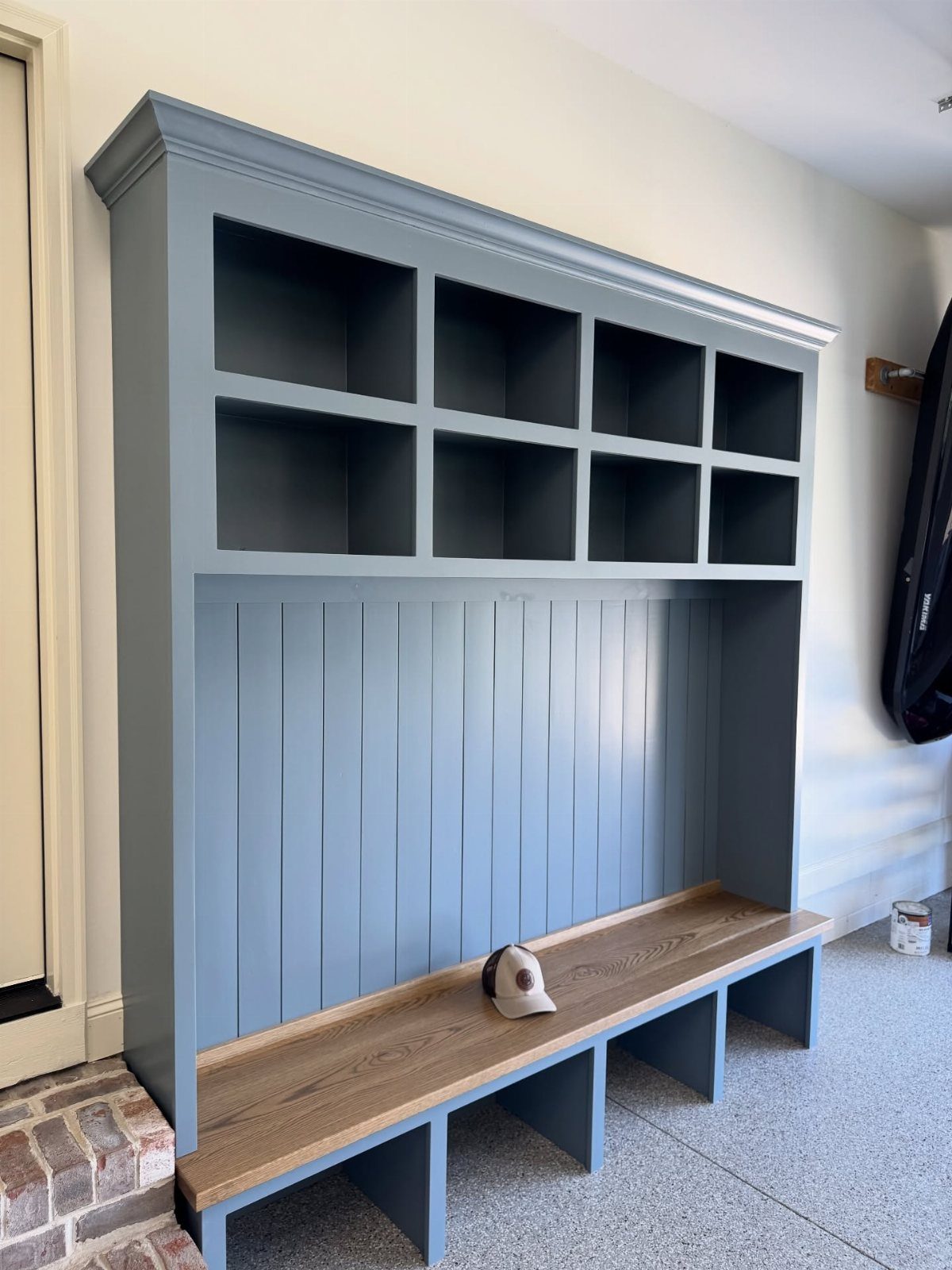
A shoe bench gives you somewhere to sit while you lace up, with storage built right underneath. I like this setup when you come through the garage door into the house and need a pause before the indoors.
Check that the bench depth leaves you enough aisle room; a typical bench can eat your walking space fast in a narrow garage.
Cubbies above the bench are a nice touch for gloves and hats, but they need wall anchoring if kids will climb.
2. Wall-Mounted Shelving
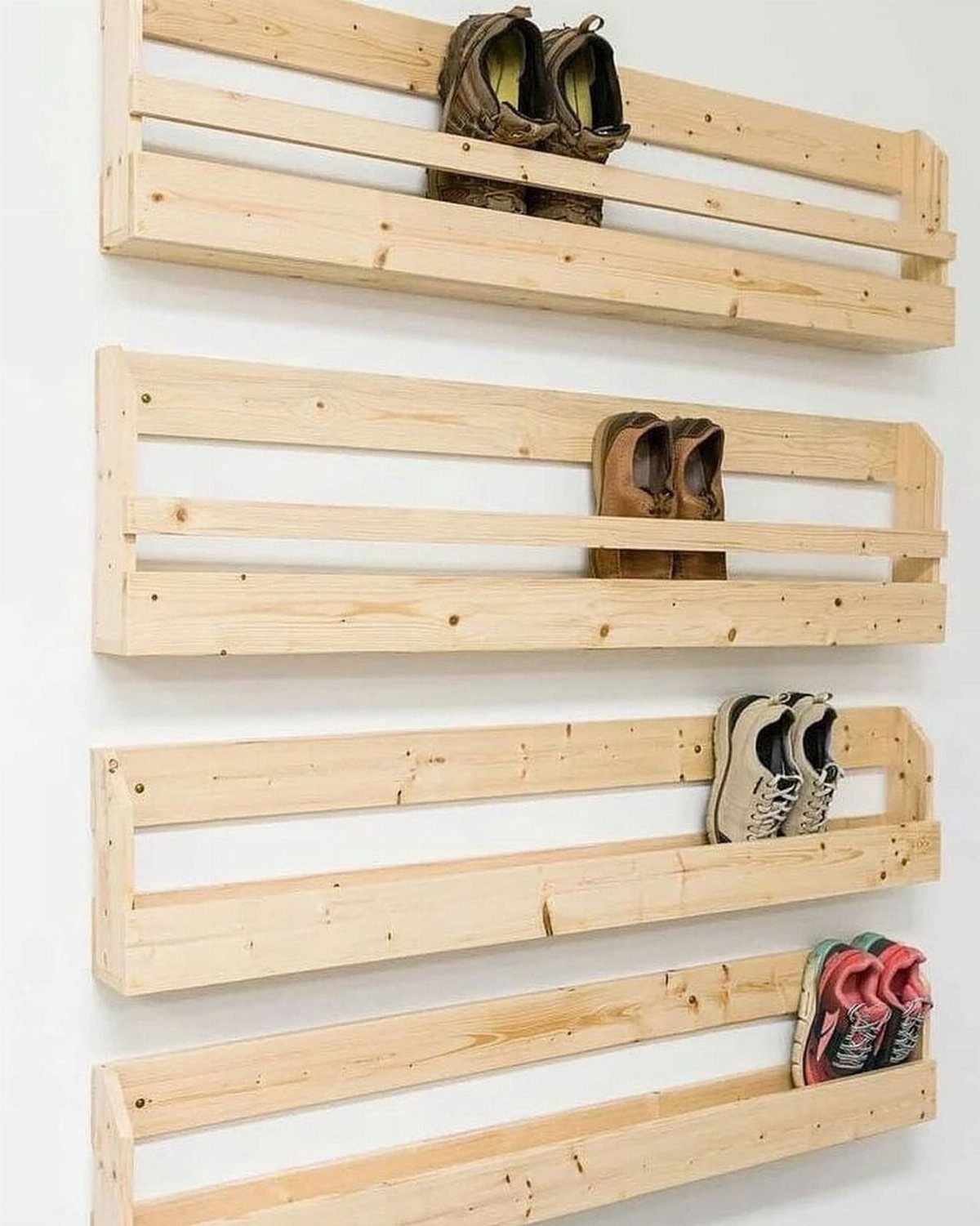
Wall-mounted shelving keeps shoes off the floor and in view, which I find helps with the "did I leave my boots in the car?" problem.
A sealed or painted wood finish here is what I’d look for, since raw wood soaks up garage grime and never really lets it go.
Before you drill, locate your studs; drywall anchors in a garage often pull loose with humidity swings.
I would space shelves 10 to 12 inches apart vertically so boots and sneakers both fit without stacking. This setup suits renters less, since it leaves holes.
3. Shoe Cabinets
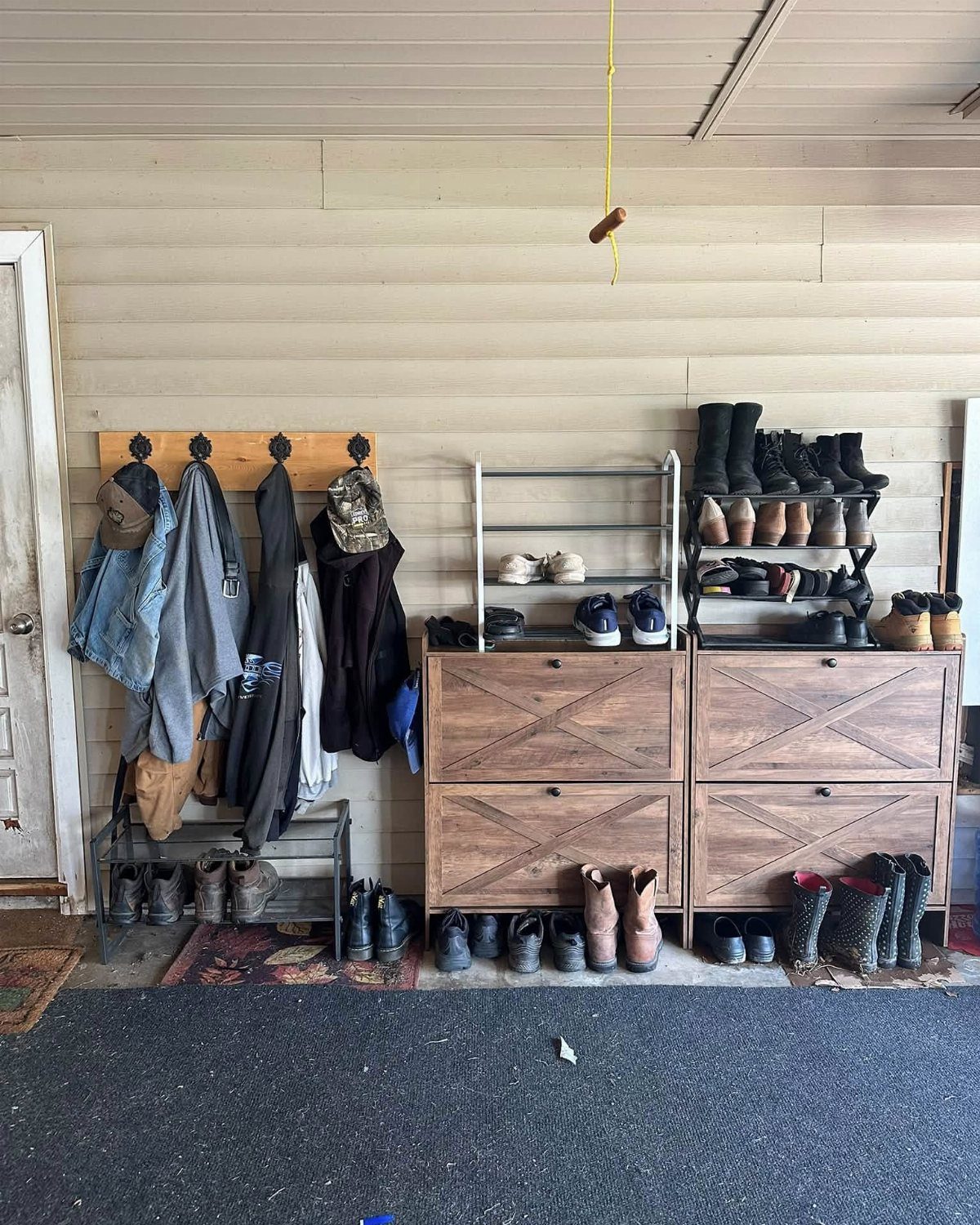
Shoe cabinets hide what wall racks leave on display, which matters if your garage faces the street or you just prefer less visual noise.
The X-pattern doors on these add something, though I would probably pick plainer fronts to avoid dating the look.
Fold-out designs need floor clearance in front; allow room for the door swing plus your foot reaching in.
The flanking coat hooks in this setup are practical, but they turn the whole wall into a mudroom zone, so commit the space or skip it.
The Elfa Classic Platinum Shoe Wall requires only 27 inches of space but can store up to 52 pairs of shoes, including sneakers, boots, and heels.
4. Open Wooden Cubby Unit
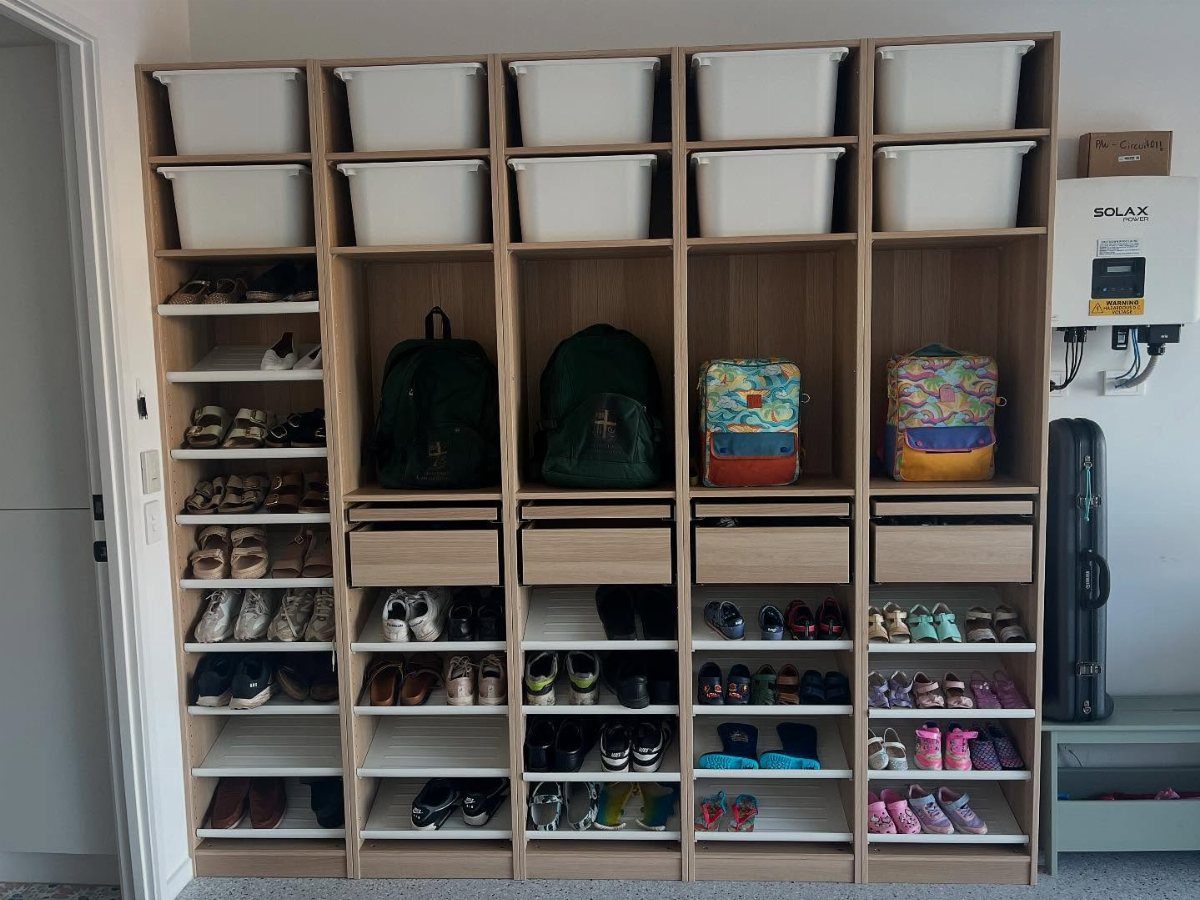
An open cubby unit stands wherever you need it, no wall mounting required. I like that this one handles shoes, backpacks, and bins in the same footprint, which cuts down on the scattered-pile effect by the garage door.
Light wood shows scuffs faster than painted or dark finishes; that is the trade-off for the airy look.
Measure your tallest boots before you buy; short cubbies will leave winter gear flopped sideways. This is the option I would pick for a growing family whose gear changes season to season.
5. Clear Stackable Shoe Boxes
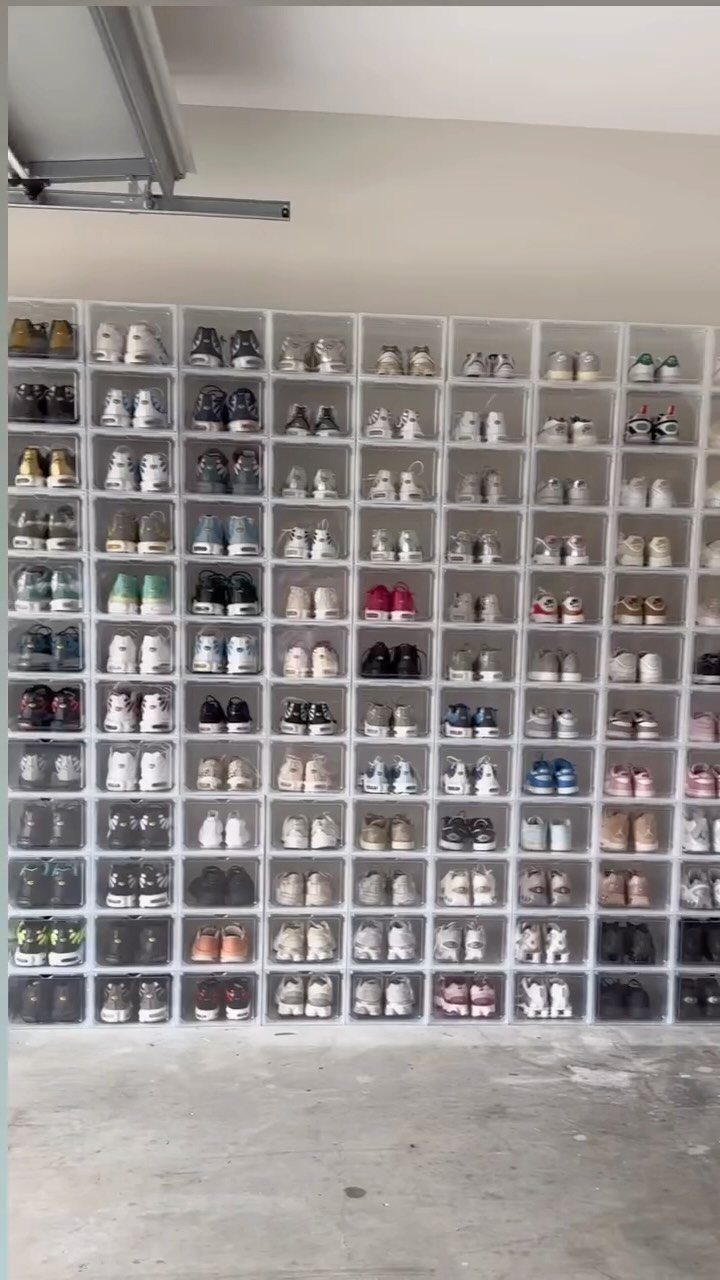
Clear drop-front boxes let you scan your collection without unstacking, and they keep garage dust off suede and mesh. The sneaker-heavy setup here suggests who this suits; I would not bother for muddy work boots you hose off.
Stack them two or three boxes deep at most, or the back row becomes dead storage.
These are cheap individually but a full wall of boxes adds up fast. I think they work best for a rotation you curate, not every shoe you own.
6. Heavy-Duty Metal Shelving
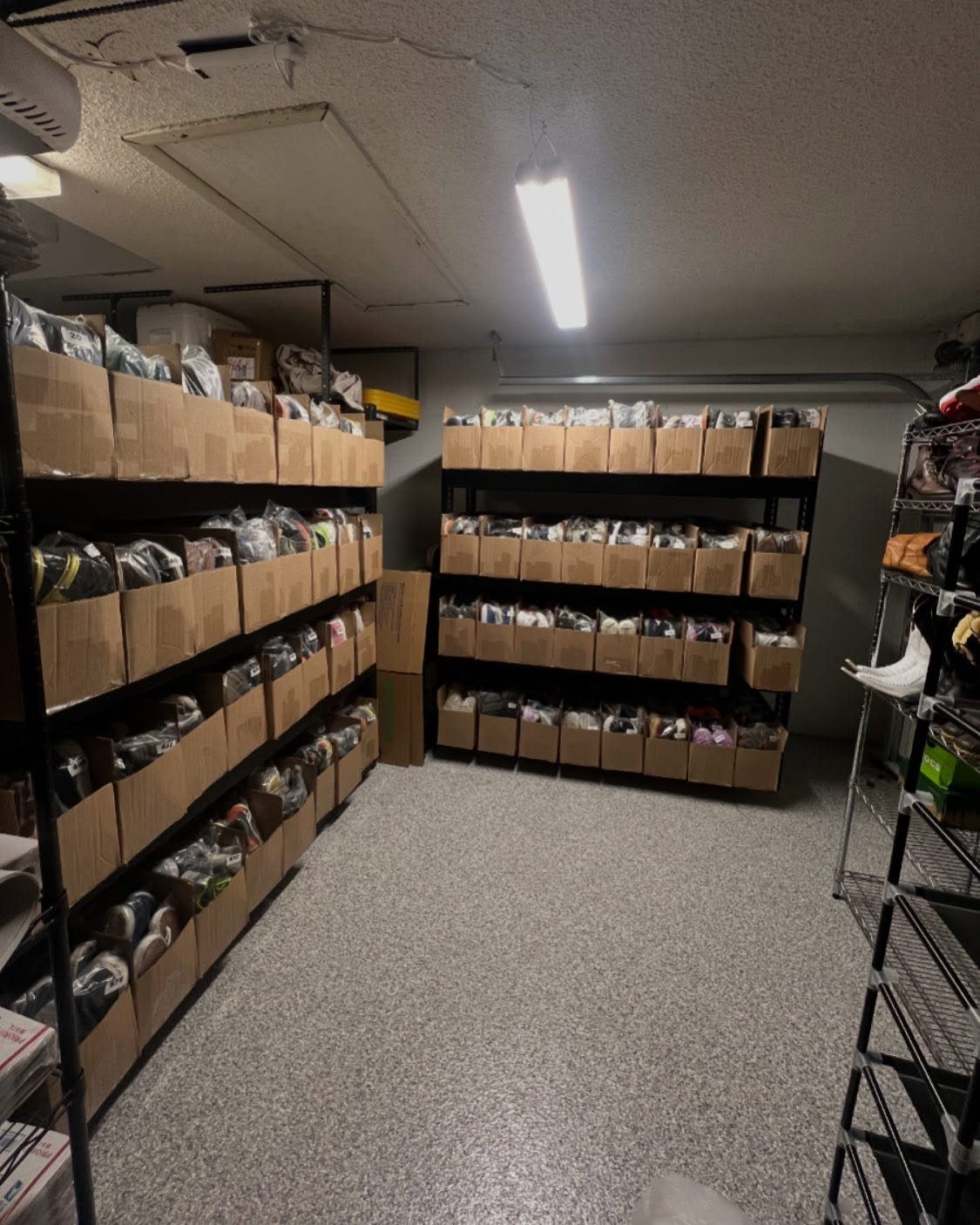
Heavy-duty metal shelving holds serious weight and takes abuse, which is why it ends up in so many garages. The cardboard bins here are a smart match; they slide like drawers but cost far less than plastic equivalents.
A tall black unit like this is wide and deep; check your bay depth before you buy, as these sit well out from the wall.
I would label every bin, because "out of sight" becomes "out of mind" fast. This is utilitarian storage, not quick-grab access, so place it where you do not need shoes in a hurry.
7. Garage Workbench Bottom Shelf
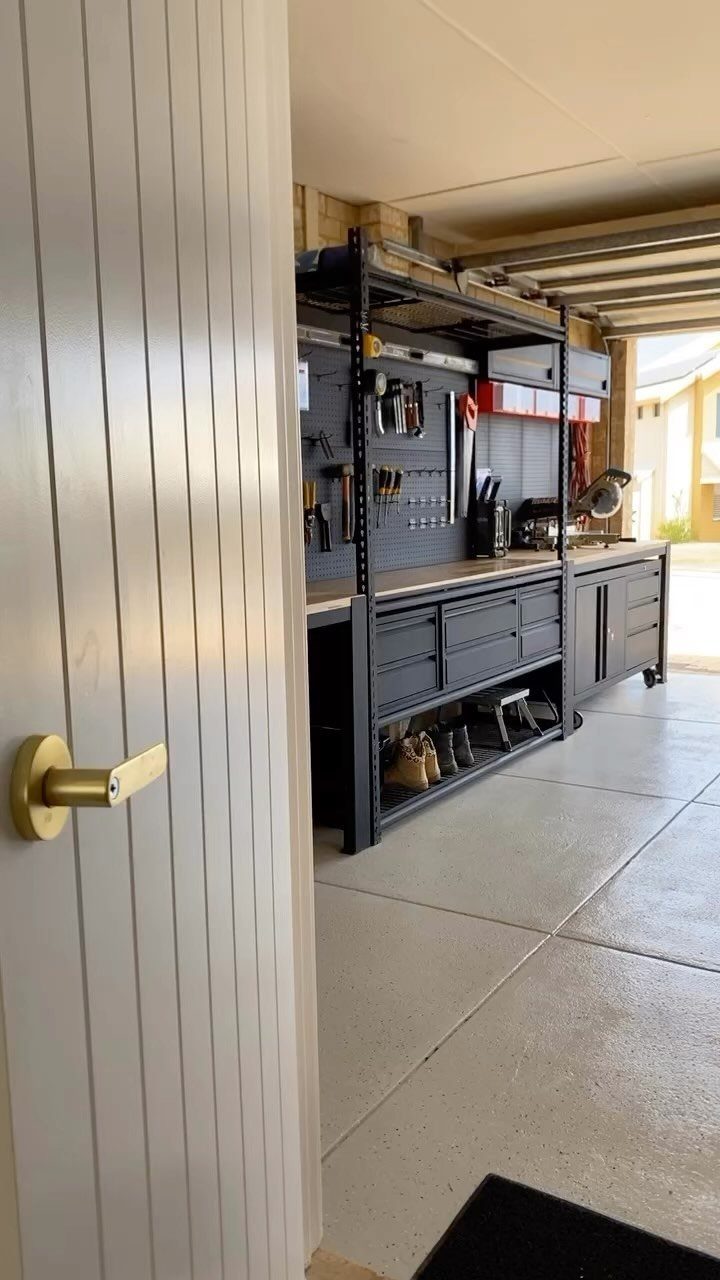
The bottom shelf of a garage workbench is dead space until you put shoes on it, and the open frame keeps pairs visible and quick to grab.
I like this for work boots you actually use at the bench, not for dress shoes that will collect sawdust.
Check that the shelf height leaves toe clearance; a low shelf forces awkward bending with heavy boots. The metal grid or slat surface here drains mud and snow melt, which beats a solid board that puddles.
A workbench bottom shelf keeps boots and shop shoes right where you need them, and a rubber mat on top keeps grit from riding up with you when you stand there for long jobs.
This suits someone whose garage is already a workspace, not a dedicated storage build.
Benefits of Shoe Storage
Organized shoe storage near the garage entrance keeps daily routines moving, especially for households with kids scrambling for the right pair on school mornings.
Separating what you wear every day from off-season boots or dress shoes means you are not digging through a pile to find what you need.
A wall-mounted setup stops dirt from tracking past the garage and into the house.
Industrial pipe shelves with wood planks handle this without a major build; PVC pipe works if you already have it on hand, though you will want to check the load before you load it up.
Structured storage also changes how the space feels when you pull in after work. Shoes collected in one zone instead of scattered across the floor make a narrow garage easier to walk through and park in.
Maintenance Tips
Wet shoes go straight to mold in a closed garage, especially where humidity swings with the seasons.
Let boots dry completely before they go into a cabinet, box, or cubby; a wire shelf or open grid like a workbench bottom lets air move while they sit.
Silica packs inside storage containers pull moisture away from leather and suede.
Zip-lock bags with a few packs work for a single prized pair, though they are impractical for daily rotation. For a whole collection, drop-front boxes with desiccants inside beat airtight bins that trap dampness.
Direct sunlight through a garage window will yellow midsoles and fade colorways.
A cabinet or closed box faces away from the light source if your garage gets afternoon sun. Temperature control is ideal, but most garages run hot in summer and cold in winter; stable storage beats perfect storage.
Installation Advice
Measure twice before you buy or build. A bench that is too deep blocks car doors; heavy-duty shelving that is too deep sits out past where you need to walk.
For wall-mounted shelves, studs matter more in a garage than inside the house. If you are renting and cannot drill, skip wall mounting entirely and look at freestanding cubbies or stackable boxes instead.
A DIY pipe shelf needs pipe that can handle the weight of wood plus shoes. PVC is tempting for scrap piles, but iron pipe holds more; test your material before you commit the wall.
Frequently Asked Questions
How do you make shoe shelves in a garage?
I would use wood planks and pipe or brackets for a simple wall-mounted rack you can assemble in an afternoon. Space shelves 10 to 12 inches apart vertically so boots and sneakers both fit without stacking.
Can I keep shoes in the garage?
Yes, and it often makes sense when the garage is your main entry point.
The risk is humidity, dust, and temperature swings, so pick closed cabinets, clear boxes, or open wire shelves that let air move rather than tossing shoes in a pile.
Any shoe that comes in wet needs to dry out fully before it goes into a closed bin.