These exterior renovations run from a weekend of planting and paint to a full porch addition with permits, and the right pick depends on whether your goal is to live with it or sell it.
A porch deep enough for a chair or composite cladding that keeps old shingles out of a landfill each serve different timelines and budgets.
Where your house sits worst, failing roof or dated door, is what should get the money first.
[link-whisper-related-posts]1. Add a Porch
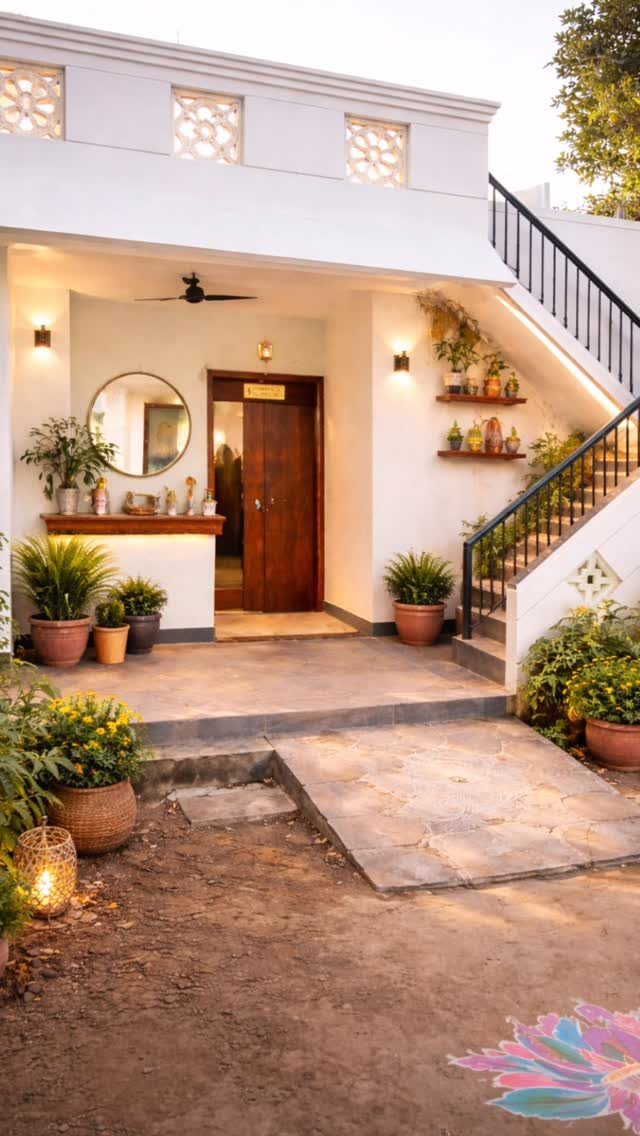
A porch turns the front of your house into usable outdoor space.
Before committing, check your local setback rules and whether the roofline needs reworking to shed water properly. I would go deep enough for a chair, even if that means shortening the depth somewhere else.
2. New Front Door
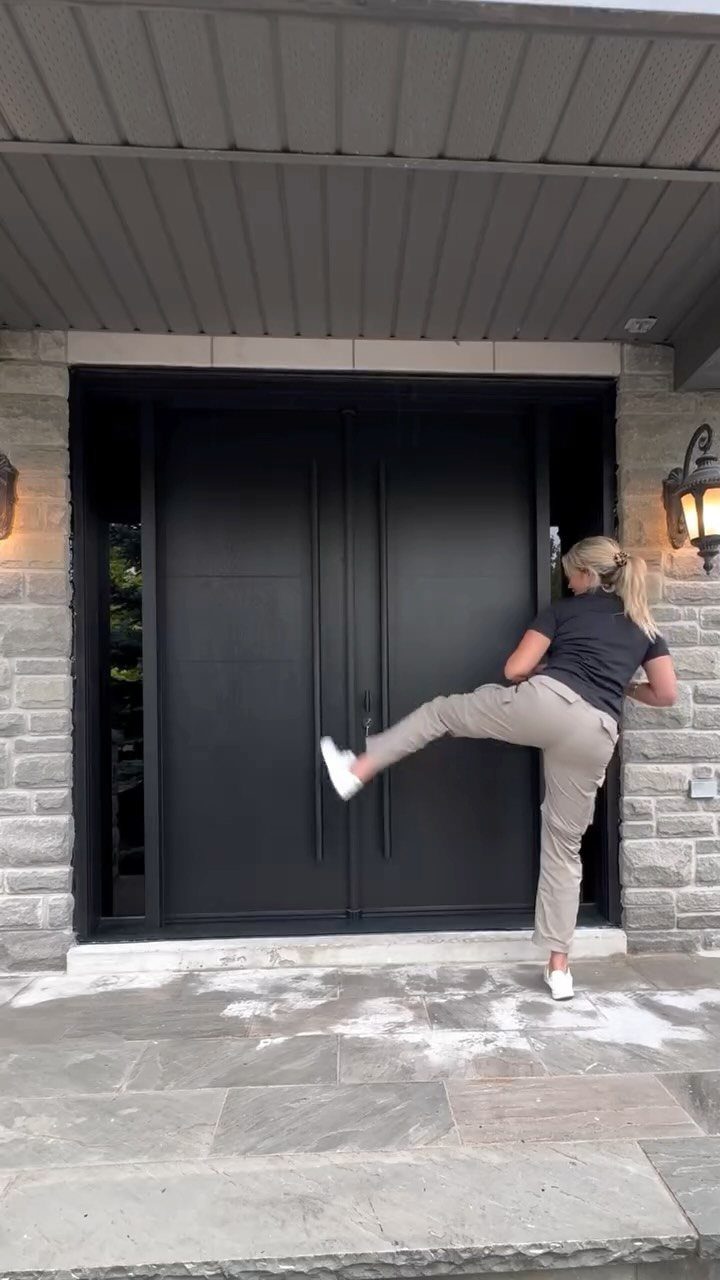
Matte black double doors read expensive without being oversized or custom.
I would check the rough opening before I fell in love with a size. Older houses often run narrower, and widening the frame means reframing, which means siding repair and maybe electrical relocation.
3. Modern Garage Door
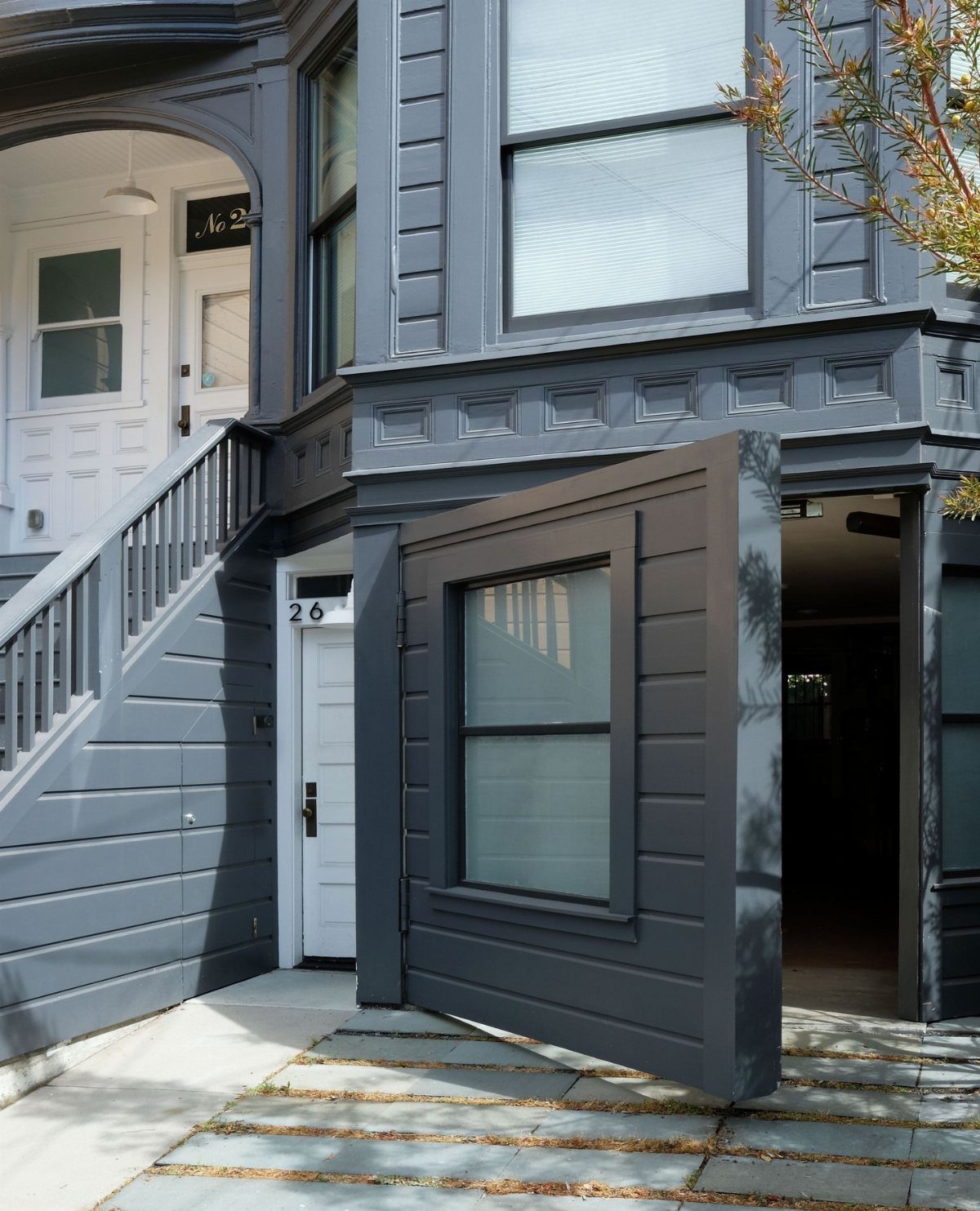
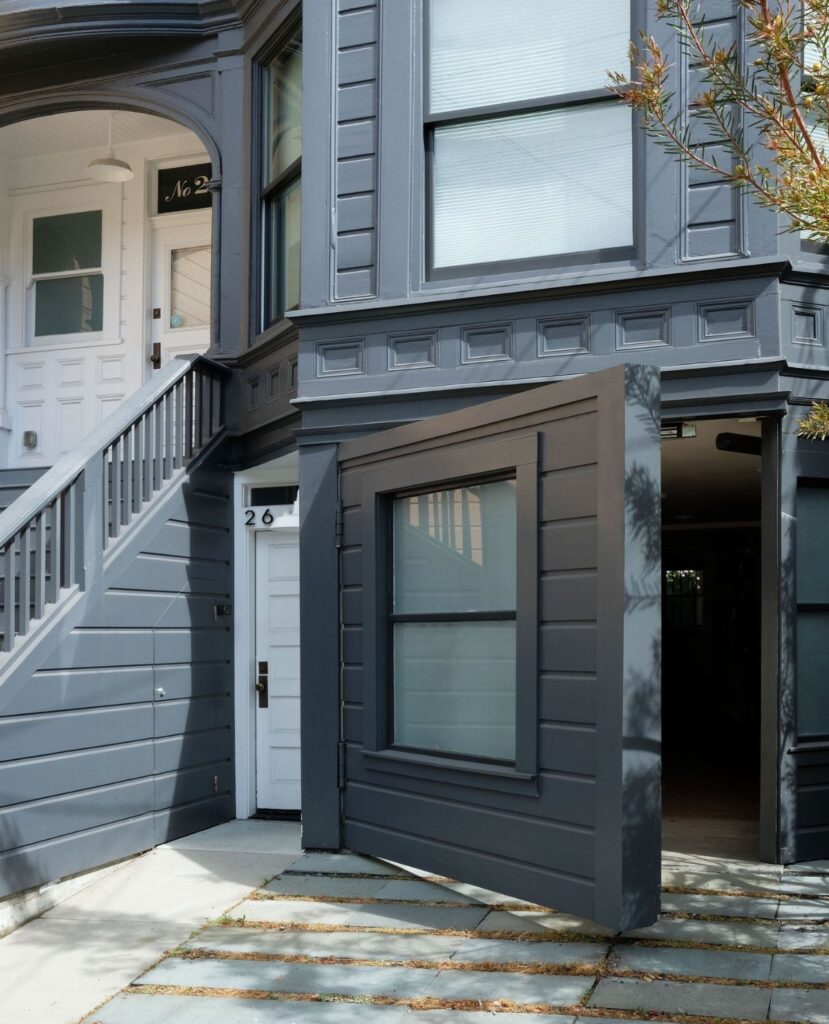
A pivoting door hides the garage almost entirely; from the street it reads as window wall, not utility. That works best on a modern or Victorian facade where the scale already carries something unexpected.
Swing-up doors need clearance inside, so I would measure the depth of your garage first.
If your house is standard suburban, I would skip the disguise and spend on better panel styling instead; the neighbors will thank you, and so will your resale.

BEFORE YOU BUY - Each panel is 4"X6". Ensure your garage door panels are at least 8.5X12.5 inches to fit 4 magnetic panels. Verify your garage door is magnetic. Note: Window frames are not included in this package.
4. Stone Siding
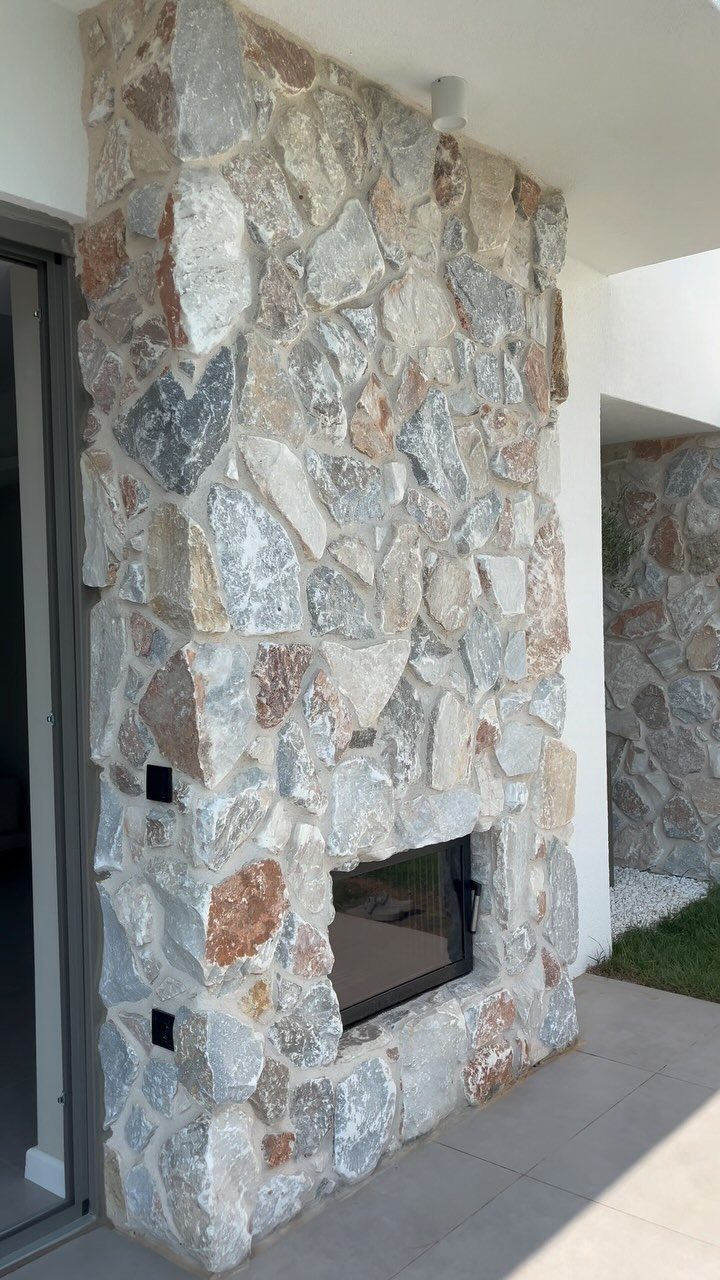
Rough-cut natural stone, not manufactured, gets its life from variation in color.
I would use this on one focal element, the chimney or the entry column, rather than wrapping the whole house. Stone on every wall can bury a modest facade; a single mass of it reads as deliberate.
Check that your foundation and framing can take the weight; engineered stone veneer is lighter, cheaper, and I would pick it for any upper-story application.

Note: pillar panels are sold as singles, you will need 8 pillar panels to complete installation as shown.
5. Colorful Flower Beds
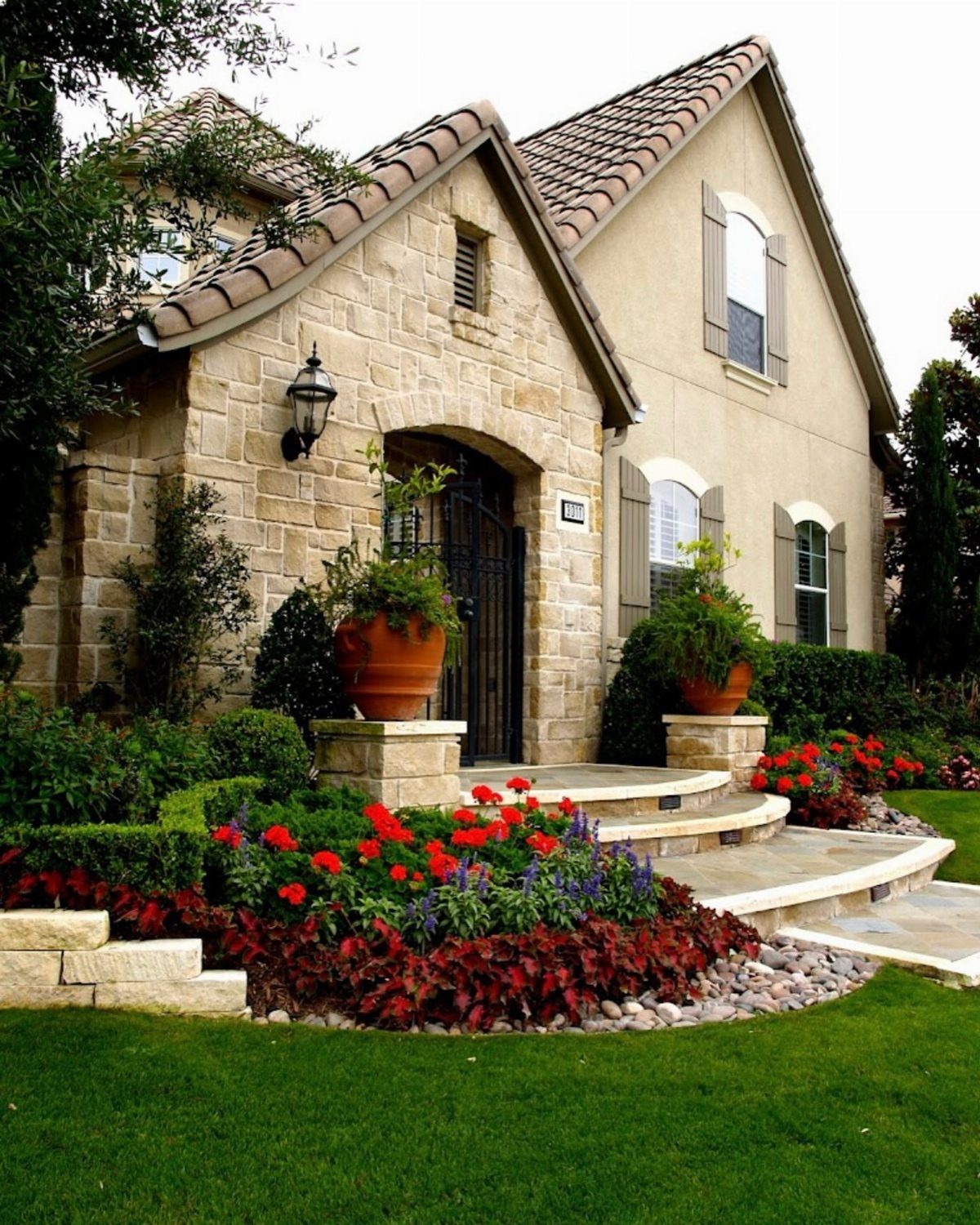
Layered beds with a color story, the red and purple against stone, give a house presence that lawn alone never will. The curved stone steps echo the bed lines; someone planned the hardscape and the softscape together, not as afterthoughts.
For a weekend project, I would buy nursery stock in gallon pots, not plugs, and plant in drifts of three, five, or seven of one color.
The urns flanking the steps repeat the bed colors and carry the scheme to the front door. Mulch with something that contrasts the stone, not matches it, or the whole thing goes muddy.
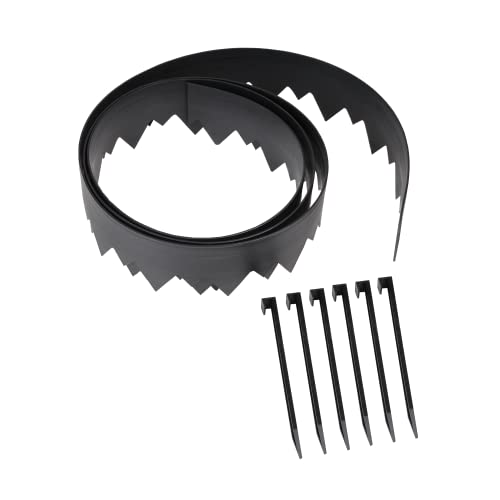
Pound‑In Lawn Edging – Create clean, defined garden borders without hiring a professional; installs with minimal ground preparation.

Kit contains (1) 100 ft. coil of 1.5 in. tall landscape edging and (32) anchoring spikes

Durable Galvanized Steel for Long-Lasting Garden Edging: Crafted from premium galvanized steel, this metal garden edging is built to endure extreme weather. The precision CNC manufacturing ensures clean lines and strength, making it ideal for landscape edging, lawn edging, and garden bed edging projects.
6. Modern Exterior Lighting Fixtures
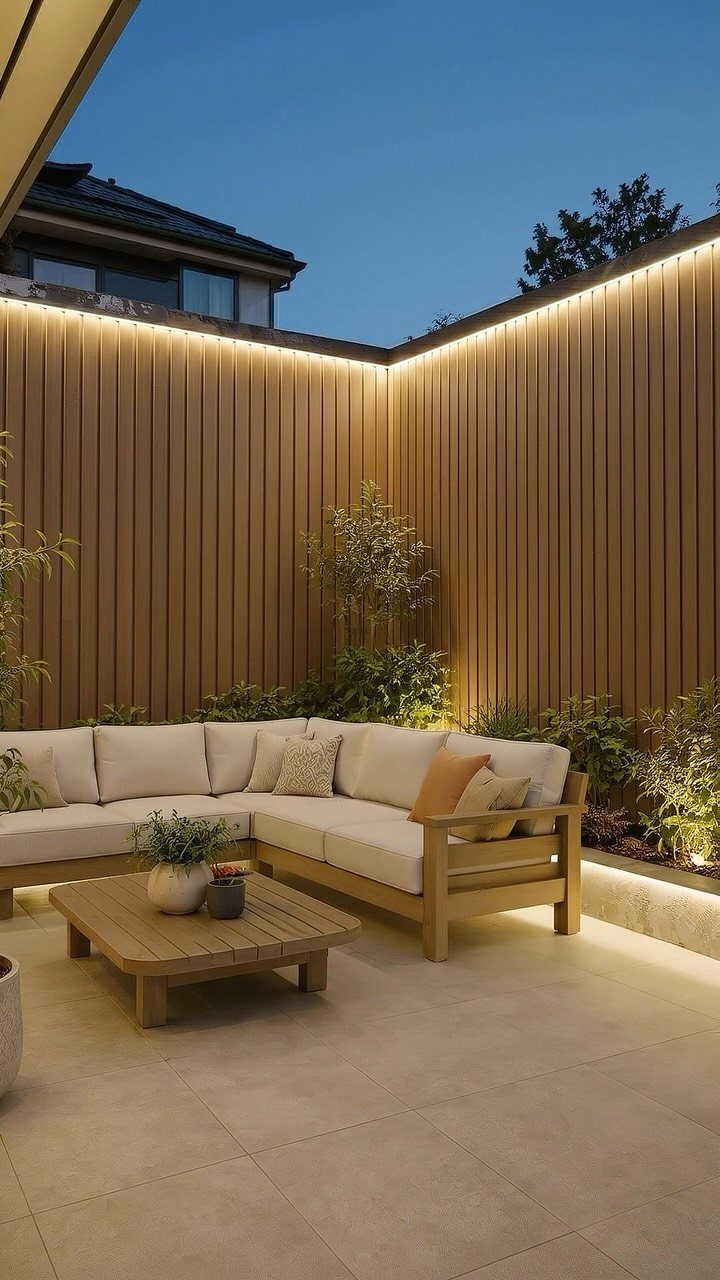
LED strip lighting under the roofline, the bench, and the fence turns a patio into a room after dark. Warm color temperature, probably 2700K, is what keeps it from feeling like a parking structure.
I would put everything on a timer or smart switch so it just happens.
The photo uses the lighting to define edges rather than flood the space; that is lower lumen, lower cost, and I think more elegant than overhead downlights.

3 Pieces Patio Bistro Sets Cover: Protect your 3 piece patio bistro set with our all-weather furniture cover set, which includes 2 chair covers and 1 coffee table cover. It's suitable for your deck, porch, patio, lawn, garden, poolside, and other indoor and outdoor areas with outdoor leisure rattan wicker furniture

BUILT TO LAST: Made from durable steel, this outdoor chair is designed to withstand the elements. The powder-coated finish protects the metal from UV rays, rust, and harsh weather.

【Swings have a short lifespan?】You need a durable and weather resistant swing. Our Iron pipes w/rust protection powder coating. All fabric is fade-resistant & tear-resistant. The nylon knobs are more hard-wearing and not easy to break than plastic parts
7. Replace Old Shingles
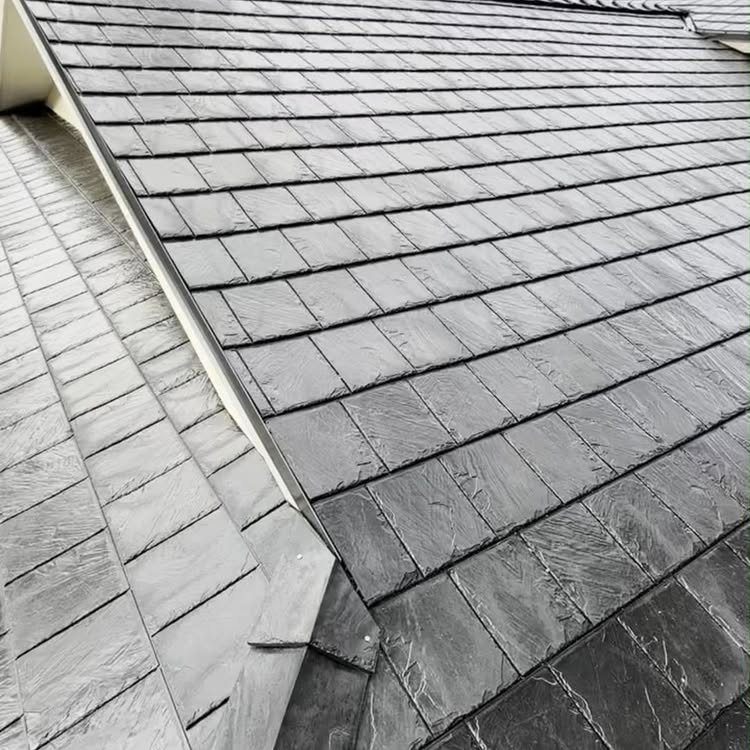
Dark grey slate-look shingles give a roof the weight of stone without the structural load.
Recycled rubber shingles are my pick over quarried slate for anything outside a historic district; the maker notes each roof kept more than 280 tires out of landfills.
I would check the warranty on color fade before I chose a batch. Synthetic slate runs lighter, installs faster, and on a steep pitch it is the safer choice for the crew.

INACTIVE DUMMY: Use on interior doors with no latch or lock, handle is non-turning. Recommended for double doors or any other doors where only a pull is needed

LOCKING PRIVACY: Use on doors requiring privacy, can be locked inside with a turn button and unlocked outside with provided release tool. Recommended for bedrooms and bathrooms

HANDLESET AND INTERIOR LEVER: Use on exterior front doors for added security and style, combine with a Kwikset electronic or mechanical deadbolt (sold separately)
8. Updated Exterior Paint
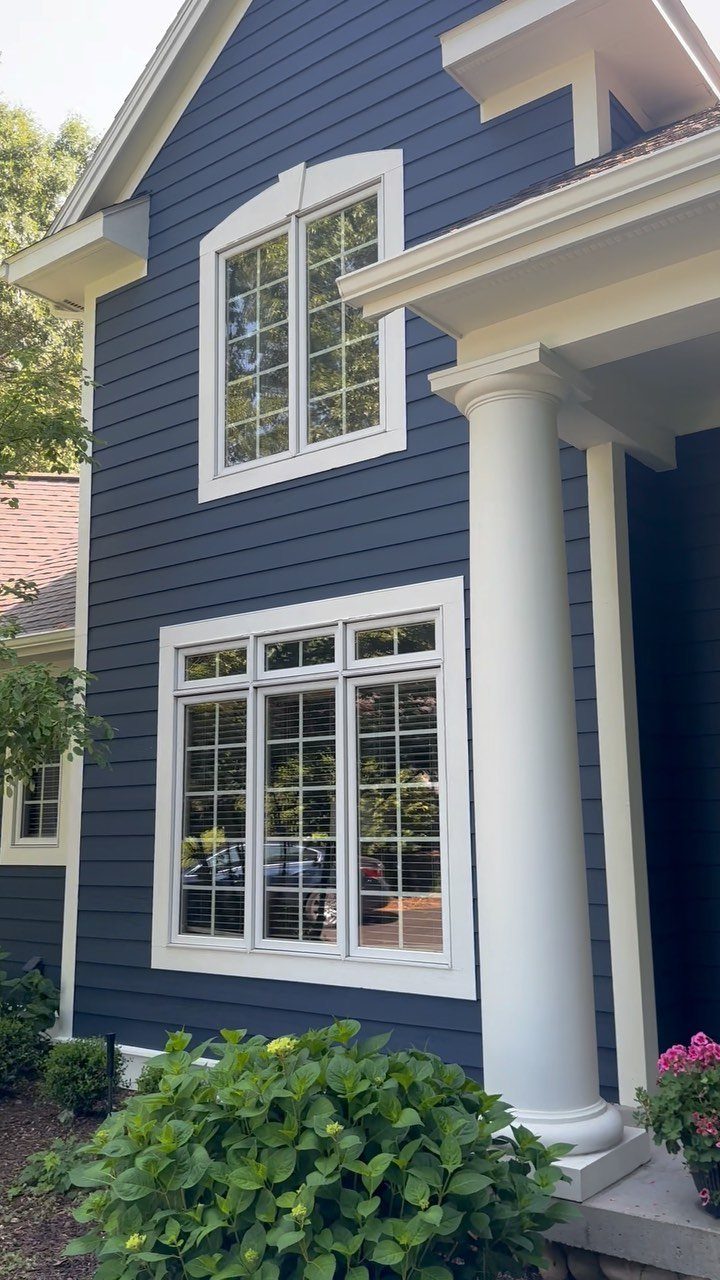
A deep blue body with crisp white trim turns a standard two-story into something deliberate without touching the roof or the windows.
I would buy sample quarts and paint a square on the north side, where the light stays flat, and live with it before committing.
Tying the porch column to the window trim with the same white is what makes the color look planned rather than applied.
9. Stamped Concrete Driveway
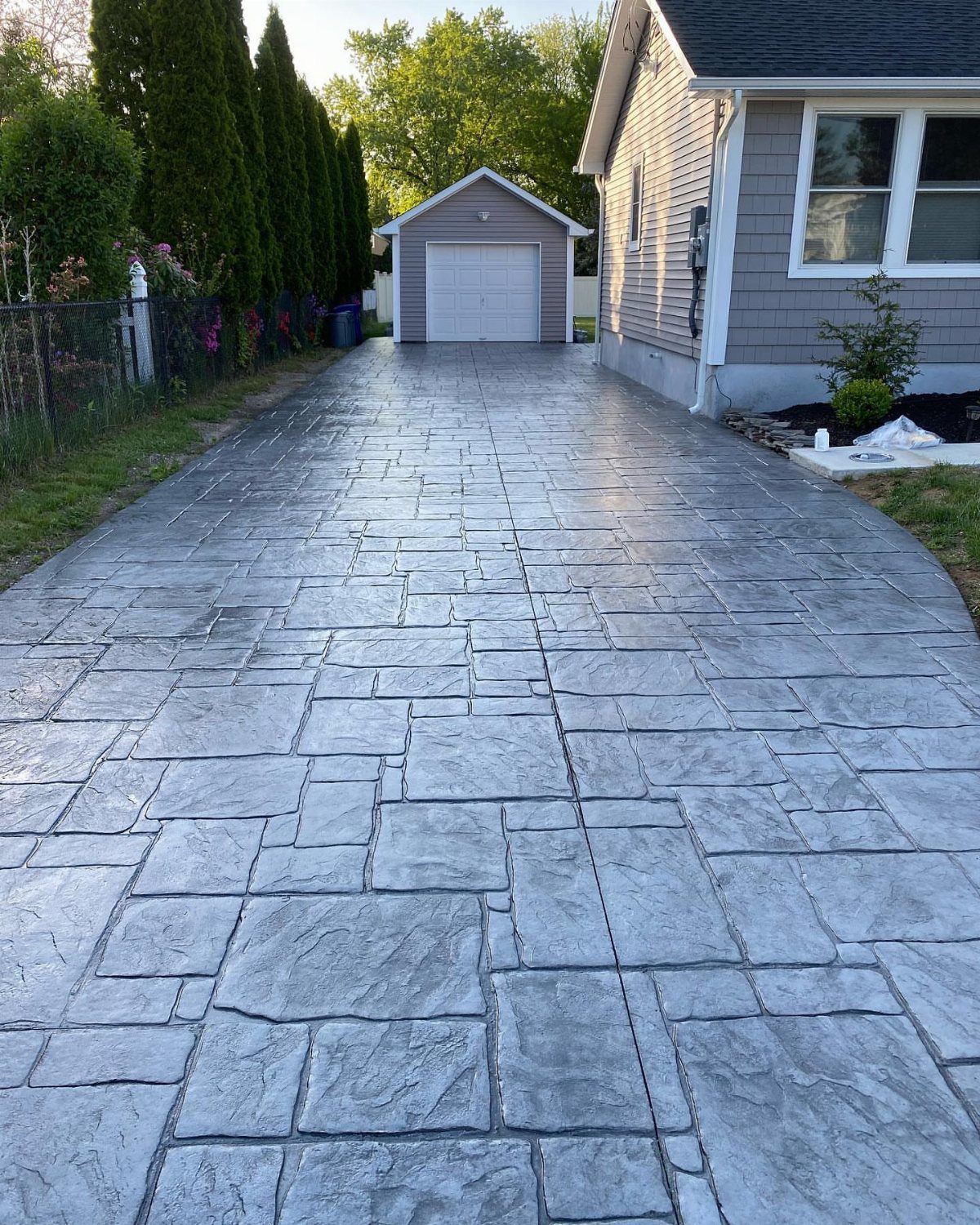
Stamped concrete reads as stone pavers at half the material cost, and the single pour means no weeds between joints.
Running the pattern lengthwise stretches a narrow drive and gives it more presence from the street.
I would ask the contractor to show me a section that has weathered; sealant fades, and the color you sign off on in the shade will lighten. Control joints placed to bisect the pattern keep cracks where you planned them.
10. Vertical Garden
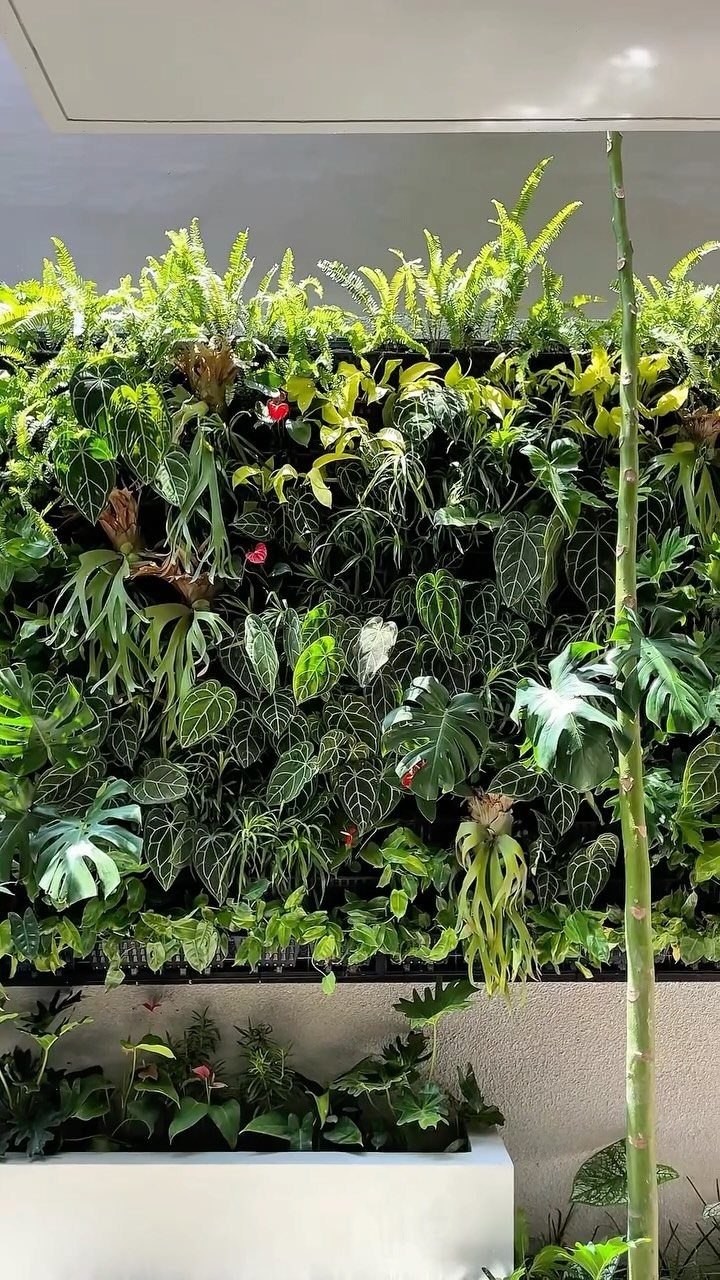
A wall-mounted system of tropical plants turns a blank patio surface into the backdrop. Ferns and anthuriums need consistent moisture; a planter box below that catches runoff and feeds it back solves that problem.
I would start with a mounted frame and small nursery plants, not a fully grown mat. The roots need time to anchor into the growing medium before gravity wins.
An irrigation line at the top, on a battery timer, is what keeps this alive through August; hand-watering a vertical garden is a daily chore I would not sign up for.
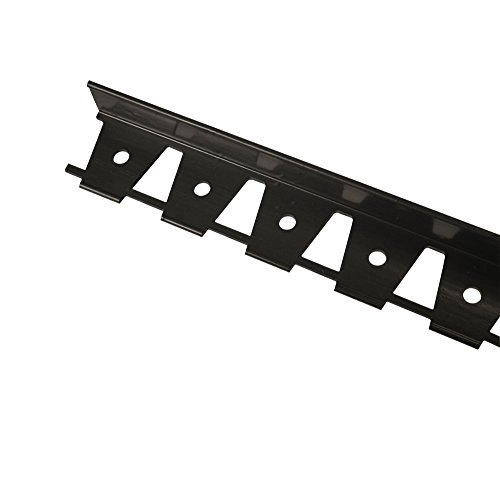
SNIP TO FLEX PAVER, BRICK, OR LANDSCAPE EDGING: Create a beautifully landscaped yard and paver designs without having to hire a professional with easy to install commercial grade edging
11. Stained Brick Exterior
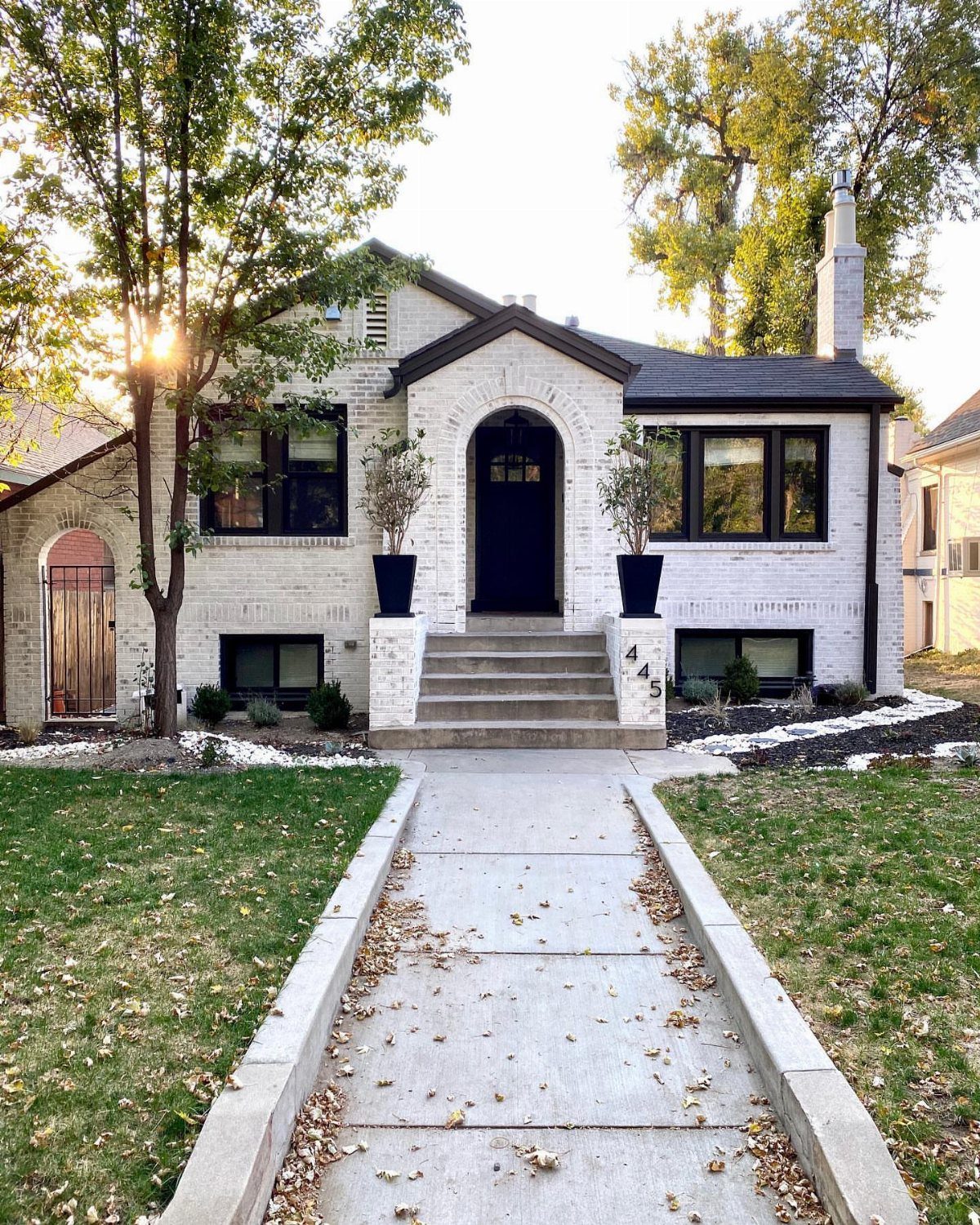
Whitewashed brick with black trim takes a dated facade and makes it read as intentional, not inherited.
A stain, not paint, lets the brick breathe and keeps the mortar’s texture visible. I would test the absorption on a back corner first; brick that has been sealed will repel stain and look patchy.
The house number in raw metal, not painted to match, is the small detail that keeps the palette from going flat.
12. Statement Walkway
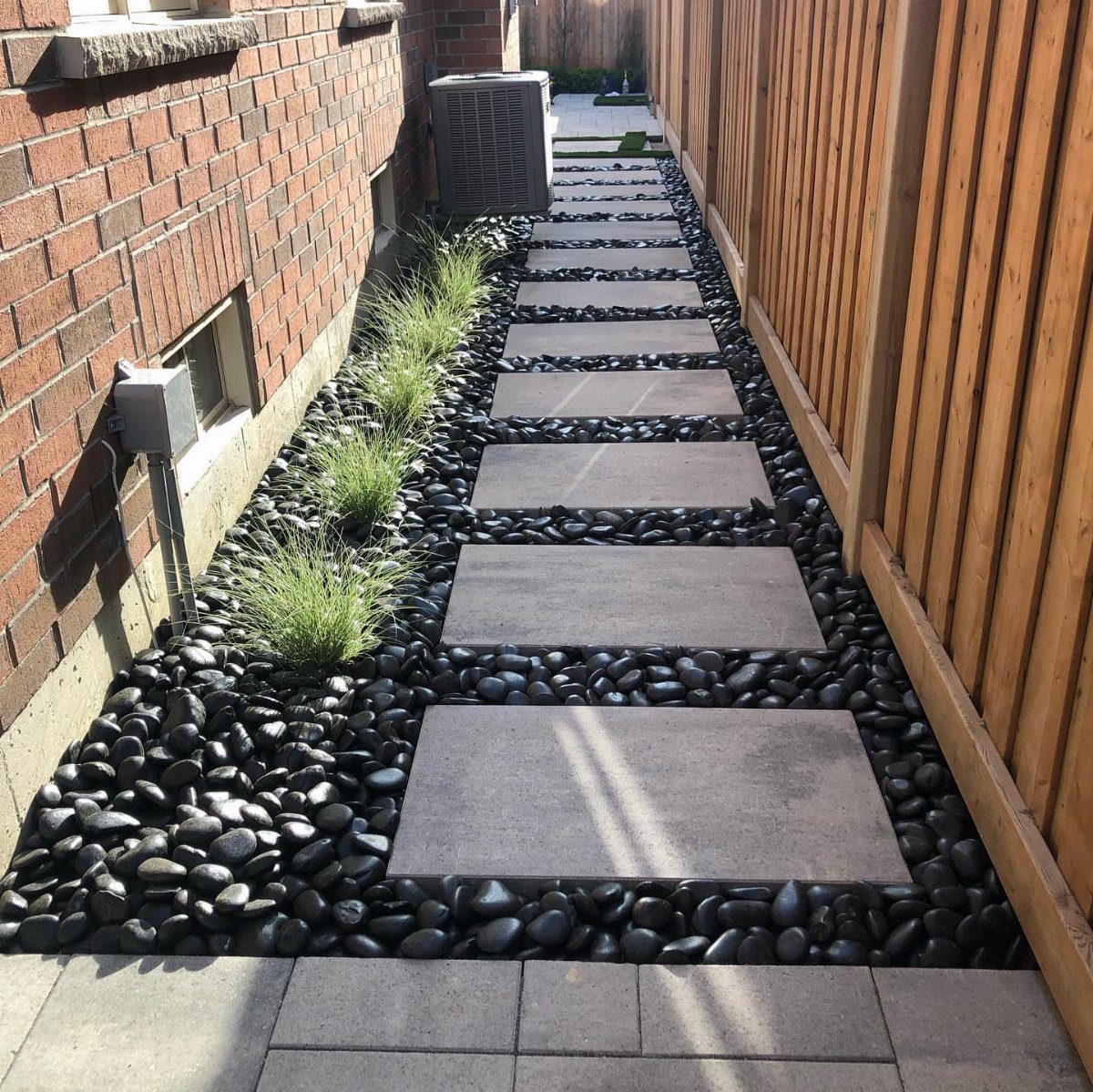
Large rectangular pavers set in polished black pebbles give a narrow side yard the rhythm of a Japanese garden without the maintenance of one.
Wide gaps between stones give you drainage and weed control in one; a rake fits through for cleanup.
I would set the pavers on a sand bed, not mortar, so frost heave adjusts itself. The ornamental grasses at the edge soften the geometry; without them, the hard lines read as parking lot.
13. Outdoor Deck Addition
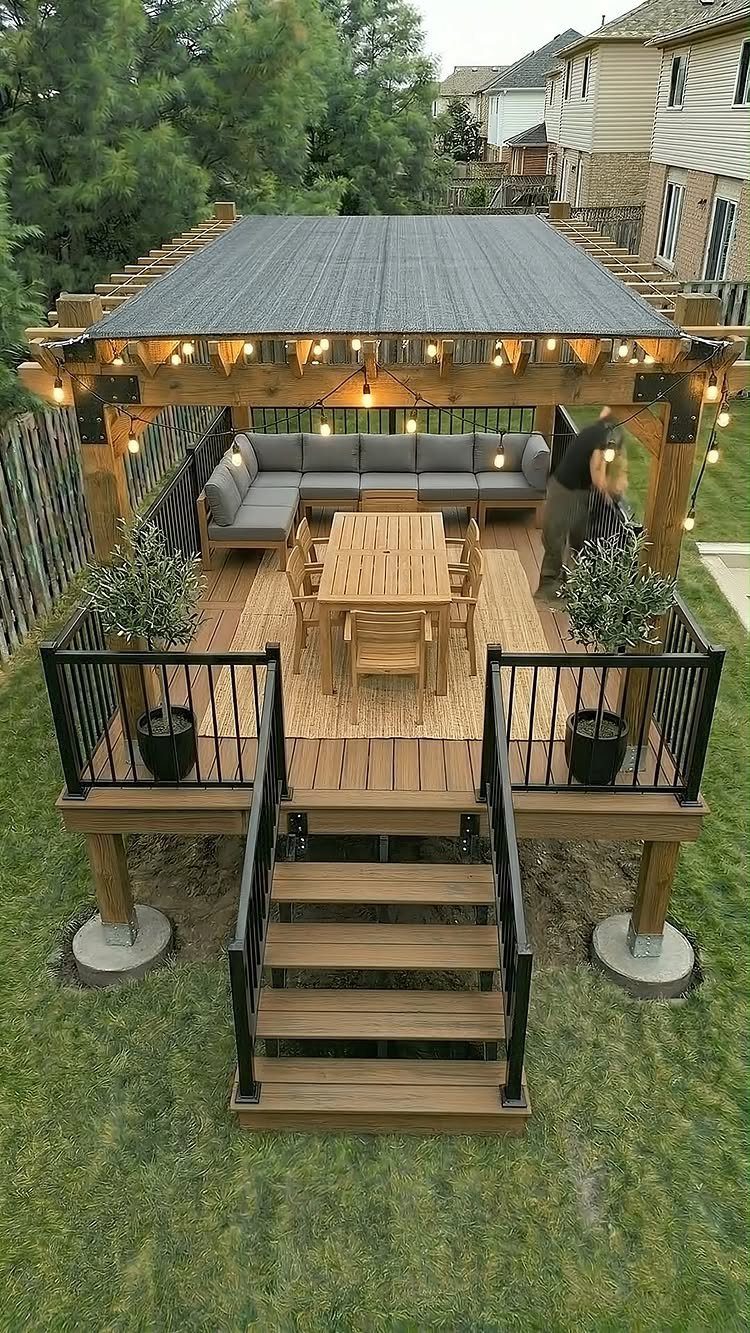
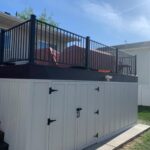
A raised deck expands your outdoor living without the foundation work of an addition. The pergola overhead gives you shade midday and anchor points for string lights after dark.
I would check local setback rules and rail height codes before I drew plans; most jurisdictions want a minimum railing on a deck this high.
Composite boards resist cupping better than wood but get hot underfoot in full sun, so I would budget for a shade sail or retractable canopy if your yard faces south.
The step detail matters: wide stairs with a landing partway down read as an invitation, not an afterthought.
14. Outdoor Fire Pit
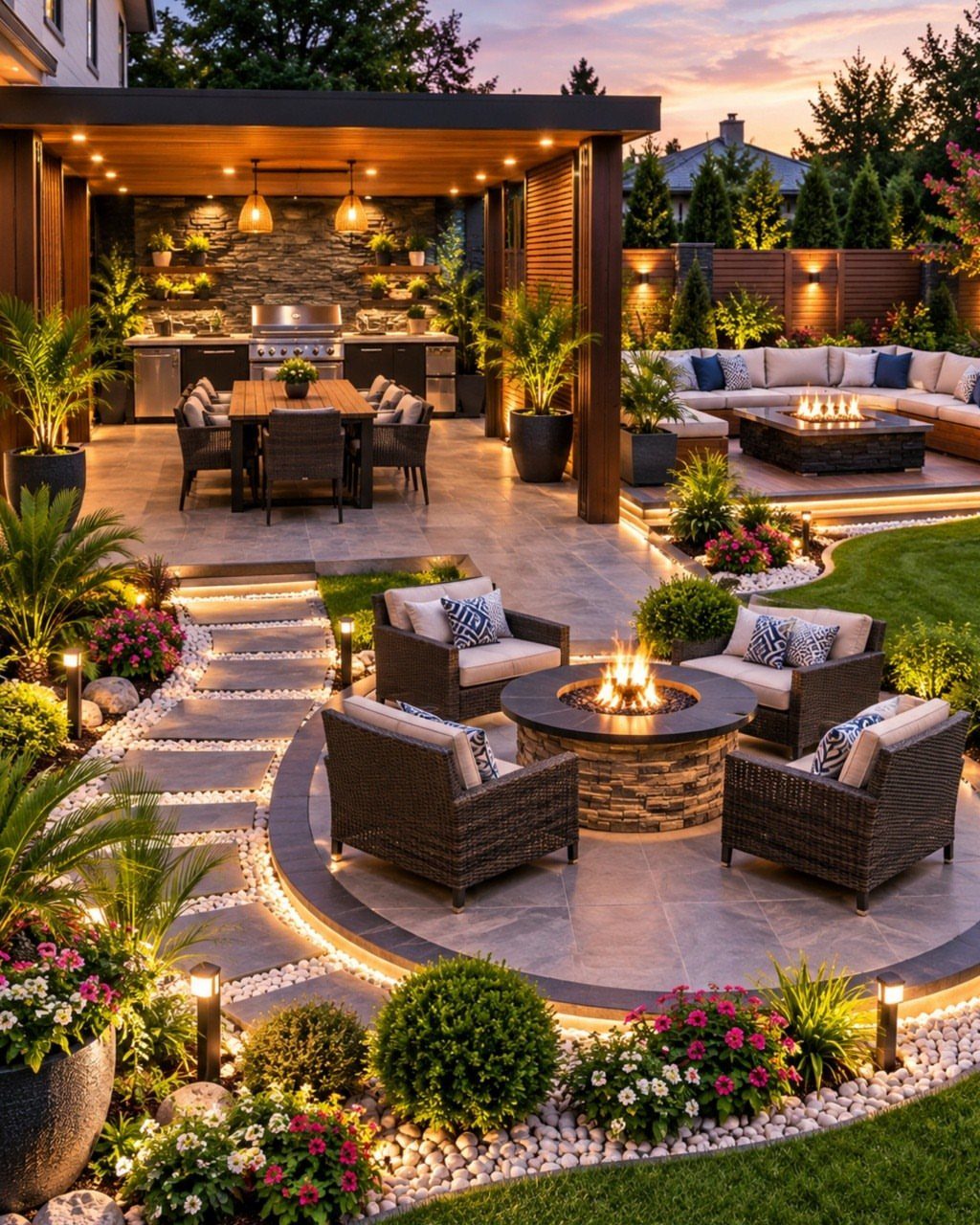
A built-in fire pit turns a patio into a gathering place that stretches past sunset. A circular stone shape seats a group without anyone staring straight into the flames.
I would build with heat-retaining stone or concrete block rated for fire, not salvage or river rock, which can trap moisture and split.
Check your municipality’s rules on open flame; some require a screen or limit burning dates. Gas lines are cleaner and instant, but a wood pit costs less to install and gives you the sound and smell.
I would place it well away from any overhang or combustible structure, and dig down for drainage gravel so water does not pool after rain.
15. Composite Cladding
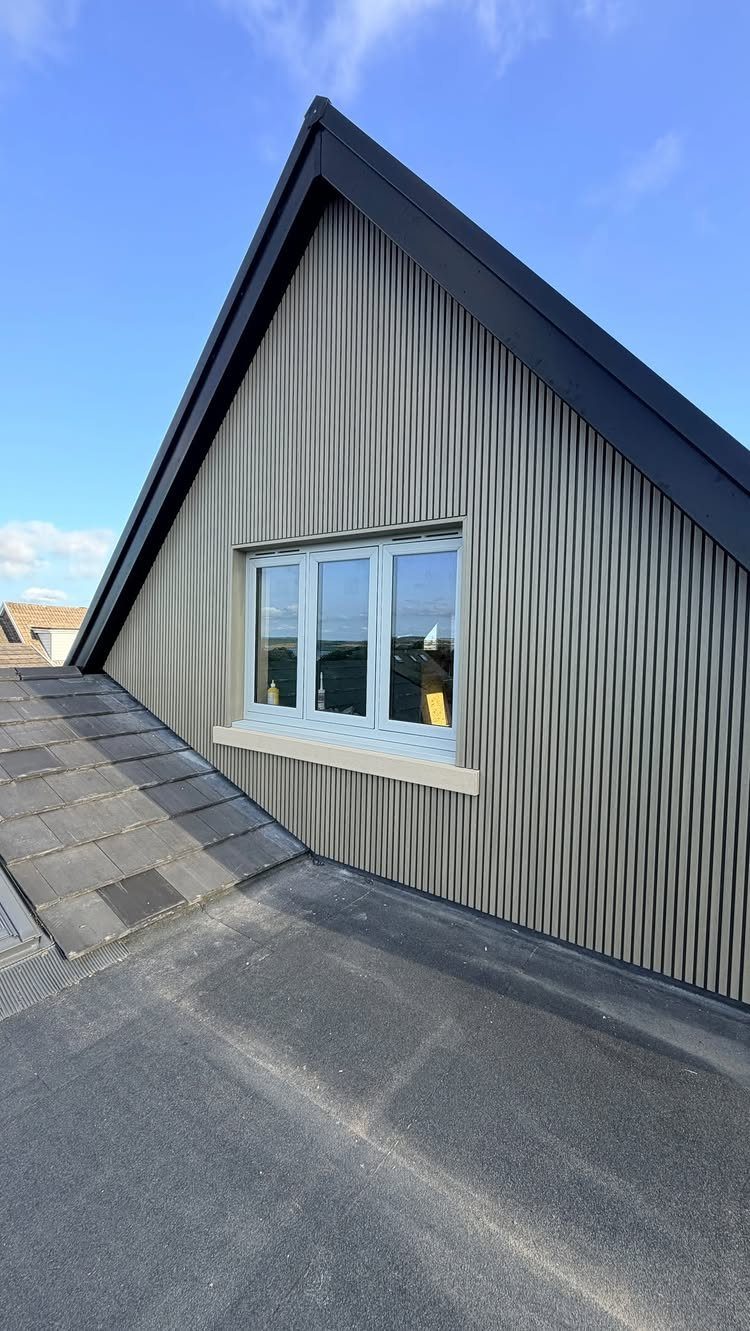
Vertical composite cladding on a gable reads as siding and sunshade at once, breaking up blank wall without the upkeep of wood slats.
Composite does not take stain the way timber does, so I would pick the finished color from the manufacturer and build the whole scheme around it.
I would flash the top cap properly or water runs behind the boards and finds your framing.
On anything above the first floor, I would hire the install; the wind load on a gable catches long boards in ways that square siding never sees.
Consider ROI for Renovations
Garage doors and siding sit at the top of the list for recouping costs.
A worn roof, new deck, or upgraded windows fall in the same tier; they fix what buyers see first and signal that everything behind the walls was cared for with the same attention.
I would not count on a full payback from any single project.
The return varies by neighborhood, and a market that values stone veneer may shrug at composite cladding. What holds true is that curb appeal projects pay better than backyard upgrades; the front of the house is what drives the offer.
If you are choosing between 2 projects, I would put money where the condition is worst. A failing roof kills a sale faster than a dated door ever will.
DIY Vs. Professional Help
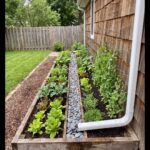
Some exterior work is within reach of a patient weekend warrior. Paint, planter beds, and mulch are obvious candidates; a vertical garden frame or simple gravel path can be owner-installed with rental tools and a helper.
I would draw the line at anything that affects weatherproofing or structural load. Flashing a gable cap, running a gas line, or extending a roofline wrong costs more to fix than the professional install would have.
The same holds for stone veneer that needs foundation reinforcement or composite cladding on a second story; wind load calculations are not a learn-as-you-go skill.
For projects in between, I would be honest about my own pace.
A deck I can frame in two weekends becomes four if rain intervenes, and lumber left bare warps. Sometimes hiring out is cheaper than the delay.
Plan for Seasonal Changes
Your climate dictates what lasts and what looks right year-round.
Dark paint on a south-facing wall reads richer in December but absorbs enough summer heat to bubble or fade faster; that sample square I mentioned should be watched through a full season, not a week.
Composite boards get hot underfoot, which matters more in Phoenix than Portland.
Stamped concrete sealant takes a beating from freeze-thaw cycles, and salt with plowing will strip the color faster than sun bleaching ever could; what looks right in shade can shift lighter, but winter wear is the real problem.
I would schedule any exterior work for the window when materials acclimate. Wood trim swells in humid August; paint skins over dew.
Roofing in January is harder on the crew and the shingles. Plan for the season your project finishes in, not the one you started it.
Frequently Asked Questions
What is the most expensive part of a house to renovate?
Kitchens and bathrooms eat the biggest budget indoors, but outside it is the roof, any new porch or deck, and a full siding swap that will empty your wallet fastest.
How to design your house exterior?
I would start by picking one focal element and making it deliberate rather than scattering ideas across every surface.
Stone on one chimney or entry column reads as intention; stone on every wall buries a modest facade. Tie the color story together, porch columns to window trim, so the whole thing looks planned rather than applied piece by piece.
What renovations actually increase home value?
A new garage door and fresh siding give the best shot at getting your money back, with roof, deck, and window work trailing just behind.