
These deck stain color ideas run from a single can of natural UV protectant to a multi-toned layout that needs two or three cans and a free afternoon to sequence.
What decides your pick is not the deck itself but what your house already wears: siding color, brick tone, and whether your yard sits in full sun or collects shade.
[link-whisper-related-posts]1. Contemporary Gray Stain
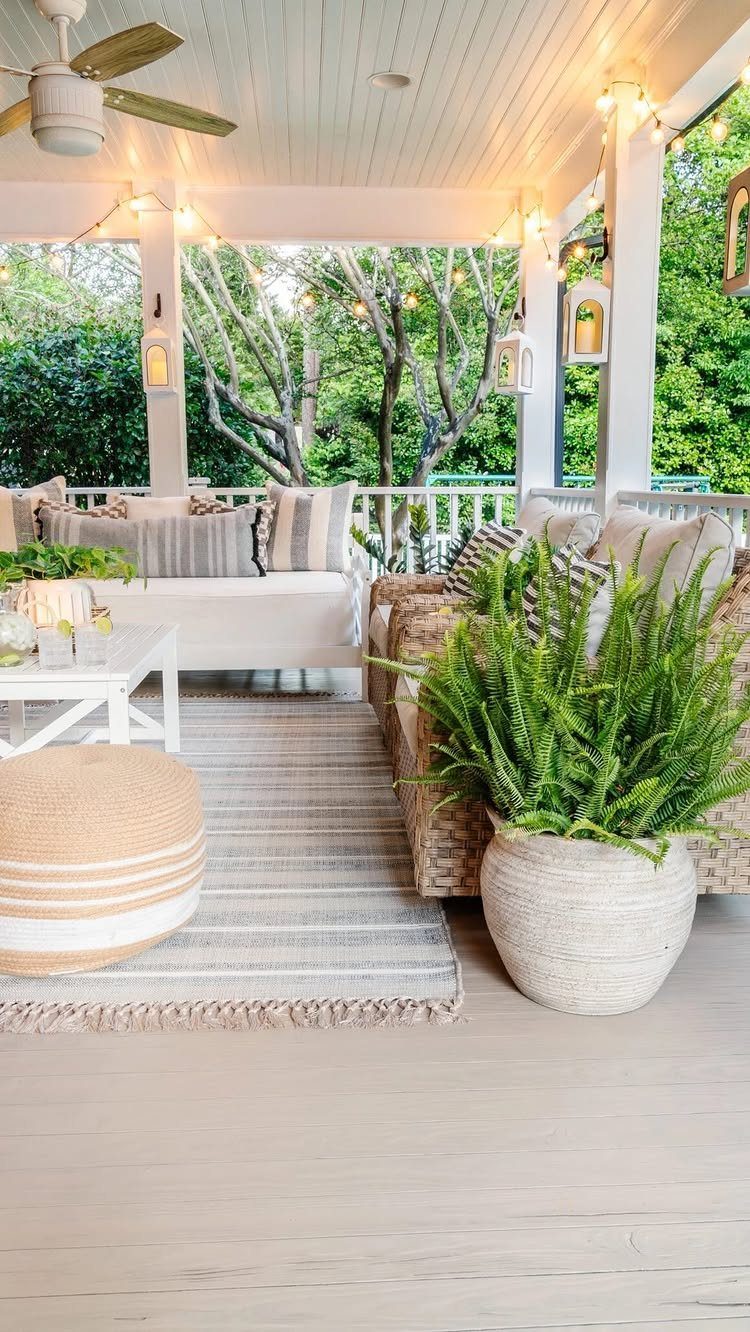
Gray stain reads as concrete or stone from a distance, which makes a wood deck feel built rather than added on.
I would check whether your siding already leans cool or warm before buying a can; a blue-gray against cream brick turns muddy, while a warm gray with brown undertones bridges the gap.
A quiet gray floor lets the furniture and pillows do the talking.
That is the trade-off. You lose wood warmth and gain a backdrop for color.
2. Brown Stains
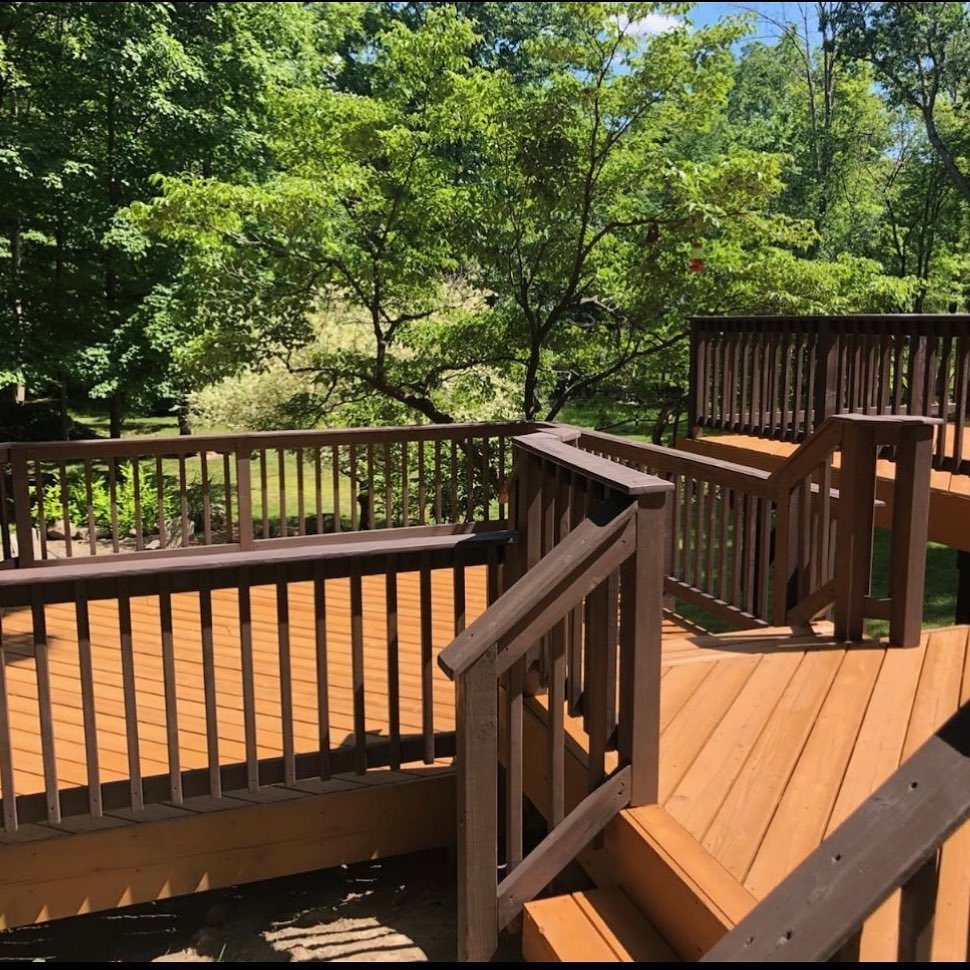
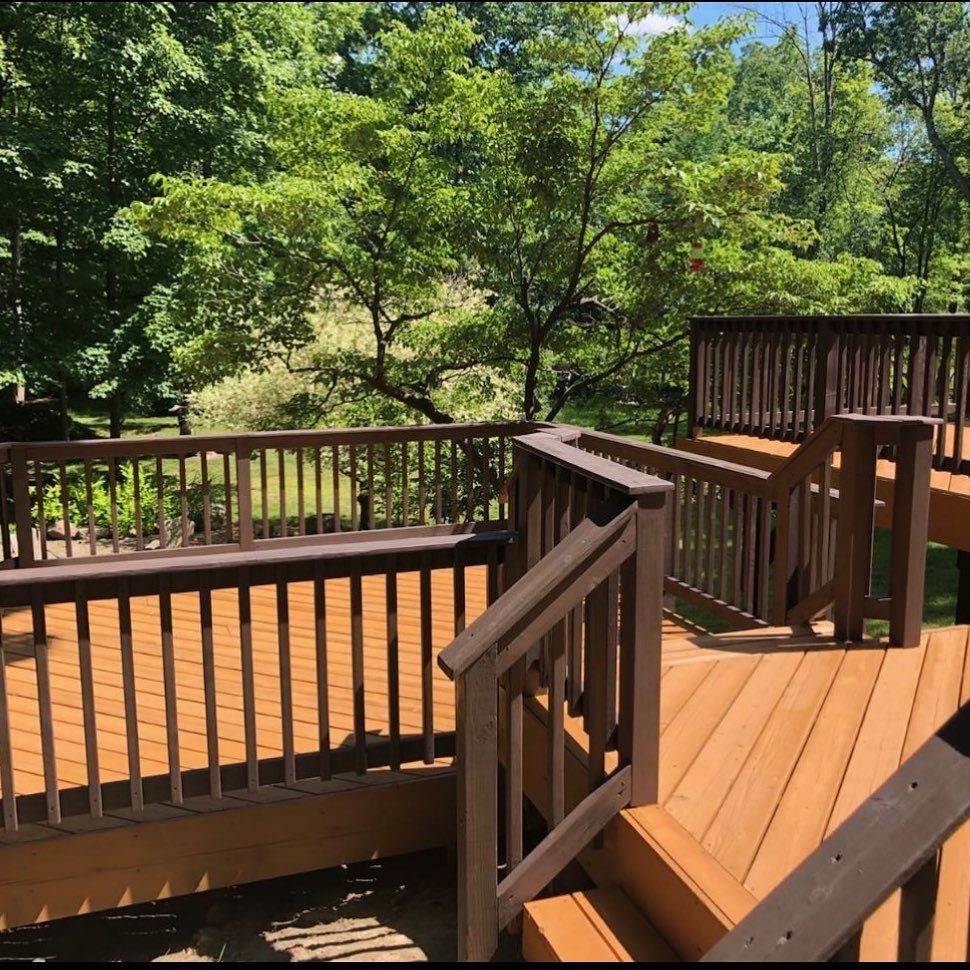
Two browns on one deck, light floor against dark rail, is the oldest trick for making a small yard feel layered. The eye reads the darker color as shadow and depth, so the space seems larger than it is.
I would not go more than 2 steps apart in tone or the contrast starts to look like a mistake instead of a choice.
Most big-box stains stock a "natural" and a "chocolate" in the same line that are formulated to layer this way. It suits any house that already has trim in 2 colors.
3. Natural Stains
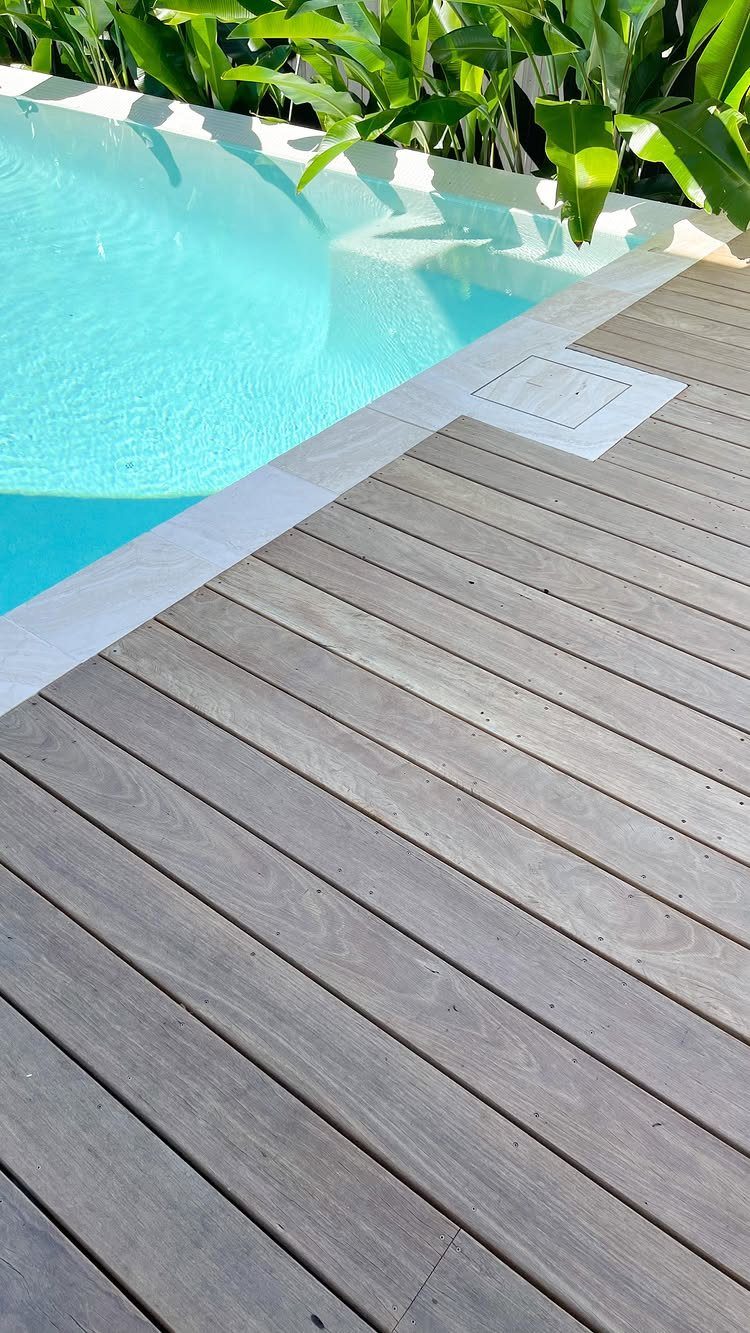
A natural stain is mostly UV protectant with enough pigment to keep the boards from going silver before their time.
Weathered is not failed; the boards have gone soft gray-brown while the grain still shows through. I would not use this on new pressure-treated lumber, which starts orange and needs a season or two to gray evenly on its own.
Better on cedar or already-aged pine where you are preserving a look that happened, not chasing one that has not arrived yet.
4. Solid Stains
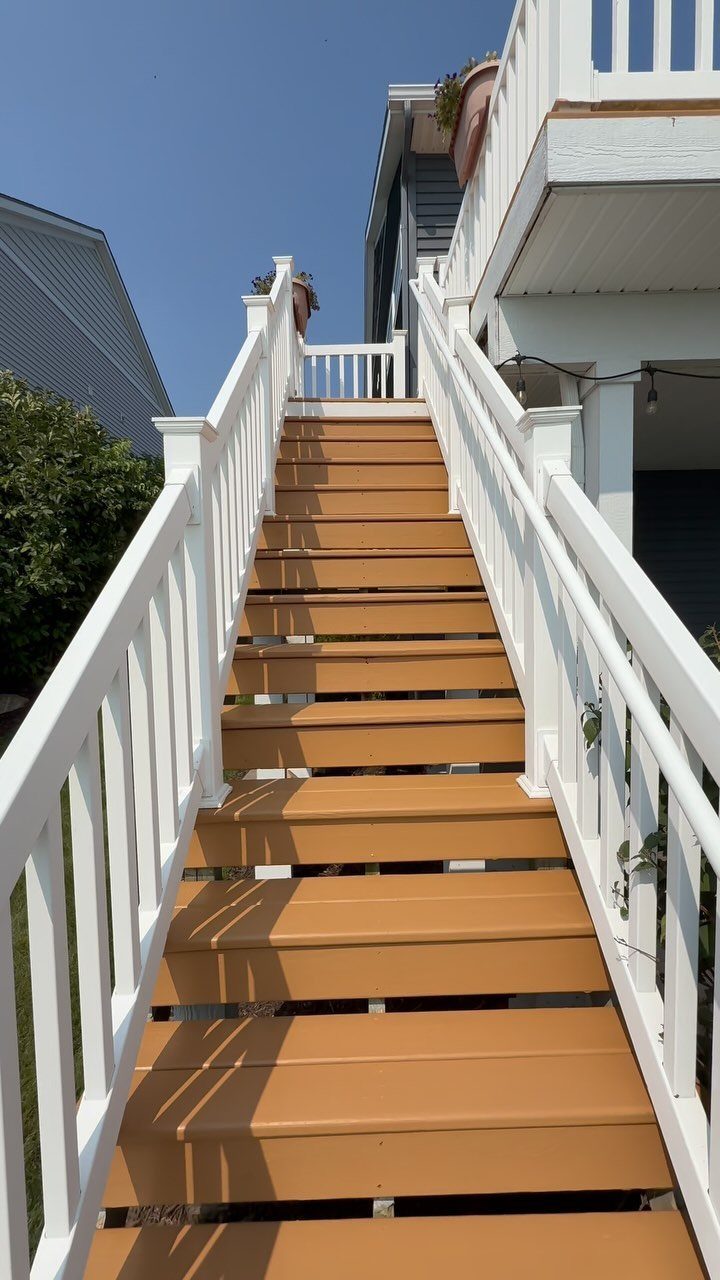
Solid stain is paint that lets a little texture peek through, and stairs show why you would want it: old wood, probably replaced in sections, now reads as one uniform surface.
I would use this where boards are mismatched or where the previous coating failed and left blotches.
The downside is maintenance. Once you go solid, you are committed; stripping back to bare wood is a weekend you will not get back, and re-coating means scuffing every square foot first.
Semi-Transparent stain allows most of the grain pattern and texture of the wood to show through. It’s available in 75 colors.

ULTIMATE PROTECTION: Solid acrylic urethane stain formulated to deliver protection against heavy foot traffic and extreme weather

Model color has been formulated with permanent pigments for fine arts; all colors are completely lightfast and opaque
5. Red Stains
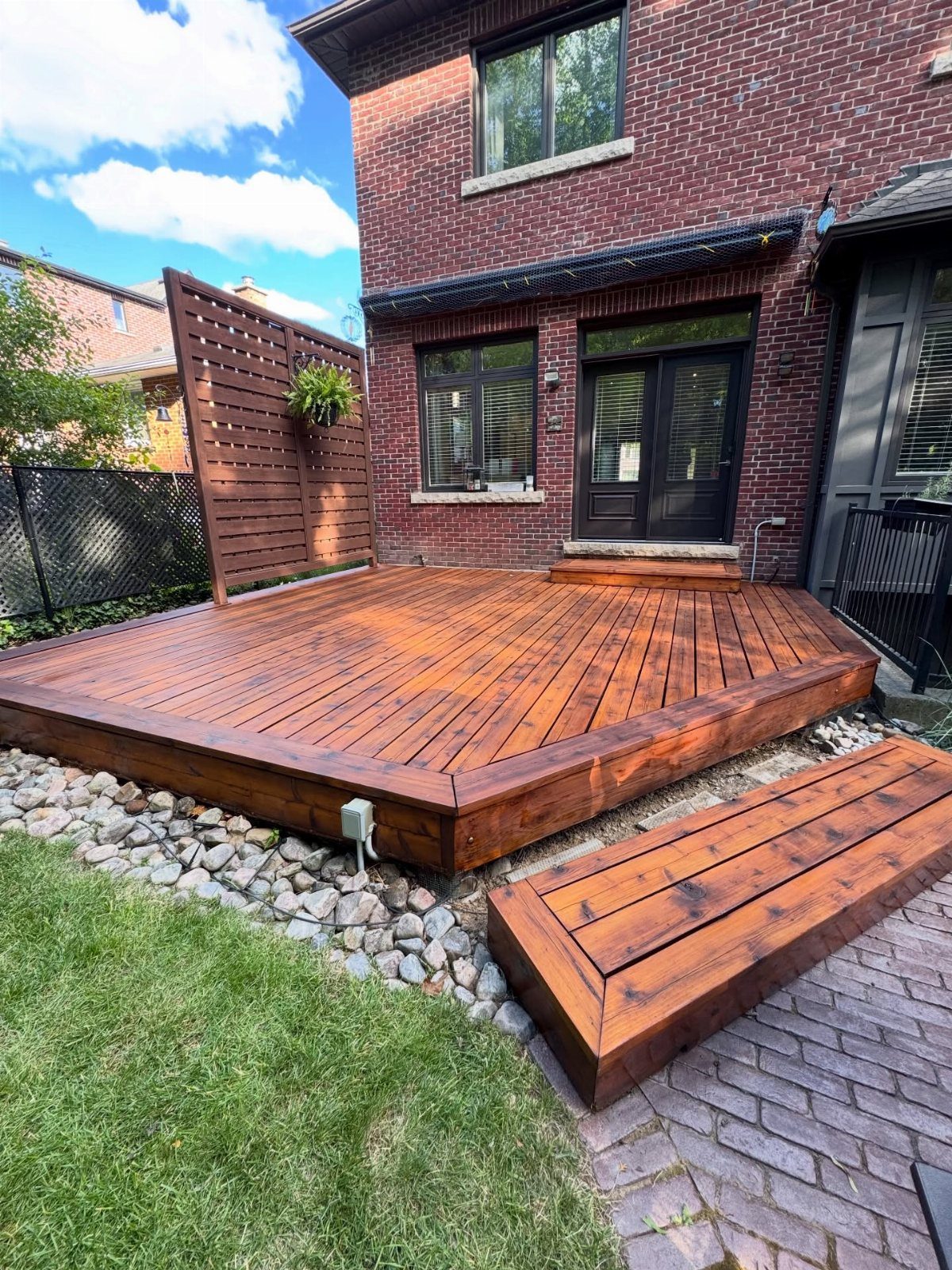
Red stain against red brick sounds like too much until you see it done, and then it makes sense: the deck becomes a deliberate extension of the house rather than a floating platform.
I would keep the red to the floor and use a cleaner neutral on railings and bench slats, as the photo does, or the whole thing starts to pulse.
This is not a color for shaded yards; it needs sun to read as warm instead of dark. Best on traditional exteriors where a bold choice still feels grounded.
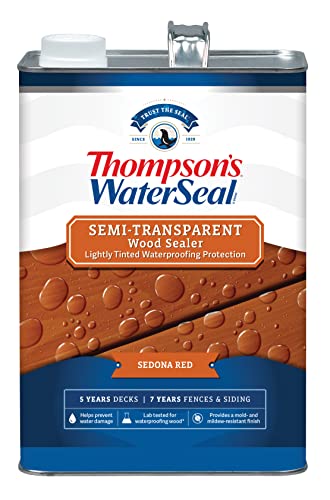
WATERPROOFING STAIN – Bring out the beauty of your outdoor wood with Thompson’s WaterSeal Semi-Transparent Waterproofing Wood Stain. Along with adding lightly tinted color, it’s a deck sealer that prevents water damage to help you maintain your outdoor living spaces.

MADE BETTER: Americrete Concrete Stains are user-friendly water-based acrylic decorative coloring that penetrates deeper to create the best, longest-lasting stain possible. Do the job right the first time, with Americrete.

RICH EVEN COLOR – Minwax Wood Finish is a deep penetrating, oil-based wood stain that provides beautiful color and enhances the natural wood grain in one coat. It’s perfect for interior staining projects such as wood furniture, cabinets, doors and more.
6. Rustic Cedar Stain
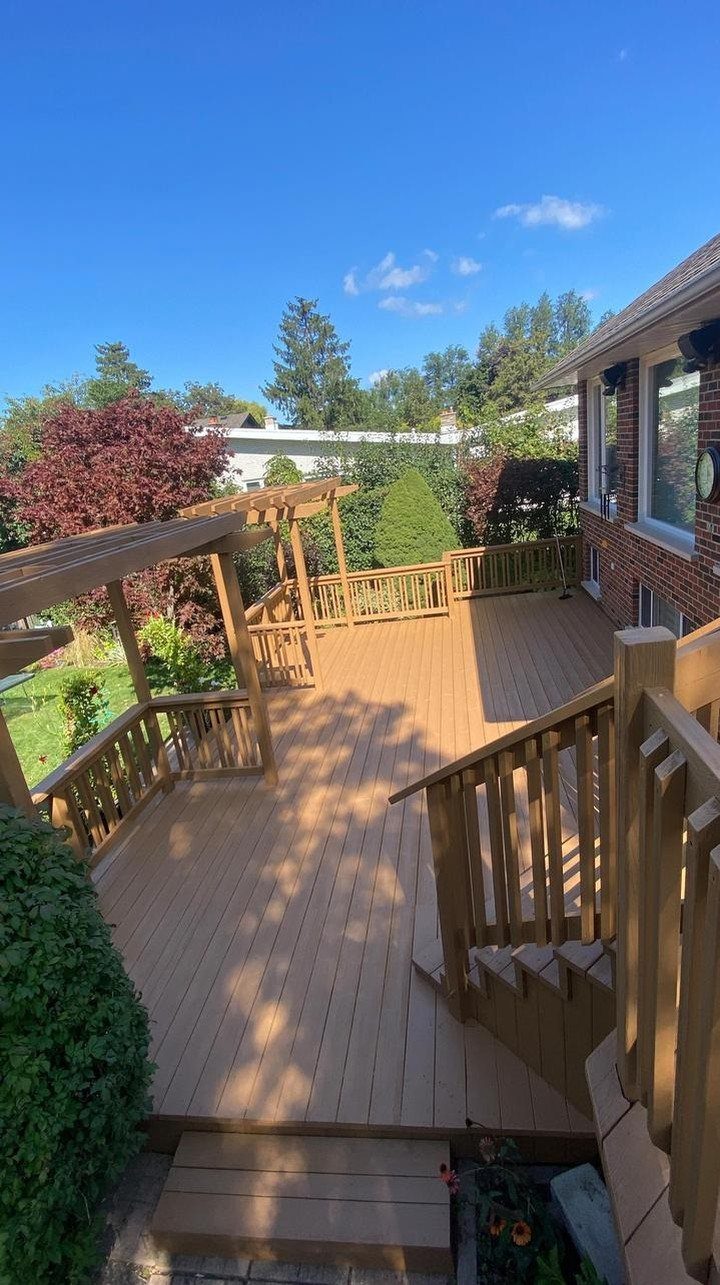
Cedar stain is what people picture when they say "wood deck," and that is its strength and its problem: it is familiar enough to disappear.
A pergola adds vertical interest so the color is not just a flat wash of warm brown.
I would spend the extra on a cedar-tone formula with some red in it rather than the yellow-brown that reads as cheap contractor grade. The difference is a few dollars a gallon and years of looking intentional instead of defaulted.

Maximum-pigmented formula to withstand heavy foot traffic

ENAMEL FLOOR PAINT: Provide your floors with an extremely durable and long-lasting finish using California Paint ALLFLOR Porch, Patio and Floor Enamel Paint.

TESTER SIZE | Perfect for choosing the right color for your project; This is not a concentrate, and is packaged at the standard dilution
7. Coastal Whitewash Stain
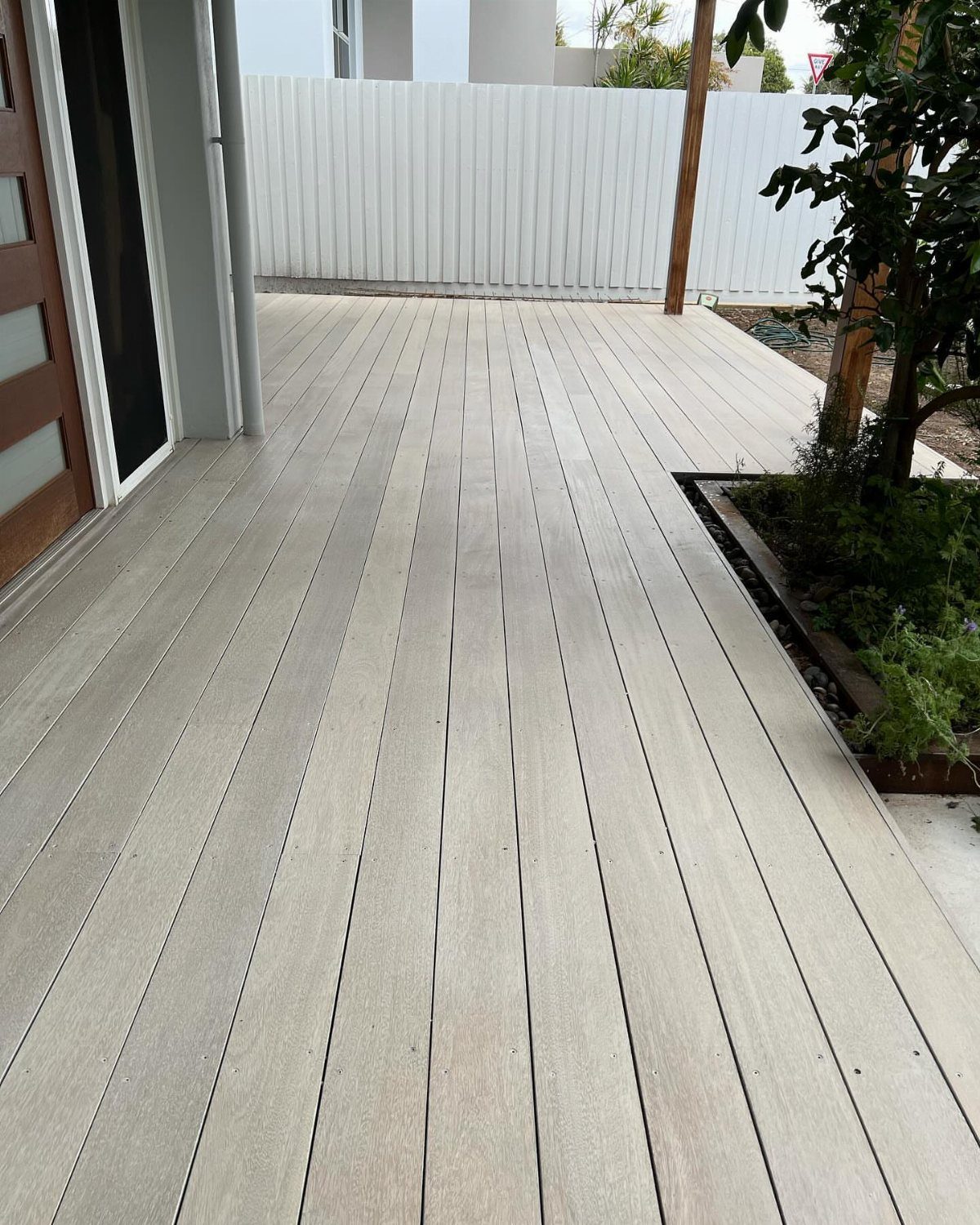
Whitewash is transparent enough that the grain still whispers through, so it suits cedar or fir that has something to show.
A solid-white fence nearby keeps the deck from reading as dirty concrete; without that echo, the color can look like unfinished primer.
I would test it on a single board and let it dry fully before committing, since the wet color lies lighter than it dries.
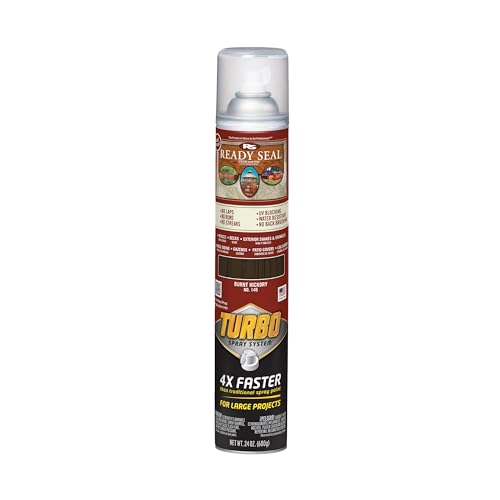
NO LAPS, RUNS OR STREAKS: Goof Proof, oil-based formula now equipped with the powerful Turbo Spray System; ideal for exterior wood projects

Wood Stain & Sealer in One: This wood stain eliminates the need for separate primer and top coat— it’s all built right in! It deeply penetrates to nourish wood from within while forming a sealed protective film on the surface, boosting hardness to resist everyday scuffs. Perfect for DIYers to restore a finish for wood with zero hassle.
8. Rich Dark Walnut Stain
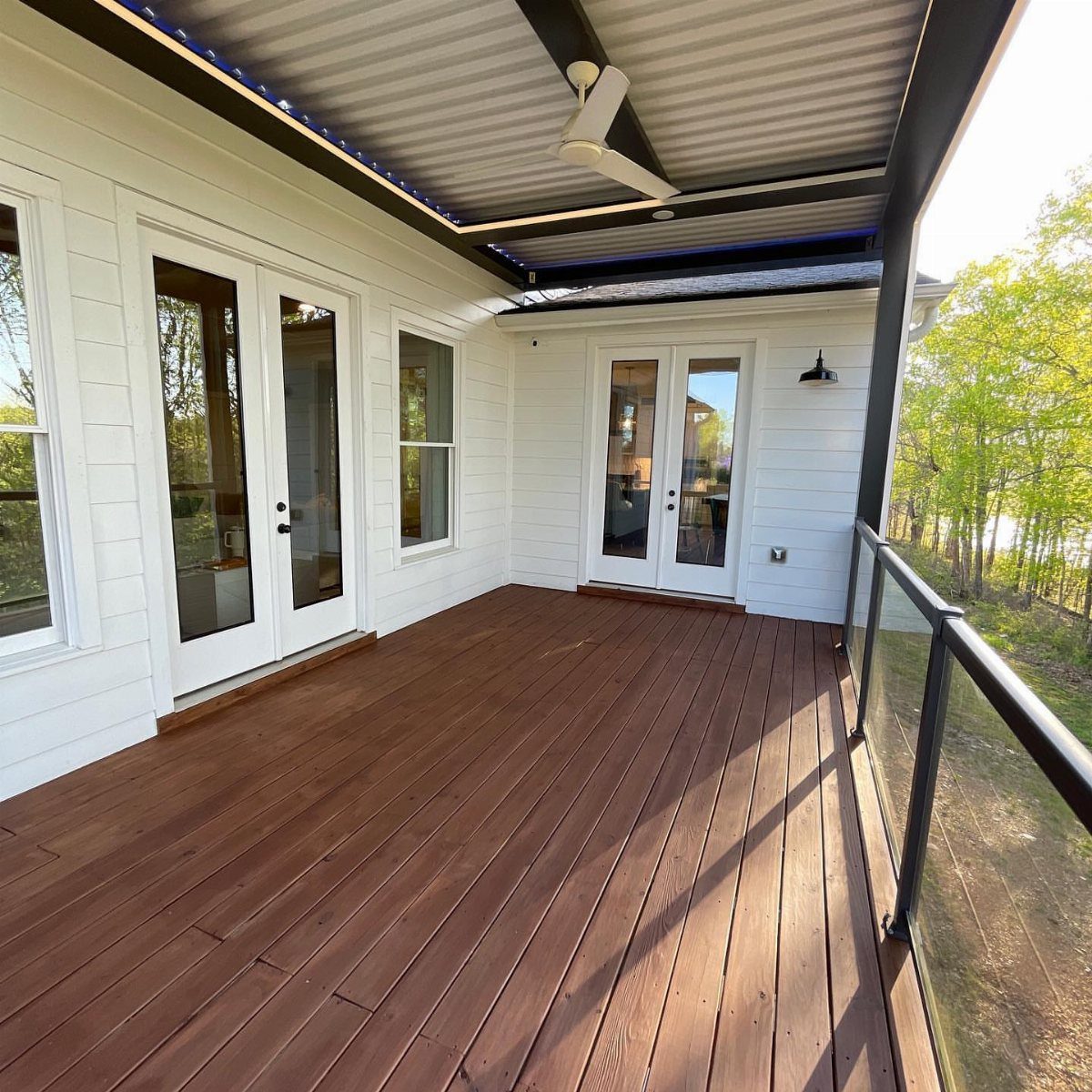
Dark walnut reads as furniture-grade from the street, especially against white siding and black metal railings.
Heat is the real downside: these boards run 10 to 15 degrees hotter underfoot than lighter stains, so south-facing decks in Arizona or Texas make you pay for the drama.
I would reserve this for covered or partly shaded spaces, and I would use it on railings and verticals even where the floor needs to stay cooler. A ceiling fan is not decorative on a dark deck; moving air matters.
9. Warm Honey Stain
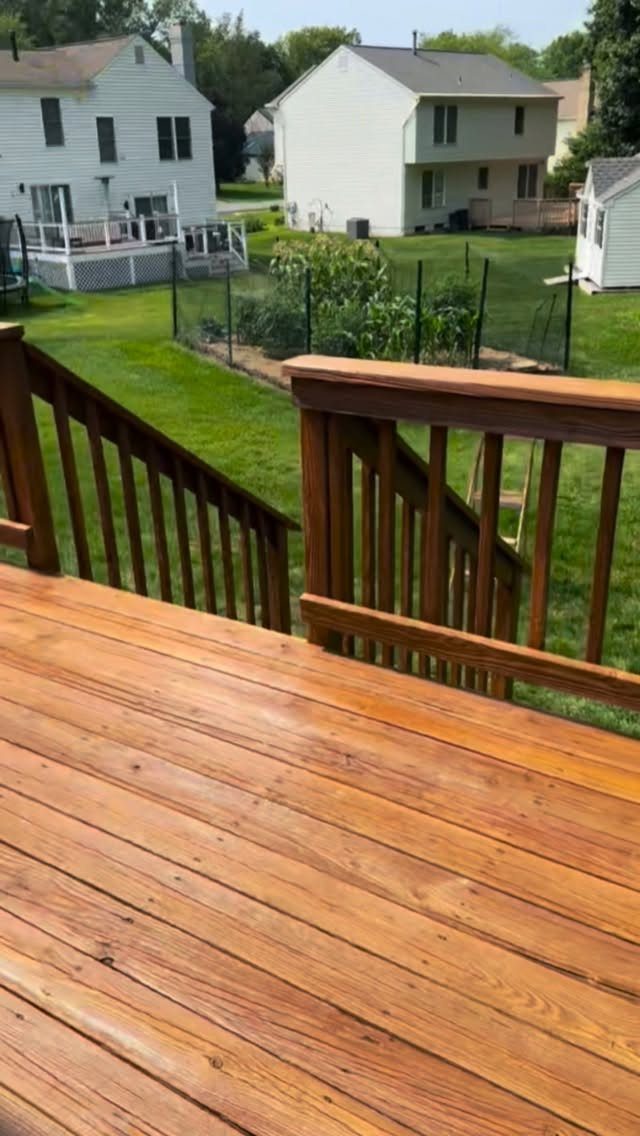
Honey stain flatters wood grain the way afternoon light does, which makes it forgiving on pressure-treated pine that has not aged out of its green tint yet.
Floor and railing both done the same works when the yard beyond is green and busy; too many competing colors and the deck loses its anchor.
I would check the undertone against your siding in direct sun, since honey can shift orange where gray would shift blue.
10. Multi-Toned Wood Stain
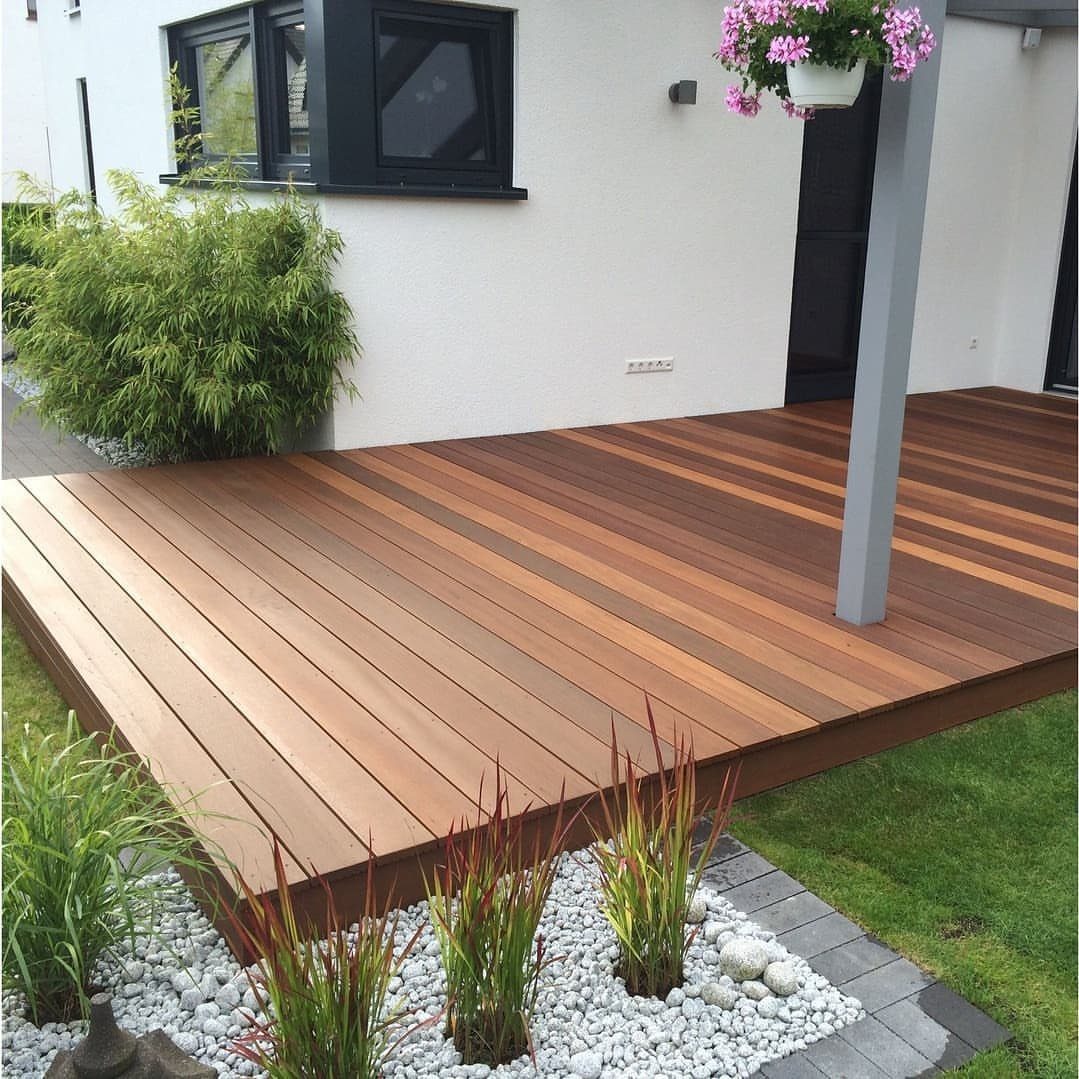
Alternating two or three stain colors plank by plank breaks up a long, flat deck the way a striped rug breaks up a room.
Browns and tans in a random mix, not a pattern, keep it from reading as a deck trying to be a chessboard.
I would lay out the sequence on the ground before opening the second can; once stain soaks in, blending a line you regret means sanding back to bare wood.
This eats time, not money, since you are buying the same stain line in different shades.
11. Light Taupe Stain
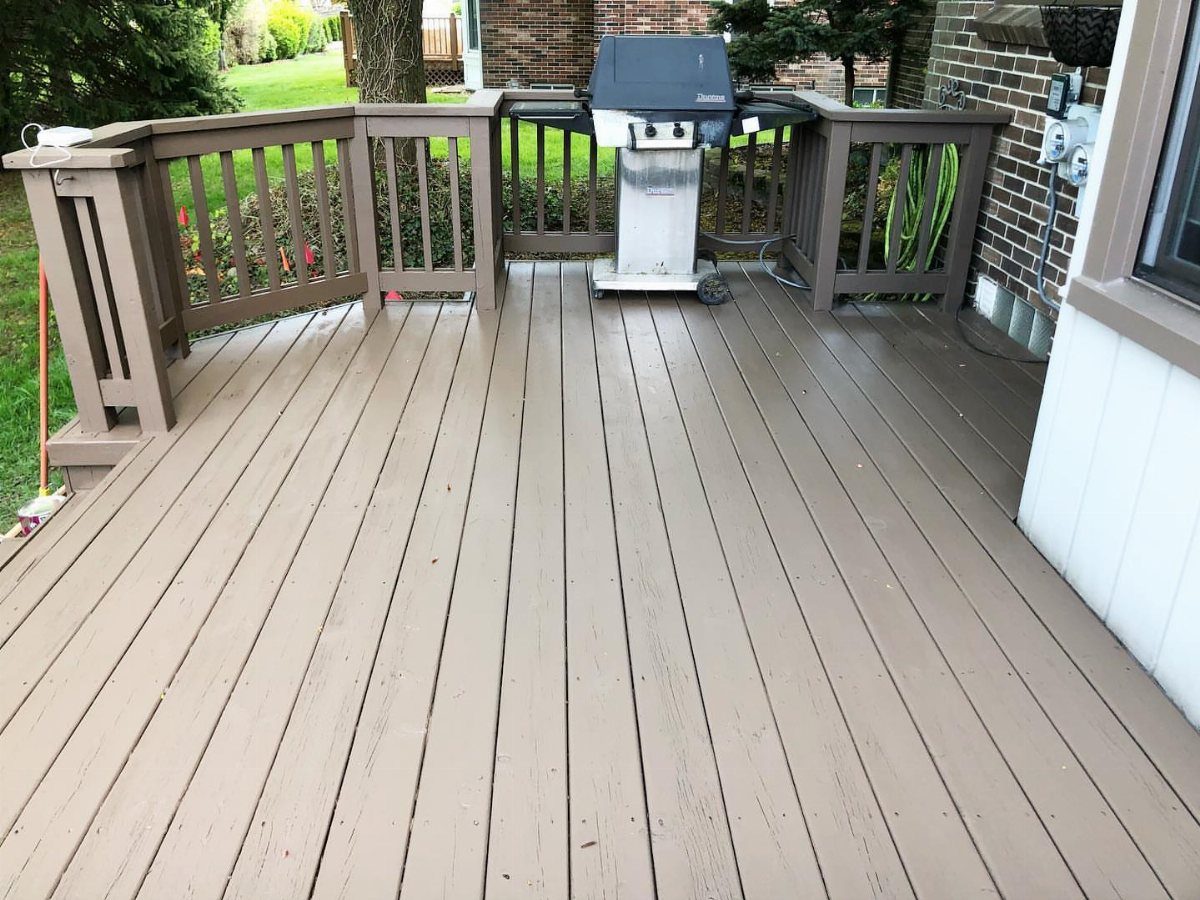
Taupe is gray with enough brown to stay warm, which lets it bridge brick and siding in a way pure gray cannot.
Solid coverage means the deck will read as painted within a few seasons, and maintenance follows the same rules as solid stain: scuff and recoat, or strip and start over.
I would use this where the house already has a quiet palette and the grill, not the deck, is meant to be the focal point. A single accent color in cushions or a planter is all this ground needs.
12. Charcoal Black Stain
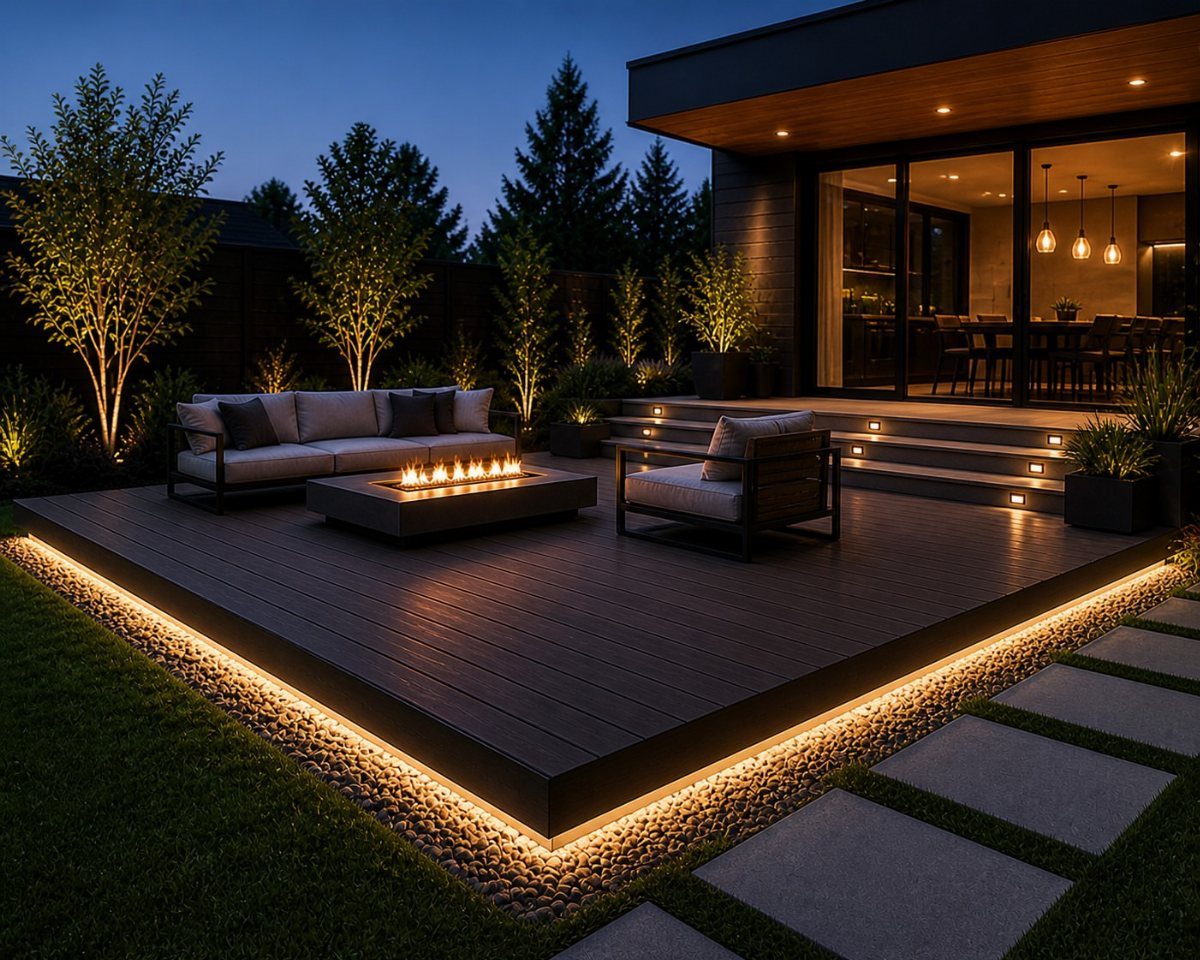
Charcoal stain is the floor of a room that happens to be outside, and lighting does real work: without those strips, the space would disappear once the sun drops.
I would plan the electrical before staining, since conduit on a dark deck shows like a scar. The furniture here is low and modern, which suits the color; traditional Adirondack chairs would look like props from another set.
This is a night deck, built for the hours after work, and the stain choice only makes sense if you will use it then.
Choosing a Stain That Works with Your Space
Your house is the largest color mass in view, so it should drive the decision. The color wheel helps here: colors next to your house’s tone give a softer effect, while opposites create stronger contrast.
Your landscape matters too.
Think about how you will use the space.
Sample Before You Decide
The same stain shifts on pine versus cedar, on rough wood versus sanded, and the wet shade always reads lighter than what you’ll live with once it cures.
I put samples on the actual boards I’m treating, or on scraps of the same species if I have them, then I check how they look at 7 AM, at noon, and at dusk before I buy the gallon.
Sampling also helps compare opacities: translucent, semi-transparent, or solid finishes read very differently once applied.
I test after the surface is clean, since grime and mildew left from last season will flatten the color and lie to you about what you’re getting.
I wait until the sample area is completely dry before I decide, rushing that step has cost me more than once.
Frequently Asked Questions
What are the best stain colors for decks?
Brown stains remain the most versatile, gray has become the fastest-growing choice for its ability to read as built-in stone or concrete, and red works when you want the deck to feel like a deliberate extension of brick siding.
I would pick based on what your house already does: warm or cool siding, trim colors, and how much sun hits the boards.
Should your deck be lighter or darker than your house?
It should relate to your house, not fight it. Neighboring tones on the wheel sit gentler against your siding; opposites jump harder and demand attention.
A light floor against a darker rail borrows from interior design and makes the yard feel deeper; the reverse, dark floor and light rail, grounds the space but reads heavier.
Heat matters on sun-soaked boards. Dark walnut holds an extra 10 to 15 degrees, enough to make a south-facing deck in Arizona or Texas something I’d avoid walking barefoot on.
What is the most popular deck stain color in 2026?
Gray and driftwood stains are picking up speed right now because they play nice with almost any house color, and they forgive the dust that gathers between hose-downs.
Brown stains still lead in total numbers, with warm browns and greige holding strong.
I would use a trend as a starting point and test on actual boards, since the same gray shifts blue or green depending on the wood species and what your siding does next to it.