These 7 pallet decks range from a single afternoon on concrete blocks to a full raised build with frost footings and step lighting, so the deciding factor is how permanent you need it to be.
A sitting area you can break down in fall asks nothing of you but sanding and spare time; a raised deck asks for joist hangers, ledger boards, and code checks first.
The sister joist is what keeps a pallet deck walkable after a few months: a 2×4 screwed to the underside frame to stiffen boards that were never meant to span that far on their own.
[link-whisper-related-posts]1. Pallet Decking with Concrete Blocks
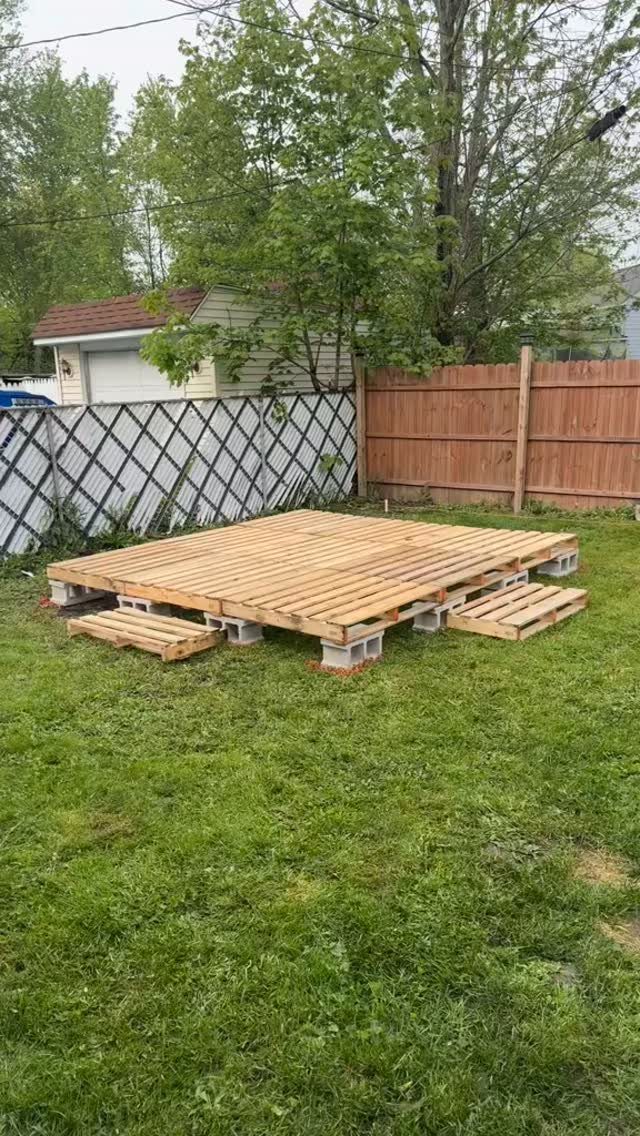
Concrete blocks buy you time and flexibility. You can level each one with a scrap of wood and a spirit level, then set pallets across without driving a single post.
I would check local code first; some towns call this temporary, some call it a structure, and the difference is whether you need a permit.
Concrete blocks under the pallet corners and mid-span are the minimum support for a deck you actually walk on.
Grass underneath will die and flatten, so expect to rake out thatch or lay landscape fabric first if the look matters to you.

Wet-Area Ready, No Sealing Required: Pre-finished with cured linseed oil — a natural plant-based wood finish — these tiles install straight from the box — no sealant, no prep, no waiting. Raised base channels water underneath for patios, balconies, pool surrounds, and shower floors

Wet-Area Ready, No Sealing Required: Pre-finished with cured linseed oil — a natural plant-based wood finish — these tiles install straight from the box — no sealant, no prep, no waiting. Raised base channels water underneath for patios, balconies, pool surrounds, and shower floors

Wet-Area Ready, No Sealing Required: Pre-finished with cured linseed oil — a natural plant-based wood finish — these tiles install straight from the box — no sealant, no prep, no waiting. Raised base channels water underneath for patios, balconies, pool surrounds, and shower floors
2. Simple Pallet Deck for Sitting Area
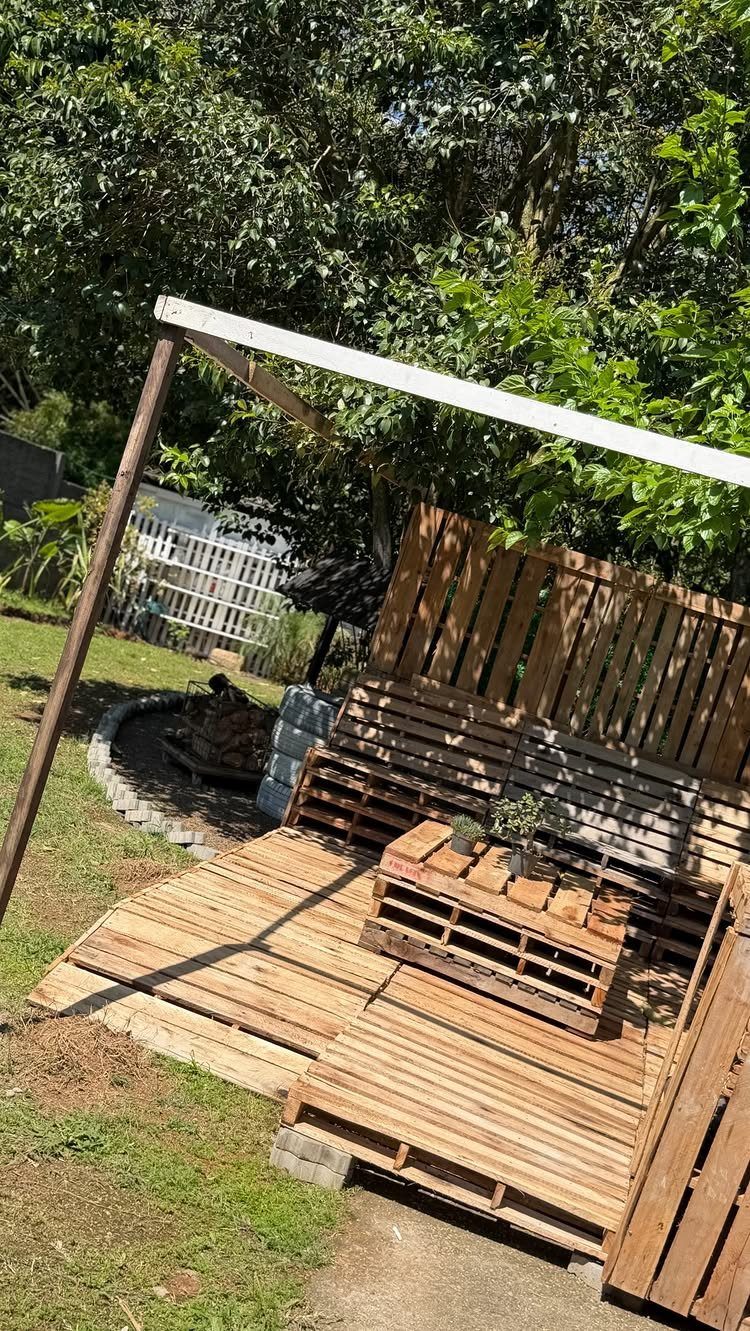
A sitting area needs less engineering than a deck you dine on. I would spend serious time sanding; pallet wood splinters, and gloves are not enough when shorts season hits.
The privacy screens are a smart add-on if your neighbor’s window lines up with your lawn. What I like about this version is that it moves: take it apart in fall and the yard goes back to grass.

Our complete self-leveling concrete tool kit is designed for professional contractors and DIY enthusiasts, covering every step of concrete, cement, and epoxy floor leveling projects. This heavy-duty set includes premium spiked rollers for air bubble removal, a durable floor squeegee for smooth material spreading, ergonomic spike shoes for walking on wet epoxy, and a convenient canvas storage bag for easy organization and portability. Engineered to deliver a perfectly flat, bubble-free finish on garage floors, basements, warehouses, and commercial spaces, it saves you time and labor on every job.

QUALITY MATERIAL: Made from solid pine, each masonry string line block is sanded smooth and built tough. It resists wear and handles tough conditions, perfect for building concrete block walls and all types of masonry

Build your own Concrete Block Making Machine with detailed, step-by-step plans.
3. Raised Pallet Deck
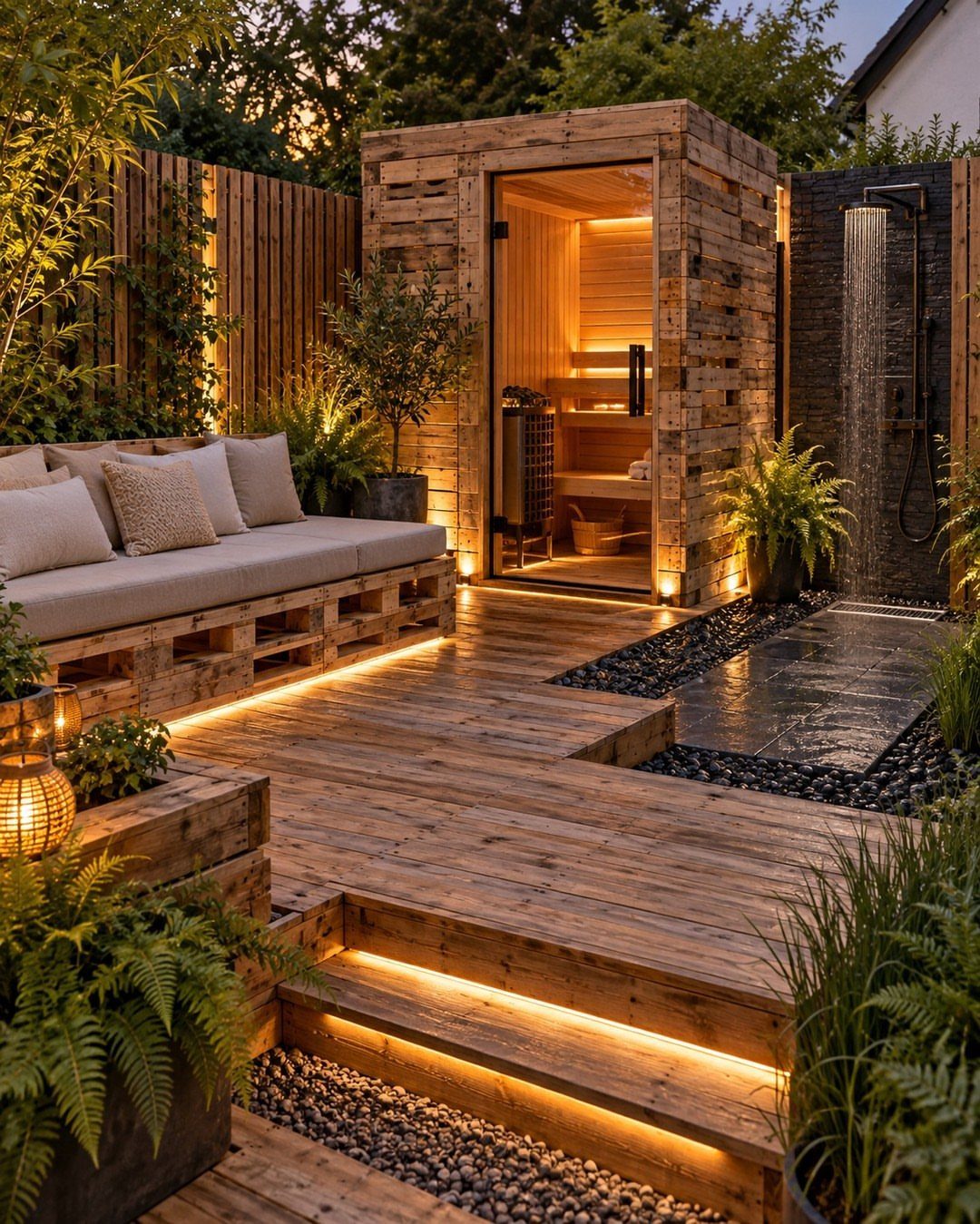
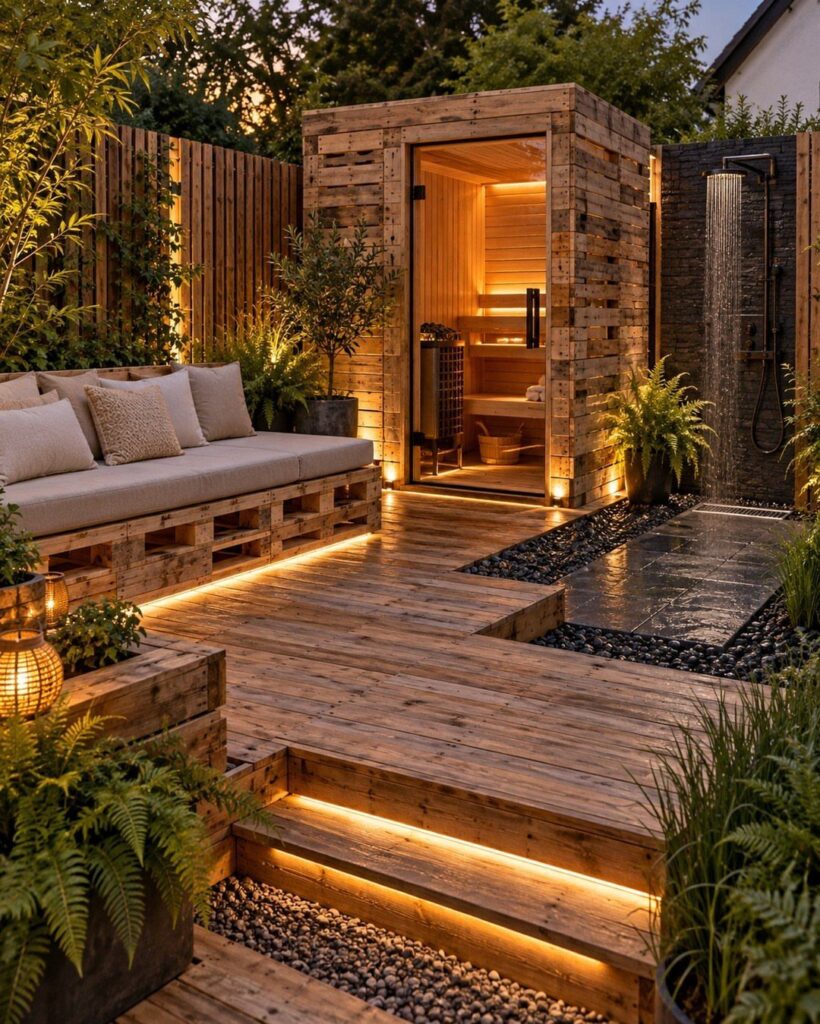
Height changes everything. A raised deck needs joist hangers, ledger boards, and footings that reach below your frost line; none of that is visible here, and I would not skip it.
The lighting in the steps is the detail that makes this work after dark, but run your wiring before you lay the last pallet or you will be drilling sideways through corners.
This is the most ambitious build on the list, and I think it suits someone who has already built a ground-level version and knows where the wobble comes from.
The sauna and shower sit beside it, not on it, which tells me the load is thought through.

Upgrade iCover Privacy Screen For Fence: Our privacy screen is made of heavy-duty knitted net, measuring 4 ft high by 50 ft long. It is suitable for fences with a height of 4 ft or slightly higher. Please accurately measure your fence before purchase

Premium Quality: The UPGRADE privacy screen for fences is made from 170 GSM non-recycled High-Density Polyethylene (HDPE). This ensures lasting durability, reliable privacy protection, and excellent weather resistance. A high-density composition makes it a dependable solution for outdoor privacy needs.

High Quality Material and Construction: Shade&Beyond privacy screen is crafted from 170 gsm UV protected NON-RECYCLED HDPE fabric; featuring durable brass grommets on each side for secure installation
4. Covered Pallet Deck with Pergola
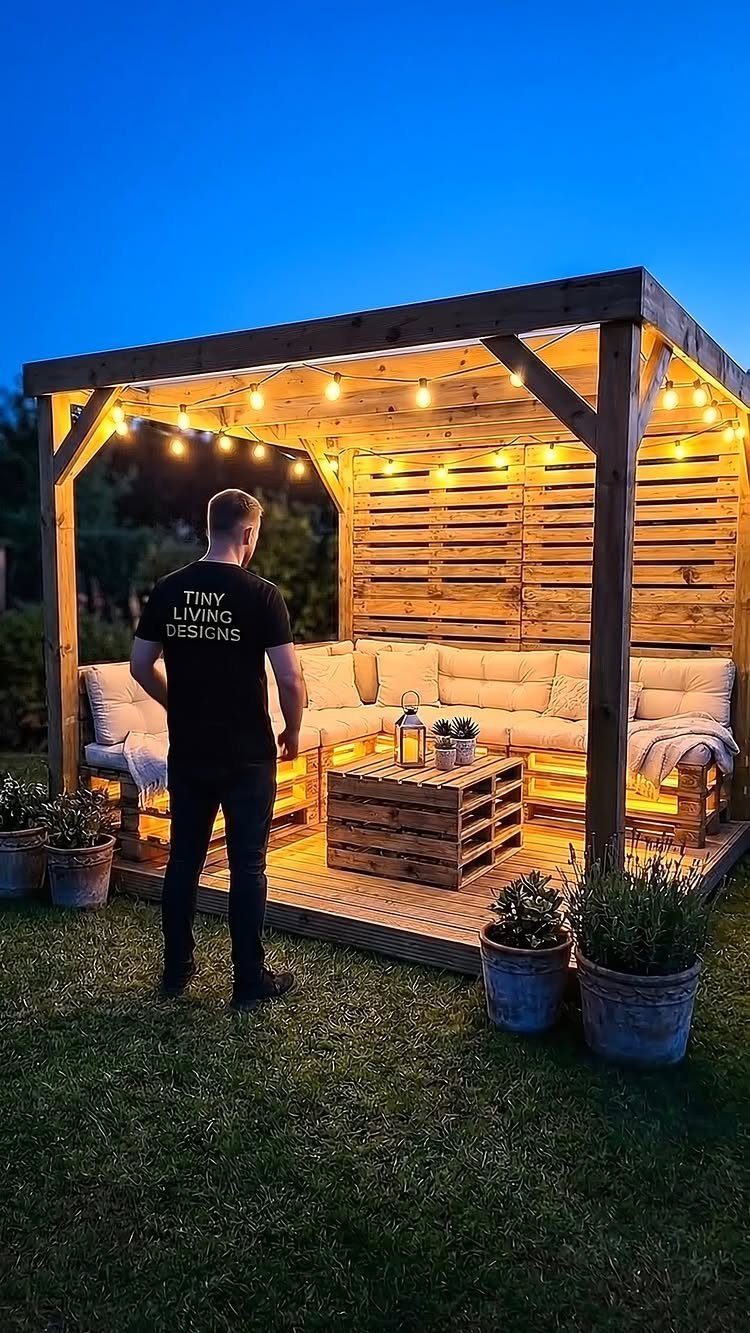
A pergola frame built from pallets means notching 4x4s into 4x4s, which is harder than it looks because pallet wood is rarely straight.
I would buy new posts for the verticals and use pallet lumber only for the roof slats and furniture; the structure above your head is not where I gamble on cracked oak.
String lights warm the whole thing up, but plan your outlet or solar panel before the roof goes on. The built-in sofas save you from buying outdoor seating, though I would still budget for cushions that can handle rain.

Enhanced Joint Integrity: enhance the structural integrity of your projects with our galvanized framing angles; These angles not only reinforce joints for stronger, straighter corners but also adapt to various sizes and thicknesses, suitable for light-duty to medium-duty tasks from light-duty jobs to hefty structural tasks

Professional Design: Specialized joist hanger tool engineered for precise installation of 2x4 joist hangers, 2x6 joist hangers, and 2x8 joist hangers; Compatible with standard joist hanger nailers for efficient deck building

【Premium Quality Materials】Fashioned from galvanized steel, each joist hanger demonstrates outstanding durability against corrosion and rust, ensuring a robust and enduring connection between the joist and header
5. Stained Pallet Grid Deck
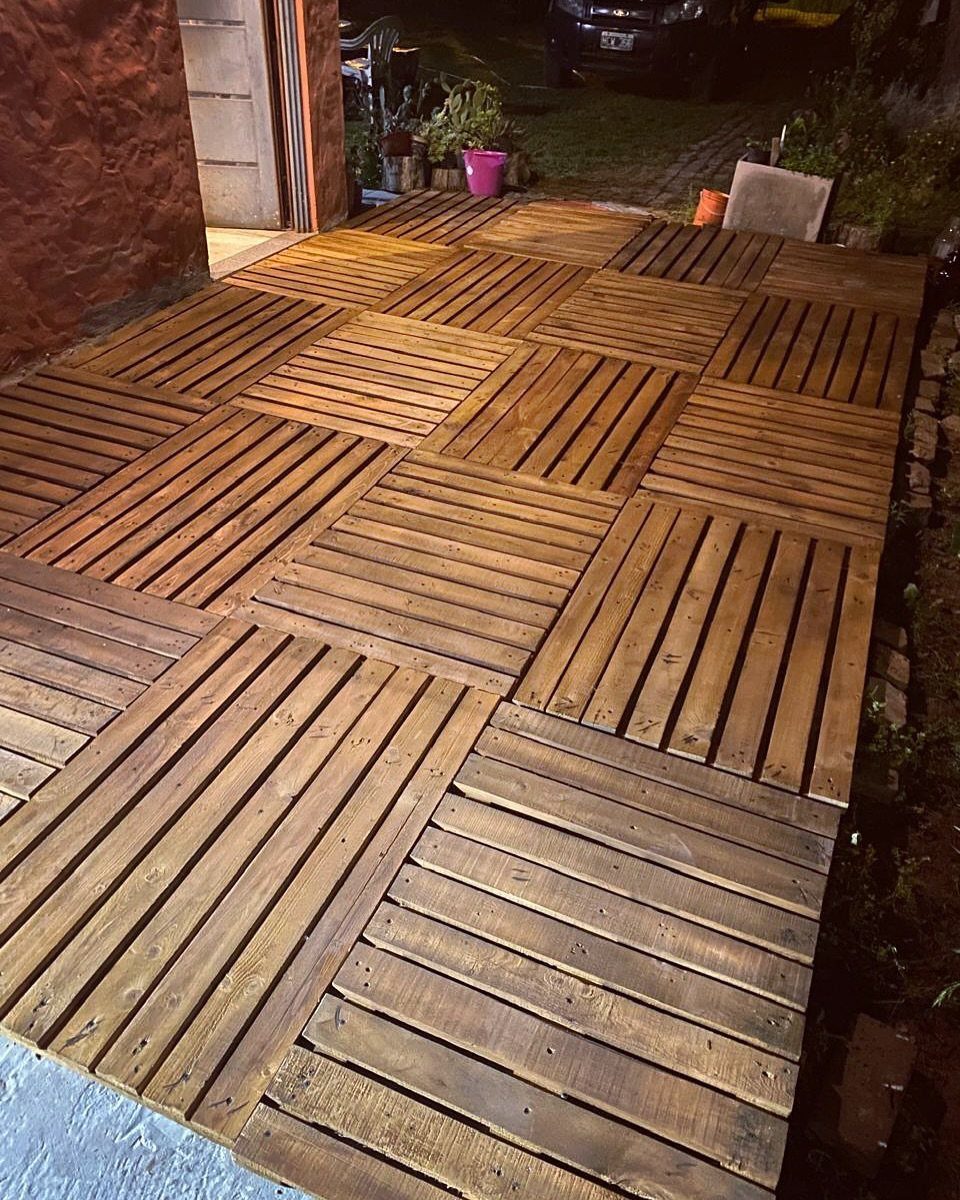
The grid pattern here is parquet, pallets turned square to each other so the grain runs alternating directions.
That hides the gaps between pallets better than running them all one way, and it looks intentional from the sidewalk. I would stain before assembly; brushing between slats after the fact takes far longer and never reaches the edges.
A dark brown like this one reads as deck, not as shipping castoff, which I think matters if you are trying to match a house with real siding.
Ground level means no railings in most codes, but check your local height limit; two and a half feet is common.

【High Bright &More Safe】Bright warm white LED deck lighting brings an impressive starry effect, making you feel sweet and comfortable in your house. Adding the black protective shell for embedded installation on the floor/stone stairs will make the LED deck lights kit safer.

【Light Sensor & Timer Outdoor Stair Lights】Built-in dusk-to-dawn sensor turns your low voltage deck lighting on at dusk and off at dawn automatically. Set the auto-off timer from 2 to 12 hours to match your schedule. No daily switching required.

【30 Degree Tilt on LED Board】The 1 Inch Recessed Step Light is a clean, modern lighting solution for stair and deck lighting applications, with no unwanted glare. A 30° tilt to the internal LED board creates a natural downward beam that eliminates the need for a visor and allows for a sleek, flat design.
6. White Painted Pallet Deck
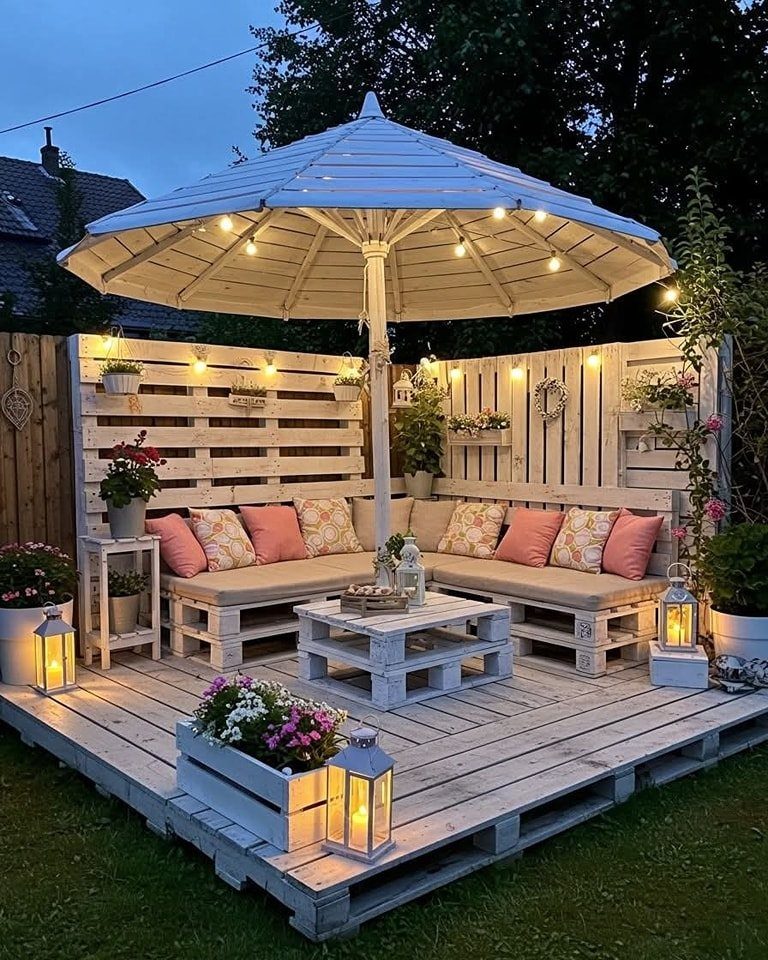
White paint on a deck is a commitment I have mixed feelings about.
It looks crisp through early summer, then pollen, foot traffic, and leaf stain start in. I would use porch and floor enamel, not wall paint, and I would budget for a recoat every other year.
The matching furniture is what sells this look; everything reads as one piece instead of a deck with stuff on it.
The umbrella is a practical must, since white paint keeps the surface cooler but does nothing to block the sun overhead.

𝗣𝗥𝗘𝗠𝗜𝗨𝗠 𝗟𝗢𝗖𝗔𝗟𝗟𝗬 𝗦𝗢𝗨𝗥𝗖𝗘𝗗 𝗔𝗖𝗔𝗖𝗜𝗔 𝗪𝗢𝗢𝗗: Crafted from carefully selected, locally sourced acacia wood, each tile showcases rich natural grain, warm color variation, and a refined wood appearance. The solid construction offers dependable strength and lasting performance, making these deck tiles a practical and attractive choice for both indoor and outdoor spaces.


Generously Size:Measuring 8FT in length and 17 inches in width,these garden walkway provides a full 8' of length to let you cover more ground in an instant,brings sufficient area for you to walk through!This is the most convenient and cost-effective tool to create the elegant and exotic hardwood deck that you have always dreamed of!Design a multifunctional pathway,or charming landscape decor with our roll-out wood garden walk-way,add instant and rustic touch to your outdoor surroundings
7. Low-Profile Pallet Deck Base
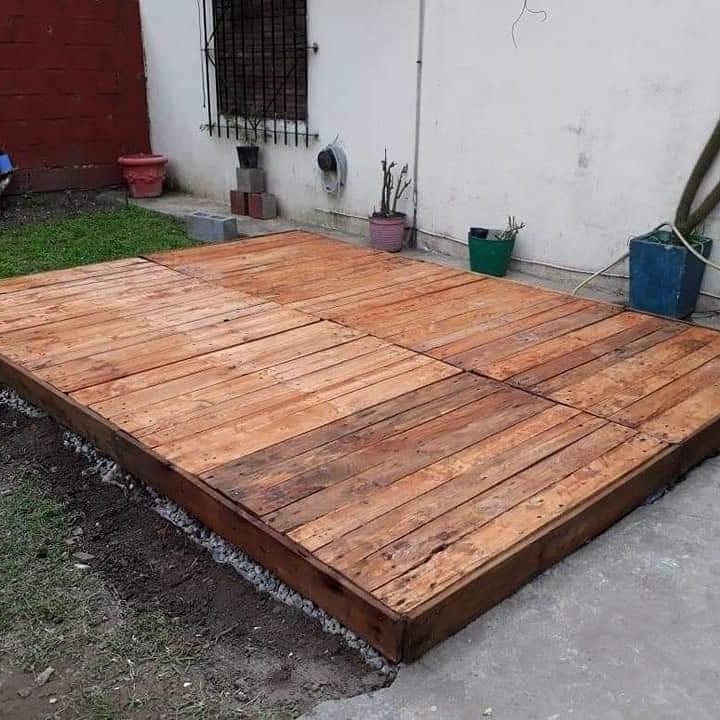
Gravel underneath buys drainage and keeps the wood off mud, which is why I go low in the first place. I would still use pressure-treated or pallet wood rated for ground contact; rot finds anything sitting this close to soil.
The planks run lengthwise here, simple to cut and simple to replace one if it cups or cracks. No railings, no steps, no frost footings: this is weekend work if you have a miter saw and a level.
What you give up is permanence. Grass and weeds will push through gravel eventually, and the deck stays where you built it unless you lift every piece.
I think it suits a renter’s side yard or a utility space where all I need is dry footing, not a showpiece. Sweep it off, hose it down, and it does its job.

Ideal for load bearing walls
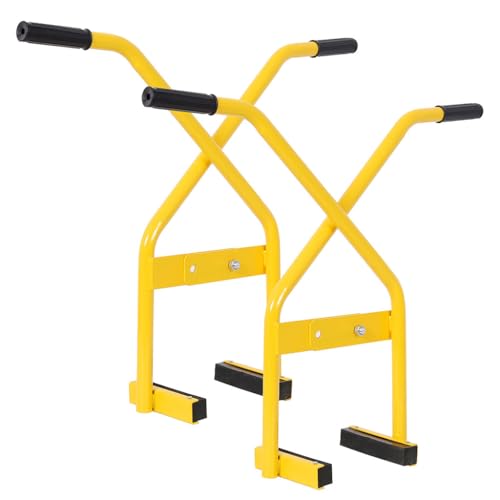
Ideal for Curbs, Blocks & Construction Materials: Designed for professional construction, landscaping, paving, and masonry applications. This lifting grapple makes it easy to transport and position curbstones, concrete blocks, gutters, pavers, retaining wall blocks, and other heavy construction materials safely and efficiently.

Self-Leveling - 0° to 5° slopes
Finding Pallets
Free pallets usually come from asking, not from taking. I would start with businesses that receive regular deliveries: hardware stores, garden centers, and small warehouses often have stacks out back.
Big-box retailers sometimes sell theirs to pallet recovery companies, so a no is common there. Craigslist and Facebook Marketplace are worth checking, though I would inspect before I commit to driving.
A token payment of a dollar or two per pallet is still cheap lumber, and it keeps the relationship friendly if you need more later.
I would avoid any pallet that smells like chemicals or has stained wood; those are often treated with methyl bromide or other preservatives you do not want near bare feet.
Heat-treated pallets are marked with HT and are the safer bet for a deck you will touch daily.

【Perfect Fence to Protect Privacy】With this privacy screen fence, you could have fun with your families not worrying about losing privacy. Also, helping you cut off some noise from your neighbours to give you a peaceful environment. Your dog will not bark from outdoor things and people too.

Privacy Protection:Create a more private backyard, garden, or patio with the KANAGAWA fence privacy screen. It provides 90% blockage to reduce visibility from neighbors, streets, and pets, while creating a more comfortable outdoor space. The privacy screen helps reduce visual distractions that may trigger dog barking for a more peaceful environment.
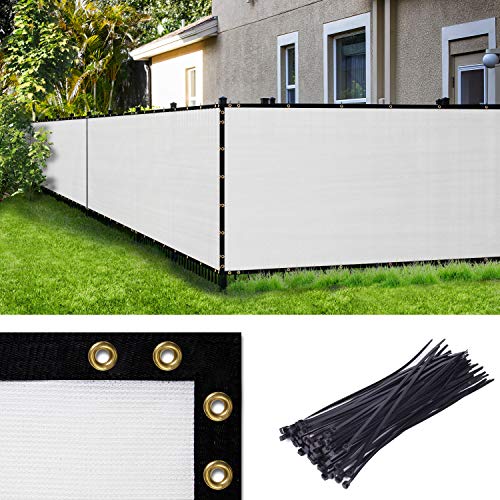
Backyard Privacy: Designed for 6-foot backyard fences, offering enhanced privacy by helping block views from neighbors and busy streets.
Pallet Quality
A pallet rated for hauling weight is built differently than one made to hold empty boxes.
I would flip each candidate over and look at the blocks or stringers underneath: three stringers with solid blocks between them will carry a person; two stringers with thin plywood blocks will sag by fall.
The gap between top slats matters more than most people think. Wide gaps mean twisted ankles and dropped chair legs, so I would pass on anything with more than an inch of daylight showing.
Pallets built for brick or paver delivery tend to be the sturdiest I have found; produce pallets are lighter and often have wider spacing.
I would collect extras beyond my count, since some boards will split when you pry them apart or cut through nails.
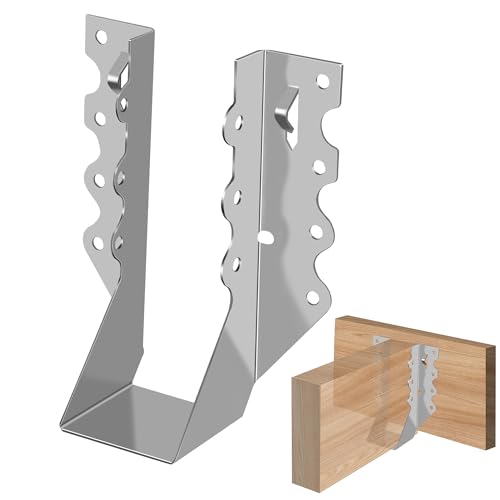
High-Quality Steel Joist Hangers: Designed for pressure-treated lumber, these 2x6 brackets for wood provide strong and long-lasting joist-to-header connections in wood-framed...
Deck Design Considerations
Laying pallets out dry before you fasten anything is the step I would not skip.
It shows where the deck overruns the space, where the grain clashes, and where you need to cut. I have redesigned at this stage more often than I care to admit, and it costs nothing but time.
For anything holding furniture or groups of people, I would screw 2x4s to the underside frames as sister joists.
The pallet’s own structure was built to sit on a forklift, not to span open ground, and the extra timber removes the bounce.
Treat every surface you can reach before assembly: preservative on all faces, then decking oil. Once the pallets are screwed together and weighted down, the underside stays wet longer and rots first.
The pallets with slats spaced wide apart belong in a vertical garden, not under your chair. I would sort them at the start rather than discovering the gap problem mid-build.

All-In-One Recessed Deck Lights Kit: HIBOITE deck lights Kit contains: 0.6W deck light *20, 15W low voltage transformer *1 and 86FT cable. HIBOITEC low voltage deck lighting kit contains everything you need. One product manual is included. No need to buy additional accessories. Our low voltage deck lights set are the ultimate solution for enhancing your outdoor living space

【WARM LED LIGHT】Warm white deck light, just the right amount of warm glow which is safer for the whole family to go downstairs at night

【High Bright &More Safe】Bright warm white LED deck lighting bring impressive starry effect, making you feel sweet and comfortable in your house. Add the black protecting shell for embedded installed on floor/stone stairs will be safer for led deck lights kit.
Frequently Asked Questions
Can you use pallets for decking?
Yes, pallets work for decking if you choose the right ones and support them properly. I would use concrete blocks at the corners and mid-span as a minimum, or set posts in cement for anything permanent.
The pallets need solid stringers underneath, three of them with real blocks between, not thin plywood, or they will sag underfoot.
How many pallets do I need for a 12×12 deck?
The count depends on the pallet size, which varies more than most people expect. Standard 48×40 inch pallets would cover a 12×12 deck with roughly 11 pallets if you use them whole, and cutting slats only increases the number you need.
I would collect the pallets first and design to their actual dimensions rather than forcing a set count; free pallets are rarely identical.
How long will pallet decking last?
A few years with the right prep, not decades. I would treat every face you can reach with preservative and decking oil before assembly, because the underside stays wet and rots first once the pallets are weighted down.
Rot wins eventually when wood sits this close to soil, though pressure-treated lumber and a gravel bed underneath buy you a few extra seasons.