A finished garden for house projects ranges from a $35 mow-and-edge to a full natural pool you build by hand, and the deciding factor is how many weekends you actually have.
The trick most people miss is starting with hardscaping, not plants, since digging later destroys whatever you already put in the ground.
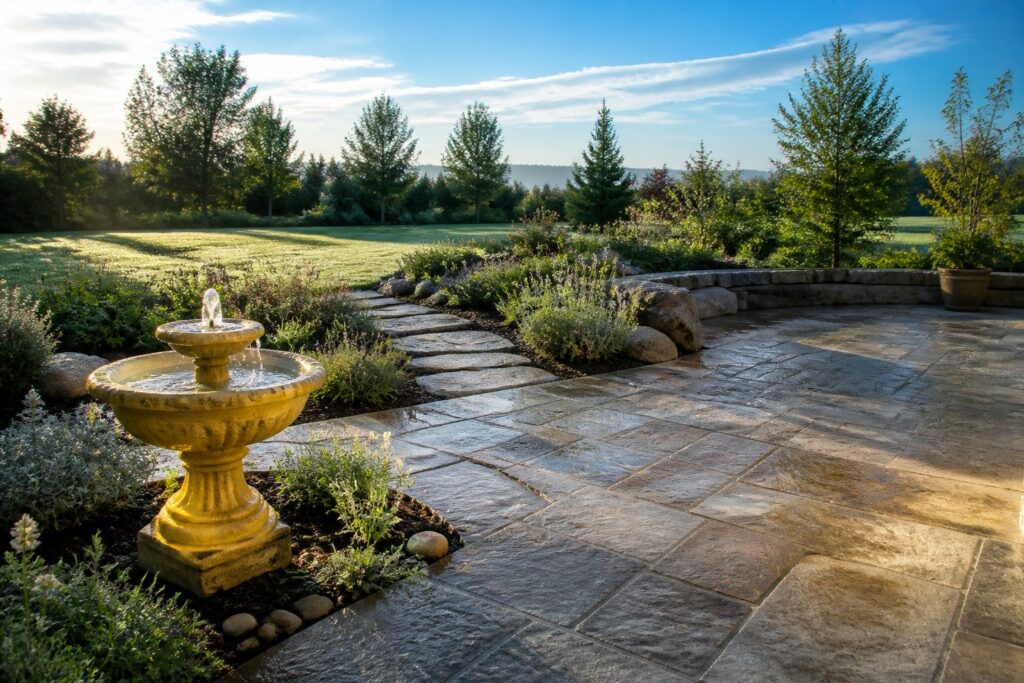
One pedestal fountain with a solar pump costs under a hundred dollars, moves with you if you rent, and does more for traffic noise than landscaping three times the price.
[link-whisper-related-posts]1. Water Features
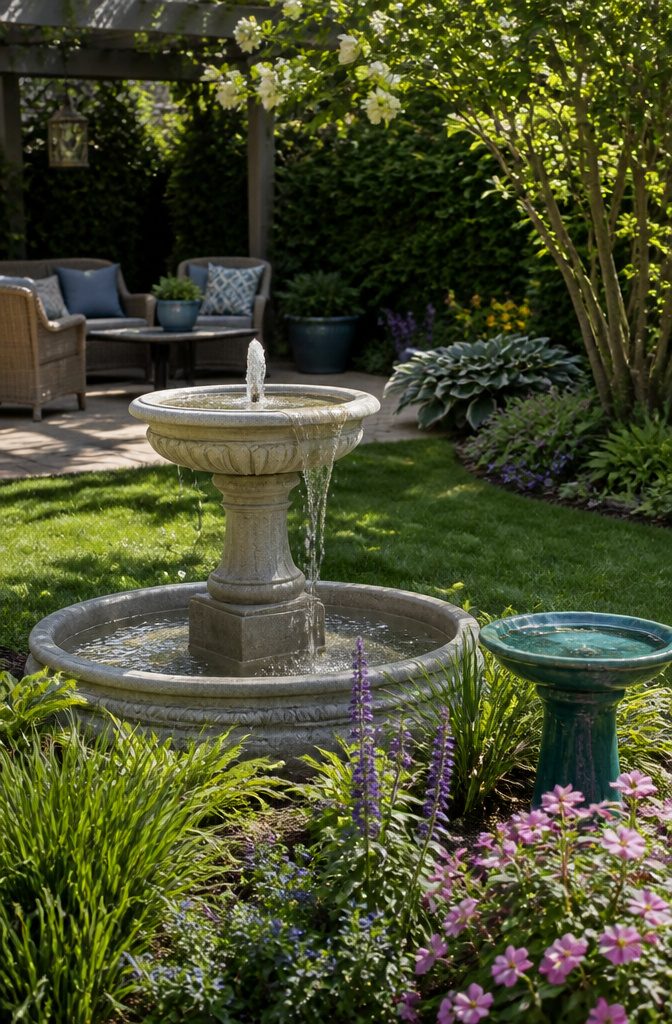
A fountain or birdbath changes a garden for house projects more than you’d expect from something so small.
The sound of moving water covers traffic noise, and even a still basin draws birds that liven up a space without any work from you.
I would skip the tiered limestone installations that dominate whole patios and need a dedicated pump, electrical run, and winterizing ritual.
A simple pedestal fountain with a solar pump sits on any level ground, costs under a hundred dollars, and moves with you if you rent.
Birdbaths work harder for the money in my view. A concrete or glazed ceramic bowl on a short stand needs no plumbing, no pump, and cleaning takes ten minutes with a stiff brush.
The water turns stagnant fast in summer heat, so I top mine up weekly rather than doing a bigger monthly clean.
Place either feature where you already sit, not where you think it ought to go; the trickling you ignore from the kitchen window is the trickling that actually calms you at the end of a workday.
2. Vegetable Patches
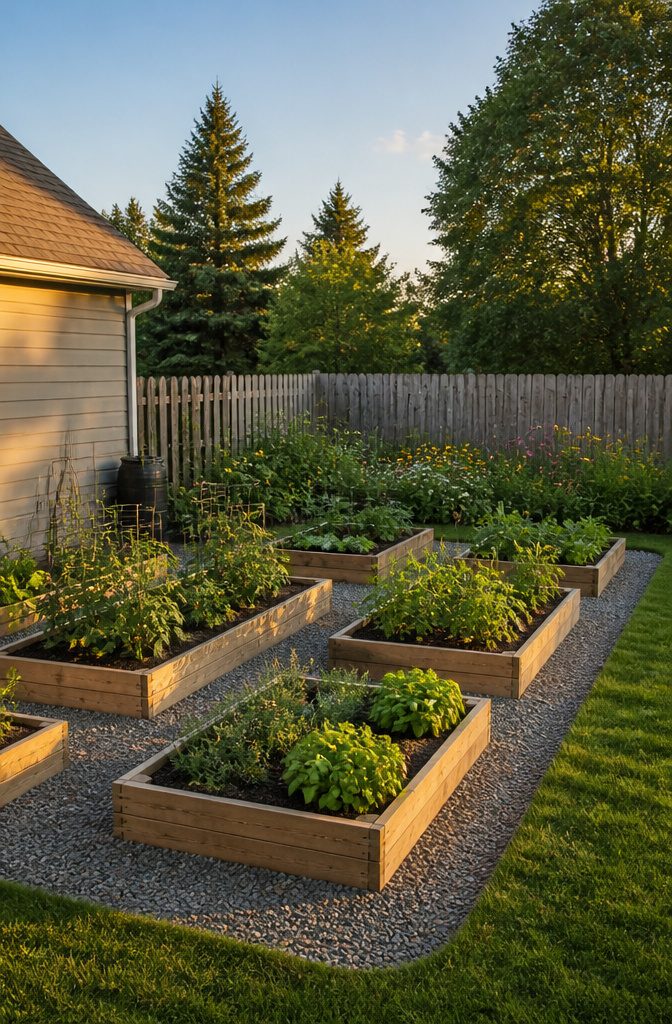
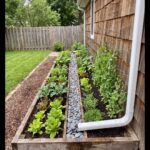
Raised beds work best for a vegetable patch that earns its keep in a garden for house spaces where you actually want to spend time.
The soil warms faster, drains better, and you stop fighting the compacted ground left by construction or years of foot traffic. A simple frame, 6 to 12 inches of quality soil mix, and you’re planting instead of digging for days.
The look matters too.
Neat boxes of tomatoes and herbs read as intentional design, not afterthought agriculture. They define the space, give winter structure, and the harvest is a side benefit that keeps paying out from late spring through first frost.
I would skip anything under 6 inches deep.
Shallow beds dry out fast and limit your root crops. Build once, build right, and the weekend you spend on construction buys you years of easier gardening with better results.
3. Landscape Borders
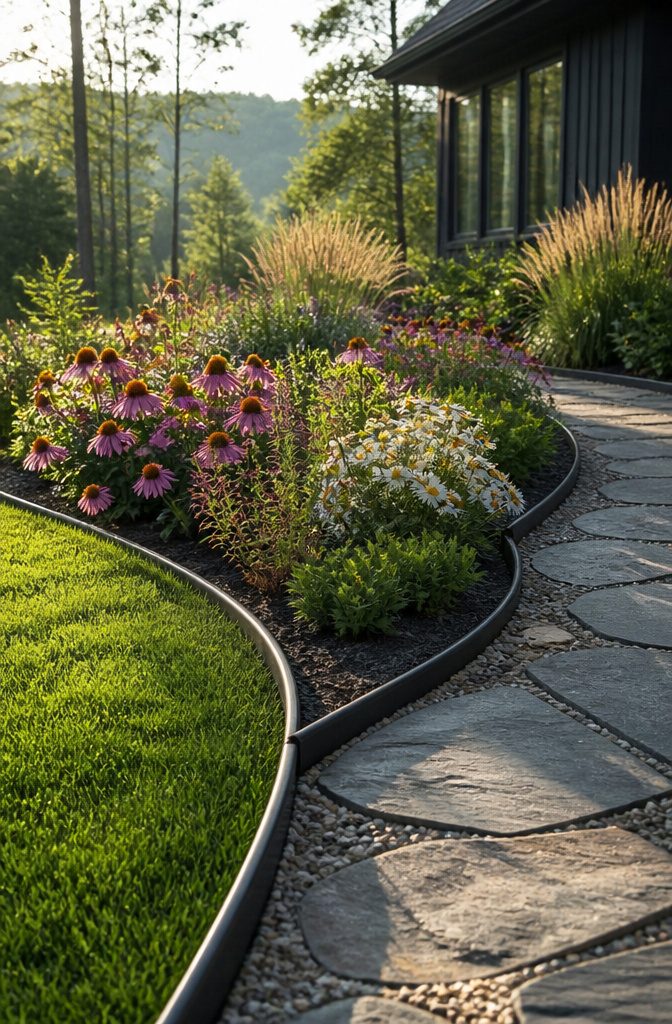
A border does nothing for your garden if the grass keeps creeping under it, which is why I pay attention to what the edge is actually made of.
Steel edging with a rubberized top lip wins for a clean line you can run a mower against without chewing up the blade, and it costs less than concrete.
Concrete curbing looks more finished and holds its shape longer, but the price jump is real, and for a weekend project on a few hundred dollars, metal leaves more room for plants.
Rock borders give you the most control over the look: smooth pebbles read modern, slate or shale read rustic, and you set the route yourself around beds or straight down a path.
The one thing rocks do not do is stop growth the way a buried steel lip does, so expect to pull runners or add a deeper trench.
Metal edging also disappears visually if you let bushes spill over it, which keeps the garden loose while the gravel path stays put.
I would skip plastic unless your budget is absolute zero; it heaves in freeze-thaw and looks it by year three.
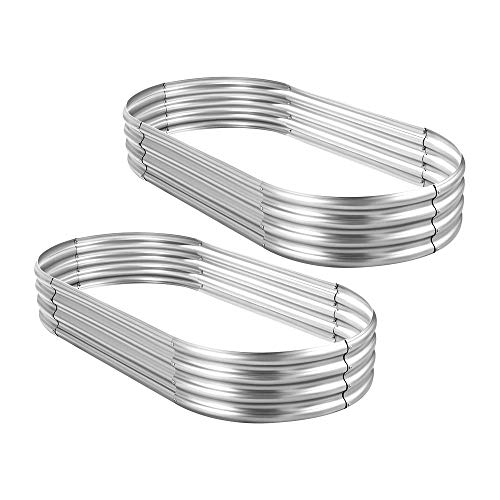
Each raised metal garden bed size: 4×2×1ft , 7Cu
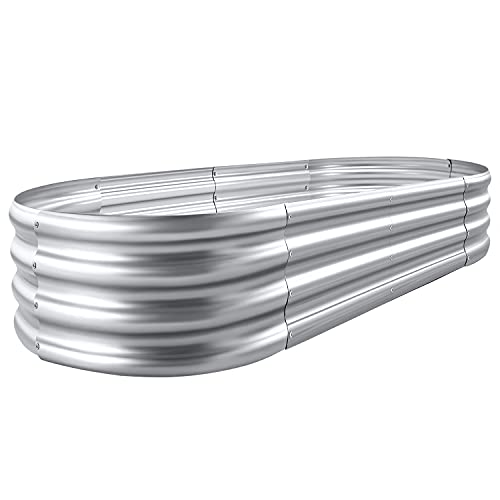
Each raised metal garden bed size: 4×2×1ft ,7.14Cu
4. Garden Furniture
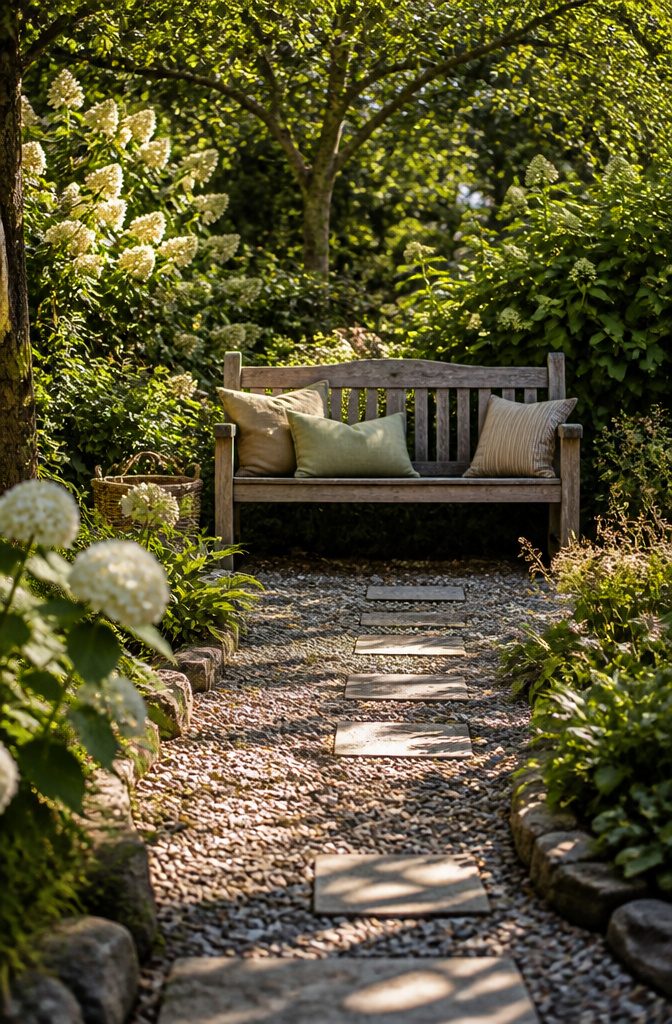
A bench at the end of a stone path gives you a reason to walk the garden and a place to stop once you get there.
Designer Vanessa Alexander took the same logic further, installing a custom daybed just off her pool for casual lounging and sunbathing.
The piece reads as effortlessly luxurious, and the custom route makes sense if standard patio furniture never quite fits your space or your proportions.
Between the two, a bench is the practical starting point for most gardens for house projects. It costs less, needs no cushions or hardware, and survives weather with minimal fuss.
A daybed wins only if you actually lie down outside often enough to justify the footprint and the upkeep of fabrics. Otherwise it becomes a staging area for damp towels and garden gloves.
Ornate garden furniture can work, but one well-placed bench usually proves the point without overcomplicating the space. I want a social spot I use, not a display I maintain.

𝐅𝐥𝐞𝐱𝐢𝐛𝐥𝐞 & 𝐄𝐚𝐬𝐲 𝐭𝐨 𝐈𝐧𝐬𝐭𝐚𝐥𝐥: Each panel measures 40" (L) × 5" (H), including 3" underground stakes for strong anchoring, leaving 2" visible above ground for a clean, low-profile border. The hammer-in design makes installation fast and effortless—perfect for creating neat, professional-looking edges without digging.
5. Native Plantings
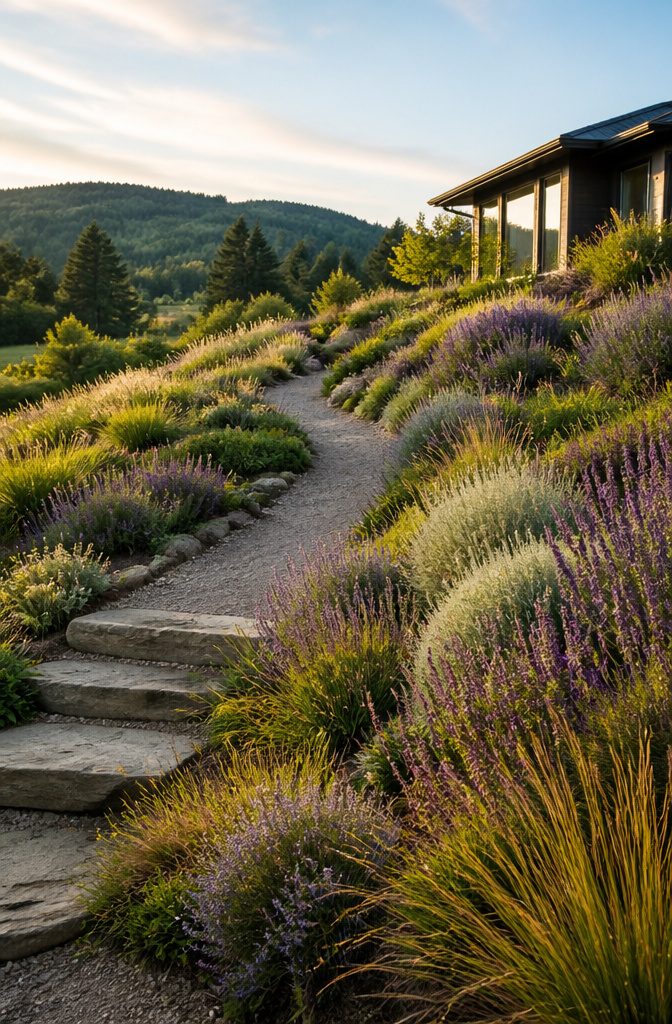
Native plantings cut the work a garden demands because they already know your soil and your rainfall.
A hillside in Bel Air planted with native grasses, sages, lilacs, and redbud trees needs no sprinkler schedule to stay lush; the plants evolved for exactly that dry California slope.
The same principle holds in upstate New York, where a pool edge kept to native landscaping lets the surrounding woods do the visual work instead of forcing imported specimens to survive where they do not belong.
For a weekend project on a few hundred dollars, native perennials and grasses are the lowest-maintenance choice you can make.
Spirea and salvia cost little at the nursery, survive drought once established, and bloom repeatedly through summer without the coddling that hydrangeas or roses require.
You pay in patience: the first season may look sparse while roots find their depth. I would skip the instant fullness of big-box annuals and plant natives in fall so they settle before the heat returns.
By year two, the garden fills itself in, and the only task left is deciding where to put the chair so you can watch it grow.

EASYFLEX DECORATIVE NO-DIG LANDSCAPE EDGING: Get a beautifully landscaped yard without all the work of a dig-in lawn edging; simple installation without trenches or shovels; color may vary due to the unique manufacturing process.
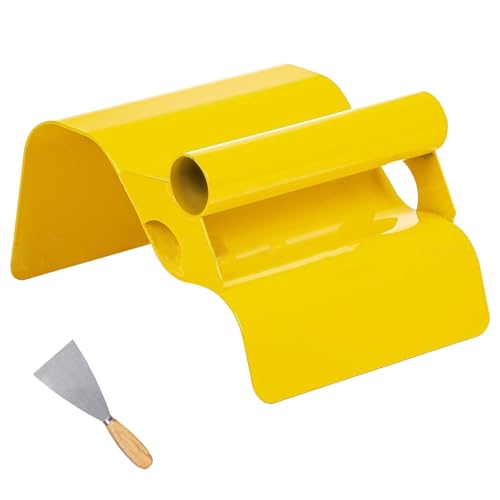
Stainless Steel Build: Concrete curb trowel edger cafted from premium, rust-resistant stainless steel, this landscape curb trowel delivers exceptional strength and long-lasting performance for all concrete edging and curbing tasks
6. Modern Garden Design
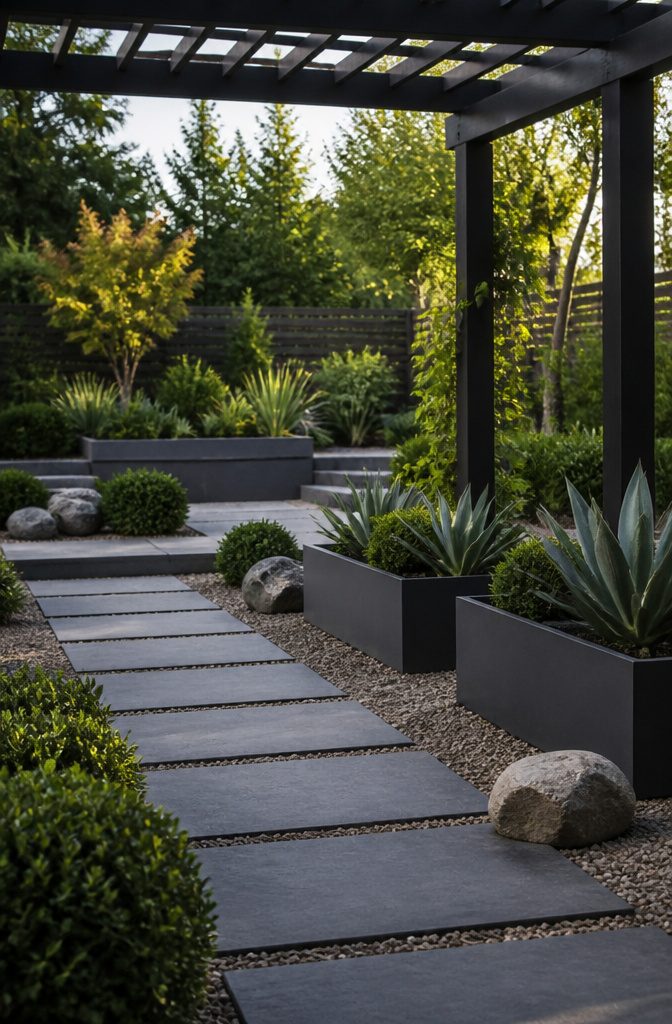
Modern garden design strips away the extra so the structure itself becomes the feature.
Straight vertical and horizontal lines read as more orderly than curves, and every element, from a paver to a pergola, earns its place by doing a job.
I would start here: repeat one material across paths, beds, and borders so the eye moves without interruption. Boxwood or agave repeated at intervals does the same work with plants, giving rhythm without clutter.
Color stays subdued, grey, brown, black, or white against green and the occasional deliberate accent. Black and white together is the classic pairing; it keeps the look crisp and avoids the drift toward softness that kills the edge.
Geometric shapes reinforce the discipline: square pavers echo a rectangular patio, rounded shrubs answer a curved alcove if you have one. Symmetry helps, matching planters flanking a door, hedging mirrored on a path.
The garden functions as an extension of the house, not a separate thing. That unification of indoor and outdoor space is what makes the style livable rather than just photographed.
Low-maintenance landscaping and sustainability fit here naturally because the spare palette leaves little to untend. I would skip anything purely ornamental that needs weekly care; I want calm, not chores.

STUNNING BIRDBATH: Quality birdbath is sure to attract feathered friends and create a charismatic ambiance for your garden, patio, deck, yard, or other outdoor spaces

BIRD BATH & FOUNTAIN COMBO: This set includes a bird bath and solar fountain, with 4 detachable rods that securely fasten the fountain to the bowl; This design prevents splashing from wind or movement while adding a charming feature that attracts birds

【Garden Decor for Outside】A charming decor for your outdoor garden yard with this exquisite, antique look bronzed patina bird baths of Fleur-de-Lis accents and delicate European lines
Sculpture Gardens
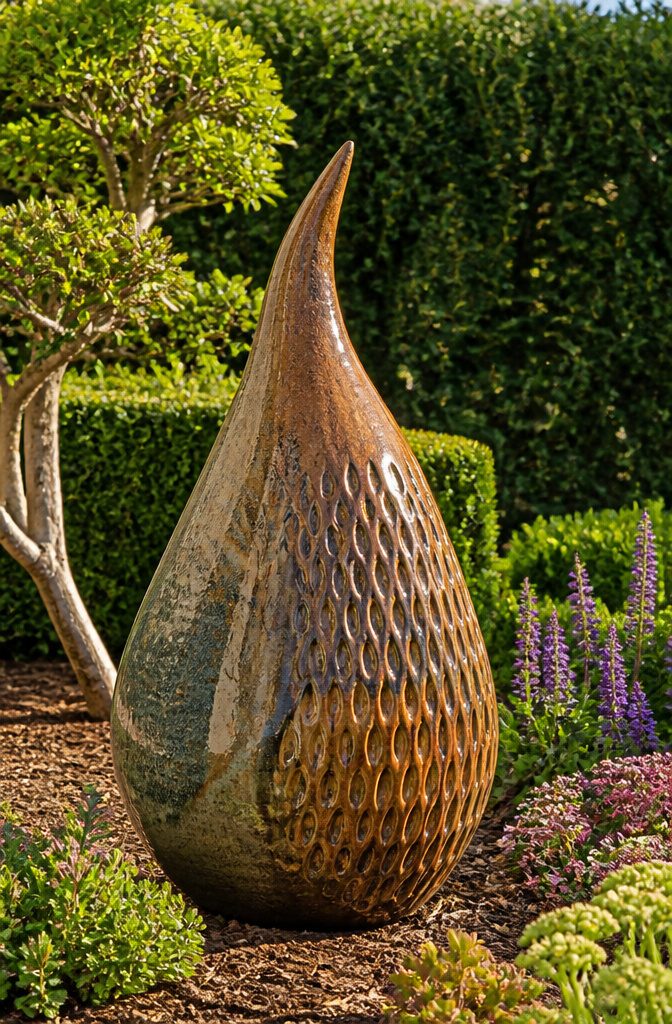
A sculpture garden does not require acreage or museum-sized pieces. The source example balances classical Italian architecture with a modern piece by Emmett Culligan, and that tension is where the interest lives.
For a house with a more modest footprint, smaller sculptures suit the style just as well and keep the project from overwhelming the yard.
Placement matters more than scale. One piece backed against a plain wall or centered in a clipped bed reads as intentional; three pieces scattered across lawn read as leftover.
I would start with a single object in a spot visible from a window I pass daily, since winter interest is half the point.
Material choice shapes the maintenance: steel rusts, bronze greens, resin fades. Each has its honest look and its real limit.
Cost is where judgment counts.
A found object, a ceramic piece by a local maker, or a mass-produced form each lands differently. The ceramic wins for texture up close; the found object wins for conversation.
I would skip anything that needs a plinth taller than the work itself, because then the pedestal becomes the sculpture and the yard looks like a staging area.

🌿 [Elegant Outdoor Decor] The matte black bird bath stand outdoor blends seamlessly with patios, porches, balconies, and small garden spaces, elevating outdoor aesthetics year round. Adds rustic charm to bird baths for outdoors and can also be used as a decorative plant stand display

🐦【2-in-1 Bird Spa & Feeder Bowl】The bird bath feeder bowl can be used as a bird bath or filled with bird food to attract cardinals and hummingbirds. The 1.39L birdbath can store water steadily without frequent water additions. And it can accommodate multiple birds at the same time and easily attract flocks of birds! Also its non-slip edges ensure that birds can rest safely, turning your garden into a vibrant bird paradise in an instant

【MEASURES】:Gazing ball holder height 19.5 inches,Inner diameter 8.5 inches.
Natural Pools
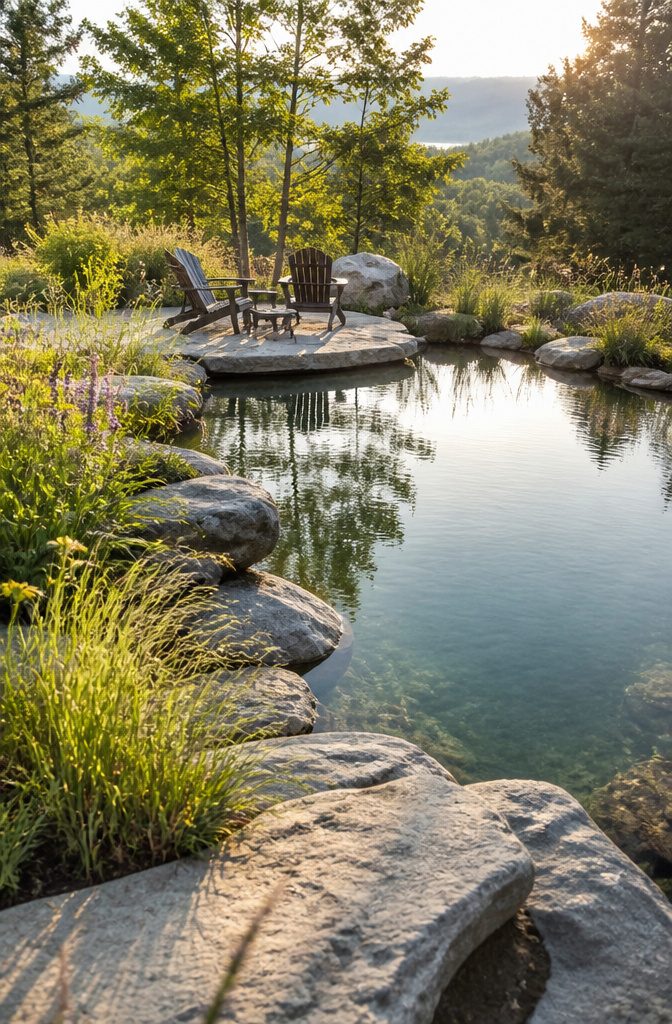
A natural pool built to read as part of the landscape skips the turquoise liner and chlorine smell for something that looks like it was always there.
Designer Melissa Anderson took this approach on an upstate New York property, keeping the exterior simple so the woods and views stayed center stage. Native landscaping around the edges and Adirondack-style seating finished the rustic look without competing with it.
The environmental draw is straightforward: no chemical system means less hardware to run and maintain. Water stays clean through plant zones and biological filters instead of chlorine tablets.
What you trade is the perfectly clear, glassy surface most people picture when they think "pool." Natural water reads greener, and debris from surrounding trees is part of the aesthetic, not a failure of maintenance.
I would only attempt this on a property with enough room to let the pool sit as one element in a larger scene.
A small urban yard turns it into a pond that happens to be swimmable, which misses the point.
For renters, this is obviously off the table. For first-home owners with some slope, some shade, and a long weekend’s patience for grading and liner placement, it is the most interesting water feature you can build with your own hands.

ULTIMATE PRACTICALITY: The planter box measures 96"(L) x 24"(W) x 12"(H), has a huge capacity, any plants and flowers you want to grow can be planted, happiness is overflowing.
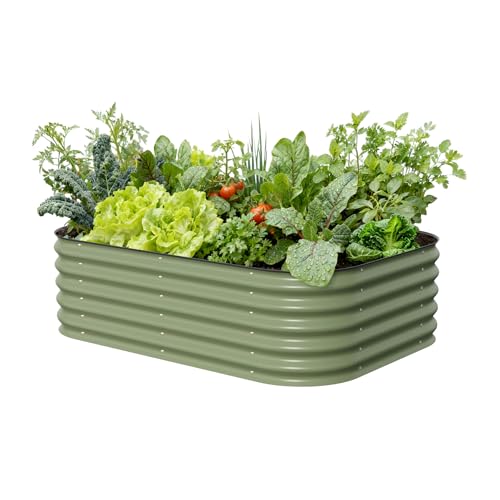
Modular Design: Vego Garden raised bed kits feature an innovative modular design, which means you can assemble a kit into various configurations that fit any backyard or garden space in a 6-in-1 kit, you can build one of 6 possible configurations to fit your garden plans

Raised Garden Bed - Add a new level of convenience to your gardening experience with the Galvanized Raised Garden Bed. Enjoy expanded yield and a more assembled garden layout with this garden accessory, each sized at 120 cm X 60 cm x 30 cm.
What Landscaping Costs in 2025
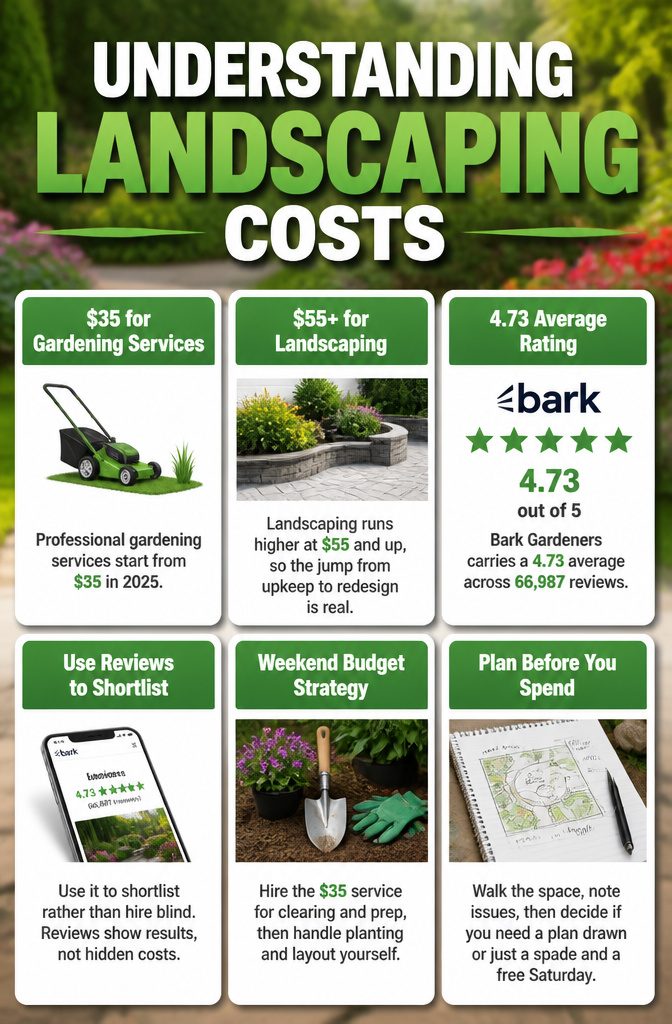
Professional gardening services start from $35 in 2025, while landscaping runs higher at $55 and up, so the jump from upkeep to redesign is real.
I would put that gap toward defining the scope before anyone quotes it. A mow and edge stays cheap because it repeats; grading, planting, and hardscaping climb fast because each piece carries material and labor stacked together.
Bark Gardeners carries a 4.73 average across 66,987 reviews, which tells me enough people found the platform useful that the rating means something.
I would use it to shortlist rather than hire blind, though. Reviews cluster around finished results you can see, not the hidden costs that surface mid-project.
For a weekend budget, I would split the difference: hire the $35 service for the grunt work of clearing and prep, then handle planting and layout myself.
That keeps labor low and puts the money into plants that actually survive. What I would skip is paying design fees before I know the site.
Walk the space, note where water pools, where sun hits after noon, then decide if you need a plan drawn or just a spade and a free Saturday.

Seamless Locking System: Our innovative no dig metal garden edging kit features a secure interlocking system with 6 steel pins (each 2.95") that firmly connect 6pcs 8" H x 40" L panels(Total 20ft/6m), preventing lifting or shifting over time. The deep-serrated, ground-gripping edge ensures reliable stability in extreme weather like heavy snow and strong winds. Each serration is safely smoothed at the tip for protection without reducing hold. This creates a continuous, professional border

Durable & Flexible Material GTSABWAY garden edging is crafted from premium galvanized steel, ensuring superior durability and flexibility. Easily shape it into straight lines,curves, circles, or unique contours ,without cracking,Can withstand all kinds of weather conditions, ensuring long-term durability and reliability. providing reliable Garden Border solutions.

Long-Lasting Galvanized Steel: Made from high-quality galvanized steel with a rust-resistant coating, this metal landscape edging built to resist fading, cracking, and rusting. It withstands all weather conditions, providing long-term durability for any outdoor environment.
Low Maintenance Combinations
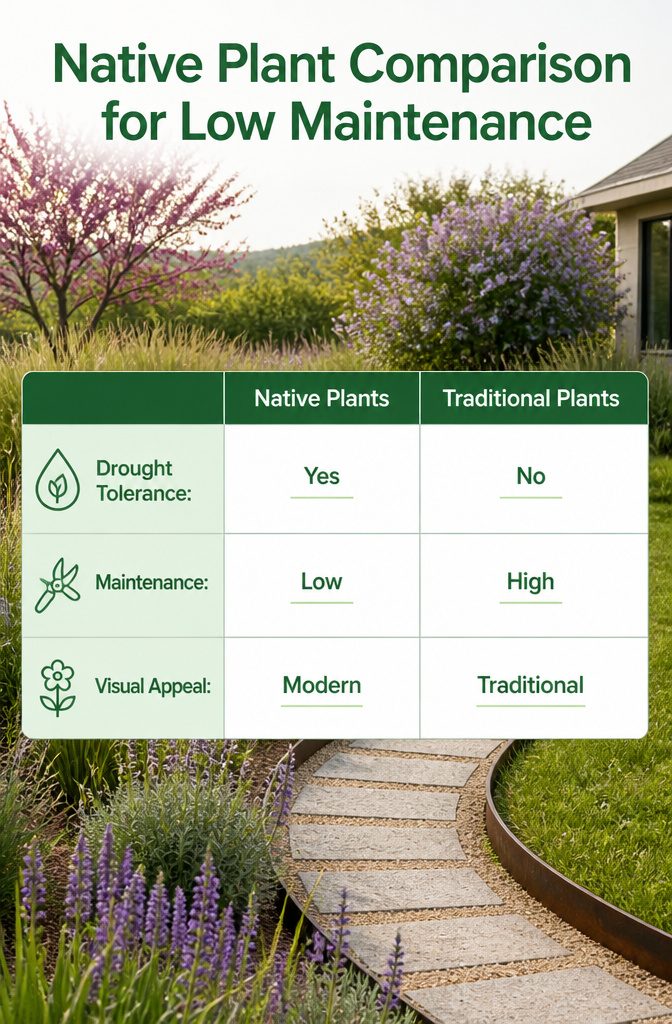
Native grasses, sages, lilacs, and redbud trees handle the dry spells on their own once established, which is the first thing I look for in any garden for house planning.
The gradient Terremoto built on that Bel Air hillside still looks intentional because they paired that wildness with a crisp metal edge between lawn and path.
That edging is what keeps the weekend work from creeping back in; without it, grass invades the walkway and you are pulling runners every Saturday.
I would take the same approach around a modest house: let the plantings go loose and native, but lock the geometry down at the borders.
A keystone pathway with a steel or aluminum edge reads modern and saves the trimming labor later. Spirea and salvia hit the same notes on a tighter budget, and both bloom through summer without the water bill climbing.
You pay in patience.
Native plants look sparse the first season while they dig roots deep enough to fend for themselves. I would rather wait that year out than fight a traditional perennial border forever.

Premium Stainless Steel Construction: Concrete curb trowel crafted from high-grade, rust-resistant stainless steel, this landscape curb trowel delivers exceptional, corrosion resistance, and long-term performance

Premium Stainless Steel Construction: Concrete curb trowel crafted from high-grade, rust-resistant stainless steel, this landscape curb trowel delivers exceptional, corrosion resistance, and long-term performance

Durable Metal Construction: SnugNiture garden edging is made of high-quality metal materials. It is strong and durable, capable of withstanding outdoor sunlight, rain, and snow. Thus, it has a long service life.
Weekend Project Order
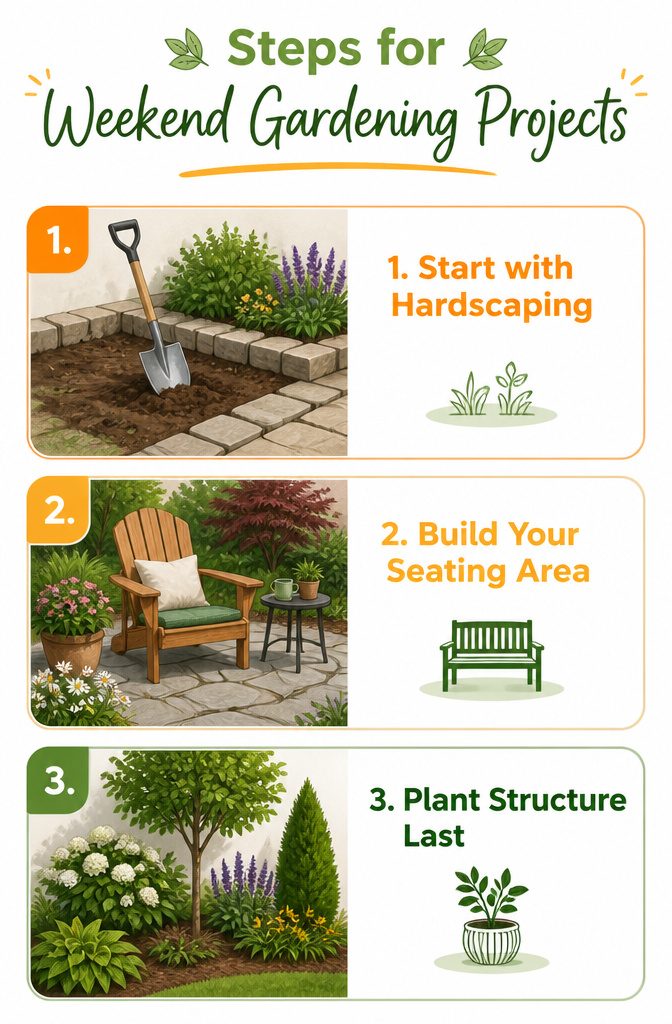
- Start with hardscaping, not plants. Digging for a border or leveling a small patio patch disturbs soil and tramples anything already growing, so get the dirty work done while the yard is still bare. I would rather reseed a thin lawn than transplant shrubs I just paid for.
- Build or place your seating area next. A chair or bench shows you where the eye actually lands, and from that fixed point you notice which angles need screening and where afternoon sun becomes unbearable. I skipped this once and ended up with tomatoes where I later wanted a lounge chair.
- Plant structure last. Trees, shrubs, and larger perennials go in after you have walked the finished floor plan a few times. Moving a pot is free; moving a dogwood after three years is not. For renters, this is the stage to lean on container edibles and temporary raised beds that leave when you do.
Frequently Asked Questions
What are some landscaping ideas for my backyard?
Water features, vegetable patches, landscape borders, garden furniture, native plantings, and modern design all work well.
A simple pedestal fountain with a solar pump costs under $100 and moves with you if you rent. Raised beds 6 to 12 inches deep give better drainage and faster soil warming than ground-level planting.
How can I make my garden low maintenance?
Stick with native grasses, sages, lilacs, and redbud trees that handle dry spells on their own once established.
Lock down the borders with steel or aluminum edging so grass stops creeping into paths and beds. Let the plantings go loose while the geometry stays crisp.
What types of water features are best for gardens?
A pedestal fountain with a solar pump or a concrete birdbath on a short stand works hardest for the money.
Birdbaths need no plumbing, no pump, and cleaning takes ten minutes with a stiff brush. Place either where you already sit, not where you think it ought to go.
What are some good ideas for a small garden in front of my house?
Native perennials like spirea and salvia cost little, survive drought once established, and bloom repeatedly through summer.
A bench at the end of a stone path gives you a reason to walk the space and a place to stop. Repeat one material across paths, beds, and borders so the eye moves without interruption.
What is the most efficient garden layout?
Start with hardscaping, then seating, then plant structure last.
Moving a pot is free; moving a dogwood after three years is not. For renters, lean on container edibles and temporary raised beds that leave when you do.